
8 min read
Veradigm Staff Confirmation Automation | End the Phone Marathon
Aubreigh Lee Daculug
:
April 24, 2026
Curogram connects to Veradigm through the open API, sends reminders automatically, and updates a live staff dashboard as patients respond in real time.
For multi-location Veradigm practices, this means centralized visibility across every provider and site — no more fragmented call lists or end-of-day guesswork.
Cancelled slots trigger automatic waitlist notifications, and unconfirmed patients are flagged for a quick personal follow-up.
The result: confirmation rates above 75%, 30+ recovered staff hours per week per location, and a front desk team that can focus on patients — not phone calls.
Think about how your scheduling coordinator starts her morning.
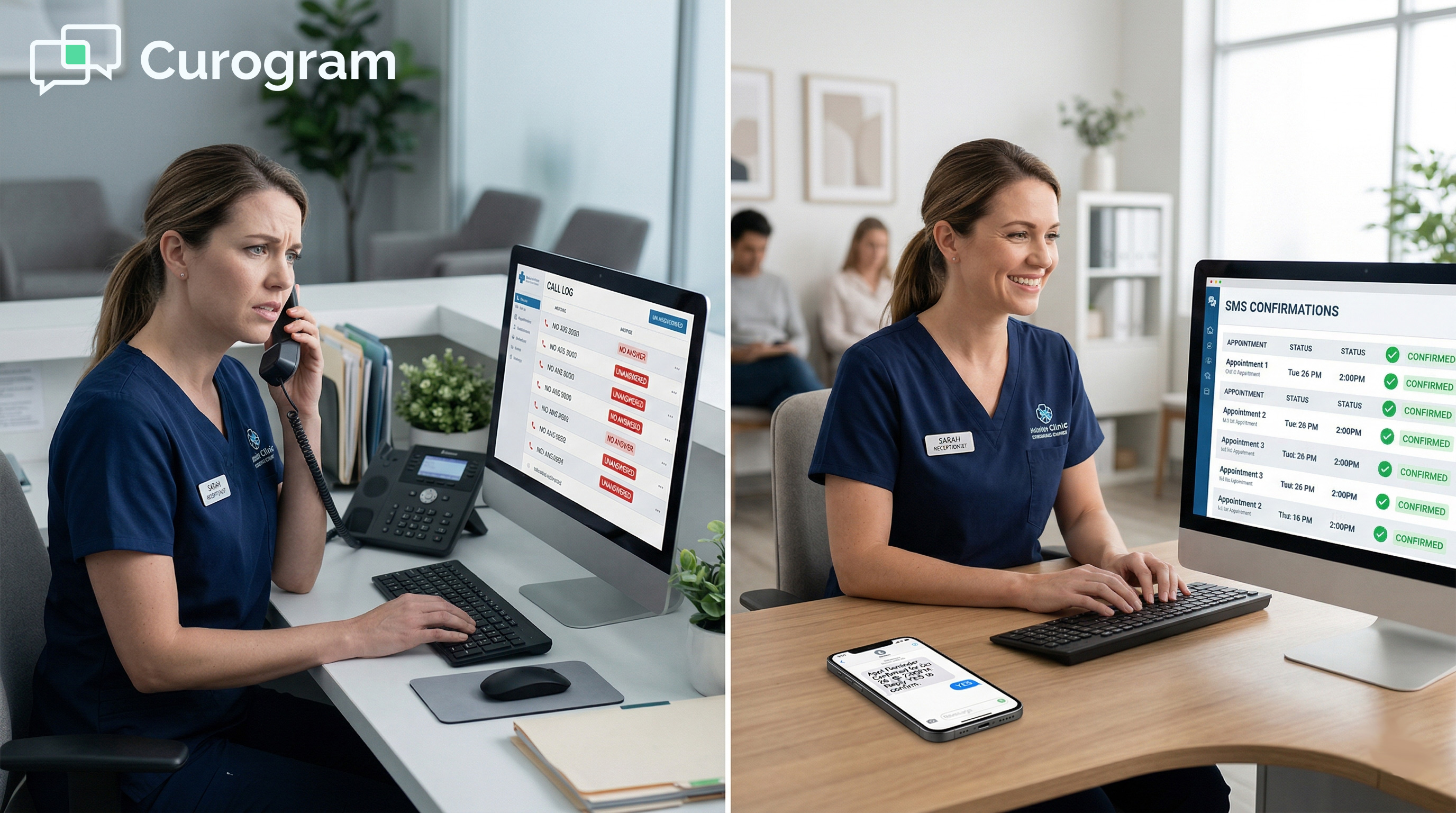
It's 7:30 AM. The waiting room is empty. But before she can do anything else, she prints tomorrow's schedule, grabs the phone, and starts dialing.
Not because she enjoys it. Because she has no other choice.
Of the 45 appointments across two providers, FollowMyHealth has already confirmed 12 — the patients who enrolled in the portal. The other 33? Each one needs a manual phone call.
Three patients don't answer. Two want to reschedule, which means opening the calendar, finding an available slot, and updating the chart. One has an insurance question that needs a transfer to billing.
By 9:00 AM, she's confirmed 15 of 33 and patients are already walking through the door. The remaining 18 won't get called back until after lunch — if there's time.
This is the confirmation call marathon. And it plays out at nearly every Veradigm practice, every single day.
The math is sobering. Each call averages 3–5 minutes once you account for dialing, waiting, talking, and documenting. At 33 calls × 4 minutes, that's over 2 hours — for one provider at one location.
Scale that across a 3-location, 8-provider practice, and you're looking at 10 or more staff hours consumed by confirmation calls alone. Every day.
And while that marathon runs, everything else falls behind. Check-ins pile up at the front desk.
Referrals sit unprocessed. Insurance verifications get pushed to tomorrow. Your scheduling coordinator — one of the most operationally important people in your practice — is on hold, waiting for a patient to pick up a call about an appointment they booked three weeks ago.
It sounds manageable. It isn't.
The deeper problem:
65–80% of patients at most Veradigm practices never enrolled in FollowMyHealth.
The portal handles the 20–35% who use it reliably. But for everyone else, confirmation is still manual, still slow, and still draining your staff dry.
There's a better way — and it starts with rethinking how appointment confirmations work.
Why Your Front Desk Is Losing Half the Day Before It Even Begins
The Morning Ritual Nobody Talks About
Your office manager didn't get into healthcare to be a phone operator. But that's what the daily confirmation call marathon has made her.
She arrives early, prints the schedule, and starts dialing.
Before 9:00 AM, a single morning already looks like this:
- 3 patients don't answer — added to a callback list for after lunch
- 2 want to reschedule — open the calendar, find a slot, update the chart
- 1 has an insurance question — transfer to billing, note the hold, move on
And the list still has 27 names on it. By mid-morning, she's confirmed half the schedule and is already behind on everything else.
The Hidden Cost Nobody Is Calculating
Here's what confirmation calls actually cost a mid-size Veradigm practice.
A single provider at one location generates 33 non-portal calls per day — over 2 hours of staff time.
Scale that to 8 providers across 3 locations and you're looking at 150+ calls and 10+ hours lost. Every single day.
Ten hours a day across three locations. That's the equivalent of a full-time employee — working exclusively on phone calls that generate zero revenue.
This means your staffing budget isn't going toward patient care. It's going toward hold music.
The Visibility Problem That Makes It Worse
Even when all the calls get made, the information they produce has a short shelf life.
Which patients confirmed?
Which cancelled?
Which didn't answer the first time?
That data lives in someone's handwritten notes or a static printout — not a live system.
By the time your operations team has a full picture of tomorrow's schedule, it's nearly end of day. Cancelled slots sit unfilled because there's no fast way to pull from the waitlist. No-shows reveal themselves only when the appointment time passes.
For multi-location Veradigm practices managing the Allscripts Professional front desk confirmation calls process across separate sites, the operational blind spot compounds across every location.
You can't manage what you can't see. And right now, your schedule visibility is hours behind reality.
Why FollowMyHealth Can't Close This Gap Alone
FollowMyHealth is a solid patient portal. For practices with strong portal adoption, it handles confirmations cleanly for enrolled users.
But portal adoption at most ambulatory practices lands between 20–35%.
That gap — the 65–80% of your schedule that the portal can't reach — is the FollowMyHealth confirmation gap that still requires a staff workaround:
Manual calls, every single day. Relying on the portal alone isn't a strategy.
It's a structural problem wearing the disguise of one.
A Smarter Way to Confirm — The Dashboard Your Team Actually Needs

What Automation Looks Like Inside a Veradigm Practice
Curogram connects to Veradigm EHR through the open API architecture. Every appointment booked in Veradigm automatically feeds into Curogram's reminder queue.
No manual import. No copy-pasting. No duplicate data entry from your scheduling coordinator.
From there, Curogram sends automated two-way text confirmations to every patient on the schedule — portal users and non-portal users alike. Patients reply with YES, CANCEL, or RESCHEDULE. Curogram captures each response in real time and updates the status board instantly.
Your staff doesn't make 80 calls. They open a dashboard.
The Real-Time Confirmation Status Board
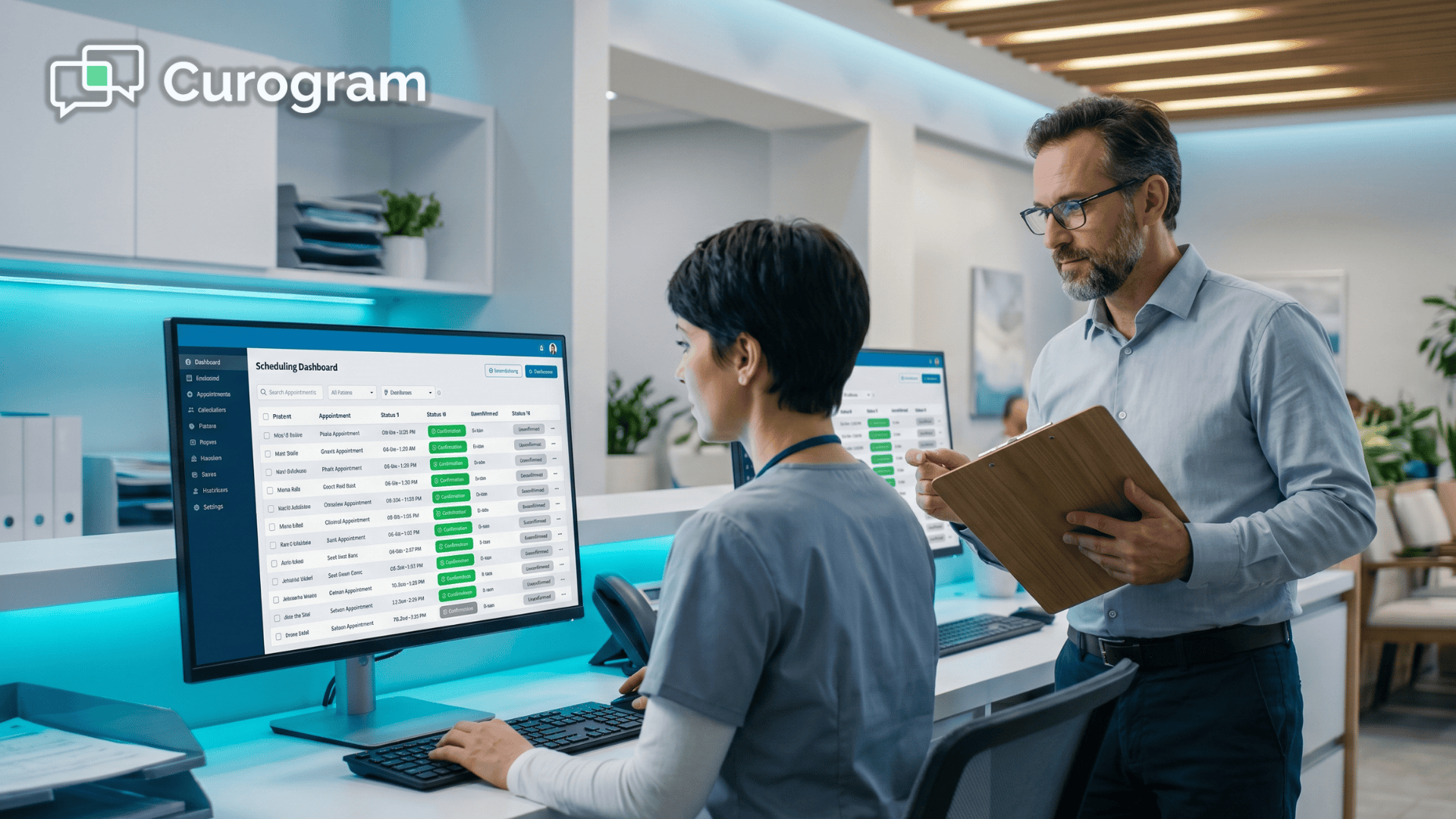
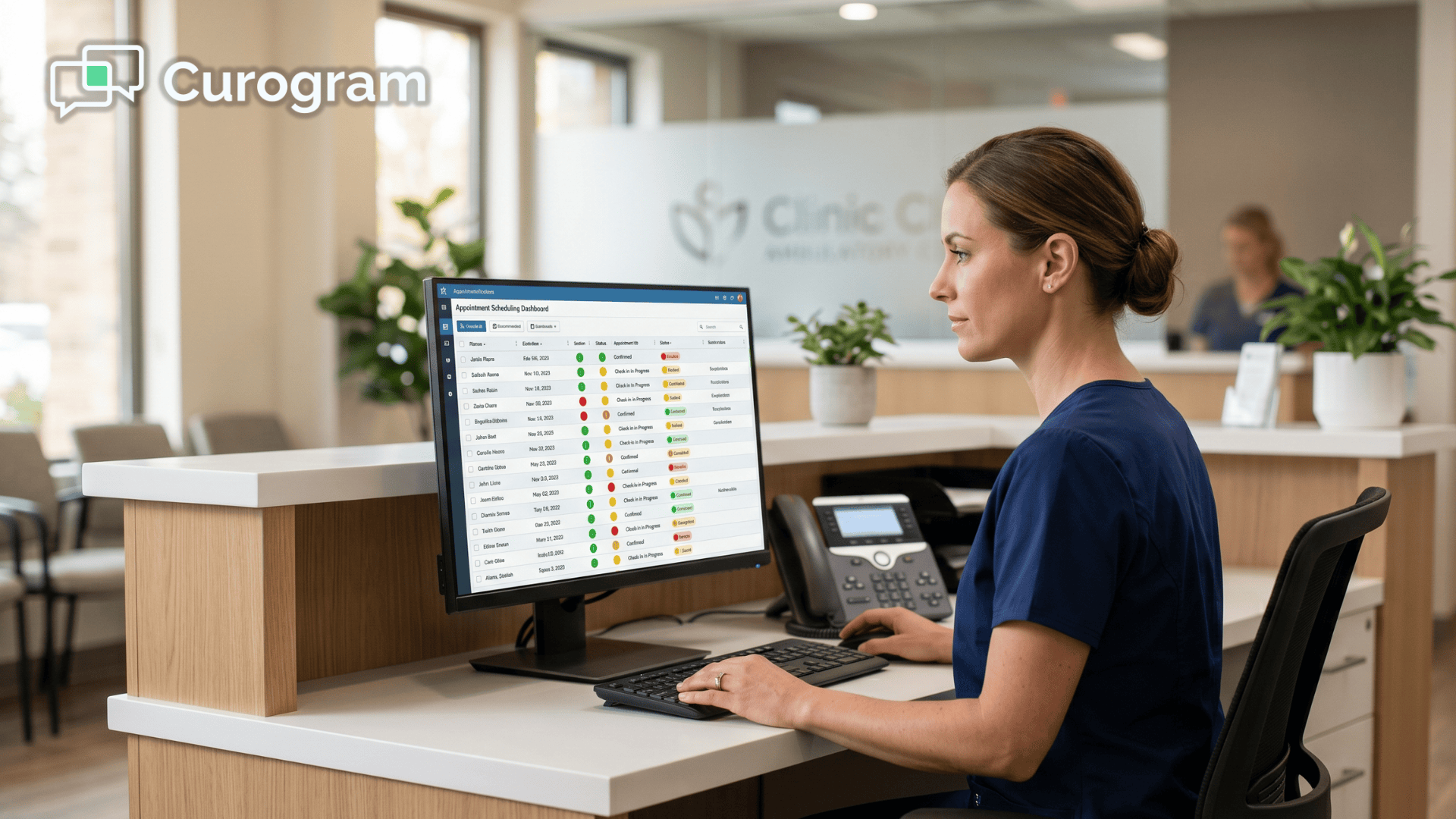
The Curogram staff dashboard displays confirmation status across all providers, locations, and appointment types — updated live as patients respond throughout the day.
Here's what replaces the call list:
| Status | What It Means | Staff Action Needed |
|---|---|---|
| Confirmed (green) | Patient replied YES | None |
| Cancelled (flagged) | Patient replied CANCEL | Trigger waitlist fill |
| Rescheduled | Patient requested new time | Review and confirm slot |
| Unconfirmed | No response yet | Manual follow-up (~5–10 patients) |
Instead of calling 80 patients, your team calls 5–10. The automation handles the volume. Your team handles the exceptions.
That shift alone recovers hours every single day.
How It Fits Into the Veradigm Scheduling Workflow
This isn't a bolt-on tool that creates more work. The Veradigm EHR no-show management staff dashboard automation Curogram provides fits the way your practice already operates.
Appointment data flows from Veradigm into Curogram automatically. Patient responses flow back into the dashboard in real time — without touching a single data field manually.
For any Veradigm scheduling coordinator looking to reduce phone volume, the automated reminder sequence runs like this:
- 72 hours out: first confirmation text sent to the patient
- 48 hours out: follow-up sends automatically if there's no response
- 24 hours out: final reminder fires for patients who still haven't replied
- Still no response: patient is flagged on the dashboard for a personal call
The automation handles every step. Your staff only steps in when a patient genuinely needs a human touch.
Customization for Multi-Provider and Multi-Location Practices
Every provider and every location can have its own reminder schedule and messaging.
A cardiologist who wants reminders sent 72, 48, and 24 hours out gets that cadence.
A dermatologist who prefers 48 and 24 hours can have a different schedule without affecting anyone else.
Location-specific messages can include parking instructions, check-in procedures, and pre-visit requirements. For an office manager overseeing the appointment confirmation workflow across a Veradigm multi-site practice, this kind of centralized control is a genuine operational upgrade.
One system. Fully customizable. No extra staff time required.

What Happens When You Take the Phone Out of the Equation
The Numbers From a Real Practice
Covina Arthritic Clinic had a challenge most Veradigm practices would recognize:
Confirmation was time-intensive, depended on constant manual staff follow-up, and couldn't scale without adding headcount.
After implementing Curogram's automated system, confirmed appointments grew from 369 per month to more than 1,300 — a 252% increase in confirmation volume with zero increase in staff call time.
More than 1,100 appointments confirmed every month, consistently — without a single additional phone call.
That's not an incremental improvement. That's a different way of running a practice.
What 30 Recovered Hours Per Week Actually Means
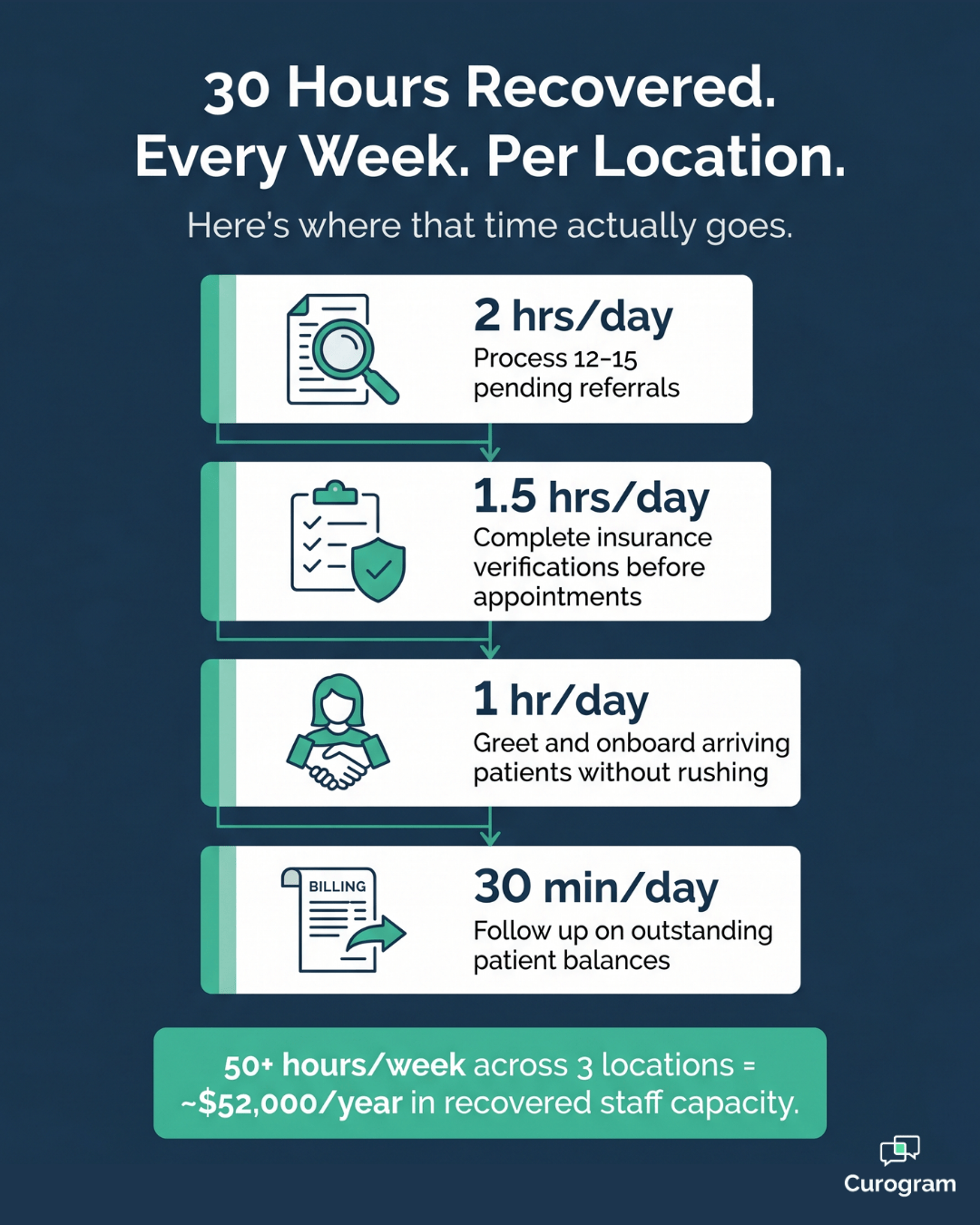
For Veradigm practices where staff currently spend 5–6 hours daily on confirmation calls, automation typically recovers 30+ staff hours per week per location.
Here's what those hours translate to:
| Recovered Time | What Your Team Can Do Instead |
|---|---|
| 2 hrs/day | Process 12–15 pending referrals |
| 1.5 hrs/day | Complete insurance verifications before appointments |
| 1 hr/day | Greet and onboard arriving patients without rushing |
| 30 min/day | Follow up on outstanding patient balances |
These aren't hypothetical tasks. They're the work that gets pushed aside every day because the phone won't stop ringing.
For a 3-location practice recovering 10+ staff hours daily, that's roughly 50+ hours per week redirected from confirmation calls toward revenue-generating activity.
At a conservative $20/hour average for front desk staff, that's $1,000 per week — or roughly $52,000 per year — in recovered staff capacity. Per location.
From Reactive to Proactive: What the Schedule Looks Like Now
Imagine your operations team pulling up tomorrow's full schedule at 4:00 PM today.
Here's what they see:
- Confirmed patients locked in green — no action needed
- Cancelled slots already being filled from automated waitlist notifications
- No-show risk patients flagged for a personal outreach call
- 5 unconfirmed names that need a quick manual follow-up
The ambulatory practice front desk appointment confirmation text workflow Curogram enables makes this possible — because your team gets real-time data, not a printout that's four hours stale.
Your scheduling coordinator stops being the person who makes confirmation calls. She becomes the person who manages the schedule.
A Wednesday at Your 3-Location Practice
Picture 168 appointments across 10 providers. FollowMyHealth confirmed 52 portal users automatically.
Curogram texted the remaining 116 — 91 confirmed by text, 14 cancelled (9 slots filled from the waitlist by noon), 6 rescheduled, and 5 flagged for a quick personal call.
Your front desk team made 5 phone calls each. Not 40.
They used the hours they recovered to process 12 referrals, resolve 8 insurance issues, and welcome arriving patients with their full attention. The schedule was 95% locked the afternoon before. The confirmation call marathon never started.
This is what Veradigm practices using Curogram experience today.
Stop Running the Marathon. Start Running Your Practice.
FollowMyHealth does exactly what it's designed to do — confirm appointments automatically for enrolled portal users.
For the 20–35% of your schedule using the portal, it works well. But for the other 65–80%? That gap has been your staff's problem every single day.
Curogram confirms everyone else.
It connects to Veradigm EHR through the open API, pulls the full schedule automatically, and sends two-way text confirmations to every patient FollowMyHealth can't reach. Responses are captured in real time. The staff dashboard updates live.
Your scheduling coordinator stops managing a call list and starts managing a schedule.
The Veradigm EHR staff appointment confirmation automation Curogram provides isn't a workaround for the FollowMyHealth confirmation gap. It's the operational layer your workflow has been missing — the one that covers your full patient panel, across every provider, every location, and every appointment type.
Practices using Curogram see confirmation rates above 75%, recover 30+ staff hours per week per location, and report front desk teams that are finally doing the work they were actually hired to do — insurance verification, referral processing, and patient experience.
Your front desk team didn't sign up for a call center job. They signed up to support patients.
It's time to give them that back.
Schedule a Demo with Curogram. Bring your current daily confirmation call volume, and we'll show you exactly how many staff hours you'll recover — across every provider and location.
Frequently Asked Questions
Curogram's escalation logic handles non-responses automatically. If a patient doesn't respond to the first reminder, a follow-up text sends at the next configured interval. If the patient remains unresponsive after all automated attempts, they're flagged on the staff dashboard as "unconfirmed — needs manual outreach." Instead of calling 80 patients, your staff calls 5–10. The automation handles the volume; your team handles the exceptions.
Yes. Curogram supports provider-level and location-level reminder configuration. A cardiologist who wants reminders sent 72, 48, and 24 hours before appointments can have a different schedule than a dermatologist who prefers 48 and 24 hours. Each location can customize messaging to include location-specific details — address, parking instructions, and check-in procedures. One system, fully configurable per provider and site.
Initial setup is designed for minimal disruption. Curogram connects to Veradigm EHR through the existing API architecture — your IT team or Curogram's implementation team handles the integration. Reminder templates are pre-built and customizable. Most practices go live within days, not weeks. Staff training is minimal because the dashboard is intuitive — if your team can read a color-coded status board, they can use Curogram.
Yes. Curogram is a fully HIPAA-compliant two-way texting platform. All patient communications are encrypted and handled within a secure environment that meets federal privacy and security standards. Appointment confirmation texts are designed to include only the minimum necessary information — no sensitive clinical details are exposed in the message. Your practice stays protected while patients get the convenient, timely communication they prefer.
Curogram's automation handles the patients who do text — which is the vast majority of your panel. For patients who don't respond to any automated text attempt, they're automatically flagged on the staff dashboard for a manual phone call. This means your team isn't abandoning non-texting patients; they're simply spending their call time only on the patients who actually need a personal touch. In most practices, that's 5–10 calls per day instead of 80.