
Veradigm HIPAA Texting ROI for Imaging Centers | Curogram
 Jo Galvez : Dec 26, 2025, 6:00:00 PM
Discover how secure texting in Veradigm improves compliance, efficiency, and enterprise communication ROI with Curogram.
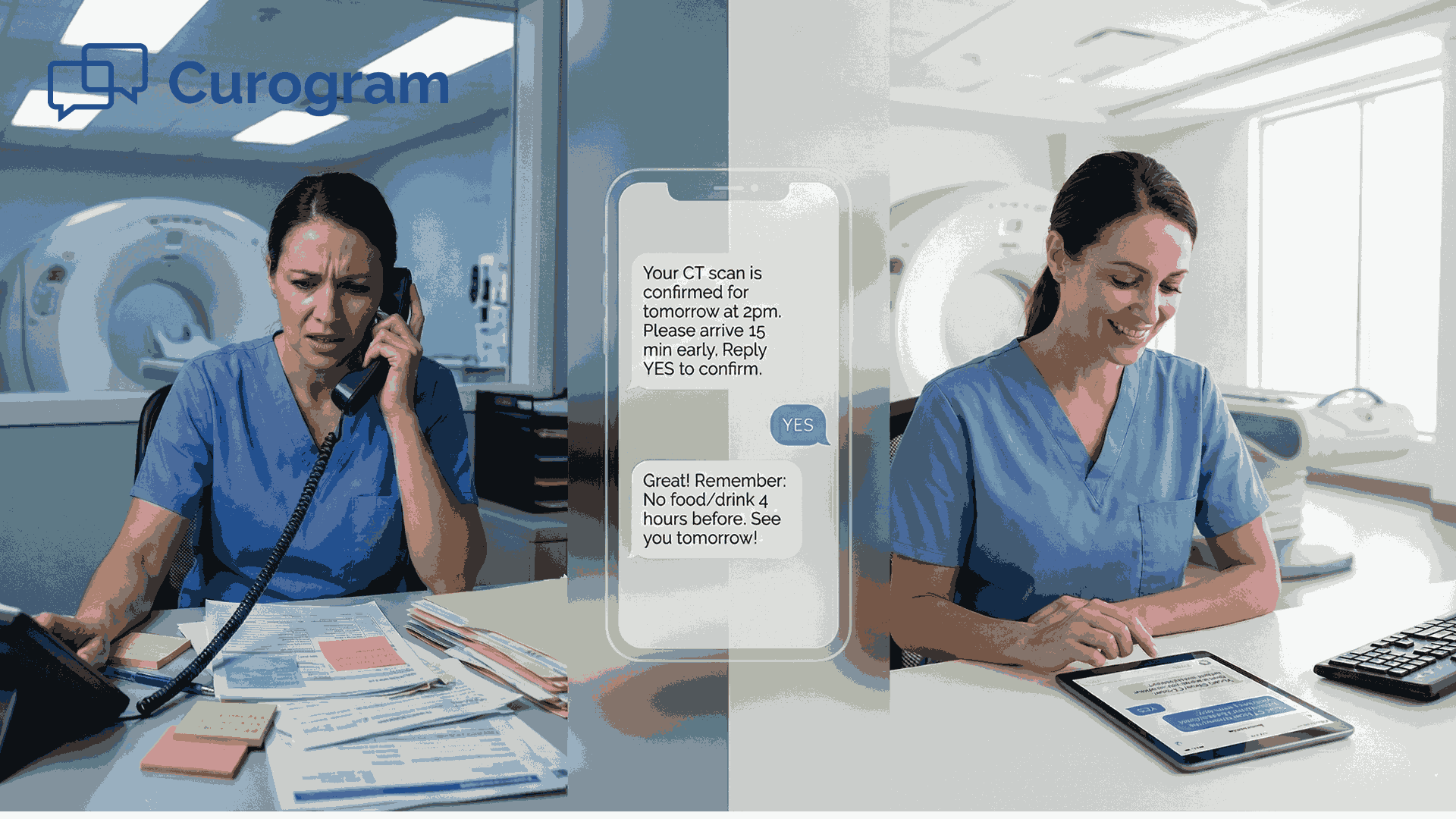
A patient missing prep instructions is every imaging center’s worst nightmare. Everyone knows what happens. The appointment gets canceled. Revenue drops while staff scrambles to fill the gap.
Phone calls create even more problems. Staff leaves voicemails that patients never check. Important details get lost between shifts. Multiple locations use different communication methods that confuse everyone.
These issues compound when imaging centers handle hundreds of appointments each week. CT scans need fasting protocols. MRI patients require metal screening. Interventional radiology cases demand precise timing coordination.
Secure 2-way messaging solves these daily challenges. Patients receive clear instructions they can reference anytime. Staff sends updates in seconds instead of playing phone tag for hours. Every message creates an audit trail that protects patient information and meets regulatory requirements.
The impact shows up immediately in smoother schedules and better resource use. Radiology teams spend less time on administrative tasks. Patients arrive prepared and on time. Multi-site operations gain consistent communication across all locations.
This workflow upgrade addresses the real bottlenecks imaging centers face. Manual processes give way to automated coordination. Phone-based confusion becomes text-based clarity. The result is clinical coordination that actually works.
The following sections show how imaging centers using Veradigm implement these improvements across scheduling, prep management, staff communication, and compliance tracking.
Radiology departments operate on tight schedules that leave no room for communication delays. A single missed message can trigger a cascade of problems across the entire day.
Imaging centers manage complex modality sequences where timing matters. MRI machines need specific booking patterns. CT scanners require proper patient intervals. Ultrasound rooms depend on steady patient flow. When communication breaks down, these carefully planned schedules fall apart.
Manual phone calls slow everything down. Staff dials the same number multiple times hoping to reach someone. They leave voicemails that patients ignore or forget. Important appointment details get lost in translation between morning and afternoon shifts.
The workload creates constant pressure on front desk teams. They answer incoming calls while trying to confirm tomorrow's schedule. They track down patients who need to reschedule. They explain prep instructions over the phone knowing half the details will be forgotten.
These inefficiencies introduce real risks. Patients show up unprepared because voicemail instructions weren't clear. Last-minute cancellations leave expensive equipment sitting idle. Staff members struggle to coordinate between multiple imaging locations.
Security concerns add another layer of complexity. Phone conversations happen in busy areas where others can overhear patient information. Staff members discuss protected health details without proper documentation. Compliance teams lack clear records of what information was shared and when.
HIPAA-compliant texting addresses these fundamental workflow problems. Messages reach patients instantly instead of waiting for callback windows. Written instructions stay accessible so patients can review details anytime. Every communication creates a secure record that supports compliance requirements.
The technology integrates with existing Veradigm scheduling systems. Staff continues using familiar EMR workflows while gaining better communication tools. Appointment confirmations go out automatically. Prep reminders reach patients at the right time. Schedule changes get communicated without staff intervention.
This approach keeps radiology operations predictable even during high-volume periods. Imaging centers maintain steady throughput because patients arrive prepared. Staff can focus on clinical tasks instead of chasing down appointment confirmations. Multi-location groups gain communication consistency that reduces operational friction across all sites.
Staff in imaging centers deal with a lot every day, especially those who schedule appointments and follow-ups. With the amount of information they handle, some details and reminders inevitably fall through the cracks. HIPAA-compliant texting can make their work a lot easier.
Scheduling teams waste hours each day trying to reach patients by phone. They dial number after number, leaving voicemails that rarely get returned. This manual process creates gaps that compromise the entire schedule.
The problem grows worse with high patient volumes. A typical imaging center handles 50 to 100 appointments daily across multiple modalities. Each appointment needs confirmation, prep instruction delivery, and timing coordination. Phone-based outreach simply cannot keep pace.
HIPAA-compliant texting delivers messages that align perfectly with EMR scheduling patterns. When staff books an appointment in Veradigm, the system triggers automated confirmation texts. Patients receive clear details about the date, time, location, and what to bring.
The coordination extends beyond initial booking. Reminder messages go out 48 hours before appointments to reduce no-shows. Same-day confirmation texts ensure patients remember their scheduled time. Each touchpoint happens automatically without requiring staff intervention.
This systematic approach prevents the scheduling chaos that manual calls create. Staff know exactly which patients confirmed and which need additional outreach. Modality schedules stay full because fewer patients simply forget to show up. Revenue improves as daily throughput becomes more consistent.
Imaging groups that operate multiple facilities face unique coordination challenges. Each location often develops its own communication habits. One site relies on phone calls while another sends emails. Patients receive inconsistent information depending on which facility they visit.
This inconsistency creates operational friction across the entire network. Staff at different locations follow different protocols. Patients get confused about appointment requirements. Administrative oversight becomes nearly impossible when each site operates independently.
Automated secure messages establish unified communication workflows. Every location sends the same appointment confirmations. Prep instructions follow identical formats. Schedule updates use consistent language and timing.
The standardization benefits extend to administrative management. Network leaders gain visibility into communication patterns across all facilities. They can identify which locations have high confirmation rates and which need process improvements. Quality metrics become comparable between sites.
Patients notice the difference immediately. They receive reliable information regardless of which imaging center they visit. The predictable communication builds trust and reduces anxiety about appointment requirements. This consistency supports better scheduling outcomes across the entire multi-site operation.
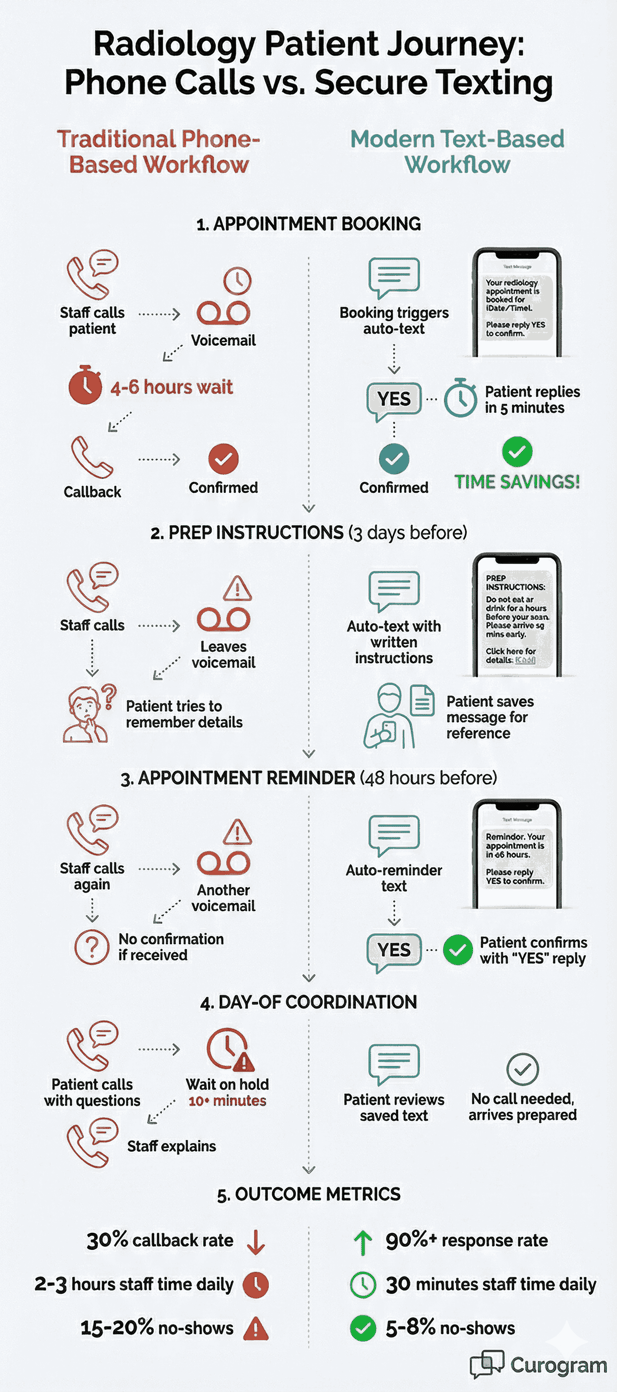
Different imaging procedures require specific patient preparation. CT scans with contrast need fasting protocols. MRI appointments require metal screening questionnaires. Interventional radiology cases demand precise medication timing.
When patients miss these requirements, imaging centers face difficult choices. They can proceed with suboptimal scans that may need repeating. They can cancel the appointment and reschedule for another day. Either option wastes resources and delays patient care.
Phone-delivered instructions create too many opportunities for error. Patients mishear fasting duration. They forget about medication restrictions. They arrive uncertain whether they followed the protocol correctly.
HIPAA-compliant texting in Veradigm ensures prep instructions reach patients in clear, written format. They receive specific details about fasting requirements, medication adjustments, and arrival timing. The message stays accessible on their phone so they can check requirements anytime.
The impact shows in significantly reduced same-day cancellations. Patients arrive properly prepared because they had clear, reviewable instructions. Staff spends less time explaining requirements on the phone. Imaging equipment stays productive instead of sitting empty due to unprepared patients.
Complex procedures benefit especially from this text-based approach. Interventional radiology cases require patients to manage multiple prep steps over several days. Written instructions break down each requirement with specific timing. Patients can follow along systematically instead of trying to remember everything from a phone call.
The preparation extends to day-of-procedure details. Patients receive parking instructions and registration information. They learn what to expect during and after the exam. This comprehensive communication reduces patient anxiety and improves the overall experience.
Contrast studies demonstrate particular improvement with text-based prep delivery. Patients receive explicit guidelines about hydration before the exam. They get reminders about kidney function requirements. Clear instructions about post-procedure hydration help prevent complications.
Staff gains confidence knowing patients received complete, accurate information. They can focus on clinical tasks instead of repeatedly explaining basic prep requirements. When questions do arise, they have message records showing exactly what information the patient received.
Better preparedness translates directly to operational efficiency. Imaging centers complete more procedures per day because fewer appointments need rescheduling. Technologists spend less time managing unprepared patients. The entire workflow moves more smoothly from check-in through exam completion.
Phone conversations introduce multiple points where critical information can get lost. Staff members explain prep instructions clearly, but patients only retain about 40% of what they hear. Background noise and distractions make the problem worse.
Voicemail messages create even bigger challenges. Patients play the message once, maybe twice, then delete it. They try to remember key details from memory. Important specifications about fasting duration or medication timing become fuzzy guesses.
These communication breakdowns show up as patient preparation errors. Someone arrives having eaten breakfast before a fasting CT scan. Another patient forgets to stop blood thinners before an interventional procedure. Staff discovers the problem only after the patient has checked in.
Secure texting provides written instructions patients can reference repeatedly. They check the requirements the night before their appointment. They review details again the morning of the exam. Questions get answered by rereading the message instead of calling the imaging center.
The written format strengthens communication accuracy across busy imaging operations. Staff sends standardized messages that include all necessary details. Patients receive consistent information regardless of which team member initiated the communication. This standardization eliminates the variations that phone-based instructions create.
Family members benefit from text-based instructions as well. Adult children helping elderly parents can review all requirements together. Caregivers supporting patients with cognitive challenges have clear references. The entire support network gains access to accurate procedure information.
Language barriers become less problematic with written communication. Patients who struggle with spoken English can use translation tools on written messages. They have time to process information instead of trying to understand rapid phone instructions. This accessibility improves preparation compliance across diverse patient populations.
Documentation quality improves alongside communication accuracy. Every message creates a permanent record of what information the patient received and when. If preparation questions arise, staff can reference the exact instructions sent. This clear audit trail supports better patient care and compliance management.
Urgent imaging needs arise without warning. An emergency department orders a STAT CT scan. An inpatient develops concerning symptoms that need immediate MRI evaluation. A referring physician identifies a critical finding that requires same-day follow-up.
These high-priority cases demand instant communication. Radiology teams need to notify patients about sudden schedule openings. They must coordinate rapid appointment changes while maintaining proper documentation. Every minute counts when dealing with urgent medical situations.
Traditional phone outreach creates too much delay for these scenarios. Staff leaves voicemails and waits for callbacks that may take hours. The appointment window passes while they try to reach the patient. Critical imaging gets postponed because communication methods cannot keep pace.
Secure texting enables faster responses without increasing staff burden. The system sends automated messages about urgent openings. Patients respond within minutes confirming availability. Staff can coordinate STAT cases while managing regular appointment flow.
The speed advantage aligns perfectly with radiology texting workflows used across other EMR integrations. Imaging centers that already text for routine appointments extend the same capability to urgent situations. Patients expect and respond quickly to text communication for time-sensitive needs.
Priority case coordination improves measurably with text-based systems. Response times drop from hours to minutes. Schedule adjustments happen smoothly because real-time communication keeps everyone informed. Critical imaging gets completed sooner, supporting better patient outcomes.
Staff experiences less stress managing urgent requests. They send priority messages knowing patients will see notifications immediately. Quick confirmations let them proceed confidently with schedule modifications. The entire process becomes more reliable and less chaotic.
Documentation automatically captures all urgent communication. Leadership can review how quickly STAT cases get scheduled. Quality teams verify that high-priority patients received appropriate outreach. The system maintains complete records without requiring manual logging.
Equipment breakdowns happen at the worst possible times. A CT scanner develops a fault during peak hours. MRI chillers fail unexpectedly. Contrast delivery delays force procedure postponements.
Patient-related delays create similar challenges. Someone arrives late and pushes back the entire afternoon schedule. A claustrophobic patient needs extra time in the MRI. Medical emergencies pull staff away from routine imaging.
These disruptions cascade quickly when communication lags. Patients continue arriving for appointments that cannot happen. Staff scrambles to reschedule while managing frustrated people in the waiting room. Revenue leaks away as expensive modalities sit idle.
HIPAA-compliant texting helps reschedule patients quickly and efficiently. When delays occur, staff sends immediate updates to everyone affected. Patients receive new appointment options before leaving work or home. Many schedule changes get resolved before anyone arrives at the facility.
The rapid rescheduling capability reduces revenue leakage by keeping modality time productive. Open slots get filled quickly when patients can respond instantly to availability messages. Imaging centers maintain higher utilization rates despite equipment or staffing challenges.
Patient satisfaction improves alongside operational efficiency. People appreciate receiving delay notifications before they commute to appointments. They can adjust their schedules without wasting time in waiting rooms. The proactive communication demonstrates respect for their time.
Staff handles disruptions more effectively with text-based coordination. They update multiple patients simultaneously instead of making individual phone calls. Alternative appointment times get offered and confirmed within minutes. The workflow stays manageable even during chaotic situations.
Multi-site groups gain particular advantage from streamlined delay management. When one location experiences equipment failure, staff can quickly offer appointments at alternate facilities. Patients receive options that minimize their inconvenience. The network operates more resiliently because communication keeps pace with changing circumstances.
Front desk teams spend enormous amounts of time on repetitive communication tasks. They confirm appointments scheduled days or weeks earlier. They answer questions about parking and registration. They explain prep instructions that were already provided multiple times.
Call center staff face constant pressure from inbound and outbound calling needs. Patients call asking for appointment confirmation. Others need to reschedule. Many simply want to verify what time they should arrive. Each call consumes several minutes of staff attention.
HIPAA-compliant texting removes these repetitive tasks from staff workload. Automated messages handle appointment confirmations without human intervention. Prep instructions reach patients at scheduled times. Reminder texts reduce inbound calls from patients verifying details.
The time savings accumulate quickly across typical imaging center operations. Staff members who previously spent 2 to 3 hours daily on confirmation calls redirect that time to higher-value work. They can focus on patient check-in, insurance verification, and clinical support.
Manual follow-up becomes unnecessary when automated systems track responses. The platform flags patients who haven't confirmed appointments. Staff concentrates outreach on people who actually need attention. This targeted approach uses administrative resources much more efficiently.
Multi-location networks see proportionally larger benefits. Each facility reduces its administrative burden. The combined time savings across 3 or 5 or 10 locations becomes substantial. Network administrators can reallocate resources based on actual operational needs instead of communication bottlenecks.
Staff morale improves when automation handles mundane tasks. Team members enjoy more engaging work instead of repetitive phone calls. Job satisfaction increases because they spend time on activities that require human judgment and expertise.
Eliminating Phone Backlogs and Voicemail Overflow
High-volume imaging practices struggle with phone system overload. Peak calling hours see wait times exceeding 10 minutes. Patients hang up in frustration and try calling again later. Staff members juggle multiple incoming calls while attempting outbound confirmation work.
Voicemail boxes fill up quickly when staff cannot keep pace with call volume. Important messages get missed in the clutter. Callbacks happen hours late or not at all. Patients grow increasingly frustrated with poor communication and responsiveness.
Automated text responses streamline patient engagement dramatically. Common questions about appointment times and prep requirements get answered instantly. Patients receive accurate information without waiting on hold. Phone lines stay available for issues that truly require human interaction.
The reduction in missed calls becomes immediately apparent. Staff members experience manageable phone workloads instead of constant overwhelm. Response quality improves because they can focus properly on each caller.
Multi-location imaging networks gain predictable communication patterns across all facilities. Each site handles similar call volumes relative to appointment numbers. Network leaders can staff appropriately because communication demand becomes more consistent. Resources get allocated based on actual needs instead of guesswork.
Patient satisfaction scores improve alongside operational efficiency. People appreciate quick responses to their questions. They feel respected when communication happens on their schedule. The overall experience becomes less frustrating for everyone involved.
Regulatory audits examine how imaging centers protect patient information during daily communication. Auditors want to see encryption methods, access controls, and complete message histories. Organizations that rely on phone calls struggle to provide adequate documentation.
Phone conversations leave no verifiable record of what information was shared. Staff members document calls in general terms, but specifics get lost. When auditors ask for proof of proper PHI handling, incomplete records create compliance gaps.
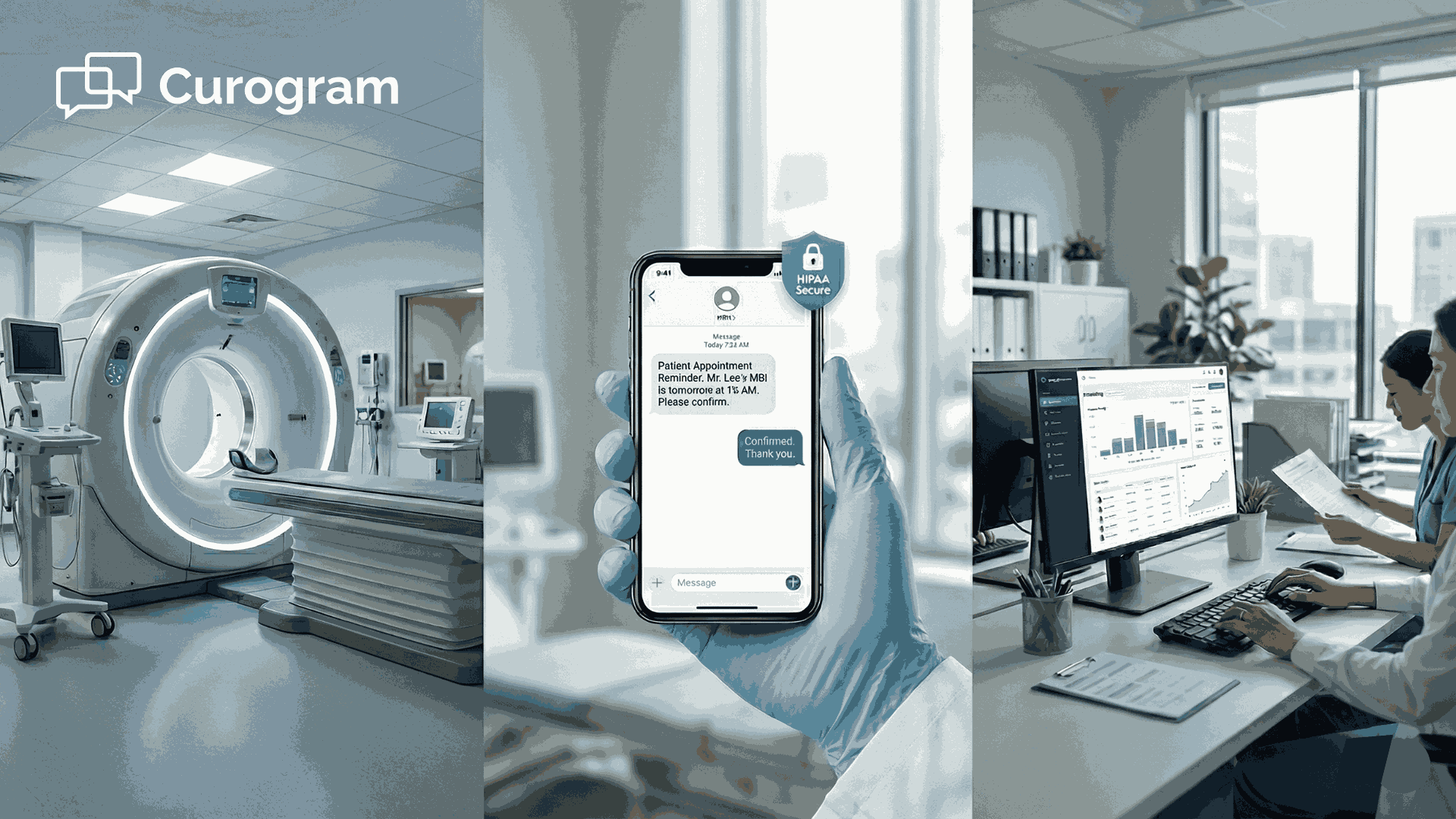
HIPAA-compliant texting provides encrypted channels that protect health information automatically. Every message travels through secure systems that meet federal requirements. Access controls ensure only authorized staff can send or view patient communications.
Traceable message histories give compliance teams the documentation auditors require. Every text shows exact send times, delivery confirmation, and message content. Records prove that patients received required information at appropriate intervals. This complete audit trail supports enterprise governance and reduces compliance risks.
The documentation extends beyond individual messages to communication patterns. Leadership can review response rates across different appointment types. They can verify that high-risk procedures received extra outreach. Quality metrics demonstrate systematic adherence to communication protocols.
Security features protect against unauthorized access. Staff members can only view messages relevant to their assigned patients. System logs track who accessed what information and when. These controls satisfy regulatory requirements while maintaining operational flexibility.
Data retention policies align with legal requirements automatically. Messages archive according to specified schedules. Old communications remain accessible for audit purposes without cluttering active workflows. The system handles retention complexity that manual documentation simply cannot match.
Multi-location imaging groups often discover that different facilities apply communication rules inconsistently. One site texts patients using personal phones. Another location emails appointment details. A third facility sticks with traditional phone calls.
This variation creates serious compliance vulnerabilities. Some locations expose patient information through insecure channels. Others lack proper documentation of communication activities. Corporate compliance teams struggle to ensure consistent standards across the network.
A centralized secure texting platform ensures uniform compliance across all facilities. Every location uses the same encrypted communication system. Security controls apply identically regardless of which site sends messages. Network-wide policies get enforced automatically instead of depending on individual facility discipline.
The standardization contributes to safer, more efficient radiology workflows throughout the organization. Staff members who work at multiple locations use familiar tools everywhere. Patients receive consistent communication regardless of which imaging center they visit. Leadership gains confidence that every facility meets security requirements.
Compliance reporting becomes straightforward when all communication runs through one platform. Corporate teams generate network-wide metrics showing message volumes, response rates, and security incidents. They can identify facilities that need additional training or process improvement. Standardized data supports better organizational governance.
Curogram integrates directly with Veradigm scheduling, documentation, and multi-location operations. The platform works alongside existing EMR workflows instead of replacing them. Staff continues using familiar systems while gaining powerful communication capabilities.
The integration means no learning curve for busy radiology teams. Appointment confirmations trigger automatically from Veradigm scheduling actions. Patient information flows seamlessly between systems. Staff avoids the frustration of juggling multiple disconnected tools.
Radiology texting workflows require systems designed for imaging center demands. Curogram handles hundreds of daily appointments across multiple modalities. The platform supports fast, predictable communication that keeps complex schedules running smoothly.
Advanced automation reduces errors that disrupt daily throughput. Smart scheduling of reminder messages prevents patient no-shows. Standardized prep instructions ensure consistent information delivery. The system manages communication complexity so staff can focus on patient care.
Curogram supports enterprise IT requirements with secure, encrypted architecture. The platform meets federal compliance standards while delivering the reliability imaging operations demand. Messages reach patients consistently without system delays or outages.
Imaging administrators gain greater control over communication workflows throughout their network. Centralized management tools provide visibility across all locations. Quality metrics support continuous improvement. The infrastructure scales smoothly as organizations grow or add new facilities.
Phone-based communication creates too many delays in modern radiology workflows. Missed calls interrupt schedules. Voicemail instructions lead to patient preparation errors. Staff spend hours on repetitive coordination tasks.
HIPAA-compliant texting eliminates these bottlenecks that disrupt imaging operations. Patients receive clear instructions they can reference anytime. Staff confirms appointments in seconds instead of hours. Schedule changes happen smoothly through rapid text coordination.
Automated secure messages reduce workload while improving preparedness and protecting imaging revenue. Fewer last-minute cancellations mean better modality utilization. Higher confirmation rates lead to more predictable daily throughput. Better prep compliance reduces wasted appointment time.
Patient communication with Veradigm and Curogram now has a modern communication framework that scales across all locations. Multi-site operations achieve consistency that was impossible with phone-based methods. Staff experiences less frustration and better work-life balance. Patients appreciate faster, more convenient interaction.
The compliance benefits provide additional peace of mind. Complete message records support audit requirements. Encrypted communication protects patient information automatically. Standardized security applies uniformly across the entire network.
These improvements address the real operational challenges imaging centers face every day. The technology integrates seamlessly with existing Veradigm workflows. Implementation happens quickly without disrupting current operations. Results become visible within weeks as schedules smooth out and communication efficiency improves.
Book a demo to see Curogram + Veradigm in action.
 Jo Galvez : Dec 26, 2025, 6:00:00 PM
Discover how secure texting in Veradigm improves compliance, efficiency, and enterprise communication ROI with Curogram.
 Jo Galvez : Jan 5, 2026, 4:00:00 PM
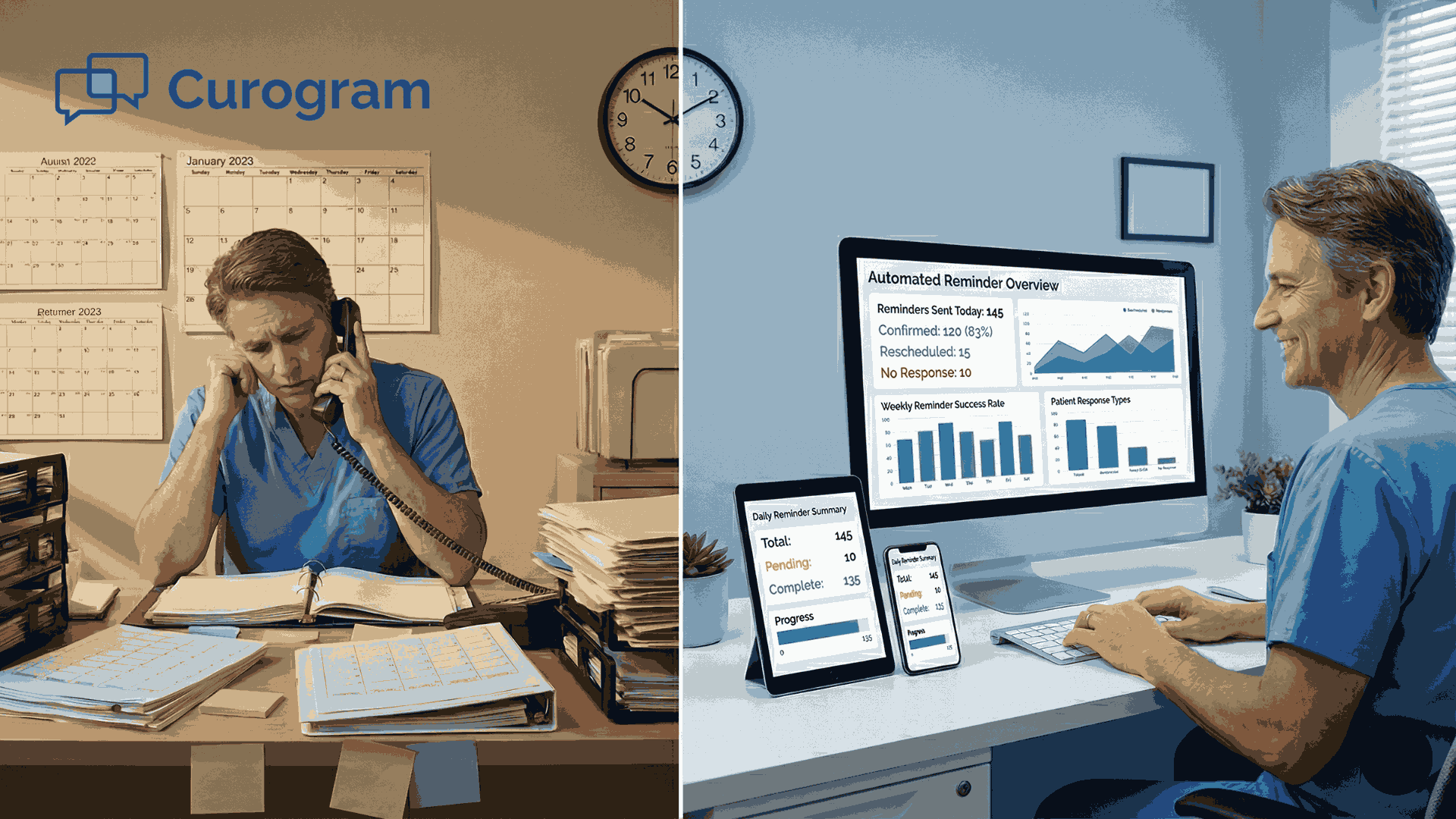
Learn how automated appointment reminders improve preparedness, reduce no-shows, and streamline workflows for imaging centers using Veradigm.
 Jo Galvez : Dec 26, 2025, 2:00:00 PM
Discover how HIPAA-compliant mass texting in Veradigm helps healthcare organizations improve engagement and operational ROI.