
14 min read

Streamlining Veradigm Enterprise Scheduling with Automated Reminders

Streamlining Veradigm Enterprise Scheduling with Automated Reminders
💡 Automated appointment reminders help imaging centers using Veradigm reduce no-shows and improve daily operations.

Key Benefits:

  • Cut missed appointments by sending timely text and email alerts
  • Improve prep compliance for CT, MRI, and IR procedures
  • Reduce staff workload on manual reminder calls
  • Stabilize daily scheduling across multiple locations
Imaging centers see higher modality use, more exams per day, and better scheduling efficiency. The reminder ROI shows up in both revenue and workflow stability.

Every imaging center manager knows this feeling. You check the morning schedule and see twelve MRI slots booked solid. But by 10 AM, three patients haven't shown up. No calls. No cancellations. Just empty time slots that can't be filled.

Those gaps cost real money. An MRI scanner sitting idle for an hour means lost revenue that never comes back. Missed CT appointments throw off the entire day's flow. IR procedures get delayed because patients arrive unprepared or don't arrive at all.

The problem isn't new. Imaging centers have dealt with no-shows for years. What's changed is the volume. Modern radiology networks handle hundreds of appointments daily across multiple sites. Manual reminder calls can't keep pace. Staff spend hours each day trying to reach patients, leaving messages, and answering basic prep questions.

Meanwhile, patients aren't being difficult. They simply forget. Life gets busy. The appointment card gets lost. The verbal instructions about fasting get mixed up with other details. A single phone call three weeks before the exam isn't enough to ensure they show up ready.

This is where automated reminders change the game. They work with your Veradigm scheduling to send timely messages without adding staff workload. Patients get clear, written instructions they can review multiple times. Text and email reminders arrive at the right moments to reinforce the appointment.

The impact shows up across your entire operation. Show rates improve. Prep compliance goes up. Staff handle fewer routine calls. Daily throughput becomes more stable. Equipment gets used better. Revenue gaps shrink.

For imaging centers using Veradigm, automated reminders aren't just about sending messages. They're about building a more reliable workflow that protects your schedule, supports your staff, and keeps patients better informed.

Why Radiology Workflows Depend on Reliable Patient Attendance

Radiology scheduling operates on tight margins. Each time slot represents a specific scan, a trained tech team, and expensive equipment standing ready. When a patient doesn't show, that entire setup goes to waste. The schedule gaps can't be filled on short notice.

This matters more in imaging than in many other medical settings. A primary care doctor can sometimes shift patients around. An imaging center can't easily reschedule a contrast-enhanced MRI when someone fails to show at 2 PM. The prep work, the contrast materials, and the dedicated machine time are all committed to that slot.

The Real Cost of Missed Appointments

No-shows hit imaging centers hard across multiple areas. The most obvious is direct revenue loss. An empty MRI slot might represent $1,500 in lost billing. Multiply that across a week or month, and the numbers add up fast. Some centers report no-show rates as high as 15-20% without proper reminder systems in place.

But the financial impact goes beyond the immediate loss. Equipment utilization drops. When you've invested millions in CT and MRI machines, every hour of idle time hurts your return. Staff productivity suffers, too. Techs and schedulers spend time managing gaps and trying to fill last-minute openings.

Patient care also takes a hit. Delayed scans mean delayed diagnoses. Treatment plans get pushed back. Referring physicians have to wait longer for results. The entire care chain slows down because one patient didn't make their appointment.

Why Manual Reminders Can't Scale

Many imaging centers started with manual reminder calls. A staff member would call patients one or two days before their scheduled time. This worked fine when volumes were lower and patient loads were manageable. But modern radiology networks operate at a different scale.

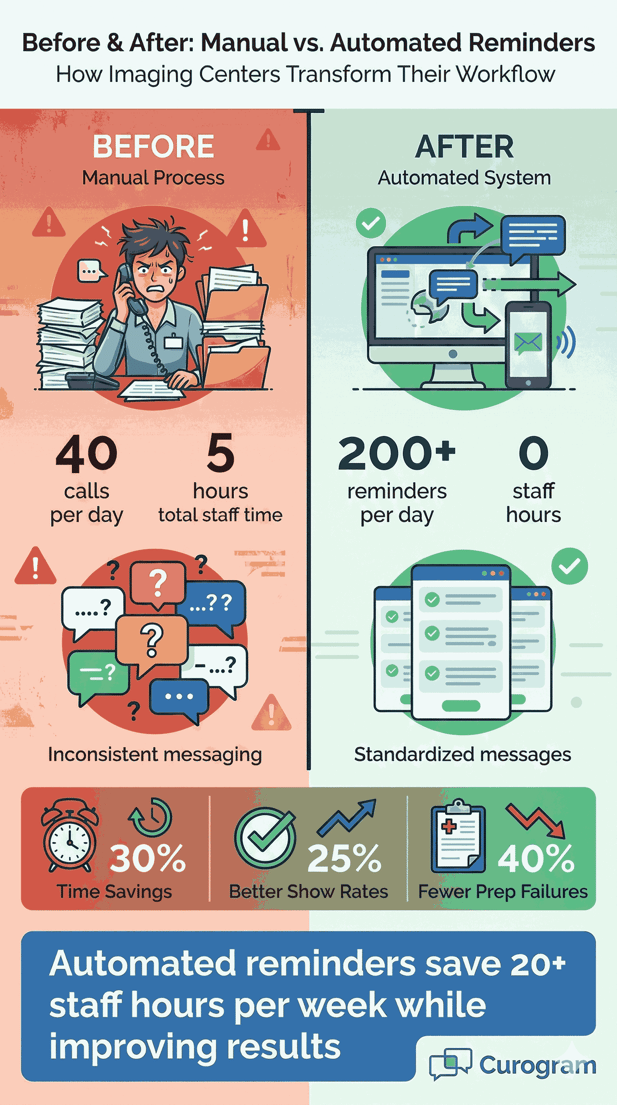
A busy imaging center might schedule 200-300 appointments per day across multiple modalities. Calling each patient takes time. You have to reach them, leave messages, call back when you miss them, and answer their prep questions. That's easily 5-10 minutes per patient when you factor in callbacks and discussions.

Do the math: 250 patients times 8 minutes equals over 33 hours of staff time per day just on reminder calls. That's more than four full-time positions doing nothing but calling patients. Most centers can't afford that kind of labor allocation, especially when they're already stretched thin on operational tasks.

Manual calls also create consistency problems. Different staff members might explain prep instructions differently. Some patients get three reminders, others get one. Sites across a multi-location network develop their own reminder habits. This variability leads to uneven show rates across your facilities.

Where Automated Systems Fit In

This is where automated appointment reminders align with Veradigm scheduling workflows. Instead of staff making hundreds of calls, the system sends timely text and email messages based on your scheduling data. Patients get consistent information. Every location follows the same process. Staff workload drops dramatically.

The automation doesn't just save time. It improves results. Text messages get read within minutes. Emails provide written instructions that patients can reference multiple times. Reminders go out at optimal times: three days before, one day before, and the morning of the appointment. This repetition reinforces the commitment.

For imaging networks, this scalability is critical. You can handle 100 appointments or 1,000 with the same reminder infrastructure. As your volumes grow, your communication system grows with it. That reliability and consistency protect your schedule, reduce no-shows in Veradigm imaging centers, and keep your workflow running smoothly.

Improving Attendance and Reducing No-Shows Across All Imaging Locations

Patient attendance drives imaging center performance. When patients show up on time and properly prepared, everything runs more smoothly. Schedules stay on track. Equipment gets used efficiently. Staff can focus on quality care instead of managing gaps. Automated reminders help build this reliability across all your locations.

Reinforcing Appointment Commitments at Scale

Patients don't intentionally skip appointments. They forget. Life gets busy, and an imaging appointment scheduled three weeks out slips their mind. A verbal confirmation during the booking call isn't enough to ensure they remember when the day arrives.

Automated reminders solve this by delivering timely prompts. A text message three days before the appointment brings it back to their attention. An email the day before reinforces the commitment. A morning-of reminder ensures they don't oversleep or get caught up in other tasks. These touchpoints work together to keep the appointment top of mind.

The results show up in your show rates. Centers that implement reminder systems typically see no-show reductions of 20-30%. Some report even better improvements when they combine text and email reminders. That difference translates directly to better modality utilization and fewer wasted time slots.

Higher attendance also protects your daily volume. When more patients show up as scheduled, you complete more scans per day. Your equipment runs at the designed capacity. Revenue stays consistent. The operational rhythm becomes more predictable, which helps with staffing and resource planning.

Supporting Multi-Location Imaging Networks Consistently

Multi-location networks face a unique challenge. Different sites often develop their own reminder processes. Site A might call patients two days before. Site B might call three days before. Site C might skip reminders for certain modalities. This inconsistency creates variable results across your network.

Some locations experience good show rates while others struggle. Patients at different sites get different levels of communication. Your network-wide performance metrics look uneven. It becomes hard to identify best practices or understand why some locations perform better than others.

Automated reminders standardize this communication across your entire imaging network. Every site uses the same reminder schedule. Every patient gets the same type of messages at the same intervals. The system doesn't depend on individual staff habits or local preferences. It just works consistently everywhere.

This consistency does more than improve show rates. It reduces variability in daily scheduling performance. You can predict patient flow more accurately across all locations. Network-wide metrics become more reliable. Performance comparisons between sites become more meaningful because everyone operates under the same communication framework.

Building Better Workflow Patterns

Consistent reminders create better patterns in your overall workflow. When patients reliably show up, your staff can develop more efficient routines. Techs know their day will proceed as planned. Schedulers don't constantly juggle last-minute openings. Front desk teams handle fewer frantic calls from patients who forgot their appointments.

These patterns compound over time. Staff become more productive because they're not firefighting schedule problems. Equipment utilization stays high. Daily volumes hit targets more consistently. The entire operation runs with less friction and more predictability.

For imaging centers using Veradigm, this alignment is seamless. The reminders work with your existing scheduling data. You don't need to change how you book appointments or manage your calendar. The system simply adds a reliable communication layer that strengthens what you already do.

The scheduling efficiency gains show up in your metrics. Average daily scan volumes increase. Staff productivity improves. Equipment downtime due to no-shows decreases. These improvements build on each other to create a more stable and profitable operation. That's the real value of reducing no-shows in Veradigm through automated communication.

Manual vs automated appointment reminders comparison for imaging centers

Delivering Clear Pre-Exam Instructions Through Automated Communication

Imaging procedures depend on proper patient preparation. A CT scan with contrast requires fasting. An MRI might need medication holds. IR procedures demand specific pre-op steps. When patients don't follow these instructions, the procedure can't happen. The time slot goes to waste, and the patient has to reschedule.

This prep communication is just as important as getting patients to show up. You can have a perfect attendance rate, but if half your patients arrive unprepared, you're still losing appointments. The difference is these losses feel even more frustrating because the patient actually came; they just couldn't complete the scan.

Ensuring Patients Understand Prep Requirements

Clear communication starts with making instructions accessible. Verbal instructions during the scheduling call aren't enough. Patients are often stressed or distracted when they book. They might not write everything down. Details about fasting times or medication holds get forgotten or confused.

Written instructions solve this problem. When patients receive prep details via text or email, they can review them multiple times. They can check the fasting window again the night before. They can verify their medication instructions with their doctor. They have a reference point instead of trying to remember what someone told them weeks ago.

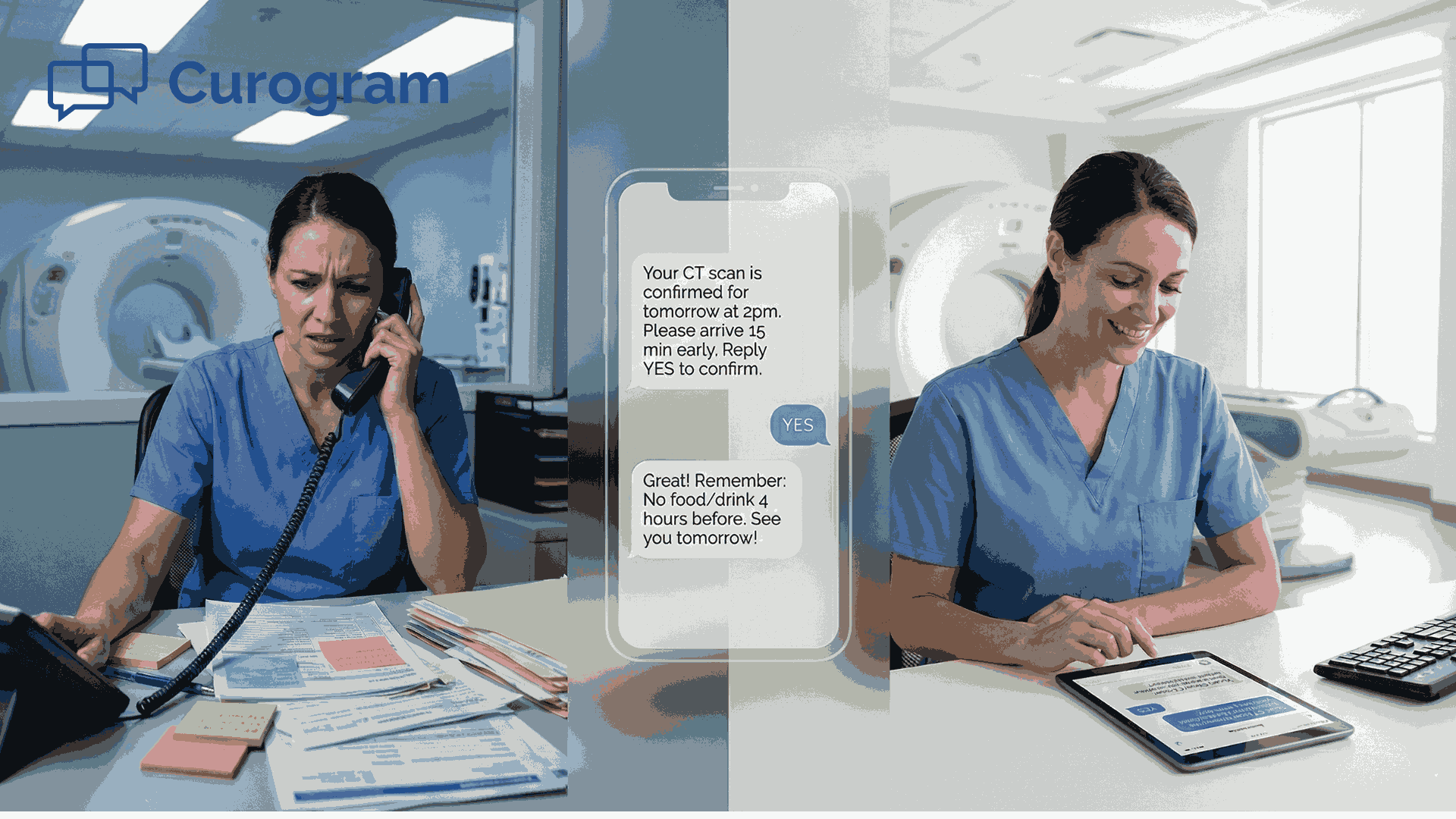
Automated reminders reinforce these instructions at critical moments. The initial confirmation message includes full prep details. The day-before reminder highlights key requirements like fasting or hydration. The morning reminder confirms the prep window and arrival time. This repetition helps information stick.

The impact is clear in your daily operations. Fewer patients show up having eaten breakfast before a fasting-required scan. Fewer patients forget to stop taking certain medications. Fewer procedures get cancelled because prep wasn't followed. Your staff spends less time explaining what should have been done and more time on actual patient care.

Breaking Down Complex Prep Instructions

Some imaging procedures require complex preparation. IR procedures might need multiple steps: fasting, medication adjustments, specific hydration protocols, and arrival timing. A patient getting these instructions in a single phone call might miss critical details.

Automated messages can structure this information clearly. Bullet points highlight key requirements. Timing details stand out. Important restrictions are emphasized. The format makes the information easier to process and remember than a verbal list during a stressful phone call.

You can also time these messages strategically. Send the full prep list immediately after scheduling. Send a simplified reminder two days before focusing on the most critical steps. Send a final confirmation the morning of with just the arrival time and any last-minute reminders. This progressive communication keeps patients informed without overwhelming them.

For prep-sensitive modalities, this clarity is essential. Contrast studies, nuclear medicine scans, and interventional procedures all have specific requirements. Getting patients properly prepared the first time protects your schedule and improves patient experience. Nobody wants to drive to the imaging center only to be turned away because they ate breakfast.

Reducing Prep-Related Cancellations

Same-day cancellations due to prep failures create unique operational challenges. The patient is already at your facility. Your staff are ready. The equipment is prepared. But the scan can't happen because the patient ate something or took a medication they should have avoided.

These situations are frustrating for everyone. The patient wasted their time and might miss work. Your staff completed the intake only to send the patient home. Your schedule has a gap that's too late to fill. The referring physician has to wait longer for results. Everyone loses.

Automated reminders help prevent these scenarios. When patients get written instructions they can reference, they're less likely to make prep mistakes. When they receive multiple reminders about critical requirements, those details stay fresh. The morning-of message serves as a final check before they leave home.

This directly contributes to radiology workflow automation. Your team spends less time managing prep failures. Fewer appointments need rescheduling. Daily volumes stay more predictable. The workflow runs more smoothly because patients arrive ready for their procedures.

Supporting Imaging Directors With Better Data

Reliable prep compliance also improves your operational metrics. When fewer appointments get cancelled for prep reasons, your actual completion rates better match your scheduled rates. This makes capacity planning more accurate. You can predict daily volumes with more confidence.

Imaging directors can track which prep instructions cause the most confusion. If certain modalities show higher prep failure rates, you can adjust how those instructions get communicated. Maybe they need simpler language. Maybe they need more emphasis in the reminders. The data helps you continuously improve.

Better prep compliance also means better resource utilization. Your contrast materials don't go to waste on cancelled procedures. Your IR suite doesn't sit empty because a patient arrived unprepared. Every resource gets used as intended, improving your overall scheduling efficiency and reminder ROI.

Integration With Existing Workflows

The key is that these improvements happen without disrupting your current processes. Automated reminders work with your Veradigm scheduling system. When an appointment gets booked, the reminder sequence starts automatically. Staff don't need to remember to send messages or worry about missing patients.

The reminders also adapt to different modality types. A routine X-ray might get basic arrival reminders. A contrast MRI gets detailed fasting and hydration instructions. An IR procedure receives comprehensive pre-op guidance. The system tailors communication to the specific requirements of each appointment type.

This flexibility means one reminder system handles all your needs. You don't need separate processes for different modalities or locations. Everything flows from your Veradigm scheduling data through a consistent communication framework to your patients. The simplicity reduces complexity while improving results.

Long-Term Impact on Workflow Stability

Over time, better prep communication builds a more stable operational pattern. Your staff develops confidence that patients will arrive ready. Your techs don't waste time on failed procedures. Your schedulers see fewer last-minute gaps from prep cancellations. The entire workflow operates with less uncertainty.

This stability compounds with better attendance rates. When patients both show up and arrive prepared, your imaging center runs at designed capacity. Equipment utilization stays high. Daily scan volumes hit targets. Revenue remains consistent. All because your communication system supports proper preparation alongside appointment commitment.

For Veradigm users, this represents a significant step toward more automated, more reliable workflows. The manual work of calling patients and explaining prep requirements shifts to an automated system that handles these tasks consistently and thoroughly. Your team gains time, your patients get better information, and your operational performance improves across the board.

Managing High-Volume Scheduling More Efficiently

High appointment volumes create constant pressure on imaging center staff. The phone rings constantly with questions. Schedulers juggle multiple calendars. Front desk teams manage arrivals, cancellations, and rescheduling requests all day. Manual reminder calls add another layer to this already demanding workload.

Reducing Manual Work for Scheduling and Front Desk Teams

Staff time is your most valuable operational resource. When team members spend hours on routine reminder calls, that's time taken away from tasks that actually need human judgment and expertise. Every call consumes 5-8 minutes, accounting for dialing, waiting, leaving messages, and callbacks.

Automated reminders eliminate this entire category of work. The system handles the routine communication automatically. Staff don't dial numbers or leave messages. They don't track which patients got called and which still need reminders. The system manages all of it based on your Veradigm scheduling data.

This reduction in administrative burden frees staff for more valuable work. They can spend more time on complex scheduling situations that need problem-solving. They can provide better attention to patients with special needs or complicated procedures. The routine gets automated, and the expertise gets focused where it matters most.

Labor costs become more predictable, too. You don't need extra staff just to handle reminder calls during high-volume periods. Your existing team can manage larger appointment volumes without proportional increases in workload. This scalability is critical as your imaging network grows.

Supporting Rapid Adjustments to Schedule Changes

Imaging centers face frequent schedule disruptions. Equipment needs unexpected maintenance. A tech calls in sick. An emergency case needs priority access. Weather delays patient arrivals. These situations require quick communication with affected patients.

Manual calling becomes impossible when you need to notify 20-30 patients within an hour. Staff can't make that many calls quickly while also managing the facility and handling incoming patients. Some patients don't answer and need callbacks. The process takes too long and creates operational chaos.

Automated systems handle these situations smoothly. When a schedule change happens, the system can notify all affected patients immediately via text and email. Patients get the update in minutes instead of hours. They can adjust their plans before leaving home. This prevents them from arriving at the wrong time or showing up for a cancelled slot.

The communication stays agile as situations evolve. Need to reschedule an entire afternoon of appointments? The system handles it. Equipment back online faster than expected? Update patients immediately. This flexibility improves as radiology workflow automation becomes more sophisticated.

Improving IR and Vascular Procedure Readiness

IR and vascular procedures demand even more rigorous preparation than diagnostic imaging. These interventional cases involve sedation, contrast agents, and specific pre-op protocols. Patient prep failures don't just delay one appointment - they can disrupt an entire procedure schedule.

Reducing Missed IR Prep Requirements

IR prep instructions are often complex. Patients might need to fast, adjust blood thinners, arrange transportation, and complete pre-op testing. Miss any of these requirements, and the procedure can't safely proceed. The IR suite sits idle, the team stands by, and the patient has to reschedule.

Automated reminders ensure the timely delivery of these critical details to all IR patients. They receive comprehensive prep instructions immediately after scheduling. Follow-up reminders reinforce key requirements at strategic intervals. The morning of the procedure, they get a final checklist to review before leaving home.

This reduces operational disruptions caused by missed prep conditions. IR teams can operate with more predictable procedure volumes. Fewer cases get postponed. Daily schedules run as planned. The reliability benefits every stakeholder.

Why Curogram Appointment Reminders Enhance Veradigm Daily Operations

Curogram reminders integrate seamlessly with existing Veradigm scheduling workflows. The connection is direct and automatic. When staff book an appointment in Veradigm, the reminder sequence starts without any additional steps.

This seamless alignment means staff avoid changing their workflow or learning new systems. They schedule appointments the same way they always have. Behind the scenes, Curogram handles the reminder communication. This reduces adoption friction and accelerates operational improvements across your imaging network.

The system is built specifically for high-volume radiology and IR workflows. It handles thousands of reminders daily across multiple sites without performance issues. Whether you're sending 100 messages or 10,000, the system maintains the same reliability and speed. This scalability matters as your network grows and appointment volumes increase.

Radiology teams gain greater stability in managing high scheduling volume. IR workflows benefit from increased preparedness and reduced cancellations. Enterprise imaging leaders see measurable efficiency improvements in metrics like show rates, prep compliance, and staff productivity. The data shows up in your operational dashboards.

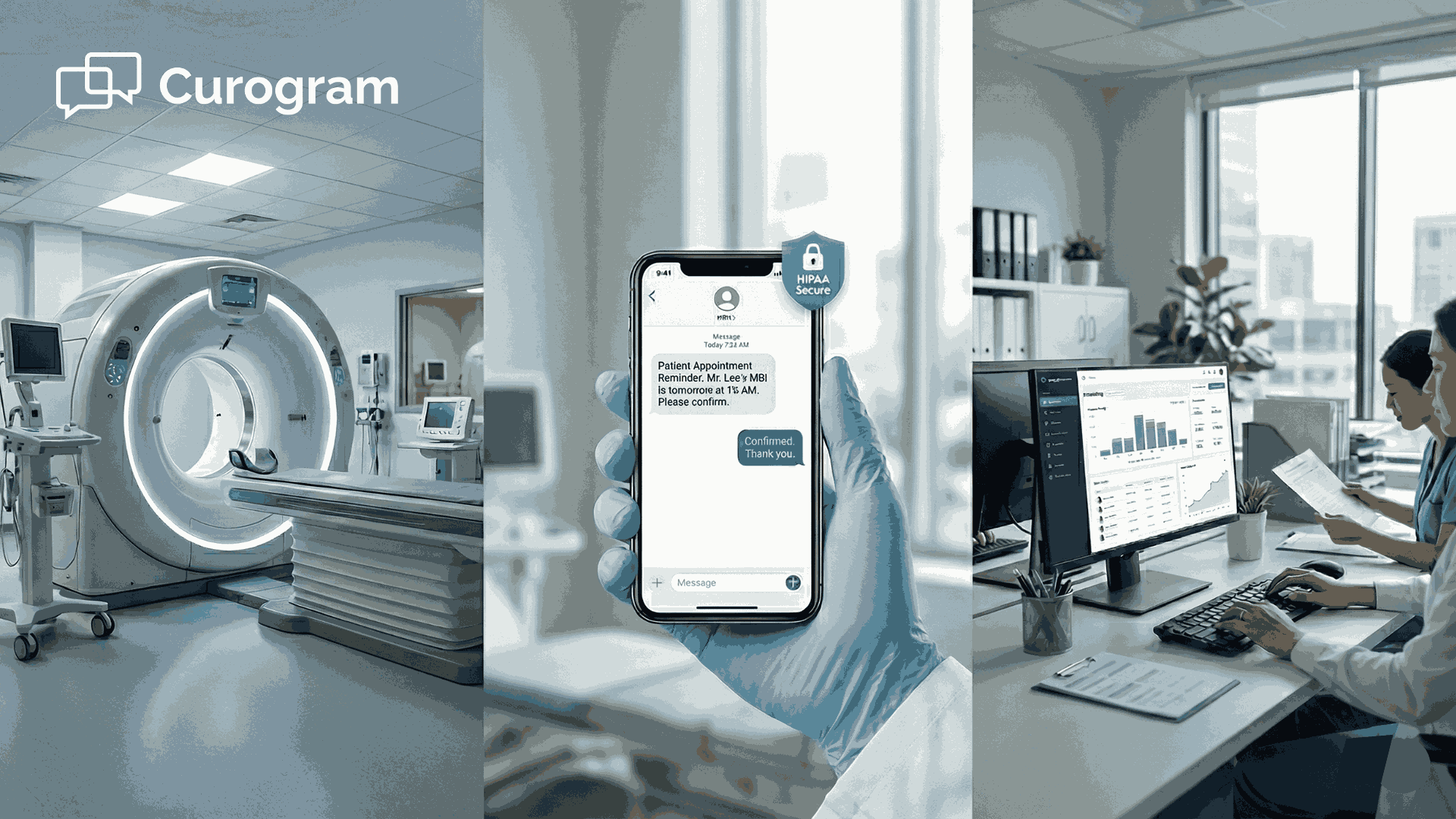
Security and compliance are built into every message. All reminders are encrypted and fully compliant with PHI requirements. Audit logs support enterprise IT governance and SOC 2 readiness. This eliminates the risk associated with consumer-grade messaging tools that some practices use informally.

The compliance protections extend across every imaging location in your network. Whether you have two sites or twenty, the same security standards apply everywhere. Your IT team gets one system to manage, one set of audit logs to review, and one compliance framework to maintain. This simplification reduces overhead while maintaining the highest security standards.

For Veradigm users, Curogram represents more than just a reminder tool. It's an operational layer that strengthens scheduling efficiency, improves reminder ROI, and supports the reliable workflows modern imaging centers need to succeed.

Conclusion

Automated Reminders Improve Workflow Stability for Veradigm Imaging Centers

Reliable patient attendance and proper preparation drive imaging center success. When patients show up on time and ready for their procedures, everything works better. Equipment runs at capacity. Staff focus on care instead of managing gaps. Revenue stays consistent. The entire operation runs with less friction.

Automated appointment reminders create this reliability. They reduce no-shows in Veradigm by keeping patients informed and engaged. Text and email messages arrive at optimal times to reinforce commitments. Written prep instructions ensure patients understand requirements. The communication happens automatically based on your scheduling data.

The operational impact shows up across your entire network. Staff spend less time on manual reminder calls. Schedule gaps decrease. Daily throughput becomes more predictable. Prep-related cancellations drop. These improvements compound to create measurably better performance.

For imaging centers handling high volumes across multiple locations, this consistency is critical. You need systems that scale without adding complexity. You need communication that works the same way everywhere. You need workflows that support growth without proportional increases in administrative burden.

Curogram enhances Veradigm by delivering this scalable, compliant communication layer. The integration is seamless. The security is enterprise-grade. The results are measurable. Imaging directors gain better scheduling efficiency and stronger reminder ROI. Staff gain time for higher-value work. Patients gain clearer information and better service.

The path forward is straightforward. Automated reminders aren't experimental - they're proven technology that imaging centers use every day to protect revenue and improve operations. The question isn't whether to implement them. It's how quickly you can start seeing the benefits in your own metrics.

Your Veradigm system already manages your scheduling. Adding automated reminders just makes that scheduling more reliable and more profitable. The operational improvements start showing up immediately and build over time as patients and staff adapt to the new communication patterns.

Book a Demo to See Curogram + Veradigm in Action.


Frequently Asked Questions

How do automated reminders reduce no-shows in Veradigm imaging centers?

Automated reminders send timely messages at booking, three days before, one day before, and the morning of the appointment. These repeated touchpoints keep appointments top of mind for patients who might otherwise forget.

The messages include key details like appointment time, location, and prep requirements. The reminders integrate directly with Veradigm scheduling and happen automatically without staff intervention.

Why do prep instructions matter as much as appointment reminders?

Many imaging procedures can't proceed if patients aren't properly prepared. A patient who ate breakfast before a fasting-required MRI still results in a cancelled appointment and wasted time slot.

When patients receive clear, written prep instructions through automated messages, they can review them multiple times before the appointment. This reduces confusion and helps ensure they follow all requirements. Better prep compliance means fewer wasted appointments, better equipment use, and more stable daily volumes.

How does reminder automation improve scheduling efficiency for multi-location imaging networks?

Automated reminders standardize communication across all locations, ensuring every patient gets the same quality of information. This consistency creates more predictable show rates across your network and makes performance comparisons between sites more meaningful.

Staff at each location save time they would spend on manual calling, freeing them for tasks that require human judgment. Imaging directors can see which locations have the best outcomes and identify opportunities for improvement.

What makes Curogram different from basic reminder systems for Veradigm users?

Curogram integrates directly with Veradigm scheduling, pulling appointment data automatically and triggering reminders without manual work. All communications are HIPAA-compliant with encryption and audit logging that meet enterprise IT requirements. The system handles complex prep instructions and customizes messages based on procedure type.

Curogram also supports high volumes across multiple locations with enterprise-grade reliability and provides detailed analytics on message delivery and appointment outcomes. Support teams understand radiology workflows and can help optimize reminder timing and content for your specific needs.

How quickly can imaging centers see results after implementing automated reminders?

Most imaging centers see measurable improvements within the first 30 days of implementation. Show rates typically increase as patients start receiving consistent reminders, and staff report reduced time spent on manual calling almost immediately. 

Long-term benefits include more stable daily volumes, better equipment use, and improved staff productivity. Unlike major infrastructure changes, automated reminders integrate with existing Veradigm workflows and start delivering value from day one.


Veradigm HIPAA Texting ROI for Imaging Centers | Curogram

Veradigm HIPAA Texting ROI for Imaging Centers | Curogram

💡 Compliance texting with Veradigm brings secure, automated messaging that improves both operations and revenue. This approach reduces no-shows and...
Read More
HIPAA-Compliant Texting for Veradigm | Curogram

HIPAA-Compliant Texting for Veradigm | Curogram

💡 HIPAA-compliant texting in Veradigm delivers measurable improvements for radiology organizations. Traditional phone-based outreach creates...

Read More
HIPAA Texting Workflows for Veradigm | Curogram

HIPAA Texting Workflows for Veradigm | Curogram

💡 Imaging centers depend on fast communication to keep schedules running smoothly. Quick, HIPAA-compliant texting connects staff and patients...

Read More