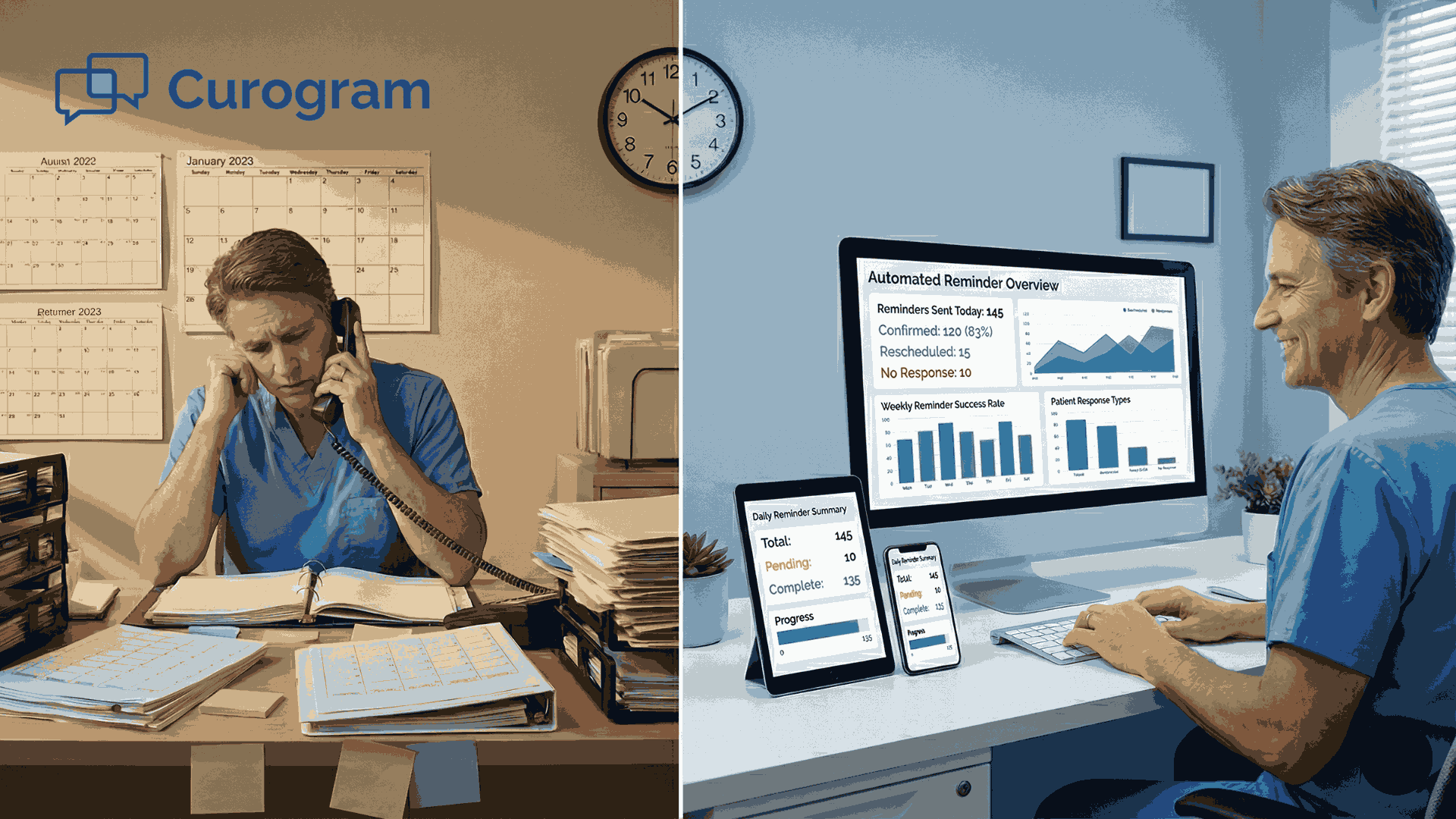
Mass Texting for Veradigm Imaging Centers with Curogram
💡 Mass texting in Veradigm helps imaging centers reach thousands of patients quickly while staying HIPAA-compliant. This communication tool...
Radiology centers operate within strict scheduling parameters. Each examination slot represents significant revenue potential. When patients miss appointments or arrive inadequately prepared, operational efficiency suffers measurably.
Most imaging organizations continue to rely on phone-based communication for appointment confirmations. Staff invest considerable time in voicemail management. Patients frequently miss critical preparation instructions. Same-day cancellations disrupt daily schedules and reduce throughput.
HIPAA-compliant texting in Veradigm fundamentally changes this communication model. Automated messages reach patients through their preferred channel. Phone tag becomes unnecessary. Confusion regarding fasting protocols or contrast requirements decreases substantially.
Enterprise radiology organizations face additional operational complexity. They manage multiple locations with varying modality configurations. Each center requires consistent communication standards. Manual processes prove inadequate at scale when coordinating 10 or 20 facilities.
Secure communication via Veradigm integration solves these coordination challenges. Messages deploy automatically based on examination type and scheduling parameters. Staff configure templates once, then automation manages routine patient outreach. This allows clinical teams to focus resources on complex cases requiring professional judgment.
Results become apparent quickly. Patients arrive with a clear understanding of preparation requirements. No-show rates decline when timely reminders reach patients effectively. Modality utilization improves as schedules maintain consistent fill rates.
Compliance requirements remain straightforward. All messages are encrypted automatically. Audit logs track every communication. IT departments avoid risks associated with staff using personal devices for patient contact.
This article examines how HIPAA-compliant texting integrates with Veradigm workflows. You will understand delay reduction strategies, patient data protection protocols, and efficiency improvements for imaging operations. The focus maintains practical implementation insights that radiology directors and practice administrators can deploy rapidly.
Radiology workflows demand operational precision. A CT examination scheduled at 9 AM cannot proceed when a patient fails to follow fasting protocols. The technologist invests 30 minutes rescheduling the appointment. The subsequent patient experiences delays and revenue potential diminishes.
Phone-based communication frequently creates operational disruptions. Staff place numerous calls that reach voicemail systems. They leave messages that patients may review hours later. Critical preparation instructions become buried in lengthy voice recordings.
High-volume imaging centers cannot sustain this level of inefficiency. They schedule hundreds of examinations weekly across multiple modality types. Each examination category maintains specific timing requirements. MRI contrast studies necessitate different preparation than ultrasound appointments.
Manual outreach fails when scaled to enterprise volumes. Consider a facility with 200 appointments scheduled for the following day. Staff must confirm each appointment and communicate preparation requirements. This represents 40 hours of phone work for a single day's schedule. Most centers lack adequate staffing capacity for this workload.
Missed communications compound operational problems. A patient does not receive the voicemail regarding fasting before their upper GI study. They arrive having consumed breakfast. The examination gets cancelled. The modality remains unutilized for an hour while staff attempt schedule recovery.
These cancellations impact revenue significantly. Imaging equipment represents a substantial capital investment. An MRI machine that sits idle for two hours per day loses thousands in potential billing revenue. When multiplied across multiple sites, the financial impact becomes considerable.
HIPAA-compliant texting in Veradigm addresses these specific operational challenges. Voicemail systems become unnecessary. Callback scheduling windows are eliminated. Patients review preparation instructions at their convenience.
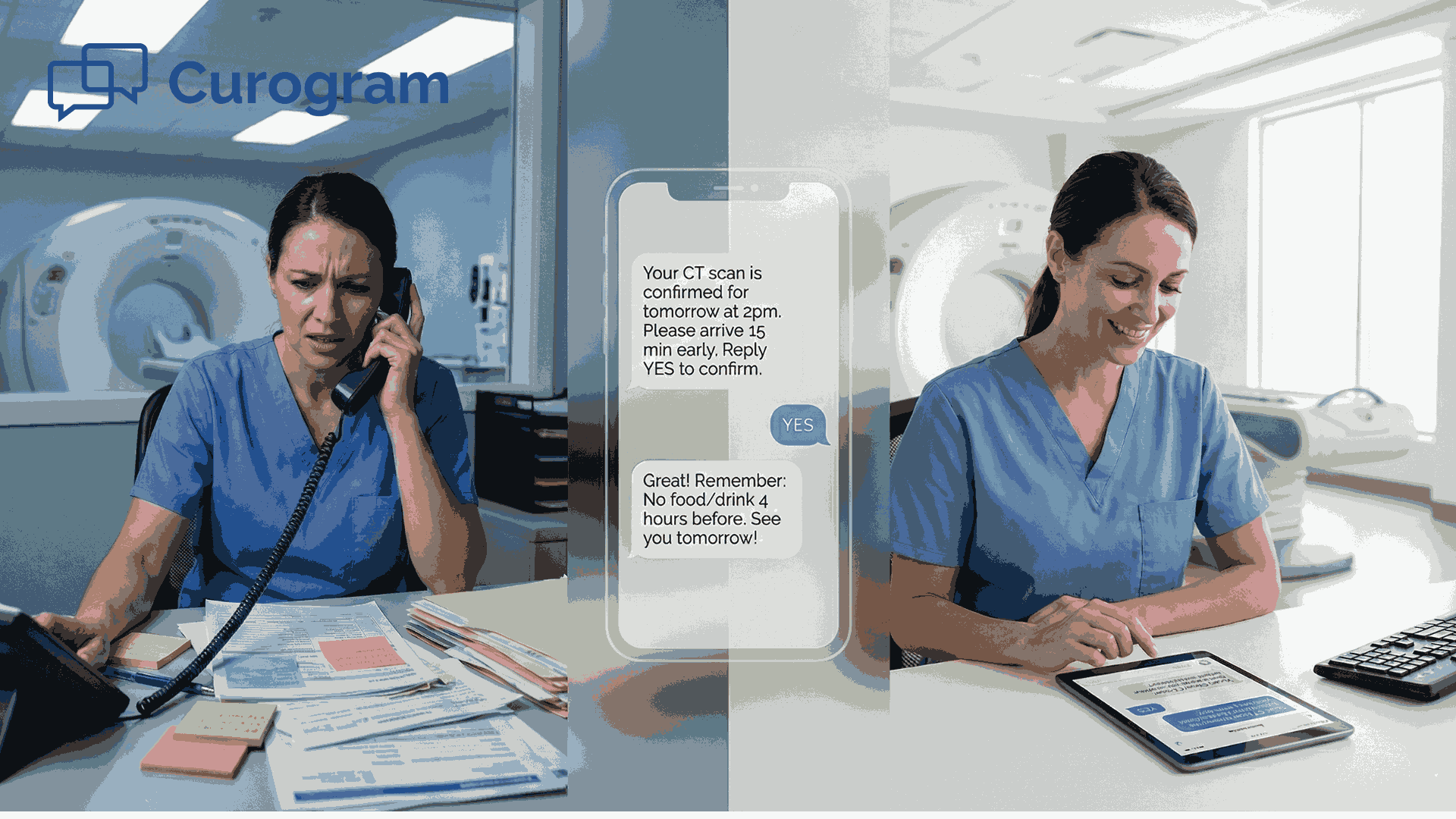
The system manages routine communication through automation. When scheduling creates a new CT appointment, the platform sends a confirmation text automatically. Two days before the scan, patients receive preparation instructions. The morning of the examination, a final reminder deploys without staff intervention.
This establishes predictable patient communication patterns. Every patient receives identical information at standardized intervals. Preparation compliance improves because instructions arrive when patients can implement them. They maintain adequate time to request clarification if questions arise.
Multi-location operations realize additional advantages. A radiology organization with 15 centers requires standardized operational processes. Secure communication Veradigm integration ensures every site implements identical protocols. This means quality standards remain consistent.
Security considerations remain paramount for imaging workflows. Patients share sensitive health information when scheduling radiology examinations. Insurance data, clinical history, and referring physician notes all contain protected health information. Text messages must encrypt this data appropriately.
Standard SMS fails to meet HIPAA requirements. Messages are transmitted as plain text across telecommunications networks. Individuals with network access could potentially intercept communications. This exposes practices to significant compliance risk.
Enterprise texting solution platforms eliminate security vulnerabilities. They encrypt messages end-to-end. Patient data remains protected from transmission origin through delivery to recipient devices. Audit logs provide compliance documentation when regulatory inquiries occur.
This combination of operational efficiency and data security makes texting essential for contemporary imaging centers. Radiology organizations using Veradigm cannot rely on outdated phone communication methods. Patients expect improved service. Scheduling demands require optimization. Revenue protection necessitates modernization.
Proper communication of schedules is essential in any imaging center. However, mistakes and gaps are inevitable. HIPAA-compliant texting helps avoid scheduling errors and ensures smooth operation, even across multiple locations.
Veradigm manages scheduling functions effectively. However, communication gaps emerge in patient outreach. While the EMR maintains appointment records, it does not automatically remind patients or verify their attendance. Automated secure messages address this operational gap.
Integration operates through the scheduling module. When staff book a new imaging appointment, the system triggers message workflows automatically. Patients receive instant confirmation containing examination details. Time, location, and preliminary preparation information arrive within minutes.
This reduces manual outreach requirements substantially. Staff no longer call every patient following booking. The platform manages routine confirmations. Team members redirect their focus to complex scheduling scenarios requiring professional judgment.
Message timing synchronizes with EMR scheduling patterns. Templates trigger based on appointment classification and date. A mammogram scheduled three weeks in advance receives different message sequences than a STAT chest radiograph. The system adapts automatically.
Enterprise imaging organizations operate across numerous facilities. Each location maintains its own schedule and staffing. Without standardized communication protocols, quality varies significantly between centers.
One clinic may send comprehensive preparation instructions, while another provides minimal guidance. Patients at different locations receive inconsistent experiences. This creates confusion and undermines the organization's professional reputation.
HIPAA-compliant texting in Veradigm solves this through template standardization. Central administrators create message templates once. All locations utilize identical language for the same examination types. A CT abdomen preparation message maintains consistency whether the patient visits Site A or Site Z.
This consistency improves patient preparation across the network. Patients understand expectations clearly. They follow instructions more reliably. Cancellation rates decline because fewer patients arrive confused or inadequately prepared.
Modality utilization improves correspondingly. When more patients arrive properly prepared for their examinations, scanners maintain optimal productivity. Schedule gaps decrease. Revenue per machine hour increases.
Regional directors gain visibility into communication performance metrics. They identify which sites achieve high confirmation rates and which require improvement. This data drives targeted interventions. Underperforming locations receive additional support to match top performers.
New locations onboard more rapidly with standardized messaging protocols. They avoid reinventing communication workflows. Templates and timing sequences exist ready for deployment. New sites adopt proven practices immediately.
Staff training becomes simple when processes remain consistent across locations. Team members can work at multiple facilities without learning different protocols. Everyone follows the same operational playbook for patient outreach.
Secure communication with Veradigm integration supports this standardization at the technical level. The platform connects to scheduling data across all facilities. Messages deploy uniformly while respecting each location's specific schedule.
This creates scalable operations. Expanding from 10 to 20 locations does not double communication complexity. The same templates and workflows extend to new facilities. Administrative overhead remains manageable as networks expand.
Quality metrics become comparable across locations. Leadership can benchmark performance objectively. They understand that differences in no-show rates or preparation compliance stem from local factors, not inconsistent messaging.
The result is predictable patient communication at enterprise scale. Every imaging center delivers the same high-quality experience. Patients trust the organization because they know what to expect regardless of which location they visit.

Patient preparation determines imaging examination success. A patient who consumes food before a fasting study compromises the entire appointment. The technologist cannot complete the scan. The scheduler must fill the unexpected gap. The patient experiences frustration.
Traditional communication methods fail to prevent these scenarios. Voicemail instructions are frequently forgotten. Paper handouts become lost. Patients arrive uncertain about basic requirements.
Secure texting improves instruction clarity substantially. Messages arrive on devices patients check regularly. They can reference preparation requirements the evening before or the morning of their examination. No searching through paperwork or attempting to recall voicemail details.
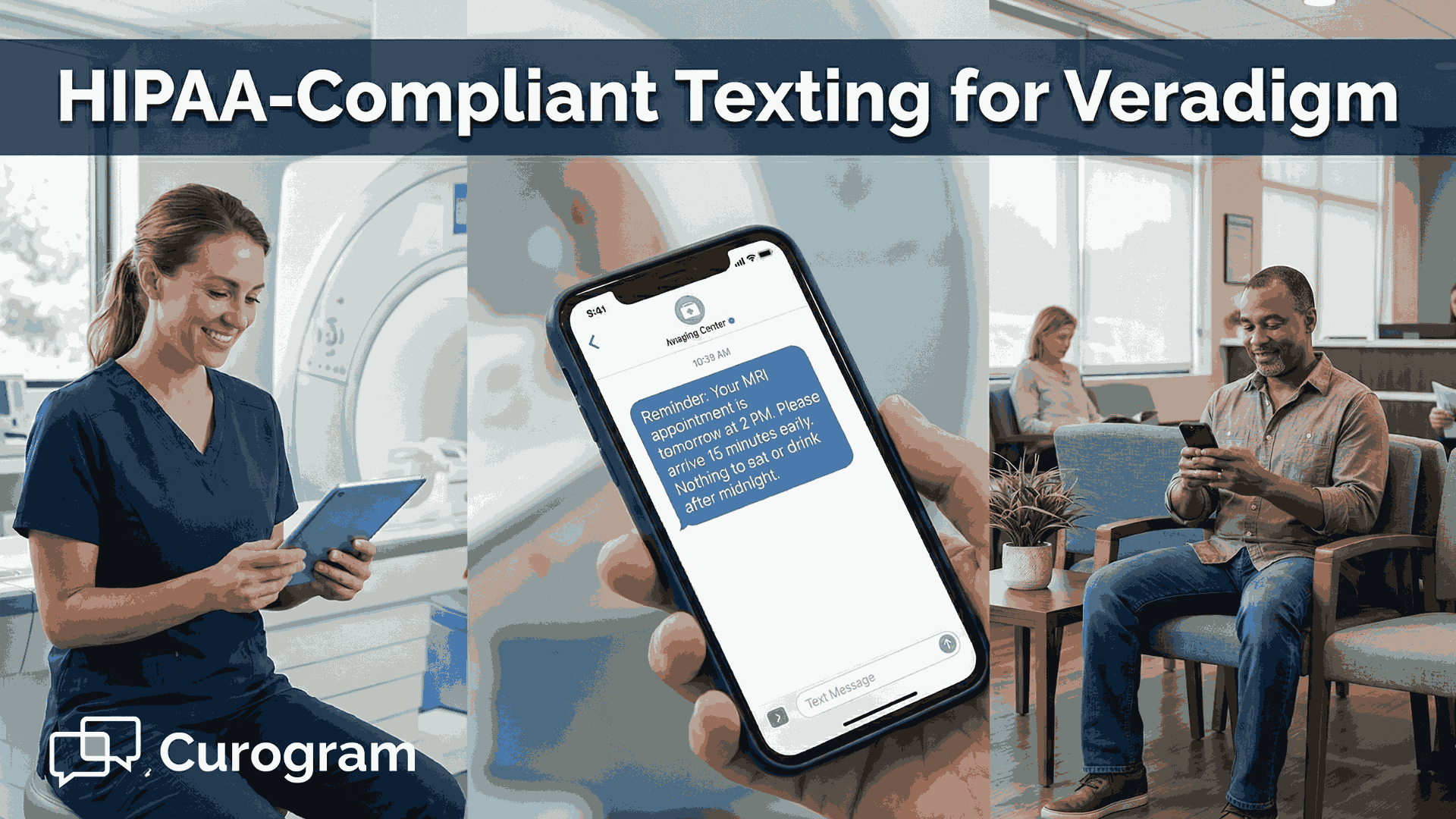
Fasting protocols become explicit through text messaging. A message might state: "Nothing to eat or drink after midnight. You may take regular medications with small sips of water." This specificity prevents common patient errors.
Contrast preparation messages address patient concerns proactively. "Your examination uses IV contrast. Inform staff if you have kidney problems or shellfish allergies." This information prompts patients to disclose relevant medical history before the appointment.
Arrival guidelines prevent scheduling friction. "Arrive 15 minutes early to complete paperwork. Bring your insurance card and photo ID." Patients arrive prepared with necessary documentation.
Multiple touchpoints reinforce critical instructions. An initial confirmation includes basic preparation. A 48-hour reminder emphasizes the most important requirements. A same-day message confirms timing. This repetition reduces patient confusion substantially.
Interventional radiology workflows benefit from more detailed preparation sequences. IR procedures often require complex preparation compared to diagnostic imaging. Patients may need to discontinue blood thinners, arrange transportation, or fast for extended periods.
Text messages break complex requirements into manageable steps. "Seven days before procedure: Stop taking aspirin. Continue other medications." Then: "Day before: No solid food after 8 PM. Clear liquids until midnight." Each instruction arrives at the optimal moment.
This approach reduces cancellation risk considerably. Patients do not feel overwhelmed by extensive requirement lists. They address one step at a time with clear guidance. Compliance improves when instructions appear achievable.
MRI preparation becomes simplified as well. Metal screening questions can initiate via text. "Do you have any implanted devices, pacemakers, or metal fragments?" Patients have time to consult with their physicians if uncertain. This prevents last-minute screening failures.
Pediatric imaging presents unique challenges. Parents manage multiple responsibilities simultaneously. Text reminders help them coordinate childcare, time off work, and transportation logistics. A simple "Tomorrow at 2 PM: Jamie's MRI" message integrates into busy schedules.
Bilingual messaging serves diverse patient populations effectively. Templates can automatically switch languages based on patient preferences stored in Veradigm. Spanish-speaking patients receive preparation instructions in Spanish. This improves comprehension for all demographic groups.
Radiology schedules change frequently. Equipment malfunctions occur without warning. Technologists call in sick unexpectedly. Referring physicians add STAT orders. These changes require immediate patient communication.
Phone calls prove ineffective during urgent situations. Staff place calls that reach voicemail systems. They leave messages patients may not review for hours. Meanwhile, the schedule deteriorates.
HIPAA-compliant texting in Veradigm supports radiology texting workflows for time-sensitive scenarios. A STAT CT head order arrives. The scheduler needs to reschedule a routine examination promptly. They send a text: "We need to reschedule your appointment to tomorrow at the same time. Please confirm."
Patients typically respond within minutes. They confirm the new time or request alternatives. The scheduler resolves the conflict efficiently. The STAT case proceeds without delay.
Equipment downtime communication improves substantially. When an MRI experiences an unexpected malfunction, affected patients need immediate notification. Mass texting alerts everyone scheduled for that machine. They can reschedule before making unnecessary trips.
Weather-related closures are managed effectively. Ice storm closes the facility? One message reaches all scheduled patients. "Clinic closed today due to weather. We will contact you to reschedule." No patient arrives to find locked doors.
Critical results communication maintains strict protocols. Radiologists cannot text actual results due to liability considerations. However, staff can text: "Please call our office regarding your recent examination." This prompts faster follow-up than postal mail.
Imaging teams reduce workload through automated rapid communication. They no longer spend hours on phone calls during schedule disruptions. The system handles mass notification. Staff focus on complex problem-solving and patient care.
After-hours preparation questions receive efficient responses. A patient texts at 8 PM, concerned about tomorrow's fasting requirements. Automated responses can provide basic guidance. "For morning examinations, no food or drink after midnight. Call 555-0100 with urgent questions."
This 24/7 availability reduces patient anxiety. They receive answers when questions arise, not only during business hours. This improves the overall patient experience.
The result is a responsive communication system that maintains pace with dynamic imaging operations. Changes propagate instantly to affected patients. Staff maintain control without becoming overwhelmed by manual outreach. Schedules remain organized even during challenging operational days.
Automated messaging reduces manual work substantially. Front desk staff spend significantly less time on phone calls. They manage exception cases instead of routine confirmations. This redirects effort toward higher-value tasks.
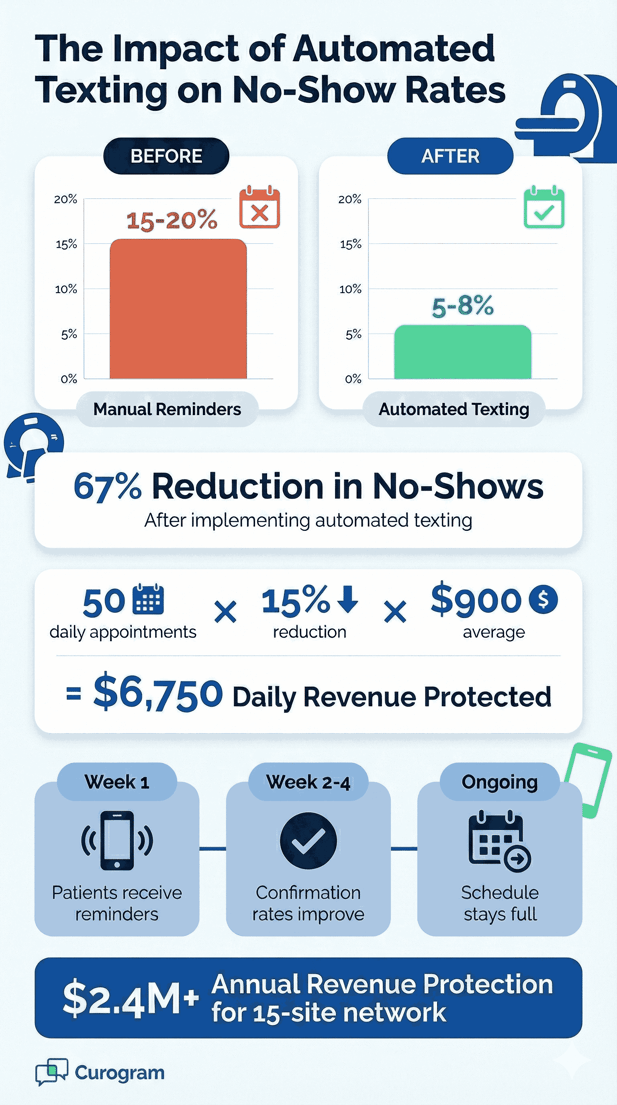
Consider the time savings: A center booking 50 appointments daily might invest 10 minutes per phone confirmation. This represents over 8 hours of phone work. Automation eliminates approximately 90% of those calls. Staff reclaim nearly a full workday.
These hours get redirected to valuable patient care activities. Team members assist confused patients in understanding complex preparation. They coordinate with referring physicians. They resolve complex insurance issues. All these tasks create more value than leaving voicemails.
Compliance teams maintain concerns about uncontrolled texting practices. Staff might use personal phones to message patients. This creates substantial privacy risks. Protected health information can leak outside secure systems.
Enterprise texting solution platforms prevent these violations comprehensively. All messages are routed through encrypted channels. PHI never traverses consumer SMS networks. Audit logs capture every communication automatically.
IT departments value centralized security controls. They enforce policies through the platform. Staff cannot text from unapproved devices. Message templates prevent accidental disclosure of sensitive details.
Compliance audits become straightforward with complete records. Regulators inquire, "How do you protect patient communication?" Leadership presents encrypted message logs, access controls, and security policies. All required documentation exists in one system.
Growth challenges multi-location radiology organizations. Adding facilities means extending quality standards everywhere. Communication cannot degrade as networks expand.
Standardized templates ensure consistency. New locations inherit proven messaging from implementation. They do not create protocols from scratch. Best practices scale automatically.
Performance remains predictable across entire enterprises. Site A and Site B achieve similar no-show rates because they utilize identical communication strategies. Variability decreases. Outcomes improve across the board.
No-shows damage an imaging center’s finances directly. An empty MRI slot for one hour represents hundreds to thousands of dollars in lost revenue. Multiple no-shows per day create a significant financial impact.
Automated confirmations reduce these gaps substantially. Patients confirm attendance via text. Centers know precisely who will attend. Last-minute openings get filled with waitlisted patients.
Better Utilization of Imaging Resources
Modality time represents the most valuable asset. Properly prepared patients move through examinations more efficiently. Scanners complete more studies per day. Throughput increases without additional equipment investment.
Improved preparation maximizes these expensive resources. When patients follow instructions correctly, examinations proceed smoothly. Technologists avoid wasting time troubleshooting preventable problems.
Reducing Administrative Costs With Automation
Manual communication requires substantial staffing. High-volume organizations might employ dedicated schedulers exclusively for appointment confirmations. Automation reduces these staffing requirements considerably.
The savings compound across multiple locations. A 15-site network might reduce scheduler headcount by 20-30%. Those salary savings offset the messaging platform costs many times over.
Operational efficiency improves throughout the organization. Staff focus on complex tasks requiring human judgment. Routine work processes automatically. The entire operation runs more efficiently and profitably.
Integration with appointment reminders strengthens these benefits further. When Veradigm appointment systems coordinate with secure texting, the entire patient journey improves from booking through examination completion.
Curogram integrates with Veradigm without disrupting established workflows. The platform connects to existing scheduling data. Staff do not learn complex new interfaces. Messages trigger based on appointment information already maintained in the EMR.
Implementation proceeds quickly because workflows remain familiar. Teams continue using Veradigm as they always have. Curogram operates in the background, managing patient communication automatically.
Large radiology organizations require solutions that scale effectively. Curogram handles high message volumes across multiple locations. Whether you operate 5 centers or 20, the platform maintains consistent performance.
Template management functions at enterprise scale. Central administrators create messaging standards once. All sites deploy them instantly. Updates push to the entire network simultaneously.
Reporting provides network-wide visibility. Leadership reviews communication metrics across all locations. They identify trends and optimize performance systematically.
Security meets healthcare's strictest requirements. Curogram supports HIPAA compliance through end-to-end encryption. SOC 2 certification demonstrates that the platform meets enterprise IT governance standards.
The system understands radiology-specific workflows. Message templates account for modality types, preparation requirements, and timing needs unique to imaging. This is not generic texting adapted for healthcare. It is purpose-built for radiology operations.
Audit capabilities satisfy compliance teams. Every message creates a permanent record. Access controls prevent unauthorized communication. IT departments maintain full visibility and control.
This combination of integration, scalability, and security makes Curogram the natural communication layer for Veradigm imaging centers. It extends EMR capabilities without creating additional complexity.
Manual communication cannot support modern radiology operations. Numerous things can go wrong and cost radiology centers a lot of money. But these errors are preventable, with the right framework and support.
HIPAA-compliant texting in Veradigm addresses these challenges systematically. Automated messages reach patients reliably. Preparation instructions arrive at optimal intervals. Confirmations occur without staff intervention.
The benefits extend across imaging operations. Patients arrive better prepared. No-show rates decline measurably. Staff redirect focus to high-value work instead of phone calls.
Enterprise radiology organizations realize additional value. Standardized communication scales across all locations. Quality remains consistent whether patients visit Site 1 or Site 15. New centers onboard with proven processes already established.
Security and compliance occur automatically. Protected health information remains encrypted. Audit logs provide regulatory documentation. IT teams maintain control without limiting operational flexibility.
Revenue protection derives from multiple sources. Improved modality utilization means more billable studies per day. Fewer cancellations keep schedules optimally filled. Lower administrative costs improve operational margins.
Curogram enhances how Veradigm imaging centers operate at every scale. Single-site practices gain efficiency. Multi-location enterprises achieve consistency. All organizations benefit from strengthened patient communication.
Modern radiology requires a modern communication infrastructure. Secure texting is no longer optional. It represents essential infrastructure for competitive imaging operations.
Book a demo to see Curogram + Veradigm in action.
The platform connects directly to Veradigm's scheduling module through secure APIs. When staff create or modify appointments, the system automatically triggers appropriate message workflows.
Messages are sent based on appointment type, timing, and patient preferences stored in the EMR. No manual data entry is required. The integration maintains real-time synchronization so schedule changes immediately update communication sequences.
Phone communication proves inadequate at the scale most imaging centers operate. Staff invest excessive time leaving voicemails that patients may not review promptly. Critical preparation instructions are frequently forgotten or misunderstood.
Callback windows do not align with patient availability. High appointment volumes make manual calling operationally unsustainable. Phone systems cannot provide delivery confirmation or track communication compliance effectively.
Automated reminders arrive when patients can still adjust their schedules. Multiple touchpoints reinforce appointment importance. Clear preparation instructions reduce confusion that leads to cancellations. Patients can easily confirm attendance or request rescheduling through text replies.
The system identifies at-risk appointments early based on non-response patterns. Staff can then personally contact these patients before cancellation becomes inevitable.
Enterprise platforms encrypt all messages end-to-end to protect patient data. They provide comprehensive audit logs for compliance documentation. Access controls prevent unauthorized messaging.
Templates ensure consistent, professional communication across all locations. Integration with healthcare systems enables automated workflows. Standard SMS lacks these security features and creates HIPAA violations when used for patient communication.
Centralized template management allows administrators to create standardized messages that deploy across all sites. Each location uses identical language for the same examination types. Message timing sequences remain consistent regardless of which center books the appointment.
Regional leadership monitors performance metrics to ensure all sites achieve similar outcomes. New locations inherit proven communication strategies immediately upon joining the network.
💡 Mass texting in Veradigm helps imaging centers reach thousands of patients quickly while staying HIPAA-compliant. This communication tool...
💡 Mass texting gives imaging centers a clear path to better revenue. If you want to boost engagement with Veradigm, mass texting helps cut no-shows...
💡 HIPAA-compliant texting in Konica Minolta Exa improves radiology workflows instantly. It does so by ensuring secure, efficient communication...