
Billing teams send secure text links that patients can pay in two taps, and payments sync back to Veradigm in real time.
Text messages reach a 98% open rate, compared to 20–30% for portal and email notices. Practices typically convert 10–20% of overdue AR into same-day payments.
For multi-location groups, this is the fastest way to close AR cycles, cut call time by up to 80%, and recover revenue without hiring more staff.
Imagine this. It's 9 a.m. on a Tuesday, and your billing team is already on the phone.
There's a queue of 80 overdue accounts waiting. By lunch, they've reached about 20 patients. By 5 p.m., they've recovered maybe 5 payments.
That's not a broken team. That's a broken workflow.
For most medical practices using Veradigm, this is what collections look like every single day. Calls go unanswered. Voicemails pile up.
Patients feel chased. Staff feel stuck. And the money sitting in AR keeps sitting there.
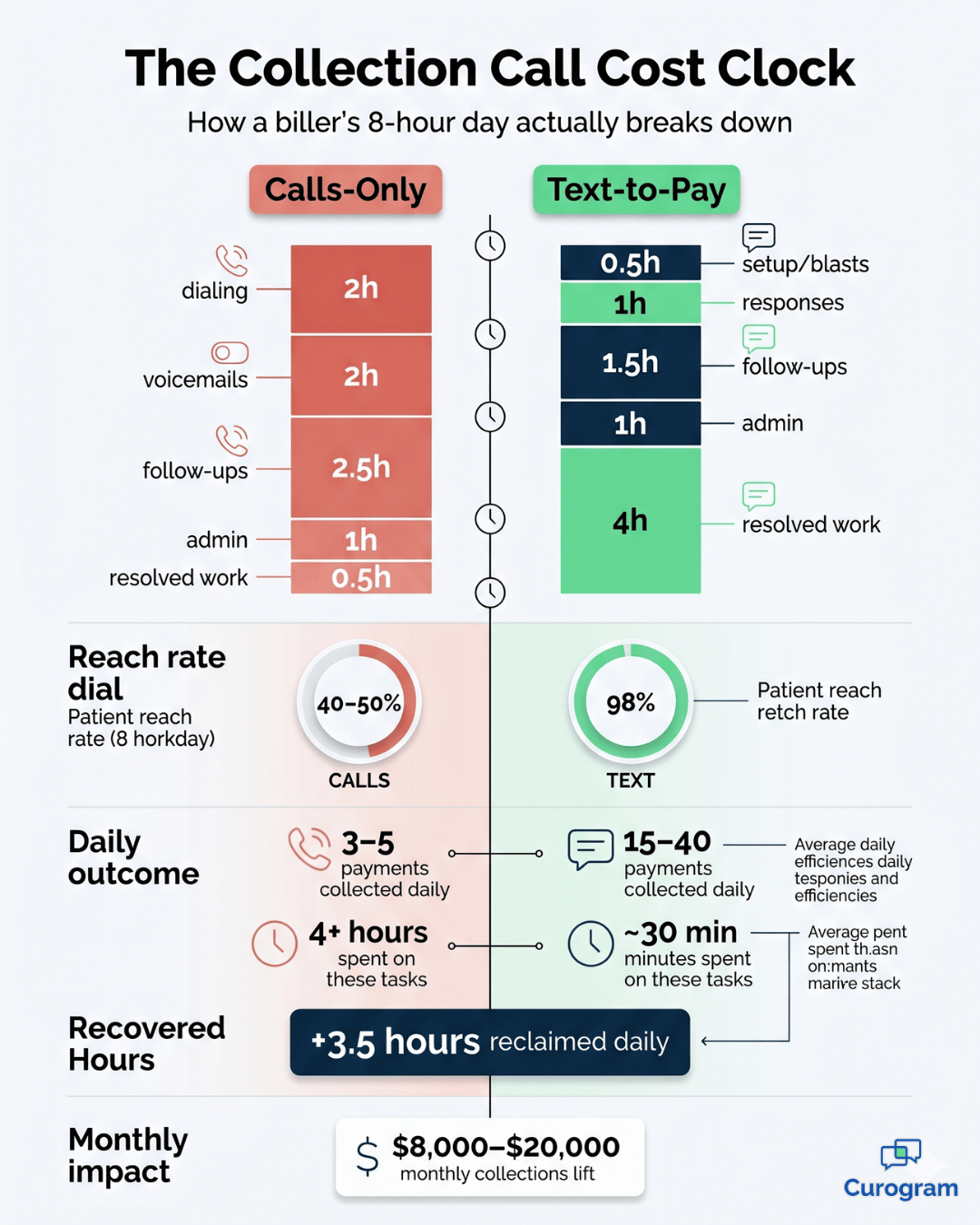
Think about the real cost. If a biller spends 4 hours a day dialing and leaving voicemails, and only 40–50% of calls connect, that's 2 hours of labor going nowhere.
Multiply that across a 10-provider practice and you're burning close to $2,000–$5,000 a month in wasted staff time and missed collections.
Patients don't hate paying. They hate the process. Nobody wants to pick up a number they don't recognize, sit on hold, or read their card over the phone.
Yet that's still the default for most practices.
Here's the gap. FollowMyHealth handles maybe 30% of your patient panel, the ones already logged into a portal.
Everyone else? They still get a call. Or a paper statement that costs $3–$5 to mail.
There's a faster way, and it already lives in your patients' pockets.
A Veradigm EHR billing staff text payment collection workflow fits inside the tools you already use, works with the patients you already have, and moves money off your AR report in minutes, not weeks.
Let's break down why calls fail and what actually works.
The Daily Grind of the Collection Call Queue
Your billing team didn't invent this system. They inherited it. Call patients with overdue balances, leave voicemails, note the account, repeat tomorrow. It works, technically. But the numbers don't lie.
Here's where the system quietly breaks down:
- 40–50% of collection calls go unanswered
- Around 30% of connected calls end in a hang-up or "can I call you back?"
- Reaching a single patient usually takes 3 to 5 attempts
Now picture your biller's morning.
They open the overdue list. Eighty accounts. Same names as yesterday. They call one patient twice in a week because the note never got logged.
Management wants the collection rate up, patients don't want to be bothered, and the cycle repeats.
What It Actually Costs Your Practice
That wasted time shows up in real dollars. For a mid-sized Veradigm practice, staff hours spent on unresolved calls translate directly into lost revenue and ballooning AR.
| Cost Area | Monthly Impact |
|---|---|
| Wasted staff hours on unreached calls | $1,500–$3,000 |
| Paper statements ($3–$5 each, 300/month) | $900–$1,500 |
| Delayed collections (extended DSO) | $1,500–$4,000 |
| Total drag on cash flow | $3,900–$8,500 |
In plain language, a medical practice billing staff text-to-pay Veradigm rollout has room to recover most of this without adding headcount.
And the bigger the practice, the bigger the leak.
Why Portals Alone Don't Close the Gap
FollowMyHealth payment notifications only reach patients who signed up for the portal, typically 20–35% of your panel. The remaining 65–80% never see that email. They get a call or a letter, and you're back where you started.
For your team, that means two things.
First, portals solve part of the problem, not the whole thing.
Second, you need a collection channel for patients who live on their phones but never log into a portal.
That's where allscripts professional billing team payment automation starts making sense.
A Smarter Way to Collect: The Two-Tap Payment Text
Now flip the workflow.
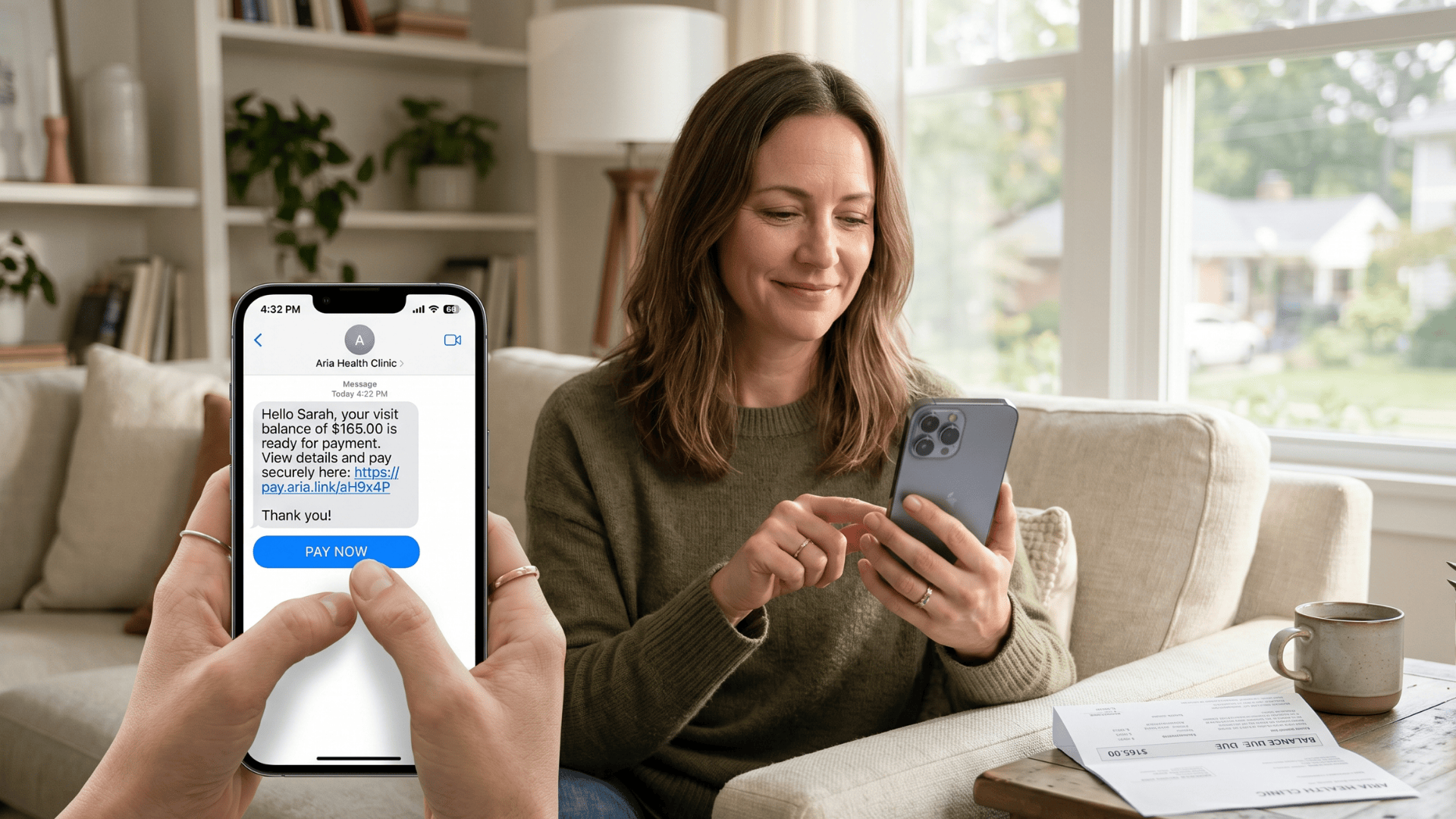
Instead of calling 80 patients, your billing team sends a batch of 80 secure payment texts in about 10 minutes. Patients tap the link, enter their card once, and confirm. Payment hits your account, and Veradigm updates on its own.
That's automated patient payment collection EHR integration in one sentence.
And it changes what your billing day even looks like.

How the Workflow Actually Runs
Here's what a typical day looks like with Curogram's text-to-pay in place. Your biller pulls the overdue AR list from Veradigm, then batch-sends payment texts with a single click.
From the patient's side, the process is just as short:
- Tap the link (no app, no portal login)
- Enter card details once on a PCI-compliant gateway
- Get a confirmation in about 20 seconds
Balances update in Veradigm EHR automatically.
No double entry, no spreadsheet reconciliation, no "did they pay yet?" chasing between billing and the front desk.
Why It Works Where Calls Don't
The difference comes down to how patients actually use their phones. Text messages have a 98% open rate, while portal and email notifications hover around 20–30%.
For a 10-provider practice sending 200 collection texts, that's roughly 196 patients who actually see the message, compared to maybe 50 who open an email.
Out of those 196, 15–40 pay the same day. It sounds simple. It is. And that's the point.
Built for Practices That Can't Leave Anyone Behind
The real power shows up across multi-location groups. Front desk payment collection text message automation is the only channel that works across every patient segment. Portal users get notifications inside FollowMyHealth, non-users get a text, and every payment flows back into the same EHR.
This is why the veradigm billing workflow SMS payment links approach beats a portal-only strategy.
You stop leaving 70% of your AR on the table.

Collections That Compound Over Time
Here's what changes when you shift from calls to texts. The numbers start moving in the right direction, and they keep moving month after month.
From Call Queue to Confirmed Payment
The clearest way to see the shift is a side-by-side look at both workflows.
| Workflow | Calls-Only | Text-to-Pay |
|---|---|---|
| Daily outreach volume | 40–50 patients | 200+ patients |
| Reach rate | 40–50% | 98% |
| Same-day payments | 3–5 | 15–40 |
| Staff hours spent | 4+ hours | ~30 minutes |
| Follow-up required | High | Low |
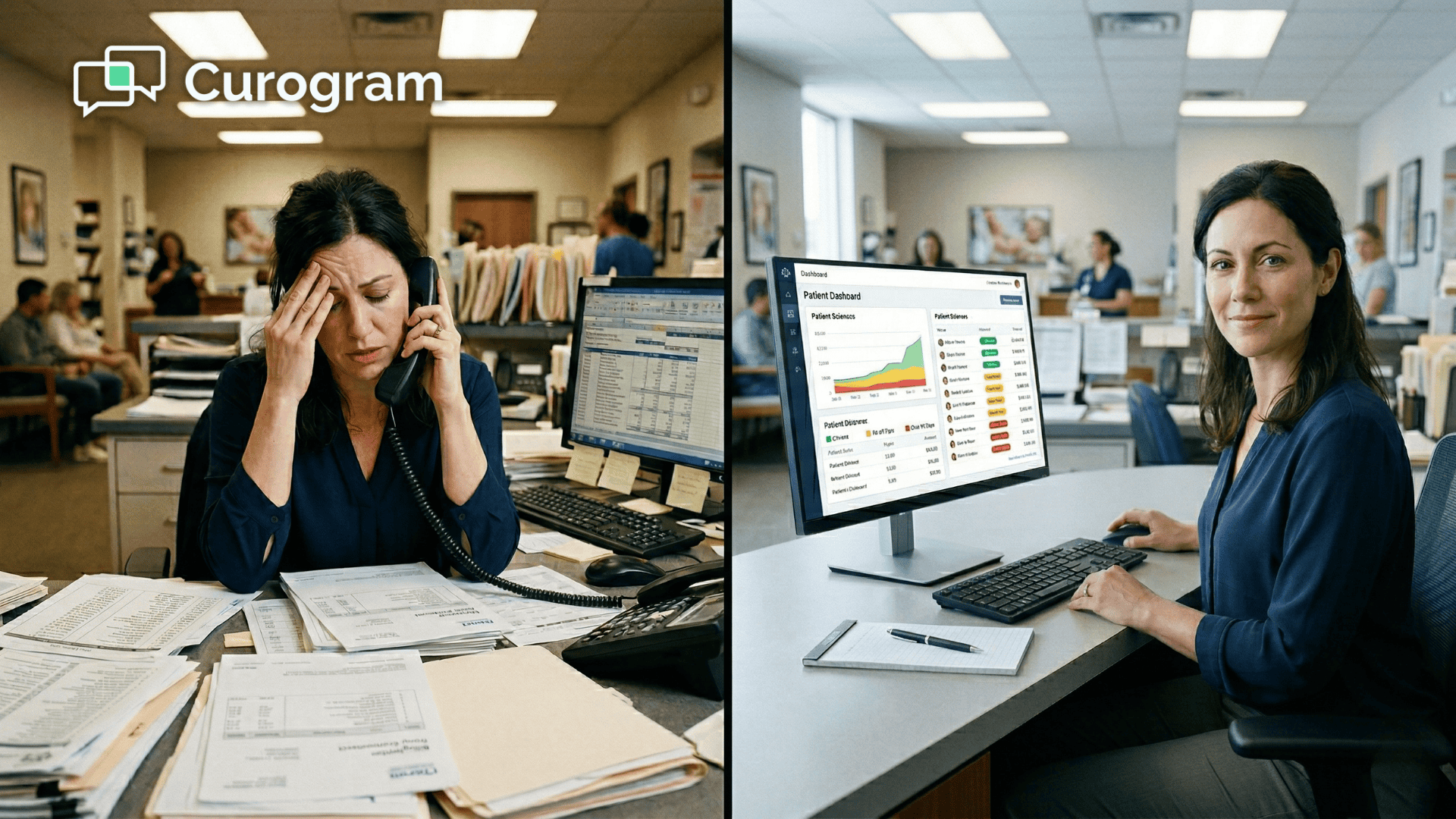
For your team, that 3.5-hour gap is huge. Instead of dialing, your staff handle complex denials, appeal rejected claims, or train new hires.
The work moves up the value chain, which is where you actually want your experienced billers spending their time.
What This Means for Revenue
For a 10-provider Veradigm practice carrying around $100,000 in monthly AR, text-to-pay typically lifts collections by $8,000–$20,000 per month.
That's an 8–20% revenue bump without adding a single staff member.
Days Sales Outstanding usually drops by 5–8 days too. In practice, that means balances that used to age 45 days now settle in 37. Cash flow gets healthier, and your balance sheet looks cleaner.
This is the quiet power of a veradigm ehr billing staff text payment collection workflow: it doesn't just save time, it compounds revenue every single month.
One Channel, Every Patient Segment
None of this replaces FollowMyHealth.
Curogram just fills the space around it. Portal-active patients keep using the portal. The other 70% get a text they'll actually open. Both channels push payments into the same Veradigm ledger.
Two doors into the same room. More patients walk through.
Ready to Cut Collection Time by 80%? Schedule a Demo
If your billing team is still spending 3 or more hours a day on collection calls, and the answer rate is stuck under 50%, you're not short on effort. You're short on the right tool.
The call queue isn't the problem. Relying on it as your only channel is.
Curogram's text-to-pay slots in next to your existing systems. It works with Veradigm. It works with FollowMyHealth. It doesn't replace your portal strategy, it completes it. Your billing staff spend less time dialing and more time resolving the work that actually needs a human.
Here's what a quick demo will show you.
The exact integration between Curogram and Veradigm. A live walkthrough of how your staff send batch payment texts and track confirmations.
The ROI math for your practice size, based on your current AR volume and DSO.
Most practices see results inside the first billing cycle. An 80% reduction in call time. An 8–20% lift in monthly collections. A 5–8 day drop in DSO.
And a billing team that isn't burning out by noon.
If you're running a multi-location practice, this is especially worth a look. A medical practice billing staff text-to-pay Veradigm setup scales across every location without extra staff, extra phone lines, or extra paper.
One workflow. Every office. Every patient.
Schedule a Demo and we'll walk you through the integration, the staff workflow, and the revenue math in about 20 minutes. You'll leave the call knowing exactly what this looks like inside your practice, and what it would recover in your first 30 days.
Frequently Asked Questions
Yes. Curogram's payment links are HIPAA-encrypted and PCI-DSS Level 1 compliant. Sensitive card data never touches your Veradigm EHR or your email servers. Patients enter card details on Curogram's secure gateway, and only the payment confirmation flows back into Veradigm, not the card number itself.
Curogram tracks payment status in real time and syncs with Veradigm automatically. If a patient pays by text at 2 p.m. and then calls at 3 p.m., your staff immediately see a zero balance and can confirm the payment on the spot. No duplicate charges. No confusion for patients or staff.
Curogram is a separate, focused tool that works alongside FollowMyHealth, not in place of it. You pay for Curogram only for the services you use, like text-to-pay. Your FollowMyHealth fees stay exactly where they are. Think of Curogram as a virtual billing assistant that handles the 70% of patients the portal doesn't reach.
Most practices are live within a few business days. Setup includes connecting Curogram to your Veradigm EHR, configuring payment templates, and a short staff walkthrough. Training usually takes about 10 minutes per biller because the workflow is built around tools your team already uses. There's no IT overhaul, no new hardware, and no disruption to your existing collection process.
Yes. You can tailor message templates by balance size, visit type, location, or aging bucket. For example, a reminder for a $45 copay can read very differently from a follow-up on a $900 deductible balance. You can also schedule batches to go out at the best times for response rates, like mid-morning or early evening, and add personal touches like the patient's first name or provider's name.