
6 min read

HIPAA Two-Way Texting for Psychiatry Practices on Valant

HIPAA Two-Way Texting for Psychiatry Practices on Valant
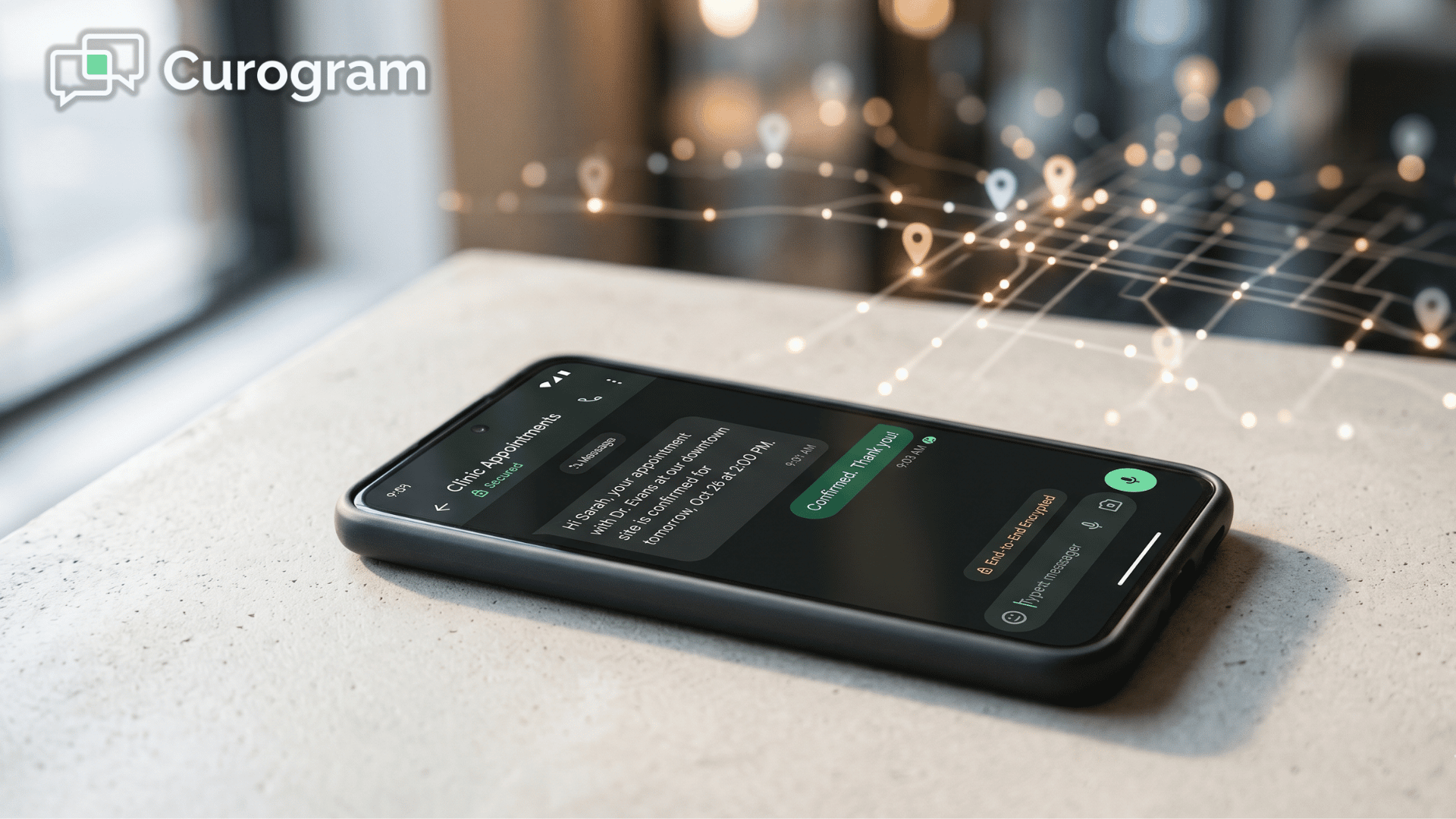
💡 HIPAA two-way texting for psychiatry practices on Valant lets your team text patients safely from your own phone number. Valant's portal works well for formal notes, but many patients skip it. They prefer a quick text on the phone they already check.

Curogram for Valant fills that gap. It adds encrypted, two-way texting that sits next to the portal, not in place of it. Every message is logged and covered by a signed BAA.

Patients do not need an app or a login. They just reply to your number, and staff handle each chat from one dashboard. The result is fewer no-shows, faster replies, and far less risk from staff using personal phones.

Here is a line we hear all the time from psychiatry practices:

“Patients reply to our reminder texts and the messages go into a void.”

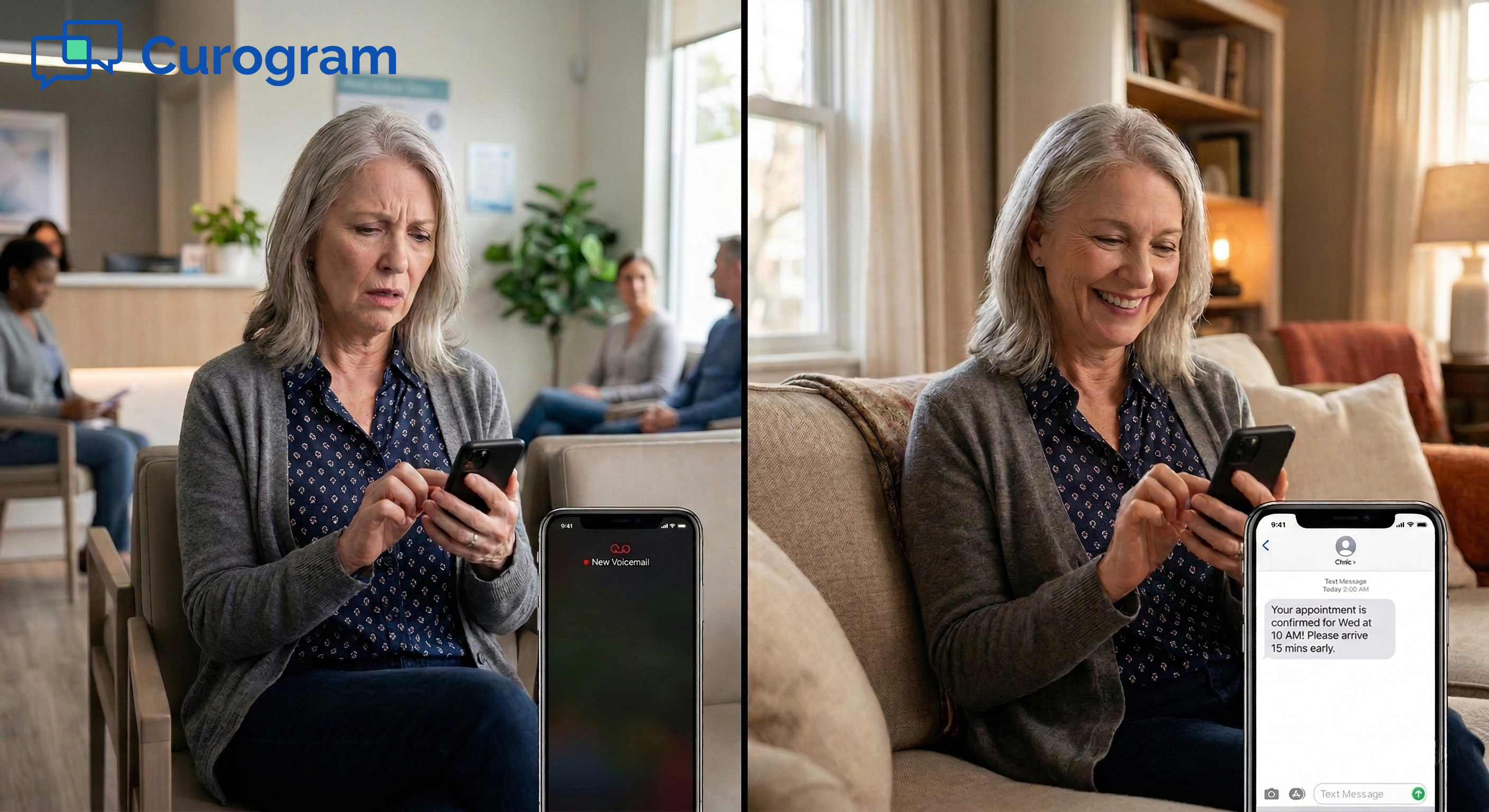
You send a reminder. The patient texts back. And no one sees it. The portal stays quiet while the patient waits.

This gap shows up across outpatient psychiatry. Valant gives you a patient portal with secure messaging. Curogram for Valant adds what the portal misses: real, two-way texting from your own number.

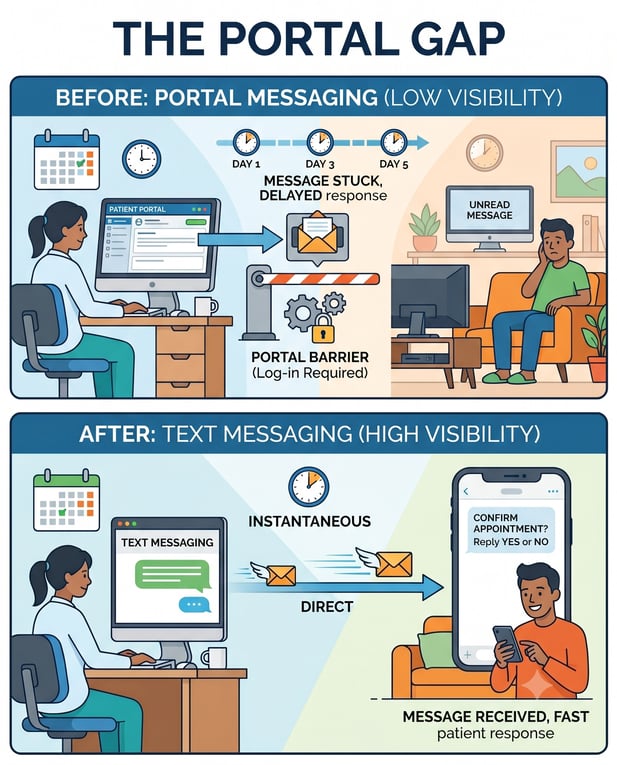
On paper, the portal should cover patient contact. In real life, many patients never log in. People who manage anxiety, depression, or ADHD often find it a chore. A login feels like one more hurdle.

So they skip it. Then your front desk fills the gap. Staff text patients from personal phones to confirm visits and share updates. It works for a moment, but it opens a real risk.

The cost is real, not just a hassle. Missed messages lead to no-shows and gaps in care. Staff burn time chasing replies by hand. And every personal text adds quiet legal risk.

Those personal texts are not encrypted. They are not logged. They are not covered by a signed agreement. Each one can turn into a HIPAA problem.

HIPAA two-way texting for psychiatry practices on Valant fixes this. Patients text the number they already know.

Your team replies from one dashboard. Every message is encrypted, logged, and covered by a signed BAA.

In this guide, we cover what compliant texting needs. We show how Curogram links with Valant. And we explain what shifts once your practice can text patients the right way. You meet people where they are, and you cut risk while you do it.

Let's start with where the gap begins, then build from there.

The Portal Messaging Gap In Outpatient Psychiatry

Valant's portal is solid for formal notes. The trouble is reach. Many patients never open it, so messages stall. Let's look at why the gap forms and what it costs.

Why patients skip the portal

A portal asks for a login every time. That small step adds friction. For someone managing anxiety, depression, or ADHD, friction is enough to stop them. They would rather send a quick text.

So portal use stays low and uneven. The patient checks their phone, not the portal. Your careful message sits unread for days. Meanwhile, the patient assumes no one replied.

This is not about effort or how much patients care. It is about how people use their phones today. Texts get read in minutes. Portal logins often get put off, then forgotten.

How staff fill the gap, and the risk it creates

When the portal fails, staff step in. Front desk teams text from personal phones to confirm visits and pass along updates. Clinical staff may post in the portal while knowing the patient will not see it soon.

This patchwork feels helpful, but it hides a problem. Texts from a personal phone are not encrypted or logged. They are not covered by a BAA. Each one that holds visit or clinical details is a HIPAA exposure waiting to happen.

As one practice put it, replies seem to vanish into a void. In psychiatry, that void is the space between the portal you use and the phone your patient checks.

Some patients get two messages, others get none, and the practice loses a clear record of who said what.

What HIPAA-Compliant Two-Way Texting Requires

Not every texting tool is safe for health data. A few features are non-negotiable. Here is what real compliance looks like.

The core safeguards

Start with encryption. Every message must be locked in transit and at rest. This is the default, not an upgrade.

Next is the audit trail. Each sent text, each reply, and each staff response should be logged with a time and a name. That record stays ready for review.

Then comes the BAA. A Business Associate Agreement is a signed contract that covers patient messages. An informal thread on a personal phone does not count.

Built for how patients text

Patients should not have to download an app or make an account. SMS texting works on any phone and any carrier, with no setup. That keeps the door wide open.

Texts should also come from and go to your practice number. Patients reach the same number they would call. There is nothing new to learn, which is why people actually use it.

Speed matters too. A safe tool should feel as fast as a normal text. If it slows staff down, they drift back to personal phones. Good design keeps everyone on the protected channel. 

Infographic illustrating behavioral health data integration between Curogram and Valant

How Curogram Adds Two-Way Texting To Valant

Curogram brings safe texting to your Valant practice without replacing the portal. It plugs into your current setup and your current number. Here is how it fits together.

Texting from your existing number

Patients text the same number they would dial. Your staff reply from the Curogram dashboard, never from a personal phone. The chat feels normal to the patient and stays controlled on your end.

Every message encrypted and logged

Each conversation is encrypted from end to end. Every text is logged with a time stamp and a user. The full record is ready for any compliance review, and the channel sits under Curogram's signed BAA.

Synced with your Valant schedule

Curogram pulls patient records and appointment data from Valant. That sync lets you send messages that feel personal, not generic. When a patient confirms, the status writes back to the Valant schedule on its own.

A complement to the portal, not a replacement

Patients who like the portal keep using it. Patients who prefer texting, or who never adopted the portal, now have a safe channel. You are not picking one path; you offer both.

Adoption is strong because the tool is easy. Curogram reports a 94% user adoption rate (G2 Spring 2026, third-party verified). Staff training takes about 10 minutes on average.

Curious how this stacks up against other tools? See our Curogram vs Klara comparison. In short, Klara centers on athenahealth and Veradigm with AI-powered routing.

Curogram is EMR-agnostic and connects with BH-native systems like Valant that Klara does not support. It also brings texting that works outside the patient portal.

The aim is simple. Keep what already works in Valant. Add the channel patients prefer. And lower your risk at the same time, without asking your team to learn a brand-new system.


What Changes When The Practice Has Two-Way Texting

Adding texting is a small change with a wide ripple. The day-to-day gets smoother fast. Here is what shifts.

Smoother confirmations and coordination

Patients confirm with a quick reply, not a login or a phone call. When the effort drops to near zero, confirmation rates climb.

Based on our internal data, Curogram clients see appointment confirmation rates above 75%.

Time-sensitive items move faster too. Prior authorizations, lab follow-ups, and schedule changes go out by text in real time. No one waits days for the patient to check a portal.

Happier patients, leaner workflow, stronger compliance

Most patients prefer texting, so the channel matches how they already talk. You meet them where they are, which builds goodwill.

Based on our internal research, automated reminders and texting help cut no-show rates 53% below the industry average.

Your team gains too. Staff handle every chat from one dashboard instead of many personal phones. And since each text is encrypted, logged, and BAA-covered, the risk from personal phones drops to zero.

There is a money side as well. Fewer no-shows means fuller schedules and steadier care. Based on our internal data, recovered visits can lift revenue by 10% to 20%. That comes from slots you used to lose.

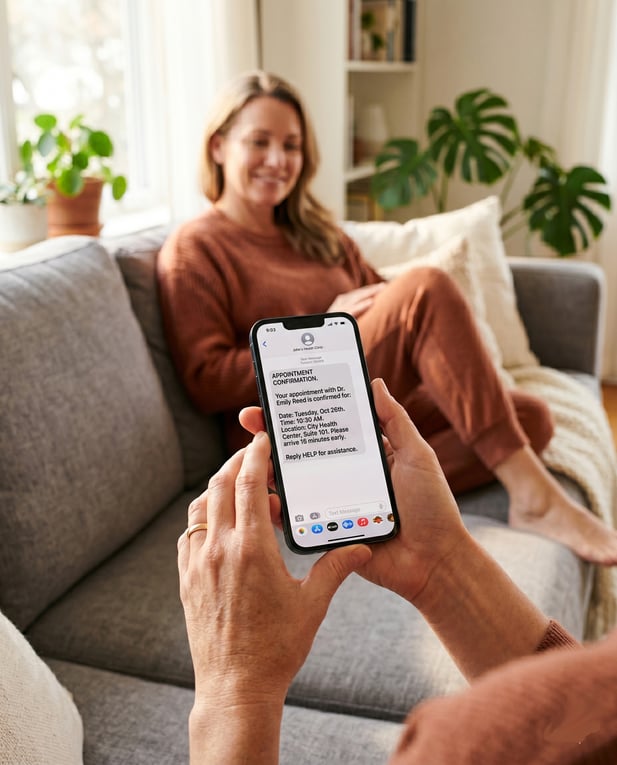
Patient confirms behavioral health appointment via text on smartphone

Getting Started

Going live is quick and low-lift. Curogram's team does the heavy work for you. Here is what to expect.

Setup in 2 to 4 weeks

Most practices are up and running in two to four weeks. Curogram's team handles the Valant integration end to end.

They also set up two-way texting from your existing practice number, so nothing changes for your patients.

You will not need to switch numbers or retrain patients. The number they already know keeps working. Your team learns the dashboard in about 10 minutes, then you are ready to text.

See it work for your practice

Want to watch it run with real Valant data? Book a quick demo and we will walk your team through it.

You will see safe texting, the Valant sync, and the dashboard in action. Curogram also supports behavioral health clinics beyond psychiatry, so the same setup grows with you.

Book a quick demo. Bring your questions, and we will tailor the walkthrough to your workflow. You can also explore how Curogram supports behavioral health clinics. 


Frequently Asked Questions

How does HIPAA two-way texting work with Valant?

Curogram adds texting that runs from your existing practice number. It pulls records and appointment data from Valant, so messages stay personal. Patients text and reply on their phone, while your staff respond from one dashboard. Every message is encrypted, logged, and covered by a signed BAA.

Why do patients ignore the Valant portal?

A portal asks for a login each time, and that friction adds up. Patients who manage anxiety, depression, or ADHD often skip the extra step. They check texts on their phone far more than a portal. So a quick text reaches them when a portal note does not.

Why are staff texts from personal phones a HIPAA risk?

Personal texts are not encrypted, so the data is exposed. They are not logged, so there is no audit trail for review. They also fall outside any signed BAA. Each message with visit or clinical details can become a HIPAA violation.

How is Curogram different from Klara for psychiatry practices?

Klara focuses on athenahealth and Veradigm with AI-powered routing. Curogram is EMR-agnostic and connects with BH-native systems like Valant. It also offers texting that works outside the patient portal.

How long does setup take, and what does it involve?

Most practices go live in two to four weeks. Curogram's team handles the full Valant integration for you. They configure two-way texting from your current practice number. Staff training is light and takes about 10 minutes on average.