10 min read

SmartCare EHR Text-to-Pay: Close the Behavioral Health Billing Gap

SmartCare EHR Text-to-Pay: Close the Behavioral Health Billing Gap
💡 SmartCare EHR runs your clinical and revenue cycle work. But it has no built-in way for clients to pay by text. Curogram adds that layer.
  • After each session, staff send a secure SMS payment link.
  • Clients tap, pay, and get a receipt in under 60 seconds.
  • Links are HIPAA-compliant, PCI-secure, and SOC 2 Type II backed.
  • Amounts flex for Medicaid copays, sliding-scale fees, or old balances.
  • Text payments can double or triple results versus mailed paper bills.
Paper statements cost $800 to $1,000 monthly per location and collect near 20%. Text-to-Pay helps close that gap fast.

A behavioral health client moves apartments three times in one year. Your paper statement chases an address that no longer exists. The bill never arrives. The balance never gets paid.

This is the quiet leak in behavioral health billing. Mailed statements cost real money and collect very little. Staff print, stuff, and stamp them, then wait. For organizations running on Medicaid-thin margins, that gap hurts every month.

SmartCare EHR does the clinical heavy lifting well. It handles documentation, scheduling, and revenue cycle management with depth. But it gives your clients no simple way to pay by text. That last step still leans on old paper.

Here is the better path. With SmartCare EHR text-to-pay for Medicaid copay collection and behavioral health billing, clients pay by SMS instead of mail. Curogram sends a secure payment link right after the session. The client taps, pays, and gets a receipt in seconds.

Security stays tight at every step. Curogram is HIPAA-compliant, SOC 2 Type II certified, and uses PCI-compliant payment processing. No card details ever travel inside the text. The message holds only a safe, encrypted link.

This matters most for the people you serve. Clients with serious mental illness, substance use disorders, or housing instability rarely answer mailed bills. They do respond to a text. Based on our internal data, more than 75% of Curogram appointment texts get a confirmation reply.

That same habit powers payments. A bill they can tap gets paid. A bill in the mailbox gets lost. The phone is simply where these clients live.

This guide shows you how to close that billing gap. You will see how text-to-pay works right alongside SmartCare. You will see what paper really costs you each year. And you will see how much faster money arrives when you simply text the bill.

The Villain: Why Traditional Billing Fails Behavioral Health Organizations

SmartCare EHR was built for complex behavioral health work. It tracks clinical notes, treatment plans, and Medicaid claims with care. Its revenue cycle tools handle the payer side well. The trouble starts on the client side.

SmartCare manages the claim. It does not text the client a way to pay. So the patient balance still goes out by mail. That single step pulls your whole billing process backward.

Walk through how it plays out. A client finishes a session and leaves. Days later, staff print and mail a paper statement. The envelope then travels for a week or more.

Then the waiting begins. Maybe the client reads it. Maybe it sits in a pile of mail. Maybe they moved and never saw it at all.

When nothing comes back, staff mail a second bill. Then a third. Each round adds postage, paper, and labor. Each round also adds more delay.

The money math is brutal. Many organizations spend $800 to $1,000 each month, per location, on mailed statements. After all that spend, paper bills often collect near 20% of what is owed. You pay more to chase less.

Here is where the money goes each round:

Paper Statement Step

Hidden Cost

Print and stuff each bill

Paper, ink, and staff time

Postage on rounds one, two, three

$0.60 to $0.75 per piece, times three

Wait for mail delivery

One to two weeks of delay per round

Manual phone follow-up

5 to 10 minutes of staff time per call

Bills lost to address changes

Balances that never get paid at all


Each line above looks small on its own. Stacked together, month after month, they drain real revenue.

Picture a three-location clinic to see the scale. At $900 a month each, that is $2,700 every month. Over a year, that climbs to $32,400 in paper costs alone. And that is before counting the balances that never get paid.

Add the Human Side

Behavioral health serves people in very hard moments. Many live with serious mental illness or substance use disorders. Some are in court-mandated treatment, and some have no stable address.

A mailed bill assumes a fixed home and an open mailbox. For these clients, that assumption breaks fast. The statement may never reach them. The balance simply ages and fades away.

The cost is not only financial. Unpaid balances can stall future visits. Staff spend hours on the phone instead of helping clients. That is time pulled straight from patient care.

Think about one biller making payment calls. Say each call runs eight minutes. Forty calls a week eats more than five staff hours. Those hours cost money and rarely recover much.

The Real Care Risk

A client who dreads a billing call may skip the next visit. That breaks treatment continuity for people who need steady support. The paper trap quietly pushes people away.

This is why so many leaders now want a paper statement alternative. They want SmartCare payment collection to reach clients where they already are. That place is the phone, not the mailbox. The fix is not a new clinical system. The fix is a better last step.

For people without a steady address, the gap grows even wider. They may rely on shelters, family, or friends for mail. A bill sent there can vanish before they ever see it. Yet most of them still carry a phone every day.

That last step is a text.

The Guide: How Text-to-Pay Works Alongside SmartCare EHR

The fix is easy to picture. Keep SmartCare EHR for everything clinical. Add a text layer for payments. Curogram is that layer, and it acts as your revenue recovery partner.

Curogram is a HIPAA-compliant communication platform. It sits alongside SmartCare, not on top of it. After a session, staff send a secure payment link by text. The client taps and pays in under a minute.

The core tool here is Curogram Text-to-Pay. It turns any open balance into a tap-to-pay text. Staff set the exact amount owed. The client gets a clean link and a fast receipt.

Where SMS Payment Links

Curogram and your EHR meet in a clean handoff. SmartCare holds the clinical record and the claim. Curogram carries the message and the payment. Each system does what it does best, with no overlap and no mess.

That split matters for security and sanity. Clinical notes never leave SmartCare. Curogram only handles the conversation and the link. You add a payment channel without touching your clinical data.

Think of it as two strong tools that share one goal. SmartCare keeps your records safe and your claims clean. Curogram keeps the client connected and the balance paid. Neither tries to do the other's job.

Setup respects your current workflow. Staff keep documenting in SmartCare as always. When a balance is ready, they send a Medicaid copay text payment in seconds. There is no new clinical system and no chart retraining.

Here is the flow in three simple steps:

  1. The client finishes a session, and SmartCare records the visit.
  2. Staff trigger a Curogram payment text for the exact amount.
  3. The client taps the link, pays, and gets an instant receipt.

This is behavioral health billing automation that feels human, not cold. You can send one link, or set up reminder sequences. A gentle follow-up text nudges payment without a hard phone call. The tone stays supportive, which fits this field.

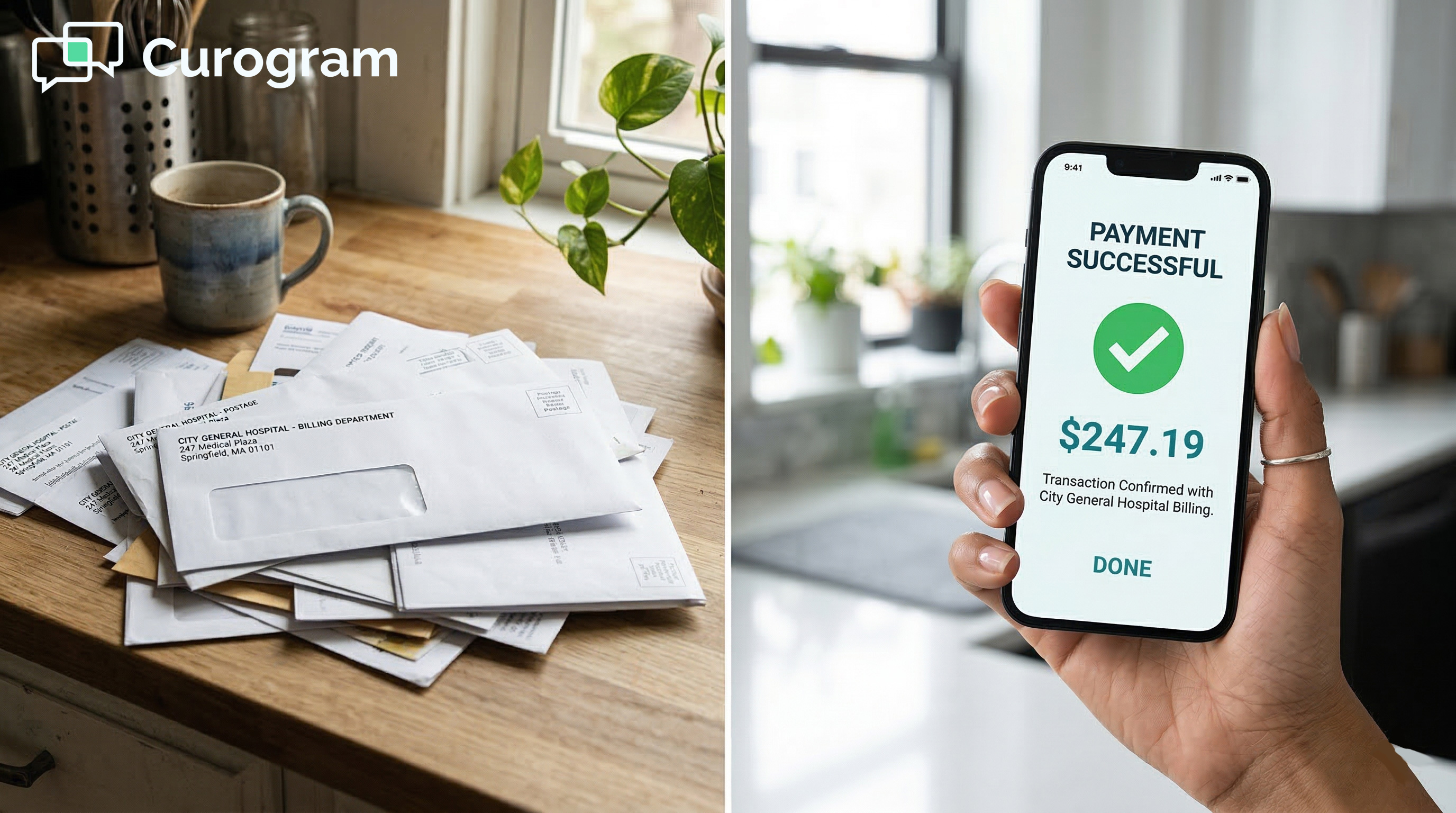
SmartCare EHR text-to-pay infographic showing 2X to 3X higher behavioral health collection rates than paper bills

Connect it to Your Clients

Behavioral health serves people with real barriers. Many face serious mental illness or substance use disorders. Many are enrolled through CCBHCs or court-mandated programs.

These clients often have a phone, even without a stable address. A text reaches them when mail cannot. A tap-to-pay link meets them where they already live, in their messages.

It also protects privacy. For 42 CFR Part 2 programs, payment texts can stay vague about treatment type. The client sees an amount and a secure link, nothing more. Their dignity stays fully intact.

And it feels personal, not transactional. A short, clear text reads like a note from a caring office. It is easier than a letter and softer than a call. People respond because it respects their time.

Flexibility helps too. One client may owe a small Medicaid copay. Another may owe a sliding-scale fee. A third may carry an old balance. Staff simply set the right amount for each text, and the client pays only what they owe.

The same channel also supports a real conversation. If a client has a question, they can reply by text. Staff can answer, send a fresh link, or set up a plan. The payment never feels like a dead-end demand.

Based on our internal data, more than 75% of Curogram appointment texts earn a reply. That same trust carries straight into payments. When you text the bill, more clients open it, read it, and act on it.

The Success: Financial Impact of SMS Payment Collection

Let us put real numbers on the change. Text-to-pay does not just feel better. It moves money in ways you can measure. Here is what closing the billing gap looks like in dollars.

Start with the cost you remove. Paper statements run $800 to $1,000 a month, per location. That spend covers paper, printing, postage, and staff time. Text-to-pay cuts most of that cost to near zero.

Look at the yearly savings by clinic size:

Locations

Monthly Paper Cost

Yearly Paper Cost

Yearly Savings With Text

1 location

$900

$10,800

Up to $10,800

3 locations

$2,700

$32,400

Up to $32,400

5 locations

$4,500

$54,000

Up to $54,000


These savings are real money back in your budget. For a Medicaid-thin organization, that alone can fund staff or services. And this is before you count a single new payment.

Remember, the savings scale with your footprint. The more locations you run, the more paper you cut. A growing organization feels this benefit most. Each new site simply skips the paper habit from day one.

Look at What you Collect, Not Just What you Save

Faster payment fixes your accounts receivable. A balance paid the same day never ages. A balance mailed three times can sit for 90 days or more. Old balances are the hardest to ever collect.

When clients pay fast, your A/R stays young and healthy. Most balances land in the 0 to 30 day window. Fewer slip into the danger zone past 90 days. That keeps more of every dollar you are owed.

For Medicaid-dominant organizations, these gains are not optional extras. Margins here are thin by design. Every point of collection improvement is material to staying open. A few thousand dollars a month can protect a program.

There is also staff time to recover. Mailing and chasing paper bills eats hours each week. Text-to-pay handles the first ask on its own. Your billers then focus only on the few clients who need real help.

Think about that shift in plain terms. Say paper follow-up takes one biller ten hours a week. Cutting that in half frees five hours. Over a year, that is more than 250 hours back for higher-value work.

Reminders and Payments as a Team

When clients show up, they generate billable visits. When they pay by text, you actually collect on those visits.

Curogram clients see strong results on the visit side too. Based on our internal data, their no-show rates run 53% below the industry average. Fewer no-shows means more completed sessions. More completed sessions means more revenue to collect.

Recall texts add even more. Based on our internal research, one multi-location practice recovered 1,240 patients through SMS recall alone. About 35% of recall recipients booked within a month. Each of those visits is new revenue that text-to-pay can then collect.

Put the full picture together for one clinic. You save up to $10,800 a year on paper. You may double or triple what you collect each month. You shrink old A/R and recover lapsed clients. Each piece feeds the next.

Now weigh that against the cost of the tool itself. The added collections and paper savings usually dwarf the platform fee. In plain terms, the gap you close pays for the fix. That is what makes the switch easy to defend to a board.

None of this requires a new clinical system. SmartCare keeps doing the clinical and claim work. Curogram simply closes the last mile to payment. The math rewards that one small change.

The closed billing gap is not a vague promise. It is paper cost removed, collection rates lifted, and A/R kept young. It is staff hours saved and lapsed clients recovered. For organizations serving Medicaid clients, those gains protect both the mission and the budget.


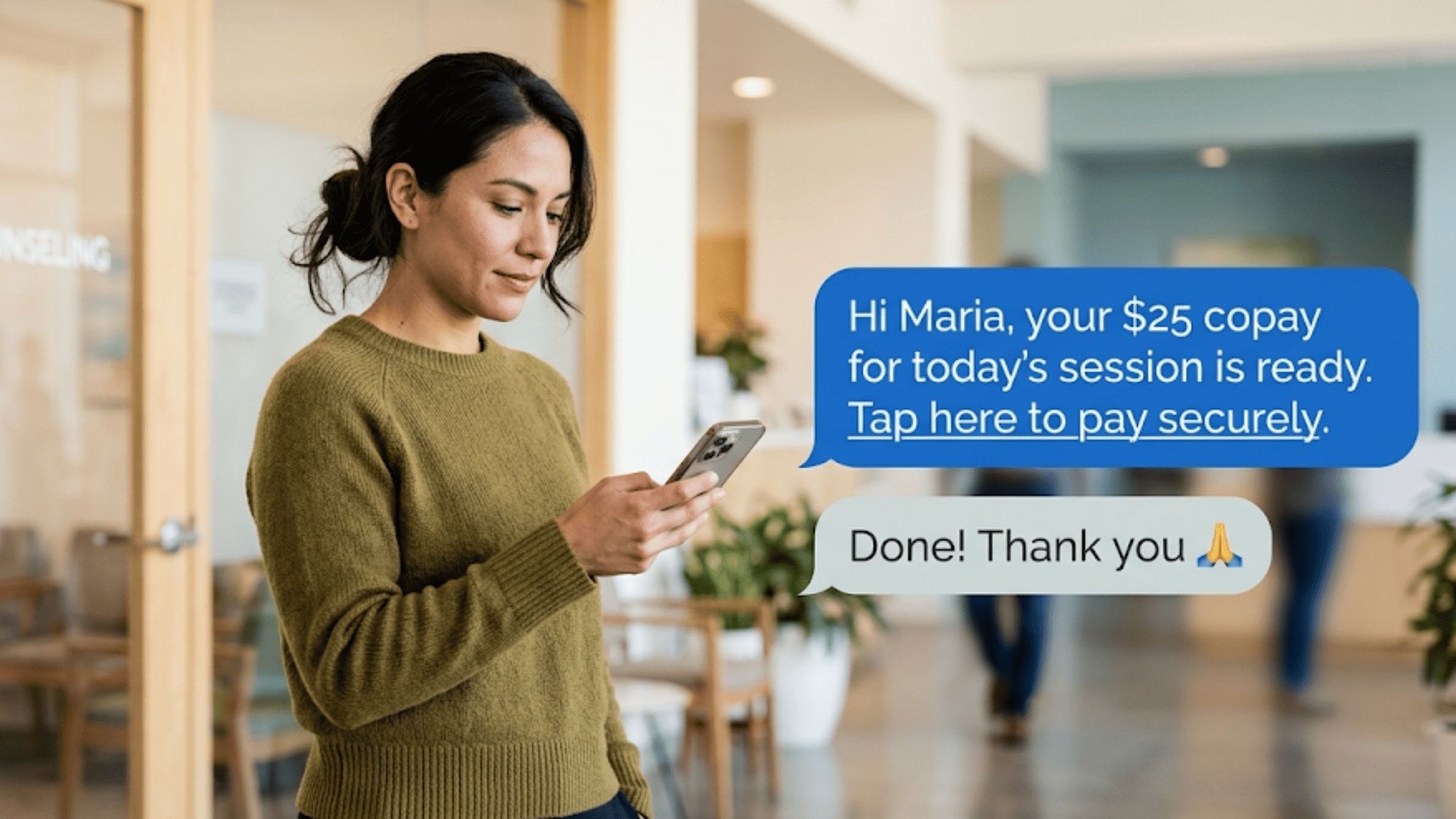
Client reading a text-to-pay copay message with a secure payment link outside a counseling office

How Curogram Text-to-Pay Turns a Session Into a Paid Balance in 60 Seconds

Curogram Text-to-Pay was built for the exact friction behavioral health teams face. The goal is simple. Turn a finished session into a paid balance before the client even leaves the parking lot.

Here is how the 60-second flow works. The client wraps up their visit. Staff pull the balance and send a payment text from Curogram. The client sees a short, clear message with a secure link.

They tap the link on their own phone. They enter their card once, or use a saved method. They confirm the payment and get an instant receipt. The whole path takes under a minute.

No card data ever rides inside the text itself. The message holds only an encrypted, PCI-compliant link. That keeps both the client and your organization protected.

The amount is always set by your staff. A small Medicaid copay, a sliding-scale fee, or an old balance all work the same way. The client only ever pays the exact figure you choose.

If the first text goes unanswered, Curogram can follow up on its own. You set the timing for gentle reminder messages. This replaces awkward phone calls with a soft, steady nudge.

Your team watches it all from one simple dashboard. They can see who paid, who is still pending, and who needs a personal reply. A quick text often settles a balance that a mailed letter never would have reached.

Best of all, it runs alongside SmartCare EHR. Clinical work stays in SmartCare. Payment conversations flow through Curogram. The two work as partners, not rivals.

For behavioral health organizations, this is the missing last step. You already do the hard clinical work each day. Curogram Text-to-Pay makes sure you actually get paid for it, quickly and with dignity intact.

Conclusion: Close the Billing Gap — Start Collecting via Text

The billing gap in behavioral health is real, but it is fixable. SmartCare EHR gives you a strong clinical backbone. It holds your notes, your claims, and your revenue cycle work. What it does not do is text your clients a way to pay.

Curogram fills that exact gap. Text-to-Pay extends SmartCare's reach all the way to the client's own phone. The clinical session stays in SmartCare. The payment flows through a simple, secure text link instead.

Think of the split this way. SmartCare EHR is for your clinical data. Curogram is for your clients' convenience. Together, they build a practice that is both clinically strong and easy to reach.

The payoff lands where it counts. You stop spending $800 to $1,000 a month per location on mailed paper. You collect more of what you are owed. And you shrink the unpaid balances that age out past 90 days.

For Medicaid-dominant organizations, that shift is not small. Every point of collection improvement supports your sustainability. Based on our internal data, Curogram clients confirm more than 75% of appointment texts. That same client trust turns more open balances into real payments.

The clients you serve deserve this ease. People facing serious mental illness or substance use disorders should not be chased by mail. A clear text respects their time and their dignity. It meets them where they already are.

Stop spending $800 to $1,000 a month per location on paper statements that barely collect. Book a demo and see how Curogram turns that wasted spend into recovered revenue.


Frequently Asked Questions

How does Curogram keep text-to-pay secure and HIPAA-compliant for behavioral health clients?

Curogram uses HIPAA-compliant, encrypted payment links with PCI-compliant processing. No card data travels inside the text, only a secure link. For 42 CFR Part 2 programs, payment messages can avoid naming the treatment type entirely.

How can Text-to-Pay handle sliding-scale fees and changing Medicaid copay amounts?

Staff set a custom amount for each client encounter. Whether it is a Medicaid copay, sliding-scale fee, or old balance, the right figure goes out by text. The client sees the exact amount owed and pays with one tap.

Why do behavioral health clients pay faster by text than by mailed statement?

Many clients lack a stable address but still carry a phone. A text reaches them instantly, while mail may never arrive. Tapping a link feels easier and less stressful than opening a letter or facing a billing call.

What should staff do when a client does not pay after the first payment text?

Curogram can send automated reminder texts at set intervals. Staff can also track payment status from the dashboard and follow up by text. This stays softer than phone calls and works better than another mailed paper bill.

How does text-to-pay work alongside SmartCare EHR without replacing it?

SmartCare keeps handling clinical notes, claims, and revenue cycle work. Curogram simply adds the client-facing payment text on top. Clinical data stays in SmartCare, while payment conversations flow through Curogram, so the two systems complement each other.


eClinicalWorks Text-to-Pay | SMS Payment Links for Enterprise RCM

eClinicalWorks Text-to-Pay | SMS Payment Links for Enterprise RCM

💡 eClinicalWorks text-to-pay SMS patient payment billing sends secure links to patients right after a visit. Patients pay in seconds from their...

Read More
Mobile Text Payments for SmartCare EHR Behavioral Health Clients

Mobile Text Payments for SmartCare EHR Behavioral Health Clients

💡 Behavioral health clients increasingly prefer to pay on their phones. With text-to-pay through a platform like Curogram, the bill arrives by SMS...

Read More
NextGen Text-to-Pay | SMS Payment Links That Replace Paper Statements

NextGen Text-to-Pay | SMS Payment Links That Replace Paper Statements

💡 NextGen Enterprise text-to-pay powered by Curogram sends patients a secure SMS payment link immediately after their visit. There is no portal...

Read More