10 min read

Cut Behavioral Health No-Shows With SmartCare EHR Reminders

Cut Behavioral Health No-Shows With SmartCare EHR Reminders
💡 SmartCare EHR manages scheduling, but it does not send automated texts that clients confirm. Curogram fills that gap and drives real no-show reduction for behavioral health practices.

How Curogram helps SmartCare EHR practices:

  • Sends automated 2-way SMS appointment reminders clients answer in one tap
  • Lets clients confirm, cancel, or reschedule by text instead of a phone call
  • Stays HIPAA-compliant and supports 42 CFR Part 2 confidentiality needs
  • Cuts no-show rates up to 53% below industry averages (based on our internal data)
  • Frees staff from 40–60 manual confirmation calls each day
Atlas Medical Center dropped its no-show rate from 14.20% to 4.91% in three months. That is more than 3X better than the behavioral health average.

An empty chair in a behavioral health clinic means more than a lost time slot. It can mark a skipped therapy session, a missed dose, or a client drifting from care. For psychiatric and substance use programs, that gap can turn serious fast.

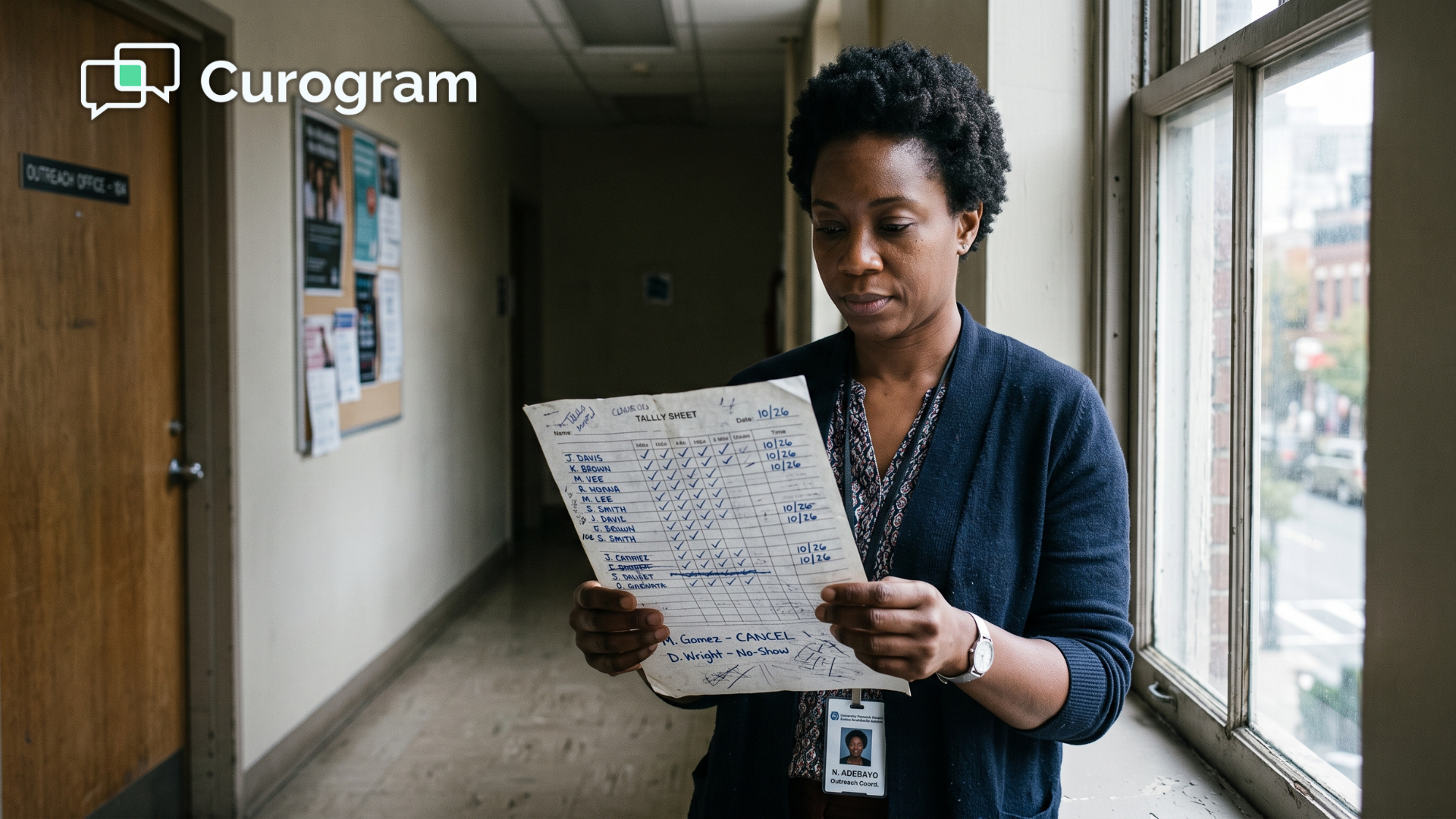
Most clinics already feel the cost. Behavioral health no-show rates run high, often well above other specialties. Staff fight back the only way they can. They call clients one by one, 40 to 60 times a day. Most of those calls reach voicemail and never get a reply.

Here is the catch. SmartCare EHR is a strong clinical system. It handles charts, scheduling, and documentation with ease. But it does not send automated text reminders that clients can confirm with a quick reply. That gap leaves your front desk doing manual work that rarely sticks.

A smarter approach changes this. Automated 2-way SMS reminders let clients confirm, cancel, or reschedule by text. The message goes out on its own. The client taps a reply. Your schedule updates without a single phone call.

The payoff is real SmartCare no-show rate reduction, not just busier staff. Curogram runs as a communication layer beside SmartCare EHR. Your clinical data stays where it belongs. Your reminders finally run on their own.

This guide walks through the full picture. You will see why manual calls fall short for behavioral health clients.

You will see how an automated appointment reminder system drives no-show reduction for behavioral health teams on SmartCare EHR. And you will see the numbers that shift the business case. Atlas Medical Center, for one, cut its no-show rate from 14.20% to 4.91%.

Let's start with the real villain: the confirmation void.

The Villain: Why Manual Calls Cannot Solve Behavioral Health No-Shows

Every behavioral health practice fights the same quiet enemy. It is the gap between a booked slot and a client who never arrives. We call it the confirmation void.

The void runs deep in this field. Missed visits in behavioral health sit far above most specialties. General medical practices often see no-show rates near 5% to 7%. Behavioral health rarely gets that lucky.

Here is how the numbers compare:

Setting

Typical no-show range

General medical practices

5%–7%

Outpatient psychiatry

Around 23%

Community mental health (first visit)

25%–40%

Substance use treatment

25%–50%


For first behavioral health visits, studies report that roughly 25% to 40% of clients do not show up. In substance use care, no-shows and early dropout are described as major, ongoing challenges. The pattern is clear. The sickest, highest-need clients are often the hardest to reach.

These gaps hit the budget hard. Consider a mid-size CCBHC with 40+ clinicians. Each session may bill $150 to $250. When many clients skip visits, the losses pile up quickly.

By our own rough math, such an organization can lose $20,000 to $30,000+ each month. We share that as an illustrative estimate, not a fixed figure. Still, even a careful guess shows the scale of the problem.

So why can't staff simply fix this by hand? They try every single day. Front desk teams place 40 to 60 confirmation calls daily. Most of those calls go nowhere.

They land in voicemail or ring out. Clients rarely call back to confirm. The work burns hours and still leaves chairs empty. This is not a sign of a lazy team. It is a sign of a broken tool.

Add the SmartCare EHR Gap

SmartCare manages appointment scheduling and clinical records well. But it does not include automated SMS reminders with 2-way confirmation. That means no automatic text, no one-tap reply, and no live update when a client cannot make it.

In behavioral health, a missed session is not just lost money. It is a clinical event. A skipped therapy hour can act as a relapse trigger. A missed psychiatric visit can break a medication routine.

For some clients, that break can lead to a crisis. Missed visits also disrupt treatment continuity, which slows real progress. The cost is measured in health, not only dollars.

Some clients need even more contact here. Court-mandated clients must attend to meet legal terms. MAT clients need steady, frequent check-ins to stay on track. These groups need proactive, high-frequency touchpoints.

A passive patient portal cannot deliver that. It waits for the client to log in, and many never do. Strong CCBHC appointment engagement needs outreach that comes to the client, not the other way around.

This is the core of psychiatric no-show prevention. You cannot prevent what you cannot reach. Manual calls reach too few people, too late.

The confirmation void is not a staffing flaw. Your team already works hard. It is a tooling flaw. Without automated SMS reminders your EHR does not send, the void stays open — and clients keep slipping through.

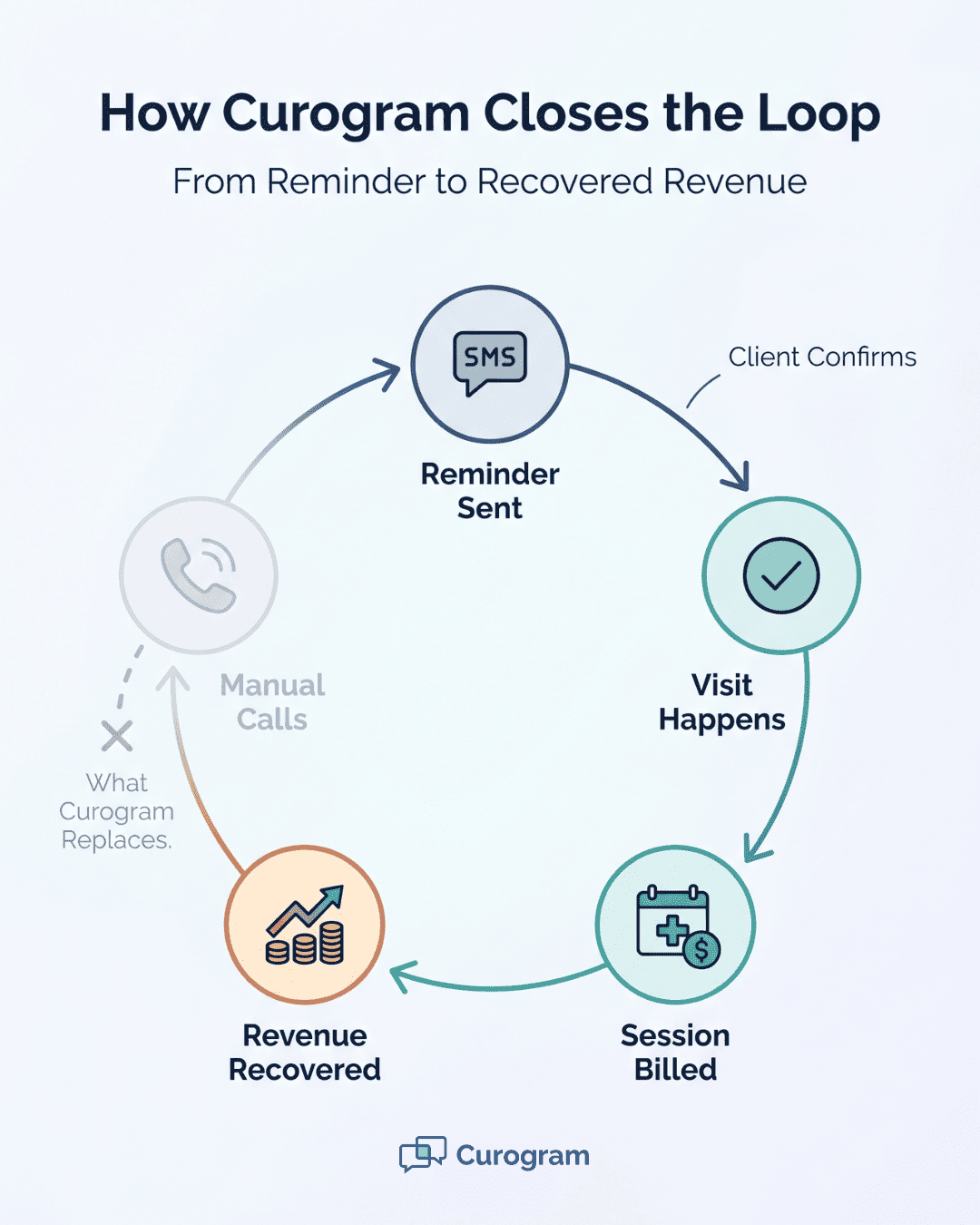
Infographic showing Curogram's 5-step loop from SMS reminder to recovered revenue for behavioral health practices

The Guide: How Automated Reminders Work Alongside SmartCare EHR

You do not need to call more. You need a different system. Curogram acts as your Attendance Architect — the HIPAA-compliant platform that turns reminders into confirmed visits.

The idea is simple. Curogram replaces manual confirmation calls with automated 2-way text reminders. These reminders help reduce behavioral health no-shows by up to 53% and recover lost monthly revenue. Your staff stop chasing and start confirming.

At the center sits one core tool: Curogram's 2-Way Appointment Reminders with Confirmation. The system sends a text before each visit. The client reads it and taps a single reply. They can confirm, cancel, or ask to reschedule right there.

This matters because texting fits how people live. Almost everyone reads a text within minutes. Few people answer an unknown phone call. A reminder that meets clients in their inbox simply works better.

Now, the key point. Curogram does not replace SmartCare EHR. It works alongside it. The two systems play different roles, and that split is the whole strength.

Think of it like a clean division of labor:

  • SmartCare EHR holds your clinical work. Charts, notes, scheduling, and records all stay there.
  • Curogram handles the client conversation. Reminders, confirmations, and replies flow through it.

Your clinical documentation never leaves SmartCare. Your communication finally runs on autopilot. Together, they cover both sides of care without forcing a rip-and-replace.

This complementary fit is built for behavioral health. The field has special needs that general tools ignore. Curogram is shaped around those needs.

  • Take serious mental illness. These clients may struggle with memory or motivation. A gentle, well-timed text lowers the bar to show up. It removes friction instead of adding it.

  • Take substance use disorders and MAT programs. These clients need frequent, steady contact. Curogram can send reminders on a higher cadence. That rhythm supports recovery and keeps clients close to care.

CCBHCs gain too. They serve large, complex caseloads with tight resources. Automated reminders stretch staff time further. Better CCBHC appointment engagement comes without new hires.

Court-mandated clients also benefit. They must keep appointments to meet legal terms. A clear text trail helps both the client and the program stay on record.

Some leaders worry that automation feels cold. The opposite is true here. A reminder that arrives on time feels like care, not a robot. It tells the client, "We saved a spot for you, and we want you here."

That is the heart of strong behavioral health appointment confirmation. The message is personal, even when the system is automatic. Curogram does the busy work so your team can focus on real human connection. The Attendance Architect builds a schedule that holds.

The Success: No-Show Reduction Metrics That Change the Business Case

Numbers tell the real story. When reminders run on their own, the schedule fills back up. Here is what that looks like in practice.

Start with Atlas Medical Center. Before Curogram, the clinic battled a steady stream of missed visits. High no-show rates drained revenue and scrambled the daily schedule. Then they switched on automated reminders and confirmations.

The change was fast and clear. Based on our internal data, Atlas Medical Center cut its no-show rate from 14.20% to 4.91% in just three months. That is more than 3X better than the behavioral health industry average. Empty slots turned back into kept appointments.

This is not a one-off result. Across our client base, Curogram practices see no-show rates 53% lower than industry averages, based on our internal research. That single number reshapes the entire business case. It moves no-shows from "cost of doing business" to "problem we solved."

Confirmation rates back this up. Among current Curogram clients, more than 75% of appointments get confirmed through automated reminders, based on our internal data. A confirmed appointment is a near-certain visit. The schedule stops being a guess.

Let's apply this to psychiatry. Outpatient psychiatry often sees no-show rates near 23%. Now apply Curogram's verified 53% reduction to that baseline. The result lands around 11%.

We share that ~11.03% figure as an illustrative computation, not a measured client number. It simply shows the math. A 53% cut on a 23% rate brings missed visits down by roughly half. For psychiatric no-show prevention, that is a major swing.

Here is a simple before-and-after view:

Metric

Before automation

After Curogram

General no-show rate (Atlas)

14.20%

4.91%

Result vs. industry

At or above average

More than 3X better

Psychiatry rate (illustrative)

~23%

~11%

Appointment confirmation rate

Manual, low

>75%


Now connect this to money. The revenue math is where leaders pay attention. Reducing no-shows protects sessions that were already booked. Each recovered visit drops straight to the bottom line.

Consider a mid-size behavioral health organization. Cutting no-shows by 53% can recover $10,000 to $20,000+ each month. We present that range as an illustrative estimate, built from typical session values and no-show volume. Your real number depends on your size and rates.

The logic still holds at any scale. Fewer missed visits means more billed sessions. More billed sessions means steadier cash flow. Steadier cash flow means a healthier practice.

The Deeper Win

Recovered appointments are also recovered care. A client who keeps a session stays in treatment. That continuity lowers relapse risk and supports better outcomes.

This is what real SmartCare no-show rate reduction delivers. It is not a vanity metric. It is a tool that protects both revenue and recovery at the same time.

The operational gains stack up as well. Automated confirmations free your front desk from endless calls.

Covina Arthritic Clinic, for example, confirmed more than 1,100 appointments per month through Curogram, based on our internal data. That volume once required hours of manual follow-up.

Now that staff time goes elsewhere. Teams can focus on intake, billing, or client support. The same headcount handles a fuller schedule. Capacity grows without new hires.

Think about the full loop. A reminder goes out. A client confirms. The visit happens. The session gets billed. Nothing falls through the cracks.

That loop is what changes the business case for good. You are no longer paying staff to chase ghosts. You are running a system that holds the schedule together. Behavioral health appointment confirmation becomes a quiet, reliable engine.

The takeaway is direct. The metrics are not just nice to see. They prove that automated reminders pay for themselves. For any behavioral health leader weighing the cost, the math points one way.


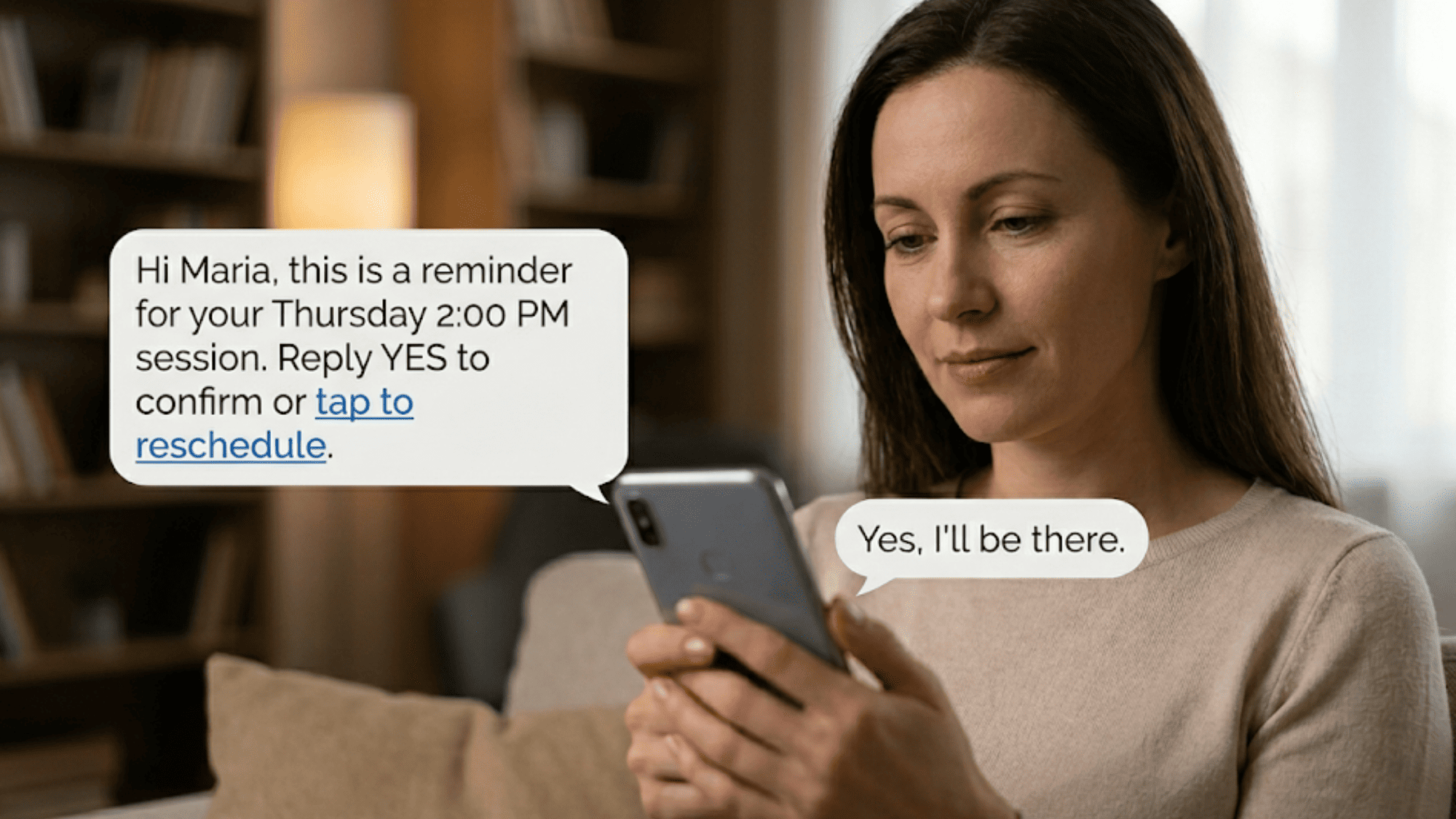
Client confirming a behavioral health appointment by text using Curogram's 2-way SMS reminder

How Curogram's 2-Way Reminders Keep Behavioral Health Schedules Full

Most reminder tools only push messages out. They tell the client about a visit and stop there. Curogram works in both directions, and that two-way flow is the difference.

Here is how it runs. Curogram sends an automated text before each appointment. The client reads it and replies with one tap. They can confirm, cancel, or ask to reschedule on the spot.

When a client cancels or wants a new time, the reply does not vanish. Curogram routes it to your staff in real time. Your team can offer open slots right inside the same text thread.

That single step prevents most no-shows before they happen. A canceled slot gets filled, not lost. A confused client gets a fast answer, not a missed visit. The schedule stays full and current.

The system is built for behavioral health from the ground up. Reminders stay HIPAA-compliant, with a signed BAA in place. For 42 CFR Part 2 programs, message content can be set to hide sensitive appointment details. Confidentiality holds while reminders still go out.

You can also tune the cadence by client type. MAT and court-mandated clients can get more frequent touchpoints. New intakes can get extra reminders to lower first-visit drop-off. The pace matches the population.

All of this sits beside SmartCare EHR, not on top of it. Clinical records stay in SmartCare. Client conversations flow through Curogram. Neither system gets in the other's way.

The result is steady CCBHC appointment engagement without added staff strain. Clients feel seen, and your calendar stays reliable. That is the quiet power of true 2-way reminders. They turn a passive schedule into an active one.

Conclusion: Stop Chasing Clients — Start Confirming via Text

The pattern is clear by now. SmartCare EHR gives your practice a strong clinical backbone. It holds your charts, your notes, and your schedule with care. But it leaves one gap wide open.

That gap is the client touchpoint. SmartCare does not send automated reminders that clients confirm by text. Curogram closes that gap. It extends SmartCare's reach all the way to the client's phone.

Think of the split this way. SmartCare EHR is built for your clinical data. Curogram is built for your clients' convenience. One protects your records. The other protects your schedule.

Together, they create a practice that is both clinically strong and easy to reach. Your team stops dialing 40 to 60 numbers a day. Your clients start tapping a single reply instead. The chase finally ends.

The proof is on the page. Atlas Medical Center cut its no-show rate from 14.20% to 4.91% in three months. That is more than 3X better than the industry average, based on our internal data. For a CCBHC, that swing means more kept sessions and steadier revenue.

It also means better care. Every recovered visit keeps a client in treatment. That continuity supports recovery and lowers risk. Strong attendance is a clinical win, not just a financial one.

The next move is simple. You can see your own potential, not just ours. Run the numbers for your own practice and your own caseload.

Stop chasing 40–60 confirmation calls a day. Schedule a demo and watch automated 2-way reminders fill your schedule while your clinical data stays in SmartCare EHR.


Frequently Asked Questions

How does Curogram keep automated SMS reminders HIPAA-compliant for behavioral health, including 42 CFR Part 2?

Curogram provides full HIPAA compliance with a signed BAA, and all reminder texts are encrypted. For 42 CFR Part 2 programs, message content can be set to hide appointment type details, protecting heightened confidentiality.

Why do text reminders work better than the phone calls clients are used to?

Most clients read texts within minutes but ignore unknown calls. SMS open rates sit around 98%, while calls often reach voicemail. Curogram adds a text option without removing the call option, so reach improves right away.

How does Curogram handle rescheduling when a client replies that they cannot attend?

When a client texts a cancel or reschedule request, Curogram routes it to staff in real time. Your team offers new times in the same thread, which keeps the slot filled and prevents a no-show.

How does Curogram support court-mandated and MAT clients who need frequent contact?

You can set a higher reminder cadence for these clients. Curogram sends steady, proactive texts that match their needs. This frequent touchpoint supports attendance, keeps a clear record, and helps maintain treatment continuity.

Why doesn't SmartCare EHR alone solve behavioral health no-shows?

SmartCare manages scheduling and records, but it does not send automated reminders clients confirm. That gap leaves staff making manual calls. Curogram adds the 2-way text layer that turns reminders into confirmed visits.