
Patient Texting for Prime Clinical Practices | Curogram
 Aubreigh Lee Daculug : Aug 12, 2026, 6:00:00 PM
Prime Clinical's portal reaches 15–20% of patients. Texting reaches 98%. Two-way SMS with a 48-hour HL7 integration. Schedule a demo.
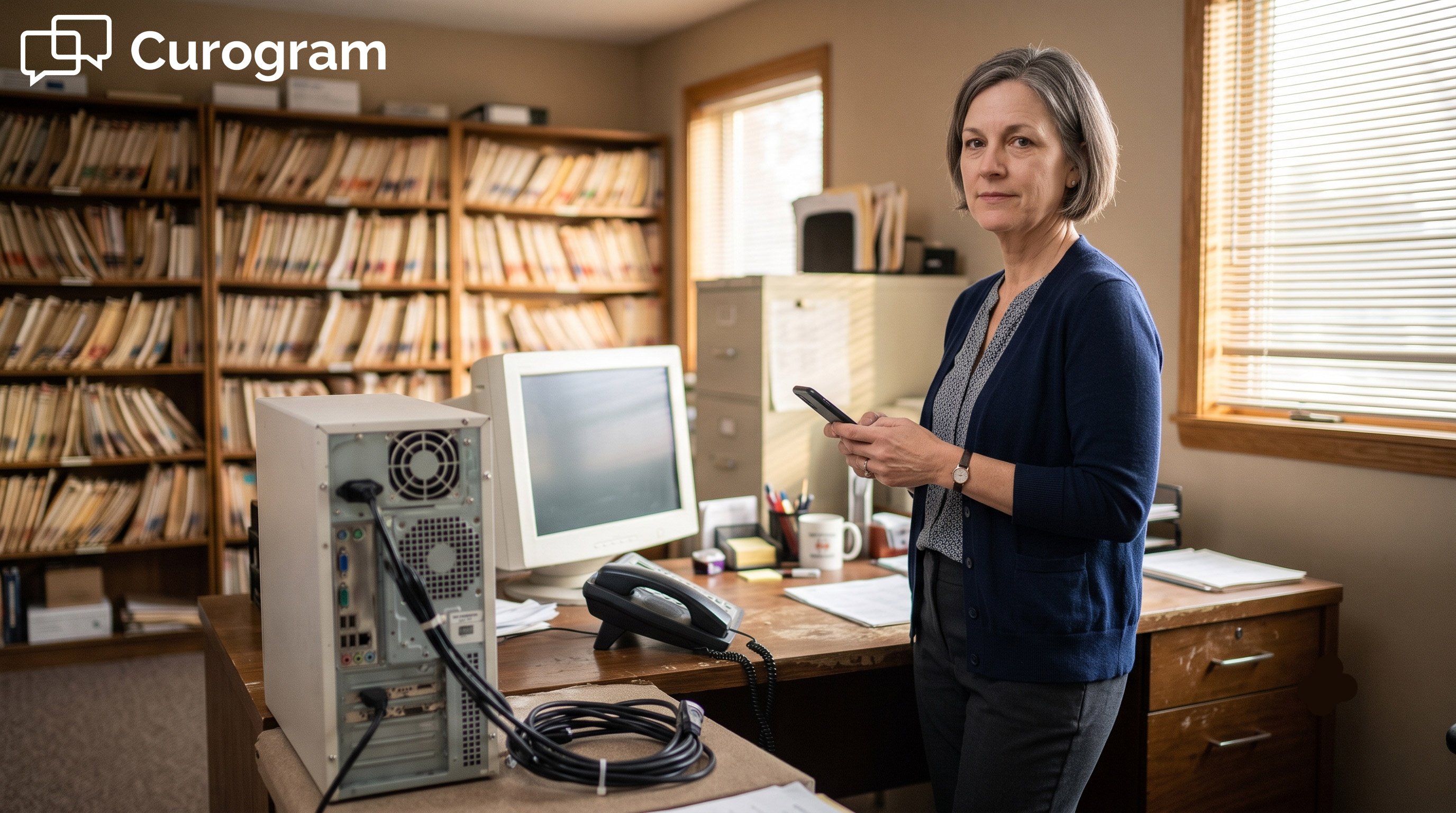
Open the mandatory disclosure PDF hosted on primeclinical.com and read the last line. It names CARETRACKER, INC, aka Prime Clinical Solutions, A Harris Healthcare Company, at 2429 Military Road, Suite 300, Niagara Falls, NY. Older pages on the same site still show the Pasadena office and the 877 number.
That footer is the whole announcement for most practices. No press tour, no migration notice, no product memo.
Prime Clinical has carried a lot of practices since 1983. Intellect runs the schedule and the billing. Patient Chart Manager holds four decades of charts, and it is still ONC certified. Nobody rips that out because a corporate parent changed.
Our point is narrower than the acquisition. Every gap your front desk feels today was already there in 2019, and it was there in 2015. Harris Healthcare Prime Clinical patient communication is a question your practice can answer on its own, this quarter, without touching a single chart.
Staff still work a call list to confirm tomorrow's schedule. Patients still hit a portal login screen and give up. Balances still go out by mail and drift past 45 days. Those stay your problems regardless of whose logo ends up on the login page.
Waiting for an owner to solve them is the expensive option. A mid-size practice leaks roughly $25,000 a month to no-shows alone at the rates we see before automated reminders go live, and that number does not pause during a corporate transition.
Loyalty to a vendor is reasonable after 20 years. Depending on that vendor for the part of the practice patients touch every single day is a separate decision, and it is one you can reverse in about two days.
Most of the change shows up on paper: a new corporate name, a new address, a new parent company. Your front desk workload did not move in either direction.
The ONC mandatory disclosure and the current product brochures on primeclinical.com carry an identical footer. CARETRACKER, INC, aka Prime Clinical Solutions, A Harris Healthcare Company, 2429 Military Road, Suite 300, Niagara Falls, NY 14304.
Harris CareTracker states on its own site that it operates as part of Harris Healthcare, wholly owned by Constellation Software. Constellation buys vertical software companies and holds them for the long term. Its operating groups run dozens of small vendors at once, and that is the structure Prime Clinical now sits inside.
The Prime Clinical acquisition by Harris Healthcare arrived without a public roadmap, a product announcement, or a sunset date.
Practices asking about Prime Clinical support changes are looking at the same three channels as before: a phone number, a remote support link, and a client login. The site lists no support email address.
Charting works. Scheduling works. Claims go out.
Patient Chart Manager holds its ONC certification, and Prime Clinical software still speaks HL7 and DICOM. That matters for anything you bolt onto it, including a communication platform.
No forced migration to CareTracker has been announced anywhere we can find. If one ever comes, it will arrive with notice and a project plan, the way EHR migrations always do.
Clinical risk from this transition reads low. The thing worth budgeting for is another year of the same front desk workload.
Prime Clinical never shipped two-way patient texting. Reminders, where practices have them, come from a call list or a bolt-on dialer. Review requests happen when someone remembers.
Sit at a five-provider practice on a Tuesday morning. Two staff work a confirmation list of roughly 80 names. Fourteen go to voicemail.
Three of those patients call back at 12:40 and get a busy signal, so they leave a message that gets returned Wednesday. The post-visit review request never goes out, because two patients need rescheduling and the phone line is stacked four deep.
Patient Portal exists and does its job for records access. Patients forget the password, request a reset, wait for the email, then call the front desk anyway.
HIPAA-compliant 2-way texting for Prime Clinical practices closes most of that loop without anyone touching the chart.
Waiting for a Prime Clinical future roadmap patient communication announcement carries a price, and the math is easy to run.
Based on our internal data, one practice moved no-shows from 14.20% to 4.91% within three months of turning on automated reminders. Apply both rates to a mid-size schedule.
|
Monthly booked visits |
No-show rate |
Visits lost |
Value at $150 each |
|---|---|---|---|
|
1,800 |
14.20% |
256 |
$38,400 |
|
1,800 |
4.91% |
88 |
$13,200 |
|
Gap |
9.29 points |
168 |
$25,200 |
Visit value of $150 is our assumption, so treat the dollar column as illustrative. The rate change comes from our internal data. At $200 per visit the monthly gap runs closer to $33,600, which lands inside the range we see at six-provider and eight-provider groups.
Fifteen years of loyalty is a real thing, and the frustration behind "loyalty should go both ways" is fair. It also has no effect on next month's no-show line.
Practices that came through an EHR migration with their patient history intact usually kept that history somewhere other than the EHR.
Eight things live inside a communication layer, and none of them are stored in your EHR:
Staff built every one of those. Rebuilding them after a platform change is the line item nobody puts in a migration budget.
Patients save it. They text it back four months later about a refill. Keeping that number through a platform change protects a channel you already spent a year training patients to use.
Every thread carries a timestamp and a full message record. Those records export into Prime Clinical Document Manager as part of the patient's file, which is what you want when a billing dispute or an audit shows up 18 months later.
The connection runs on HL7, the same standard Prime Clinical has supported for years. Your appointment schedule flows out. Confirmations, replies, completed intake forms, and message history flow back to the chart.
Staff keep working in Intellect. CareTracker Prime Clinical patient engagement does not require a second charting system, a data conversion, or a new claim workflow for your billers.
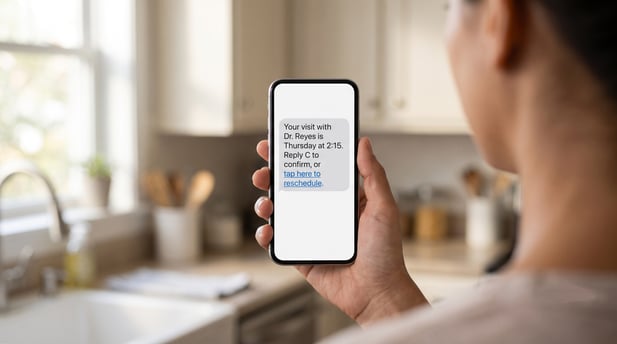
Move an appointment in Intellect at 4:15 and the reminder schedule updates on its own. Nobody cancels a queued text by hand, which is the failure mode with bolt-on dialers that pull a schedule once a night.
Curogram complements Prime Clinical. It never replaces it. Setup details for the connection sit on Curogram's Prime Clinical integration page.
Say CareTracker offers your practice a migration in 2028 and the numbers work out.
Charts convert. Billing rules get rebuilt. Templates in the EHR get recreated by hand, one at a time, usually by the person who has been there longest.
Your communication layer skips all of that, because it never lived in the EHR. EHR vendor transition communication independence means the texting number, the templates, the reminder timing, and the full message archive stay exactly where they are. Curogram connects to the next system and keeps sending.
Retraining on the communication side runs about five minutes per person. Our founder built the interface by putting engineers next to front desk staff for full days at a time, which is why the learning curve is that short.
Prime Clinical keeps doing what it has done since 1983. Charting in Patient Chart Manager. Scheduling, billing, and claims in Intellect. Document Manager as the record of file.
Communication turns into a line item you control, with your own login, your own support queue, and a release schedule that has nothing to do with Constellation's plans for the quarter.
Billers notice no change at all. Payment posting, claim scrubbing, and the aging report stay in Intellect exactly as they are today.

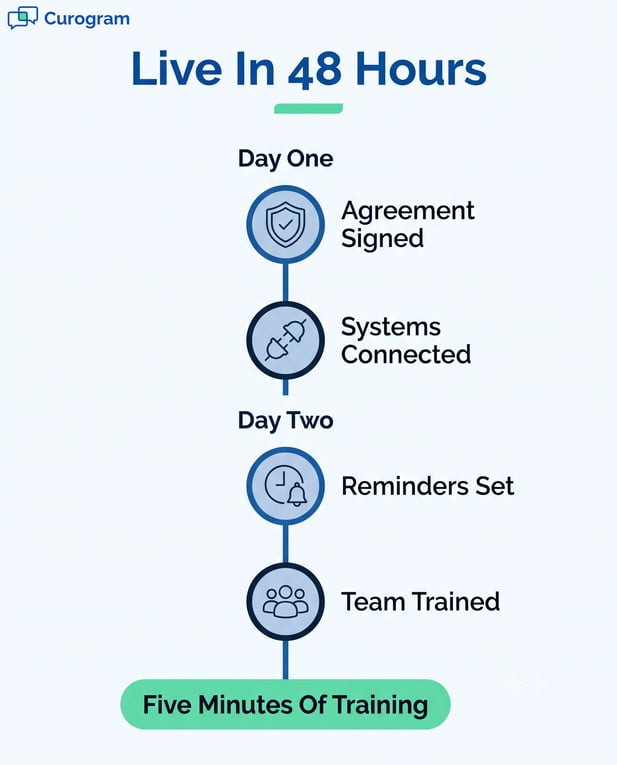
Setup runs about two days, and most of that time sits on your side of the checklist.
Nothing here requires an IT hire, a server purchase, or downtime in Intellect.
Signing on triggers the business associate agreement, so the HIPAA paperwork is done before the first text goes out. Our team sets up the HL7 feed against your Prime Clinical server, then the appointment schedule syncs. You either get a new practice texting number or port the line patients already dial.
Reminder cadence gets set, and most practices land on seven days, two days, and four hours before the visit. Templates go in for confirm, reschedule, no-answer, and post-visit.
Intake forms map to the fields your staff currently retype. Front desk walkthrough takes roughly five minutes per person.
Four tasks move off the phone almost immediately. The table below is what practice managers describe when we check in at the two-week mark.
|
Task |
Before |
After |
|---|---|---|
|
Confirmations |
About 80 outbound calls a day, 14 voicemails |
Reminders send on schedule, replies land in one inbox |
|
Intake |
Clipboard at check-in, retyped after the visit |
Form link texted three days ahead, answers arrive before arrival |
|
Balances |
Statement mailed, 30 to 45 day wait |
Text-to-pay link sent the day the claim closes |
|
Reviews |
Sent when somebody remembers |
Automatic ask after a completed visit |
Phones still ring. Call volume drops by as much as 50% based on our platform data, and what remains is prior auths, clinical questions, and new patients. Those are the calls worth a person.
Money moves faster too, since the ask lands on a phone the same day the claim closes. Text-to-pay is worth a closer look if your aging report is where the pain shows up first.
All of the following comes from our internal data across current clients.
One practice cut no-shows from 14.20% to 4.91% inside three months. Confirmation rates across current clients run above 75%. A Southern California specialty clinic confirms more than 1,100 appointments a month with nobody dialing.
SMS recall works on the patients who quietly stopped coming in. At one multi-location practice, 1,240 patients returned from recall messages alone, and 35% of everyone contacted booked within a month.
Reviews follow the same pattern once the ask is automatic. Another multi-location practice collected 1,064 new five-star reviews in three months, with 90% of responding patients rating five stars. Across Curogram clients, no-show rates sit roughly 53% below the industry average.
Six numbers tell you whether the layer is doing its job. Pull them at day 30, then again at day 90.
Opt-outs deserve a line on that report too. A patient who replies STOP is flagged in the system, and nobody on staff can text that number again by accident.
The Curogram Unified Inbox is where this stops being an abstraction for your staff. Inbound texts, reminder replies, completed forms, payment confirmations, telehealth invites, and internal staff notes all land in a single dashboard tied to the patient record. No flipping between four screens to answer one question.
The full layer runs from that inbox: two-way HIPAA-compliant texting, automated appointment reminders, digital intake forms, text-to-pay, automated review requests, and browser-based telehealth with no patient download.
Every piece works with Prime Clinical through the HL7 integration, live in 48 hours, with about five minutes of training per staff member.
Security sits where it needs to for a covered entity. Curogram is HIPAA compliant and SOC 2 Type II, PHI never rides in the raw SMS body, and patients verify identity before opening a secure link.
One property matters more than any feature on that list. The inbox belongs to your practice, not to your EHR vendor. Whatever Constellation decides about the CareTracker roadmap in 2027, your patient conversations, your templates, and your number stay under your control.
Constellation will share its plans for Prime Clinical on Constellation's schedule. Nobody at your practice gets a vote in that.
Next month's no-show rate is a different question. So is the 80-call confirmation list, the mailed statement sitting at day 40, and the review request that keeps getting skipped.
Those sit inside your control right now, and they are worth roughly $25,000 a month at a mid-size practice.
Prime Clinical for charting. Curogram for communication. That split holds whether the transition brings nothing at all or a migration offer three years from now, because the communication layer travels with the practice.
Take the question off the table before the next corporate memo lands.
See how Curogram fills the communication gap in 48 hours. Schedule a demo, and we will show you the layer running against a Prime Clinical schedule, plus what your first two weeks would look like.
 Aubreigh Lee Daculug : Aug 12, 2026, 6:00:00 PM
Prime Clinical's portal reaches 15–20% of patients. Texting reaches 98%. Two-way SMS with a 48-hour HL7 integration. Schedule a demo.
 Jo Galvez : May 5, 2026, 10:00:00 AM
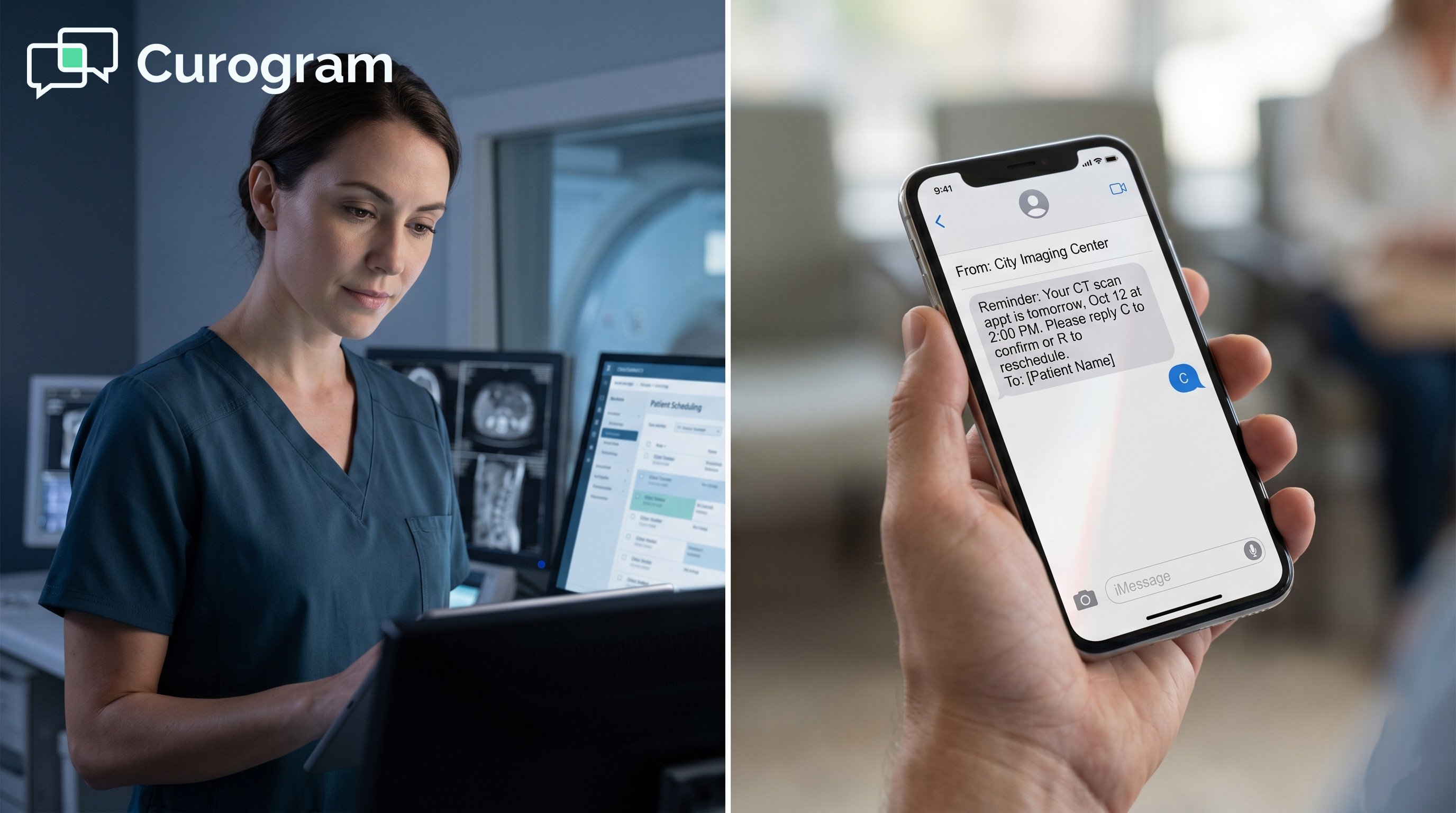
Curogram integrates with StreamlineMD to deliver 2-way HIPAA texting for imaging centers. Overcome communication gap and automate patient engagement.
 Jo Galvez : May 1, 2026, 3:00:01 PM
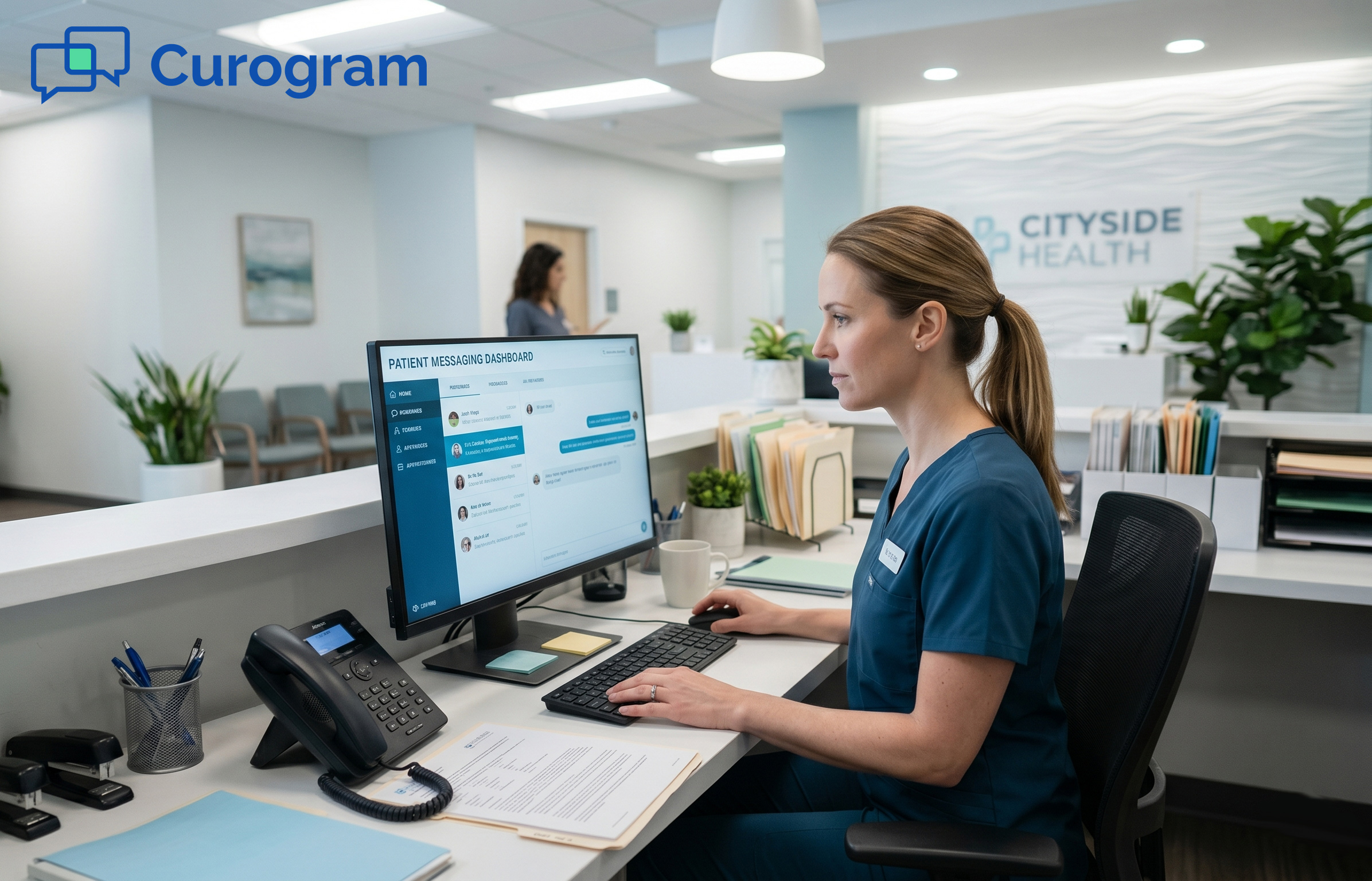
Add HIPAA-compliant two-way texting to your GE Centricity clinics with Curogram's live integration. Deploy across 20+ locations, no EHR migration...