
How to Scale Interventional Impact with Osmind Broadcast Messaging
💡 Broadcast messaging for Osmind lets clinics send bulk SMS to all patients at once. This tool works with Curogram to deliver updates, alerts, and...
7 min read
Jo Galvez
:
February 5, 2026
A pipe bursts at 6 AM. Your TMS machine needs repair. A winter storm drops six inches of snow before noon. In mental health care, the wrong kind of surprise can turn a normal day into chaos.
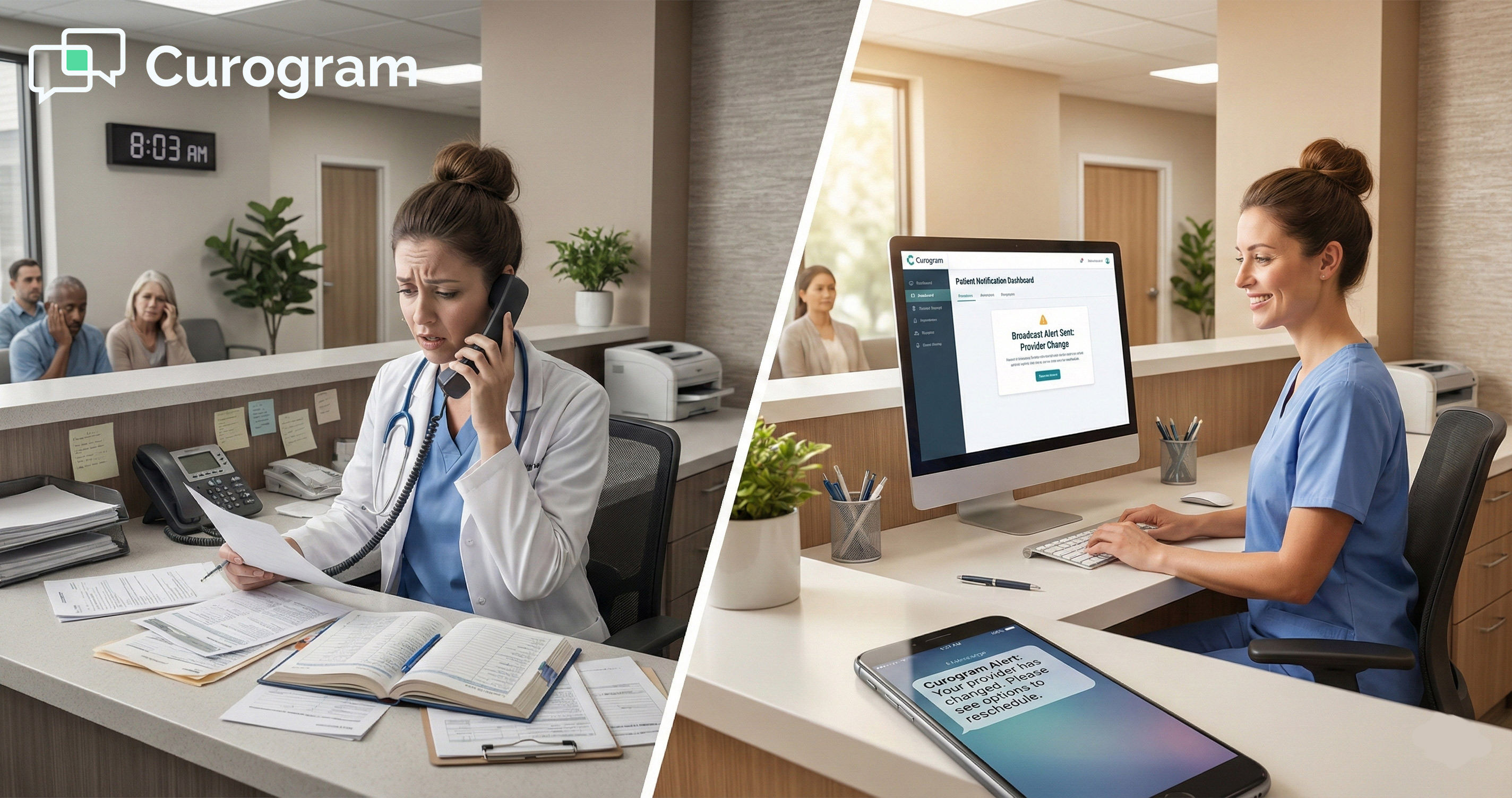
Your front desk has 40 patients to reach. Each call takes three minutes. That adds up to two full hours of phone work. By then, half your patients are already on the road.
For clinics that offer special treatments like ketamine or Spravato, the stakes climb even higher. Patients may drive an hour or more for these sessions. Showing up to a closed door wastes their time, gas, and trust in your practice.
Osmind EMR broadcast alerts change the game. With Curogram, you can filter your patient list and send a mass SMS in under 60 seconds. Every person gets the news on the device they check most: their phone.
This guide shows how psychiatric clinic emergency texting keeps your schedule safe and your patients informed. You will learn when to use alerts, how to target the right people, and why speed matters in a crisis.
No more phone tag. No more locked-door surprises. Just fast, clear updates that reach patients when it counts.
When a crisis hits your clinic, time works against you. Every minute spent on calls is a minute patients keep driving toward your door. The old ways of reaching people just do not work in 2026.
Phone calls eat time like nothing else. A single call takes at least three minutes. You dial, wait for an answer, leave a message, or talk to the patient. Then you move to the next name on your list.
The Math Behind the Delay
Picture 40 patients on your schedule for the day. At three minutes per call, your staff needs two full hours just to reach everyone. That does not count the calls that go to voicemail. Or the patients who call back with questions. The clock keeps ticking while your team dials.
Patients Already En Route
Many patients leave home an hour or more before their visit. If the crisis starts at 7 AM, they may hit the road by 8. Your staff might not reach them until 9.
By then, those patients sit in your parking lot, confused and upset. This happens more often in mental health practices that pull from large service areas.
The Unseen Email
Email seems like a fast fix. You can send one message to your whole list. But the numbers tell a harsh truth about this approach.
Urgent medical emails get about 20% open rates. That means 80% of your patients never see the message. They show up at a locked door or an understaffed clinic. Email may work for routine reminders, but it fails when speed matters most.
Most people check their email a few times per day. They check text messages right away. A study found that 90% of texts get read within three minutes. For same-day changes, psychiatric clinic emergency texting beats email every time.
The Clinical Risk of Silence
Mental health patients need clear signals from their care team. Silence during a crisis does more than waste time. It can harm the bond between patient and provider.
Patients in intensive care programs rely on routine. A sudden closure with no warning can trigger anxiety or feelings of being let down.
For someone in a fragile state, this setback may take days to shake off. Your practice earns trust by keeping patients in the loop.
Mental health clinics work hard to feel welcoming. One bad day can chip away at that image. When you use Osmind urgent patient notifications to stay in touch, patients see you care even when things go wrong. That matters for retention and word-of-mouth referrals.
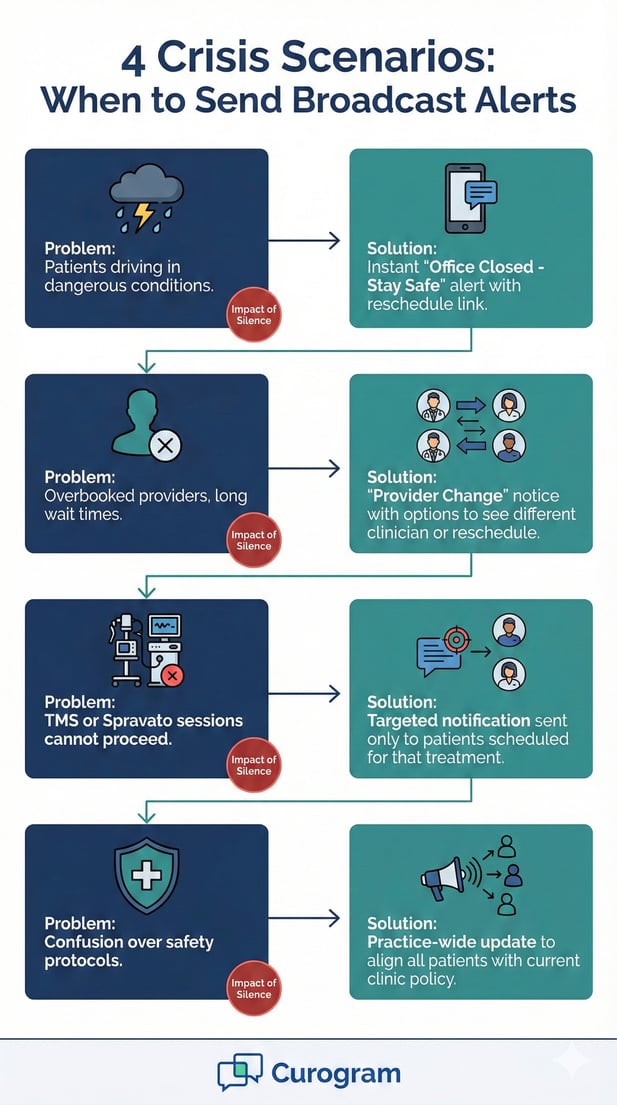
Every clinic faces surprise events. The key is knowing when to pull the trigger on a mass alert. Here are the most common cases where mental health office closures SMS, and other updates save the day.
Storms, ice, and floods can make roads unsafe. Your patients should stay home, not risk a crash to reach your door.
Without a quick alert, patients may drive through bad roads. They put themselves at risk. If they arrive and find you closed, they feel angry and unsafe. This harms your bond with them.
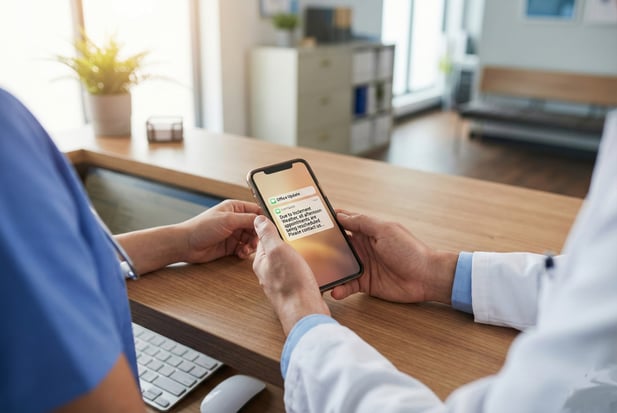
Send an instant "Office Closed - Stay Safe" text with a link to reschedule. Patients get the news fast. They stay off the roads. Your team avoids the stress of fielding calls while the storm rages.
A provider calls in sick. A family crisis pulls someone away. Sudden gaps in your team can wreck the schedule.
Patients arrive for their normal slot. The provider is gone. They wait too long or get bumped to someone they do not know. This wastes their time and shakes their comfort.
Use Osmind EMR broadcast alerts to notify psychiatric patients of staff changes right away. Offer a choice: see a different clinician or pick a new date. This keeps patients in control and cuts down on lobby wait times.
TMS machines break. Spravato supplies run low. A power outage shuts down your whole building. These events halt certain treatments.
Patients booked for those services show up ready for care. They learn at the front desk that their session cannot happen. The trip was for nothing.
Filter your list to only those with TMS or Spravato visits that day. Send a targeted text just to them. Other patients keep their normal slots. You avoid mass confusion.
New guidelines or safety rules can drop at any time. Your patients need to know what to expect before they walk in.
Patients arrive with old info. They may not have the right gear or forms. Staff spend extra time catching them up. The lobby bogs down.
Send a practice-wide update with the new rules. Include links to any forms they need to fill out. Patients come ready, and your day runs smoothly.

Mass alerts do not mean spam. The real power of Curogram lies in sending the right message to the right patients. Here is how the system works with your Osmind data to keep things tight.
Filtering by Appointment Type
Not every alert needs to hit your whole list. Many times, only a small group needs the news.
Curogram lets you select only patients with a certain visit type. If a pharmacy delay stops your ketamine supply, you can text just those with infusion visits that day. Therapy patients keep their slots.
You can also filter by date range or by provider name. If Dr. Smith is out sick, send the alert only to her patients. Others never get a message they do not need. This keeps your texts clean and your patients happy.
Dynamic Tagging
Mass medical alerts can still feel personal. Smart fields let you add patient names and provider names to each text.
A message that says "Hi Sarah, your visit with Dr. Lee has been moved" feels like a direct note. It builds trust even during a disruption. Patients see that you know who they are.
Smart fields pull data straight from Osmind. You write the template once. The system fills in the blanks for each patient. No extra typing. No errors from copy and paste.
Patients may have questions after they get an alert. Curogram makes it easy for them to reply and for you to respond.
When a patient texts back, the message lands in Curogram's secure chat. Staff can see all replies in one place. They can answer fast or route the patient to the right person.
No need to call patients back or dig through voicemails. Staff see the reply, check the schedule, and book a new slot right then. This cuts down on back-and-forth and keeps patients from falling through the cracks.
Clinics often have the same questions before they adopt broadcast tools. Here are answers to the most common ones.
How fast do the messages go out?
Speed is the whole point of mass medical alerts. Curogram's system is built for high volume.
The platform can push thousands of texts in just a few seconds. Carriers receive the batch almost at once. Your patients get the news before they leave the house.
One staff member clicks send. Done. No phone tree. No call sheet to work through. Your team can focus on the crisis itself, not on calling patients one by one.
Can we send alerts from home if the office is closed?
Some crises shut down your whole building. You need to reach patients even when you cannot get to your desk.
Curogram runs in the cloud. It links with your Osmind data from any secure device. A manager at home can log in, filter the list, and send the broadcast.
Only staff with the right permissions can send alerts. This keeps the system safe while still letting your team act fast when the office is dark.
Is there a record of who received the alert?
Good records matter for compliance and for peace of mind. You need to know who got the message.
Curogram tracks every text. You can see which patients received the alert and which ones had delivery issues. This helps you follow up with anyone who may have missed the news.
If a patient claims they were not told about a closure, you have proof. The report shows the date, time, and content of the message. This protects your practice and builds trust with your team.

A crisis does not have to turn your day upside down. With the right tools, you can clear your schedule or shift your plans in under a minute. The key is having a system that works as fast as your team thinks.
Osmind EMR broadcast alerts through Curogram give your team the power to act fast. You reach patients where they already are: on their phones.
You filter lists so only the right people get the news. And you keep a full record for your files. This is what modern clinic operations look like.
Think about the last time your practice faced a surprise. Maybe a storm rolled in. Maybe your main provider got sick. How long did it take to reach everyone? How many patients showed up anyway?
Those wasted trips hurt more than your schedule. They chip away at the bond you have built.
Mental health care runs on trust. When you keep patients informed, even during the hard days, that trust grows. They see a practice that cares enough to text them before they leave home. That small act of care speaks louder than any ad or flyer.
Your front desk team will thank you, too. No more frantic phone trees. No more stress as the clock ticks down. One click sends the alert. Then your staff can focus on what matters: taking care of the patients who do come in and planning for the next day.
The audit trail helps as well. If a patient ever claims they did not get word of a closure, you have proof. The system logs every text, every time stamp, every name. This shields your practice from blame and keeps your records clean.
Clinics that offer special treatments like ketamine or Spravato have even more at stake. Patients may drive hours for these sessions. A wasted trip is not just a hassle.
It can set back their care plan. Osmind urgent patient notifications make sure those high-value visits stay on track or get moved with plenty of notice.
You built your practice to help people heal. Do not let a broken pipe or a sick day undo that work. Give your team the tools to respond in real time. Give your patients the respect of fast, clear updates.
Schedule a 10-Minute Demo today to see how Osmind EMR broadcast alerts can provide the operational safety net your interventional psychiatry practice needs.
💡 Broadcast messaging for Osmind lets clinics send bulk SMS to all patients at once. This tool works with Curogram to deliver updates, alerts, and...
💡 Broadcast messaging for Elation Health lets you send secure texts to your whole patient list. With Curogram, you can reach hundreds or thousands...
💡 Independent clinics can scale their population health efforts by sending automated health alerts for Elation Health practices via secure...