

Boosting Google Reviews and Referrals with Reputation Management in Dolphin
💡 Online reviews play a major role in how families choose orthodontic and dental providers. Clinics with stronger ratings appear more trustworthy,...
9 min read
Sharee Narciso
:
Dec 10, 2025 6:00:00 PM
Think about the last time you searched for a restaurant or service online. You probably checked the rating, read a few reviews, and skipped places that looked risky or had very few comments. Patients behave the same way when choosing a doctor or clinic. Your online reputation is often the first “visit” they have with you.
If your profile shows only a few mixed reviews, new patients may never give you a chance. They will pick the clinic with more stars and more recent comments, even if your care is excellent. This means lost revenue, weaker growth, and wasted effort from your marketing and outreach. Poor or hidden ratings can undo months of hard work inside the practice.
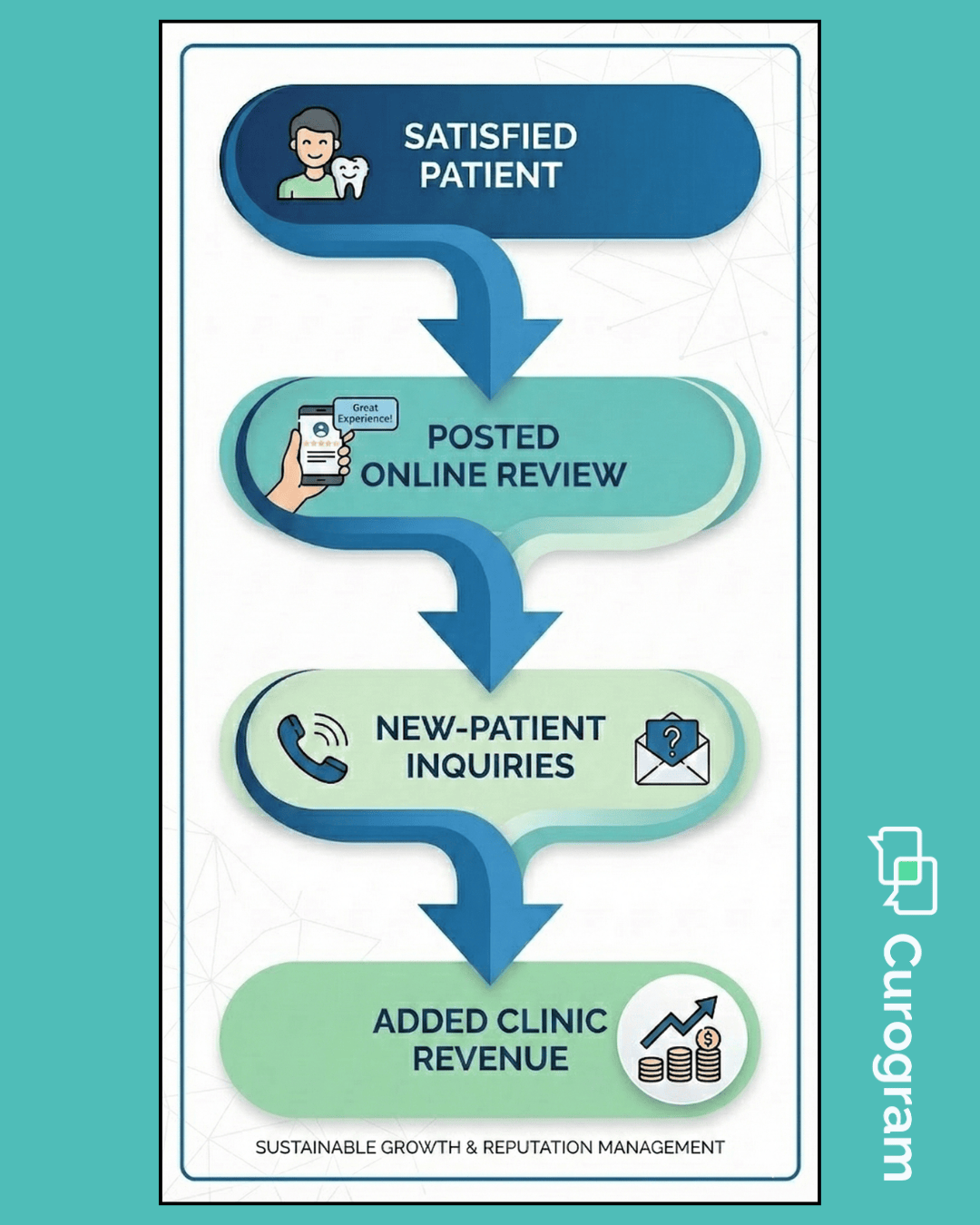
The good news is that most patients who have a good experience are willing to share it if you make it easy. When you boost Google reviews Office Ally clinics can turn quiet, outdated listings into living proof of quality care. Strong public feedback builds trust, helps you stand out in search results, and supports long-term growth.
In this blog, you will learn about the business risks of ignoring reputation management, how a structured review strategy improves ROI, and the specific gains executives and owners can expect. You will also see a simple financial example and clear next steps. By the end, you will see online reviews not as a burden, but as one of the most powerful assets your Office Ally practice can build.
When a practice does not manage its online reputation, patients do it for them. A few upset visitors may leave long, detailed reviews, while many happy patients stay silent. This creates a skewed picture that does not match daily reality. New patients only see the loudest voices, not the full story.
The first risk is lost new-patient volume. People searching for care often filter by rating or read only the first page of reviews. If your profile has a low star rating or very few comments, they may assume your clinic is less trustworthy. They will choose a competitor with more visible positive feedback, even if your clinical care is just as strong.
The second risk is damage to your brand. Old or unanswered negative reviews make it look like the practice does not listen. Patients may think their concerns will be ignored if something goes wrong. Over time, this can turn one bad experience into a lasting public stain that follows your clinic for years.
There is also a risk to provider morale. Doctors and staff who work hard every day may feel discouraged if the only feedback they see online is negative. They know that many visits go well, but those stories never appear where new patients can see them. This gap between their effort and their public image can lead to frustration and burnout.
From a business standpoint, ignoring reputation management also means losing free marketing. Each positive review is a small testimonial that lives on search pages and maps. Without an intentional plan to boost Google reviews Office Ally practices leave this potential untapped. You pay for space, staff, and technology, but you do not capture the full value of the good experiences you already deliver.
Finally, weak online reputation makes it harder to support new services or locations. When leadership wants to expand, they need confidence that new patients will find and trust the practice. A thin or shaky review profile makes every growth effort harder, slower, and more expensive. In short, doing nothing about reputation has a real ROI cost.
Curogram helps clinics turn everyday patient visits into a steady stream of public feedback. Instead of hoping people remember to leave a review on their own, you can guide satisfied patients toward sharing their experience. This closes the gap between the quality of your care and the picture strangers see online.
One way Curogram supports ROI is by making it easier to ask the right patients at the right time. When people have a good experience and receive a simple, clear request, many are willing to write a short review. Over time, this raises your average star rating and adds fresh comments that reflect current service. A stronger profile helps you boost Google reviews Office Ally clinics rely on to attract new patients.
Another ROI driver is better visibility in local search results. Search platforms tend to highlight businesses with strong ratings and recent activity. As your volume of reviews grows, your clinic is more likely to appear near the top when people search for care in your area. This gives you more opportunities to be chosen without increasing ad spend.
Curogram also helps protect your reputation by giving you a chance to respond. When feedback is visible and timely, you can thank patients for positive comments and address concerns from unhappy visitors. Thoughtful responses show that your practice listens and cares. This can soften the impact of a negative review and reassure people who are deciding where to go.
Because Curogram connects with your existing systems, reputation management becomes part of your regular communication flow rather than a separate project. You are already talking to patients about their appointments and care. Adding a simple, respectful request for feedback at the right time turns those conversations into lasting public proof of quality.

Executives and owners look at reputation through a different lens than individual providers. They care about growth, stability, and the long-term health of the brand. A strong review profile supports all three. This section looks at the specific advantages leaders gain when they invest in reputation management that works with Office Ally.
Attracting new patients is expensive when you rely only on ads, mailers, or community events. Online reviews act like a permanent referral channel. When you boost Google reviews Office Ally practices can convert more searchers into new patients without paying for every click. This lowers your cost to acquire each new patient.
Because reviews sit on platforms patients already use, they keep working long after you request them. A visit from six months ago can still bring in a new family today. Over time, a strong review base becomes one of your most reliable marketing assets. It supports both the present and future of the practice.
Reputation management is not only about bringing in new faces. It also supports loyalty among existing patients. When people see their experience reflected in public feedback, they feel more connected to the practice. They are more likely to recommend you to friends and family and to return for future care.
Higher loyalty raises the lifetime value of each patient. Instead of a single visit, you see an ongoing relationship with multiple encounters over time. This steadier volume supports revenue planning and reduces the constant pressure to “replace” patients who leave. It also creates a more stable base when you want to add services or locations.
Executives gain more than stars from online reviews. They also gain language straight from the patient’s point of view. Comments reveal what people notice most, such as short wait times, friendly staff, or clear explanations. Leaders can use this information to focus training and investments on what matters.
When patterns appear, they help guide strategy. If many reviews praise your telehealth access, you may choose to expand those options. If comments mention confusion about billing, you can simplify and clarify. Reviews become a low-cost source of real-world insight that supports better decisions.
A clinic’s online reputation also affects how it looks to potential hires and partners. Clinicians and staff search reviews before applying, just like patients do. A strong public rating and recent positive comments make your practice more appealing. This can help you compete for talent in a tight workforce market.
For partnerships or payer relationships, visible patient satisfaction is also a plus. It shows that your organization delivers care people appreciate. When executives can point to a solid review footprint, they enter negotiations from a stronger position. Reputation supports both patient-facing growth and behind-the-scenes relationships.
No practice is perfect. Mistakes and misunderstandings happen. A healthy base of positive reviews provides context when a negative one appears. Instead of letting one bad story define you, readers see it as one experience among many.
Owners who manage reviews actively can also respond quickly to concerns. A calm, professional reply can limit damage and sometimes even turn a critic into a supporter. Without a system in place, issues may sit unresolved and continue to shape public perception. Active reputation management reduces this risk and protects the brand you have built.
To see how reputation management affects the bottom line, imagine a three-provider clinic using Office Ally. Right now, the clinic averages 20 new patients per month from online search, with a modest 3.8-star rating and few recent reviews. Each new patient visit brings in an average of $150 in collected revenue. That equals $3,000 in new-patient revenue monthly from search.
After putting a focused review strategy in place, the clinic steadily boosts its rating to 4.6 stars and adds many fresh comments. As the profile improves, more searchers choose the clinic over nearby competitors. New-patient volume from search grows to 35 patients per month. At the same $150 per visit, that is $5,250 in monthly new-patient revenue.
The difference, $2,250 per month, adds up to $27,000 over a year. The cost of using tools and staff time to request reviews is small compared with that gain. In real life, additional benefits such as stronger retention and more word-of-mouth referrals can raise the total even further. This example shows how decisions to boost Google reviews Office Ally clinics display online lead to direct financial returns.
Starting with reputation management does not have to be complex. First, audit your current profiles on Google and other major platforms. Note your star rating, number of reviews, and how recent they are. This gives you a baseline and helps you set realistic goals.
Next, decide what success looks like. You might aim to reach a 4.5-star rating and add a specific number of new reviews over the next six months. Share these goals with your team so everyone understands why reviews matter. Encourage providers and staff to remind satisfied patients that their feedback is valuable.
Finally, choose tools and processes that make it easy to request reviews consistently and ethically. Keep the message simple and respectful. Track your progress monthly so you can see how changes in your review profile connect to patient volume and revenue. Over time, you will build a reputation that reflects the real quality of your care.
Curogram gives clinics a practical way to connect reputation management with everyday patient communication. Because it fits alongside your existing systems, it helps you ask for feedback at natural points in the patient journey. This turns quiet satisfaction into visible public support for your practice.
When patients have a positive experience, Curogram makes it simple to send a clear, friendly request for a review. People do not have to search for the right page on their own. With just a few taps, they can share their story. Over time, this helps boost Google reviews Office Ally practices depend on to attract new patients.
Curogram also supports better follow-through by keeping messages easy to read and act on. Patients receive requests on devices they already use, in plain language they can understand. Leaders gain a steady flow of fresh feedback, stronger search visibility, and a clearer picture of how the practice is doing in patients’ eyes. In the end, Curogram turns good care into a reputation that can grow with your clinic.
Your online reputation is no longer a side issue. It is a core part of how patients discover, judge, and choose your practice. A few negative reviews or an empty profile can quietly limit growth, even when your care is excellent. Ignoring reputation management means letting others write your story.
By taking simple, consistent steps to boost Google reviews Office Ally clinics can align their public image with the reality of daily patient care. More positive reviews lead to higher trust, stronger search visibility, and steadier new-patient flow. Executives and owners gain clearer insight, better recruiting power, and a stronger brand when challenges arise.
The path forward is straightforward: understand your current review profile, set clear goals, and use tools like Curogram to invite feedback from satisfied patients. Every thoughtful review is a small investment in your clinic’s future. Over time, those voices add up to a powerful signal that your practice is a place where patients feel heard, helped, and willing to return.
Boost your clinic’s growth by strengthening your reputation with Curogram. Book your demo today.
When your rating and review count improve, more people choose your clinic when they search online. This brings in additional new patients without the same level of advertising spend. Over time, higher visit volume from search increases revenue and supports expansion. Strong reviews also reinforce trust, which helps keep patients coming back.
Comments reveal patterns that numbers alone cannot show. They highlight what patients value, such as clear communication, short waits, or friendly staff. Leaders can use this feedback to focus training, adjust processes, and prioritize investments. When executives act on common themes, overall satisfaction and loyalty tend to rise.
First, respond calmly and professionally, thanking the patient for sharing their experience. Avoid sharing private details and focus on empathy and a desire to improve. When appropriate, invite the person to contact the clinic directly to discuss the issue. This shows other readers that you take concerns seriously and are committed to better service.
It is helpful to review your ratings and comments at least once a month. Track trends in star rating, review volume, and common themes in feedback. Share these insights with providers and staff so they understand how the practice is doing. Adjust your goals and tactics as needed to keep your reputation aligned with the care you deliver.
💡 Online reviews play a major role in how families choose orthodontic and dental providers. Clinics with stronger ratings appear more trustworthy,...

💡 Many practices want to boost Google reviews DrChrono but struggle because feedback grows slowly without clear support. Families share reviews...
💡 Boost Google reviews Cloud 9 ortho to strengthen your online reputation and attract more families. Many clinics rely on word of mouth, but today...