
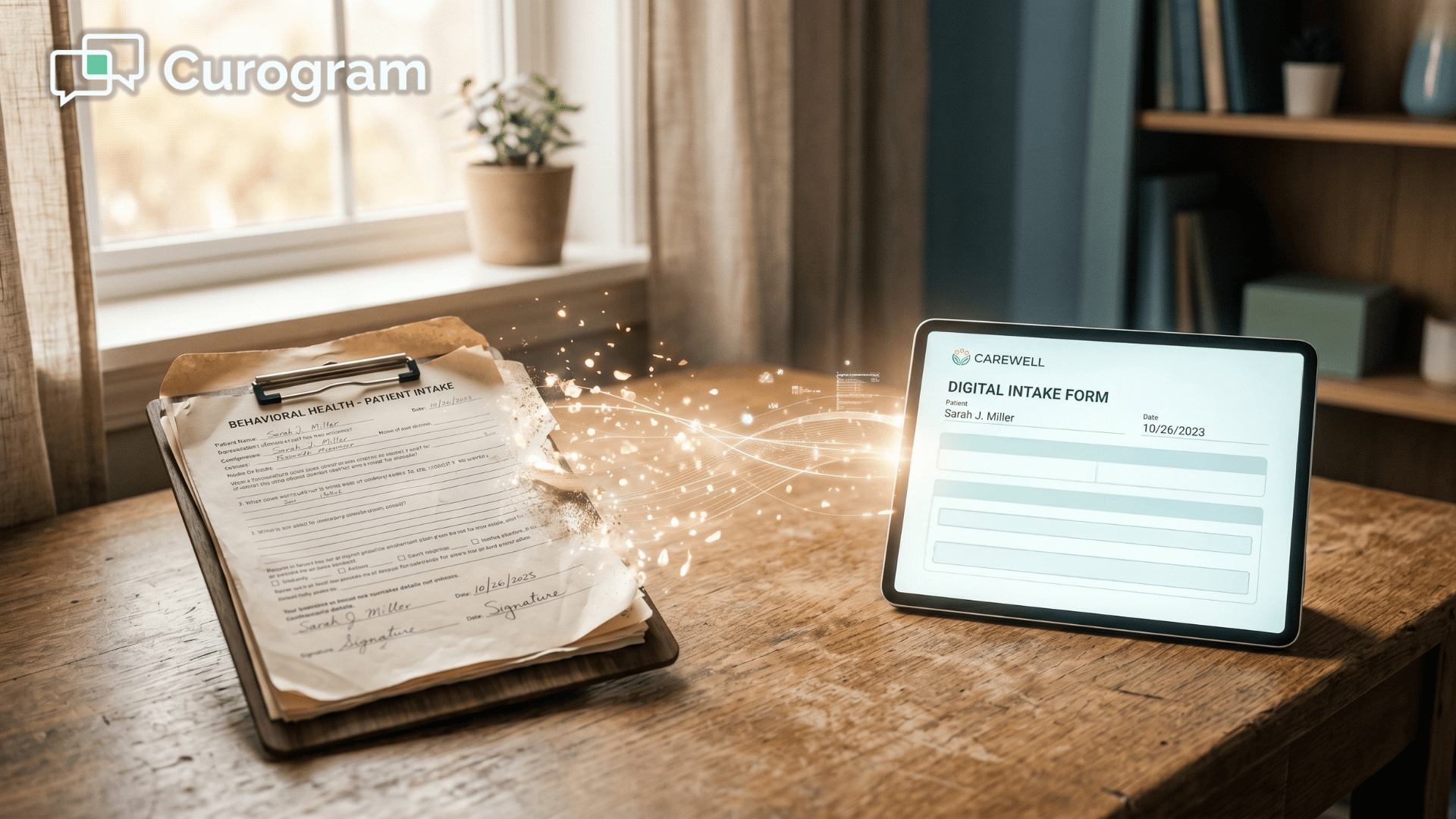
Consumers open it in their phone's browser and complete consent forms, assessments, and insurance details from home, at their own pace.
Working alongside Netsmart, Curogram sends the link, opens the forms in any browser, and auto-saves progress. No app, no portal login, no clipboard. Forms are HIPAA-compliant, and no data stays on the device after submission.
The result is a calmer first visit: less anxiety, fewer early-arrival no-shows, and treatment that starts on time instead of behind a stack of paper.
The hardest part of a first therapy visit often happens before the session even starts.
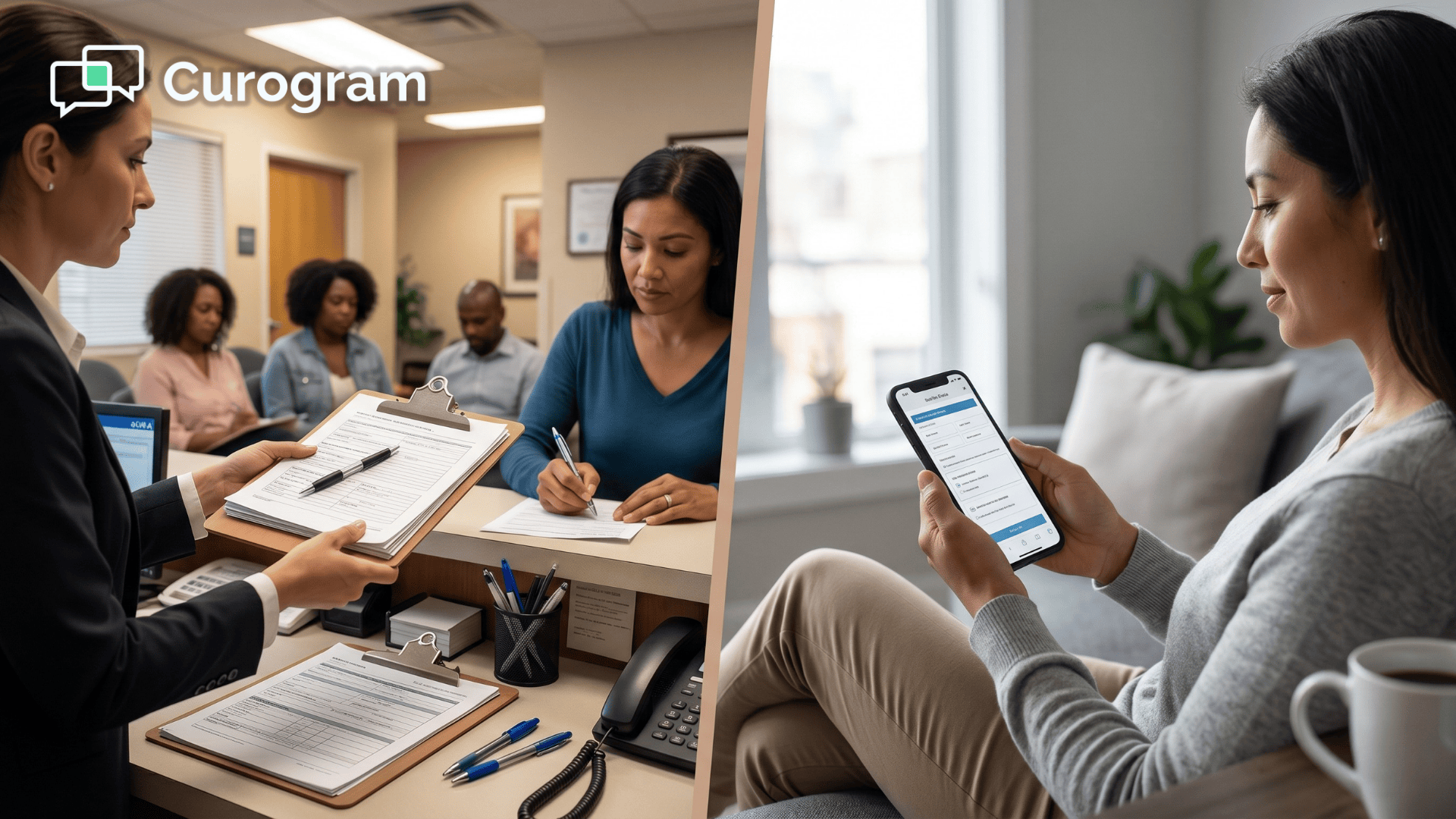
It happens in the waiting room. A clipboard slides across the front desk. Nineteen pages. Consent forms, a PHQ-9, a GAD-7, insurance details, privacy notices. A pen that may or may not work.
For someone who spent days working up the courage to come, that stack of paper lands hard.
They arrived 20 minutes early, as asked. Maybe they arranged childcare. Maybe they took time off work or sat through a long bus ride. Now they're filling out personal questions about their mental health in a room full of strangers.
It sounds like a small ask. It isn't.
For a consumer with anxiety, the paperwork becomes one more reason to leave. For someone with ADHD, a long paper packet is a wall, not a form. For someone managing low literacy, handwriting clinical answers in public feels like exposure.
And for anyone running late because the ride fell through, the reward for showing up is a shortened session or a reschedule.
That is the moment care is supposed to begin. Instead, it begins with friction. The wall goes up at the exact moment you want it to come down.
Here's the part that stings: the intake process exists to start the therapeutic relationship. Done on paper, it does the opposite. The first impression of your practice isn't a warm hello. It's a pen and a deadline.
The good news is that none of this has to happen in your lobby. The behavioral health intake forms mobile consumer experience can start at home, on the couch, the day before. No clipboard, no early arrival.
This article walks through what that shift looks like for your consumers, and why it changes more than just the first 20 minutes.
The Clipboard Is the First Barrier to Care
The first behavioral health appointment is already emotionally loaded.
Adding a stack of paperwork to it sends a quiet message:
Before we talk, prove you can sit still and fill all this out. For an anxious consumer, that message can be enough to turn a booked appointment into a no-show.
A Welcome That Pushes People Away
Walk through it from their side. They arrive early, as instructed. A clipboard appears with a 19-page packet of consent forms, clinical assessments like the PHQ-9 and GAD-7, insurance verification, and privacy disclosures. They fill it out by hand, hand it back, and wait to be called.
Who the Paperwork Stops
Now layer on real life.
A consumer with ADHD sees a long paper packet as a wall, not a task.
A consumer with low literacy feels exposed writing clinical answers in a public lobby.
A consumer who ran late because the bus did gets a shortened session or a reschedule, which only feeds the avoidance that made the appointment hard to book in the first place.
The cruel part is the intent. Intake is supposed to open the therapeutic relationship. On paper, it builds a wall between the consumer and their care instead. The first thing they meet isn't a therapist. It's a pen.
A Digital Front Door That Opens Before the Visit
A First Step That Starts at Home
Here's the shift in one sentence:
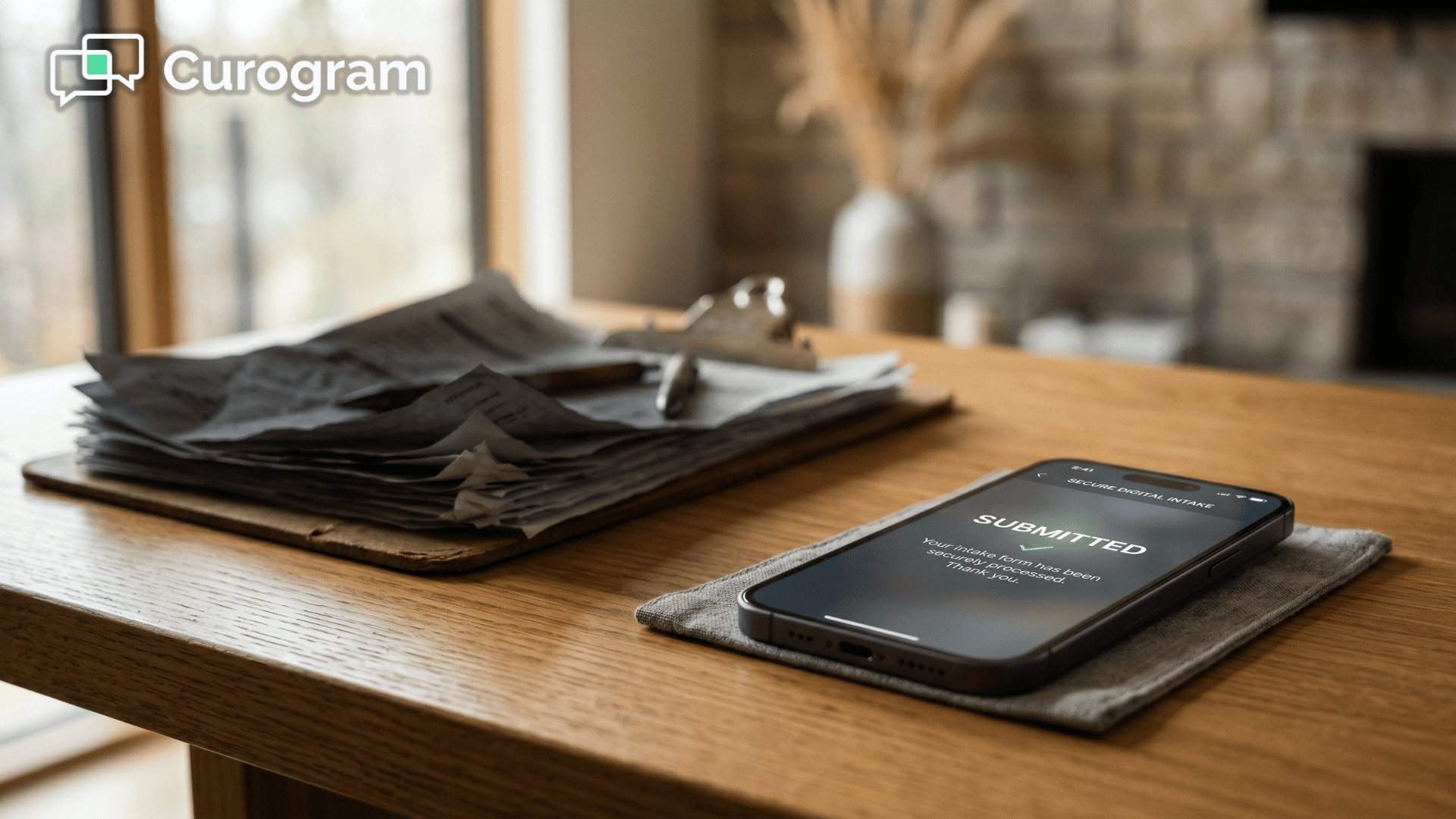
The paperwork moves off the clipboard and onto the phone. Instead of arriving early to fill out forms, your consumer gets a text before the visit.
Something simple, like:
"Welcome to [Practice]. Please complete your intake forms before your first visit: [secure link]."
They tap the link. The forms open right in their phone's browser. There's no app to download and no portal account to create.
This is what the phone-based therapy intake experience looks like step by step:
- They open the secure link from the text, with no login screen in the way.
- They scroll through questions and tap their answers on a mobile-friendly digital intake form.
- They sign electronically with a finger.
- They pause anytime, and auto-save holds their progress so they can pick up later.
That last point matters more than it sounds. These no-app intake forms keep the consumer in control of when and where they finish. A parent can complete them after the kids are down. Someone who freezes up halfway through can step away and come back without losing a thing.

A First Step That Stays Private
There's a privacy benefit, too, that's easy to miss. Curogram's forms are HIPAA-compliant and encrypted, and the platform is SOC 2 Type II certified.
No form data stays on the device after submission, and there's no app icon sitting on the home screen. For consumers on a shared phone or in a monitored living situation, there's no visible trace of a behavioral health intake at all.
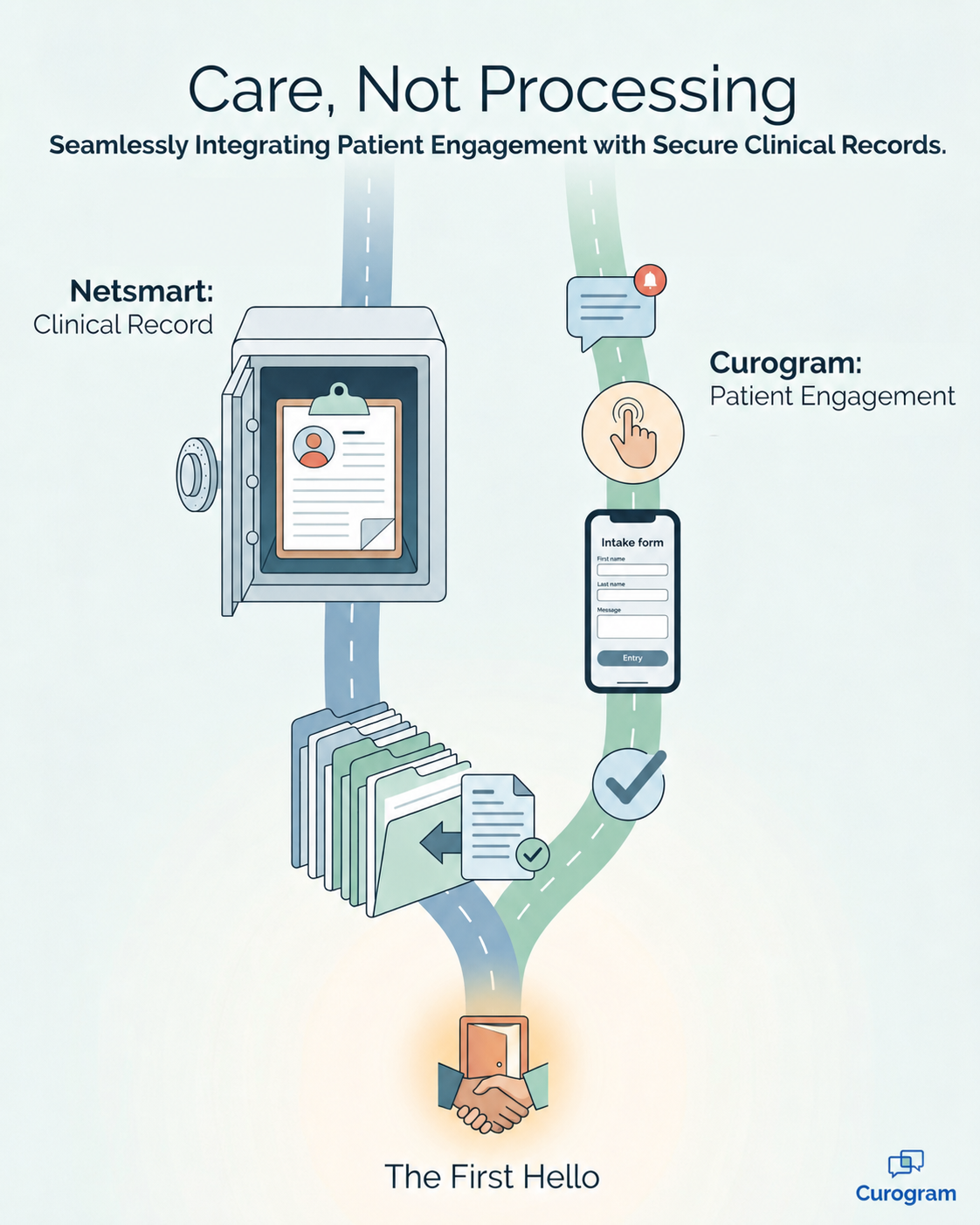
All of this runs alongside Netsmart, not on top of it. Curogram handles the text message intake forms for mental health practices, and the completed information flows into the workflow your team already uses.
What a Calmer First Appointment Looks Like
So what actually changes when the clipboard goes away? The wins show up in two places your practice already watches: staff time and who actually walks in.
The Time You Get Back
Paper intake eats up 15 or more minutes per consumer, between the early arrival and the front-desk handoff. Mobile forms move almost all of that out of your lobby.
Here's a side-by-side look at the same first visit, two different ways:
| The same first visit | On paper | By mobile text link |
|---|---|---|
| Where forms get done | In the waiting room | At home, before the visit |
| Front-desk time per consumer | 15+ minutes | Close to none |
| Early arrival needed | Yes, about 20 minutes | No |
| App or login required | No app, but a full paper packet | No app, no login |
| First impression | A clipboard | A conversation |
Now put real numbers on it. Say your practice welcomes 12 new consumers a week`.
At 15 minutes of paperwork each, that's 3 hours a week your front desk spends handing out and collecting clipboards. Over a year, that adds up to roughly 150 hours, almost a full month of workdays, spent on paper that a text link handles on its own.

The Patients Who Show Up
Removing the early-arrival rule takes away one of the easiest reasons to bail on a first appointment.
Here's a sample:
If a calmer intake prevents just 2 first-visit no-shows a month, and a first session bills around $150, that's about $3,600 a year recovered, from one change to how forms get filled out.
There's a quality side, too. Mobile intake forms for therapy patients tend to come back more complete, because people answer at their own pace instead of rushing through a clipboard before they're called.
That means cleaner data for your clinicians and fewer blanks to chase down later.
This is how digital forms improve the patient experience across behavioral health.The first interaction stops feeling like processing and starts feeling like a more patient-centered intake experience.
For your team, that's less front-desk friction. For your consumers, it's a first visit that begins with a conversation.
How to Make Sure the Forms Actually Get Done
Those numbers only hold up if consumers complete the forms. The good news is that when intake is this easy, most of them do. A few small choices push completion even higher.
Timing is the biggest lever. Send the link soon after the appointment is booked, while the visit is still fresh in mind. A text sitting in someone's pocket gets opened far more often than a packet waiting on a clipboard.
A few habits make the difference:
- Send the link right after booking, not the night before.
- Add one friendly reminder text a day or two before the visit.
- Keep the welcome message short and warm, so it reads like care, not a chore.
Two-way texting helps here, too. If a consumer has a question while filling out a form, they can reply in the same thread and get a quick answer instead of giving up. And because auto-save protects their progress, an interruption never turns into starting over.
This matters most for the people you serve. A consumer managing anxiety is far more likely to finish a calm, private form at home than a public packet under a clock.
Lower the effort, and you raise the odds that the first appointment happens at all.
Let the First Visit Begin With Care, Not a Clipboard
The first therapy visit is hard enough on its own.
Filling out 19 pages of paperwork in a waiting room shouldn't be the thing that makes someone decide not to come back.
When intake moves to the phone, the whole tone of the first appointment changes. Consumers complete consent forms, assessments, and insurance details at home, at their own pace. They walk in and start talking, instead of starting with a pen.
That shift does real work for your practice, too. Front-desk staff stop managing clipboards and chasing missing pages. First-appointment no-shows drop when the early-arrival barrier disappears. And the opening minutes of each session go to care, not data entry. That is time you can never get back once a session starts late.
Here's the simplest way to think about it.
Netsmart stores your consumer's clinical record and keeps your team aligned on treatment. Curogram makes sure their very first impression of your practice feels like care, not processing.
The two work side by side. Netsmart holds the chart. Curogram handles the first hello.
None of this requires an app, a portal login, or a new system for your staff to learn. Forms arrive by text, open in any browser, and auto-save along the way. The data is HIPAA-compliant and encrypted, and nothing stays on the consumer's device once they hit submit.
For a population already managing anxiety, that quiet, low-pressure start matters more than almost anything else you can change about the first visit.
You can see exactly how it works alongside your existing Netsmart workflow.
Schedule a Demo to watch the mobile intake experience from the consumer's side, and to see how a calmer first appointment fits into the way your team already works.
Frequently Asked Questions
Yes. The forms are HIPAA-compliant and encrypted from end to end, and the platform is SOC 2 Type II certified. No form data is left on the consumer's device after they submit. For substance use treatment, the consent forms also meet the stricter confidentiality rules under 42 CFR Part 2.
No. The forms open in any smartphone's standard web browser, so almost any phone works. There's no app to download, no account to create, and no portal login. The consumer taps the link in the text and starts right away.
The forms auto-save as they go. A consumer can stop, close the browser, and return to the same link later to pick up exactly where they left off. That makes room for interruptions and lets people move at a pace that feels comfortable.
Your team still sees the status on the dashboard, so nothing slips through the cracks. If forms are incomplete, you can resend the link by text or have the consumer finish on a tablet at check-in. Either way, the work is mostly digital, and your staff aren't retyping a paper packet from scratch.
Yes. Curogram runs alongside Netsmart rather than replacing it. The consumer fills out the intake forms on their phone, and the completed information flows into the workflow your team already uses. Netsmart stays the home for the clinical record while the first touch happens on mobile.