7 min read

SMS Reminders Keep BH Consumers in Care

SMS Reminders Keep BH Consumers in Care
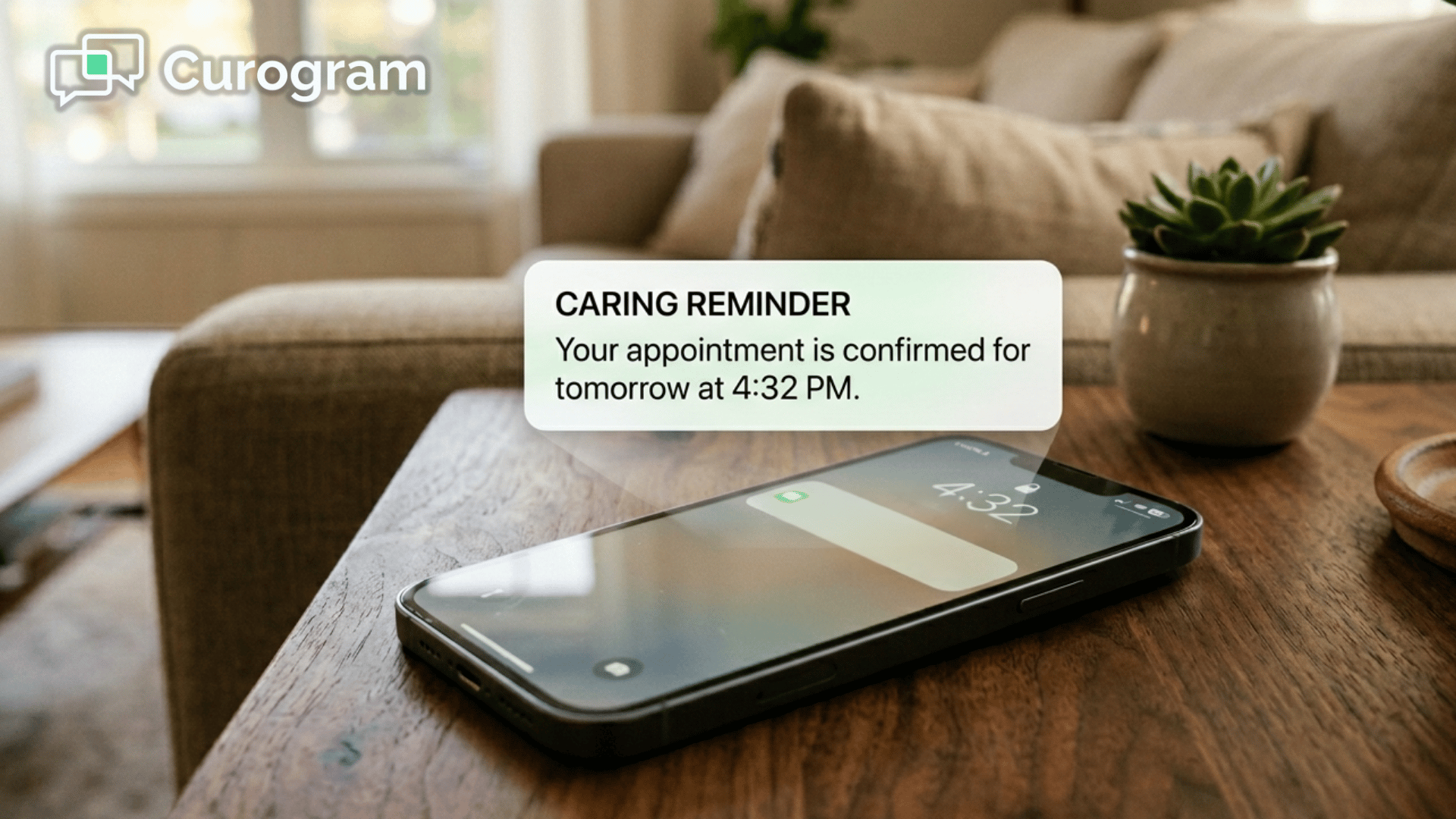
💡 The behavioral health appointment reminder SMS consumer experience is simple. A text lands on the consumer's phone, they reply with one letter, and the appointment is confirmed. There is no app to download and no portal to log into.            

This matters because portal logins create friction that behavioral health populations often abandon. A text meets people on the device they already use every day.

The results are clear. Practices using two-way text reminders see no-show rates about 53% lower than industry averages. 

One center cut its no-show rate from 14.2% to 4.91% after switching to text reminders.  


Your reminder system might be working perfectly. And that could be the real problem.

Every day, reminders leave your office on schedule with the right date, time, and details. Yet a large share of your behavioral health consumers never see them. The message exists. It just lands somewhere the consumer never looks.

Here's the gap.

Portal-based reminders only reach people who downloaded the app, set up an account, and kept it installed. Each of those steps is a small hurdle. For someone managing depression, ADHD, or a substance use disorder, small hurdles are rarely small.

So the reminder reaches the consumers who are already engaged. It misses the ones at the highest risk of dropping out.

That's the cruel twist. The people who most need a nudge to show up are the least likely to clear the steps required to get one.

And one missed appointment is rarely just one. Consumers who skip a session are more likely to skip the next. A missed psychiatry visit can interrupt medication. A missed therapy session during a hard week can undo real progress.

The schedule starts to thin out. Slots go unfilled. Staff burn hours chasing reschedules. Revenue quietly slips away.

None of this happens because consumers don't care. Most of them want to come. They simply never got a reminder they could act on.

The fix isn't a better portal. It's a different channel.

How One Missed Appointment Becomes a Dropped Treatment Plan

The portal was supposed to make reminders effortless. For many behavioral health consumers, it does the opposite.

The reminder reaches the wrong people

Reminders through a portal like myHealthPointe only reach consumers who downloaded the app, created an account, and stayed logged in.

That group tends to be small, and it skews toward the people who were already going to show up. The consumers most at risk of missing care rarely make it through the setup.

Think about what a single reminder actually asks of someone in a depressive episode.

Open the email. Find the app. Remember the password. Log in. Locate the notification. Read it.

Each step is an exit point. Depression, by definition, drains the mental energy those steps require. The reminder is sitting right there. The consumer never gets to it.

When you compare consumer engagement, SMS vs portal isn't a close contest. One channel sits in a pocket the consumer checks dozens of times a day. The other waits behind a login most never open.

A reminder nobody sees isn't a reminder. It's a missed opportunity with a timestamp.

When one miss becomes many

Then the spiral begins.

A consumer who misses one appointment is statistically more likely to miss the next, and eventually to leave treatment altogether.

In behavioral health, that's not just a scheduling issue. Interrupted medication management and skipped crisis support carry real clinical weight.

In this field, missed visits aren't a fringe problem. They're the baseline you start from.

23%–50%

The share of behavioral health appointments that typically end as no-shows.

That's a wide hole to dig out of, which is exactly why the channel you remind people on matters so much.

The damage adds up on the operational side too. Last-minute openings are nearly impossible to backfill. Staff lose hours to rescheduling cascades. Across a single location, the bleed often lands between $20,000 and $30,000 a month.

What happens The hidden cost
A consumer misses one session Higher odds they miss the next
The open slot can't be filled Lost revenue for that visit
Staff chase the reschedule Hours pulled from other work
The pattern repeats Up to $20,000–$30,000 lost per location each month

That last number is the one that stings. It isn't a billing glitch. It's care that never happened, showing up on your bottom line.

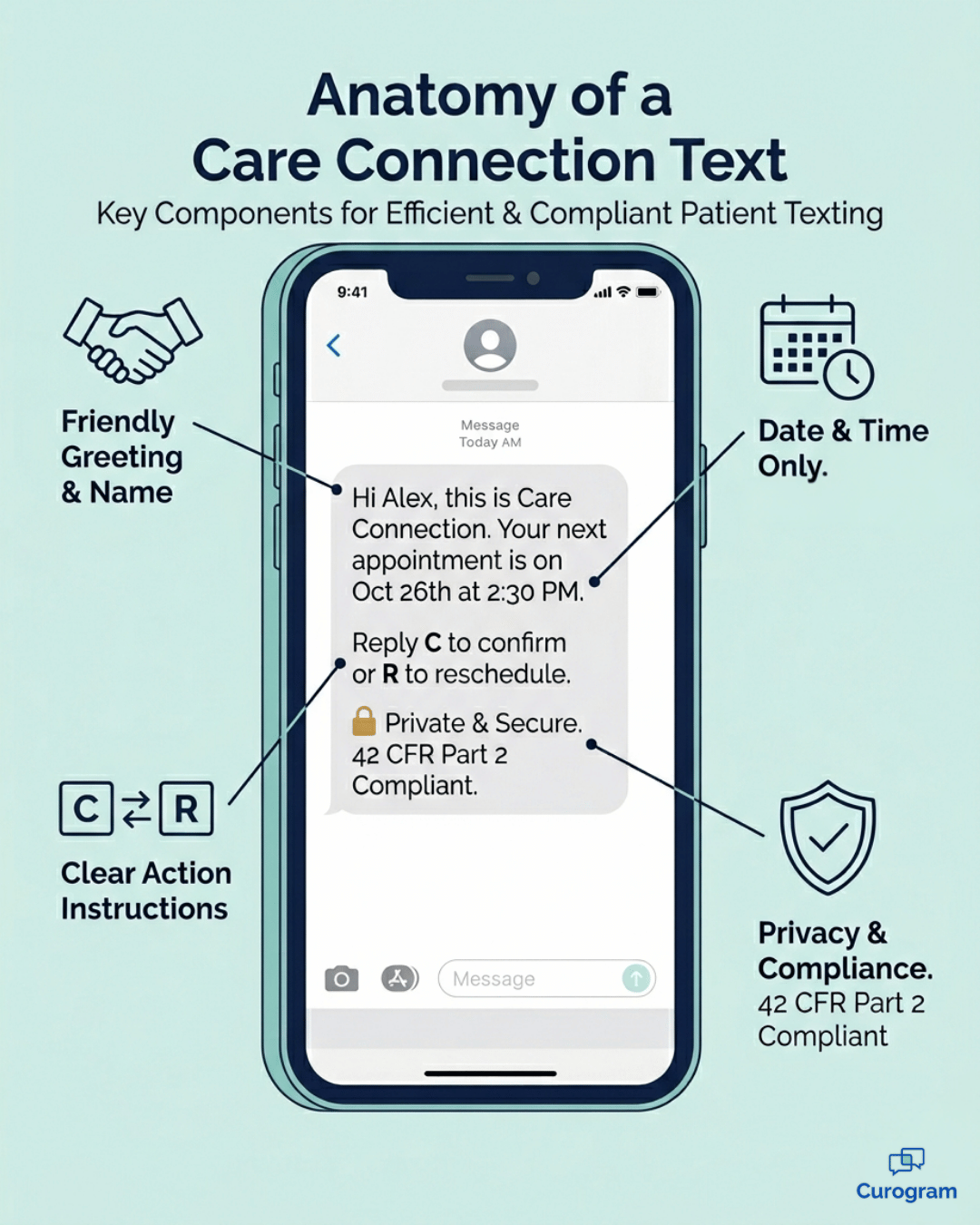
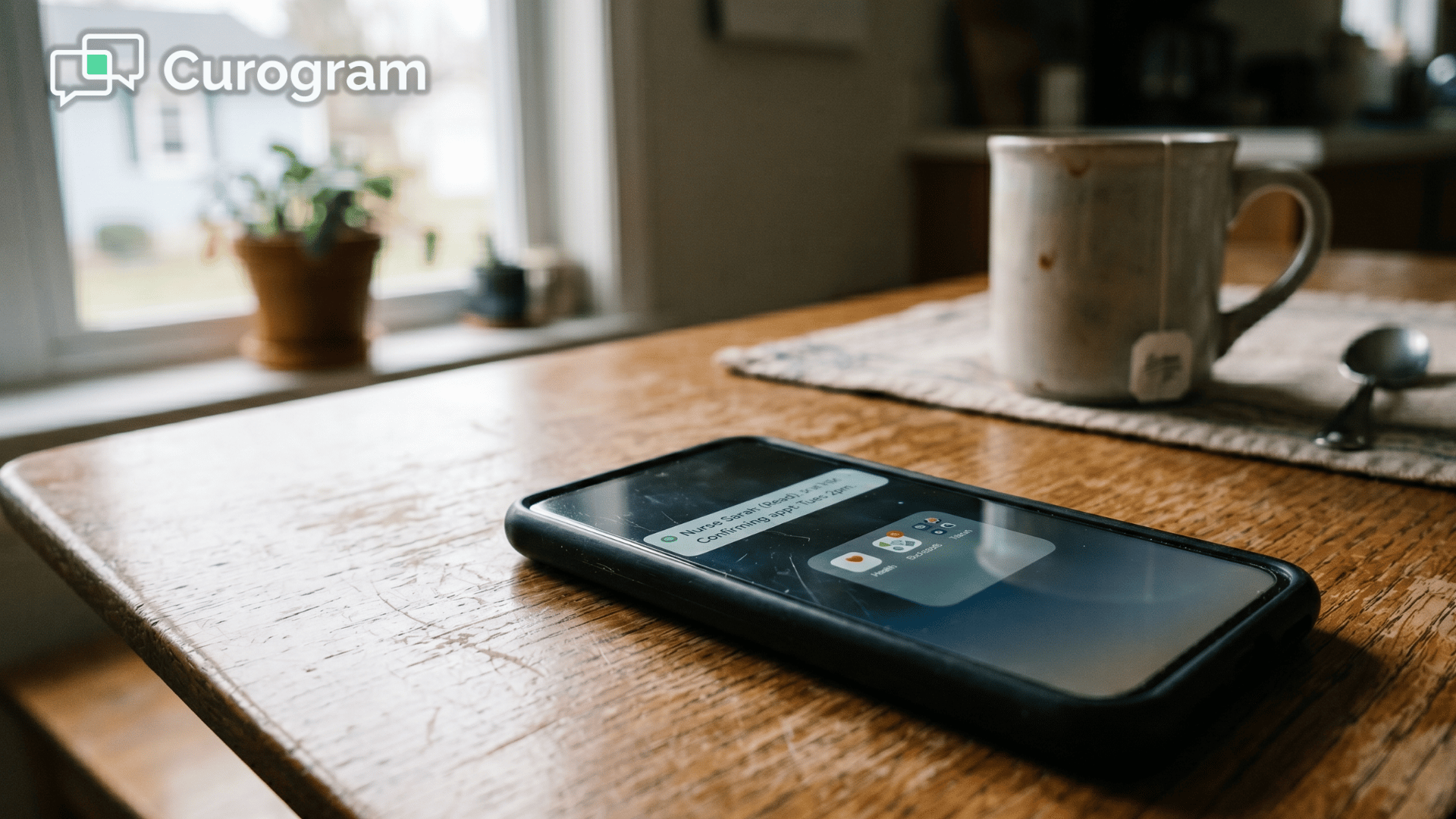
Infographic breaking down the parts of an SMS appointment reminder text for behavioral health

A Reminder That Lands Where Consumers Already Live

The fix is almost boringly simple. Meet consumers on the device they already check all day.

Curogram's text reminders act as a kind of care connection. A short, warm message arrives on the consumer's phone — the same phone they use to text family and friends. There's nothing to download and nothing to log into.

The message stays brief and human:

"Hi [Name], you have an appointment on [Date] at [Time]. Reply C to confirm or R to reschedule." One reply, and they're done.

One text, one reply

Most reminders are a one-way broadcast. You send, and you hope. Curogram's two-way confirmation turns that into something the consumer can act on without lifting more than a thumb.

A consumer can confirm, reschedule, or cancel right inside the text thread. No app. No portal. No phone tag with the front desk. For your team, that means fewer voicemails and a schedule that updates itself in real time.

Built for behavioral health privacy

Discretion matters more here than in almost any other specialty. Curogram's SMS reminders for mental health appointments are built with that in mind.

Three safeguards keep the message discreet:

  • No clinical detail in the text — just a date, time, and reply option
  • Messages designed to comply with 42 CFR Part 2 for substance use treatment
  • No app icon on the home screen, so nothing gives the consumer away

That last point matters for anyone on a shared phone or in a monitored living situation. The result is a patient reminder experience with no app to install and no portal to remember.

For consumers who quietly gave up on portals long ago, that difference is everything.

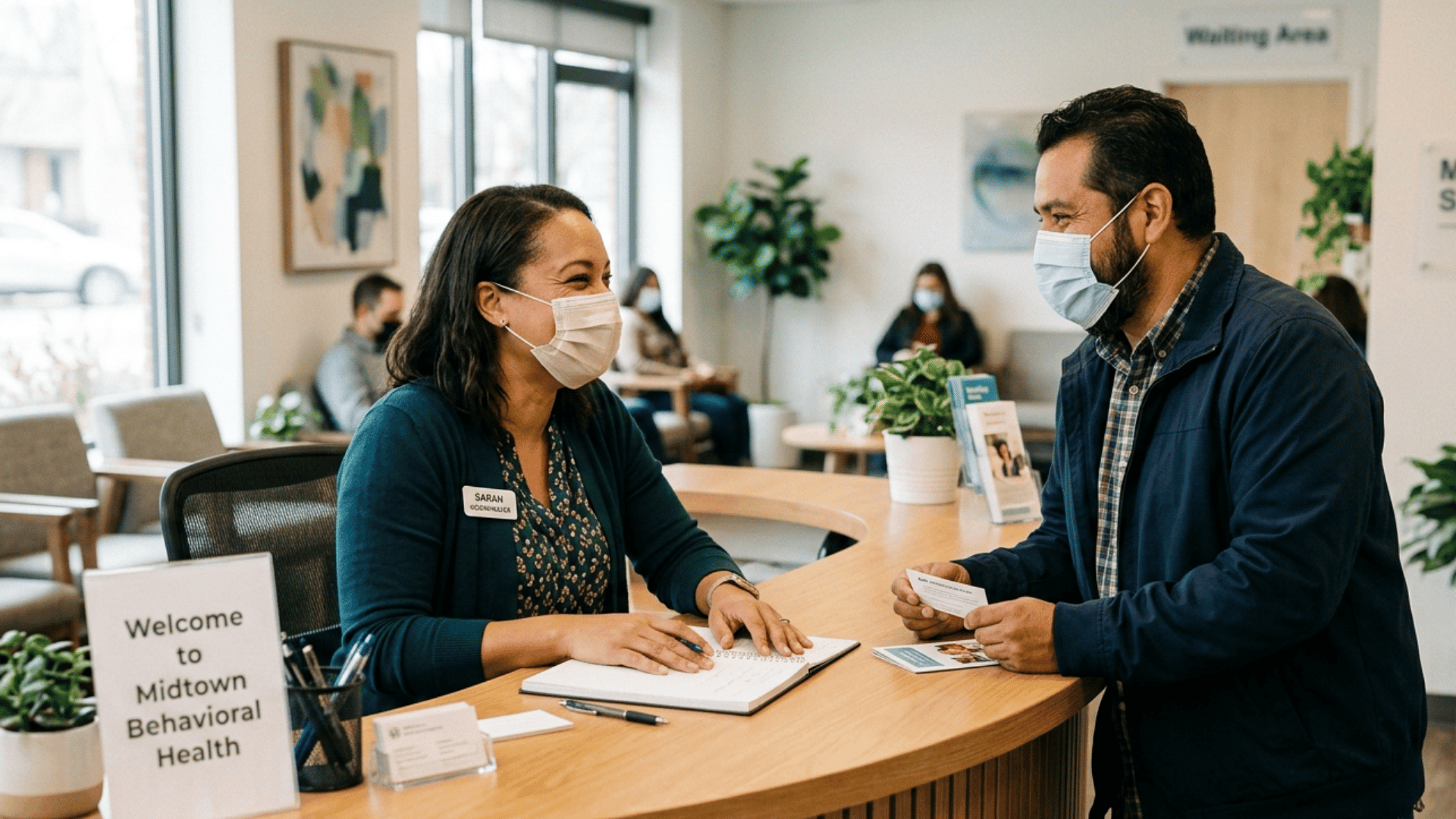
Care coordinator talking with a client at a behavioral health practice front desk

What Changes When the Reminder Actually Gets Seen

Here's what happens when reminders move from the portal to the phone.

The proof is in the numbers

There's strong evidence that text message reminders reduce no-shows in behavioral health settings, and the numbers back it up.

When Atlas Medical Center switched to text-based reminders, the change was dramatic.

14.2% → 4.91%

Atlas Medical Center's no-show rate before and after moving to text remindersThat'

In plain terms, the practice went from missing about one in seven appointments to missing roughly one in twenty. That kind of drop matters most in a field where missed visits run high.

Trimming the no-show rate doesn't just protect revenue. It keeps people in treatment.

The shift consumers actually feel

The real story is the shift in effort. The consumer's experience changes from "log into an app to check if I have an appointment" to "reply to a text." Showing up becomes the path of least resistance instead of a multi-step chore.

For behavioral health appointment adherence, texting does the heavy lifting that portals never could. Attendance improves across CBT, DBT, and medication management. Consumers stay connected to their care plans instead of slipping off the schedule.

No-shows cost you money! Reduce missed appointments by up to 75% with Curogram's automated, customizable smart reminders.  

The operational wins follow the clinical ones. Fewer empty chairs. Less staff time lost to chasing reschedules. Better outcomes and a healthier bottom line, all from one small change in how a reminder gets delivered.

In practice, that's the whole point. When the reminder reaches the consumer, the consumer reaches the appointment.

Less Work for Your Front Desk, Not More

There's a quiet worry behind every new tool: who has to manage it? With text reminders, the honest answer is almost no one.

The system runs alongside your Netsmart schedule, so your front desk isn't entering appointments twice or babysitting another dashboard. Reminders go out on their own. Replies update the schedule on their own.

Think about the hours your team loses today to the reminder shuffle:

  • Leaving voicemails that rarely get returned
  • Playing phone tag to confirm a single visit
  • Reworking the calendar by hand after each cancellation

Most of that simply stops.

When a consumer replies "C," the slot is confirmed without anyone lifting a finger. When they reply "R," the request lands in one place instead of a string of missed calls.

Your staff spend less time chasing appointments and more time on the work only they can do.

And rolling it out doesn't mean a painful overhaul. There's no new portal for consumers to adopt and no workflow to rebuild from scratch. For a team already stretched thin, that's the part that feels less like another project and more like relief.

Give Consumers a Reminder They'll Actually See

Most no-shows aren't a motivation problem. They're a visibility problem.

Your consumers want to come to their appointments. They just need a reminder that reaches them — not one waiting behind a login they rarely open.

That's the quiet strength of text. SMS carries a 98% open rate, far above email or any portal notification. When a reminder lands in a channel people actually use, attendance stops being a gamble.

It shows up in the numbers, too. Curogram practices average no-show rates roughly 53% below industry benchmarks. For your team, that's the difference between a schedule that holds and one that leaks all week.

Think of it as a clean division of labor. Your Netsmart EHR manages the clinical schedule and records the care. Curogram makes sure consumers show up for it. The EHR documents what happens. Texting helps make sure it happens at all.

That's the difference between a reminder that exists and a reminder that works.

For your team, it means fewer empty chairs and less time lost to rescheduling. For your consumers, it means staying connected to care during the moments that matter most. Neither outcome asks anyone to learn a new app or memorize a new password.

It's a small change with an outsized return. One channel. One reply. A schedule that holds together and consumers who keep showing up.

So here's the honest takeaway. The reminders you're already sending may be doing far less than you think. Moving them to a channel consumers actually check could be the simplest fix you make all year.

If you want to see how that fits alongside your existing Netsmart workflow, the best next step is a quick walkthrough.

Schedule a demo with Curogram to see how SMS reminders reduce no-shows, protect treatment plans, and give your consumers a reminder they'll actually see — without adding a single step to their day.


Frequently Asked Questions

Are SMS reminders secure enough for behavioral health appointments?

Yes. Curogram reminder messages can be set up to leave out any clinical detail, so the text only shows the appointment date, time, and a reply option. For substance use treatment, messages are designed to comply with 42 CFR Part 2. They arrive as standard SMS, with no app icon or portal link visible on the consumer's device.

Do consumers need a smartphone to receive reminders?

No. Curogram's text reminders work on any phone that can send and receive texts, including basic flip phones. That matters in behavioral health, where many consumers don't have a smartphone or a reliable data plan.

What happens if a consumer wants to stop getting reminders?

They can reply to opt out at any time, and their choice takes effect immediately. Curogram's consent management keeps you aligned with TCPA rules and behavioral health consent standards, so honoring a preference is automatic rather than a manual chore.

How do SMS reminders work with our Netsmart system?

They run right alongside it. Curogram pulls from the appointments already scheduled in Netsmart, so your front desk doesn't enter anything twice. Your EHR stays the single source of truth for the schedule, while Curogram handles the reminder and the consumer's reply.

Can we control when reminders go out?

Yes. You set the timing and cadence that fit your practice, whether that's a reminder a few days out, one the day before, or a short nudge a few hours ahead. You can also tailor the message wording, so the reminder feels like it came from your team and not a generic system.