ModMed Patient Recalls: Automate Care Continuity & Growth
💡Specialty practices can protect patient recalls for ModMed by connecting Curogram as a guardian system to their EMA. This integration continuously...
Table of Contents
Does your front desk staff feel buried under an endless list of patients who need to be called back? You are not alone.
Most specialty practices face what we call the recall debt—thousands of patients sitting in your ModMed database who are months or even years overdue for follow-up visits. Your team knows these patients need care, but the reality is harsh: there is no time to call everyone.
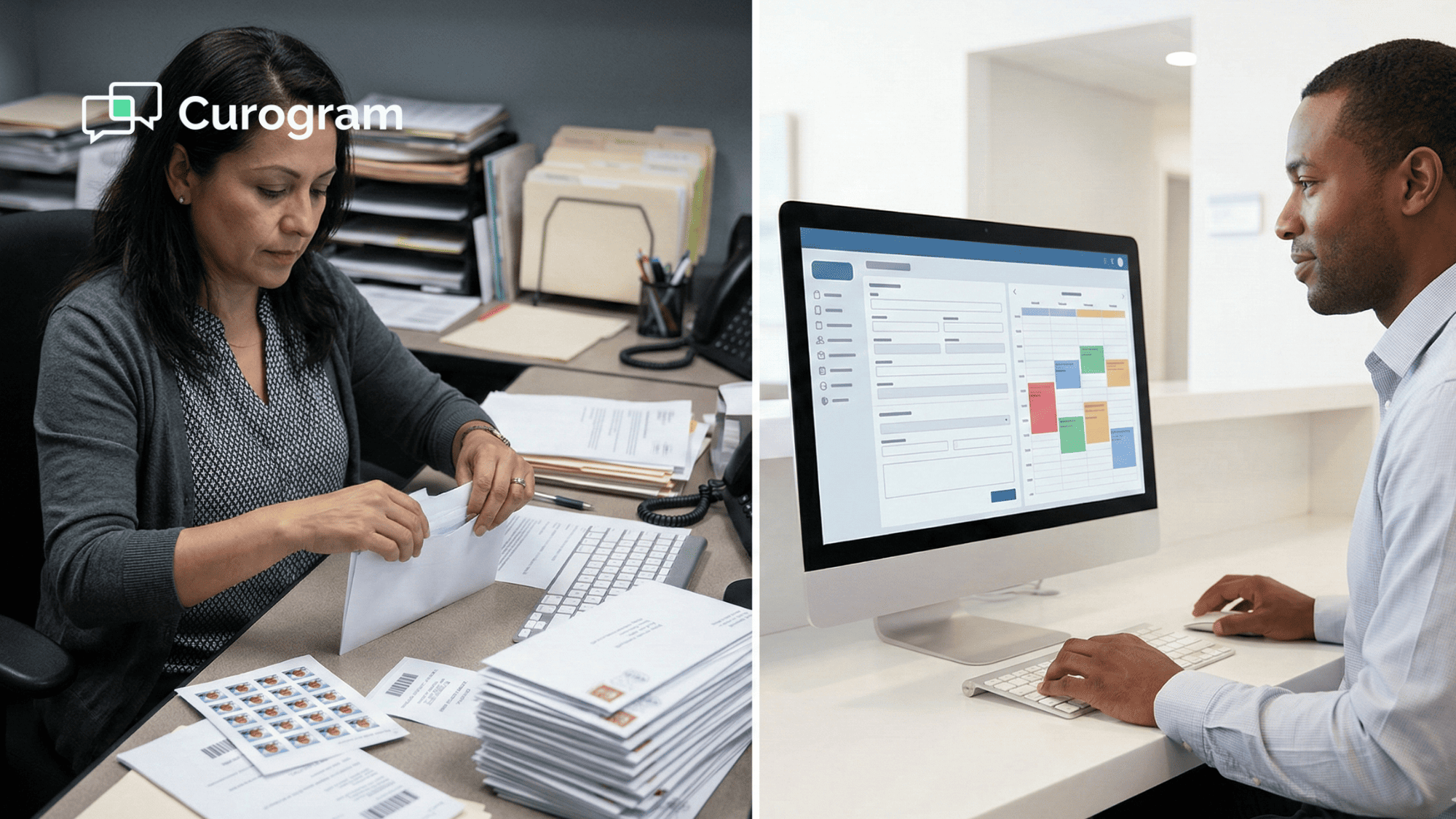
Manual recall systems create a vicious cycle. Staff members print lists, dial numbers, and leave voicemails that rarely get returned.
Meanwhile, high-priority patients slip through the cracks. Patients with chronic skin conditions miss their annual screenings. Post-surgery orthopedic patients never get their six-month checkups.
What if your ModMed patient recall workflow could run itself?
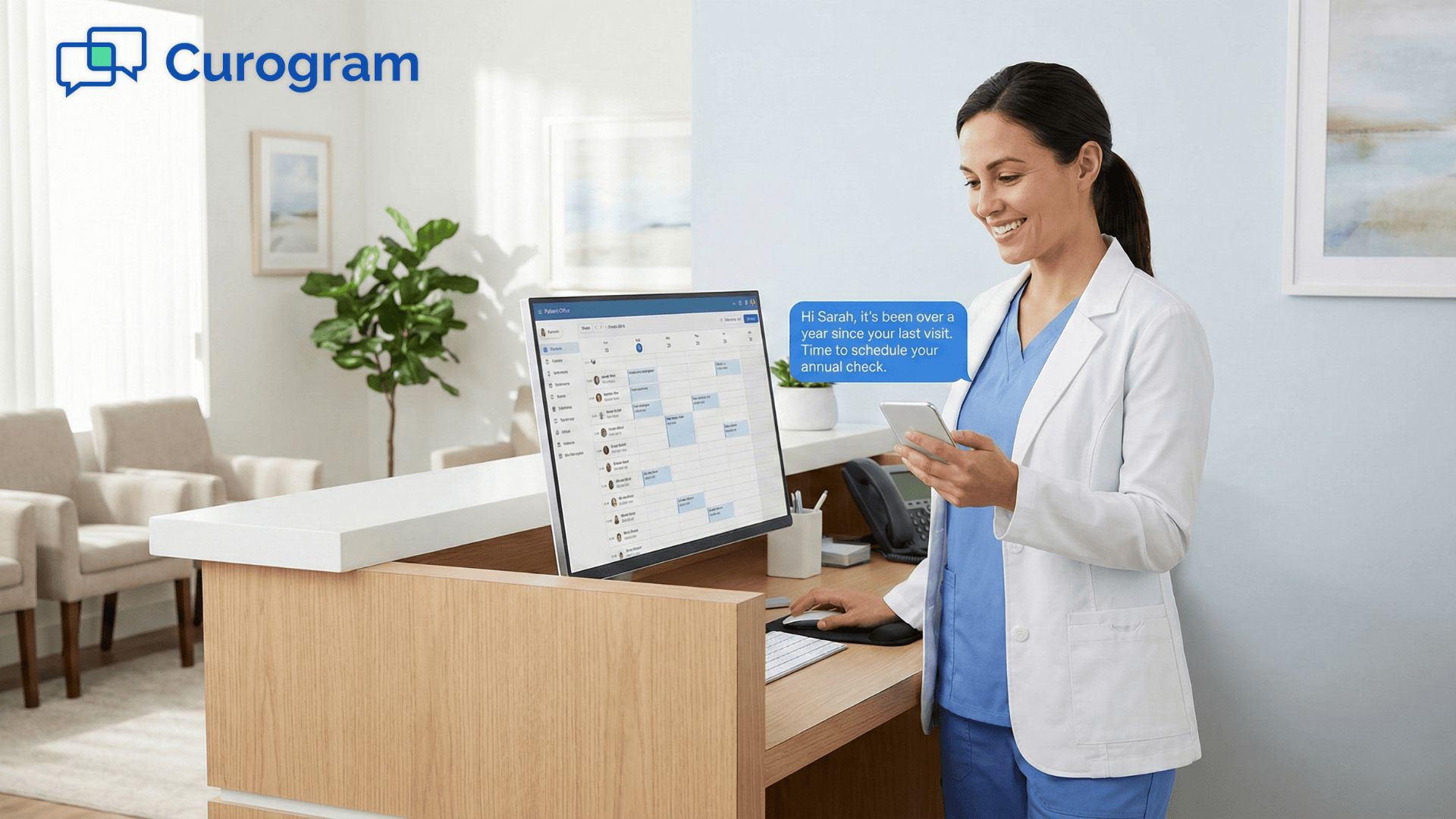
Imagine a system that automatically identifies which patients need to come back, sends them friendly text messages, and lets them book appointments with one tap—all without your staff lifting a finger.
This is not a dream. Automated recall workflows are already helping specialty clinics across the country fill their schedules, improve patient outcomes, and give their teams relief from the phone tag nightmare.
In this article, we will show you how to eliminate recall debt forever.
You will learn how modern automation transforms specialty clinic follow-up care, why text messaging outperforms traditional phone calls, and how practices are using these tools to bring back over 1,200 dormant patients—without hiring a single new employee.
Most ModMed databases contain thousands of patients who are overdue for care. If you pull a report right now, you might see 2,000 or 3,000 names who have not visited in the past year. Your staff looks at that list and feels defeated before they even start.
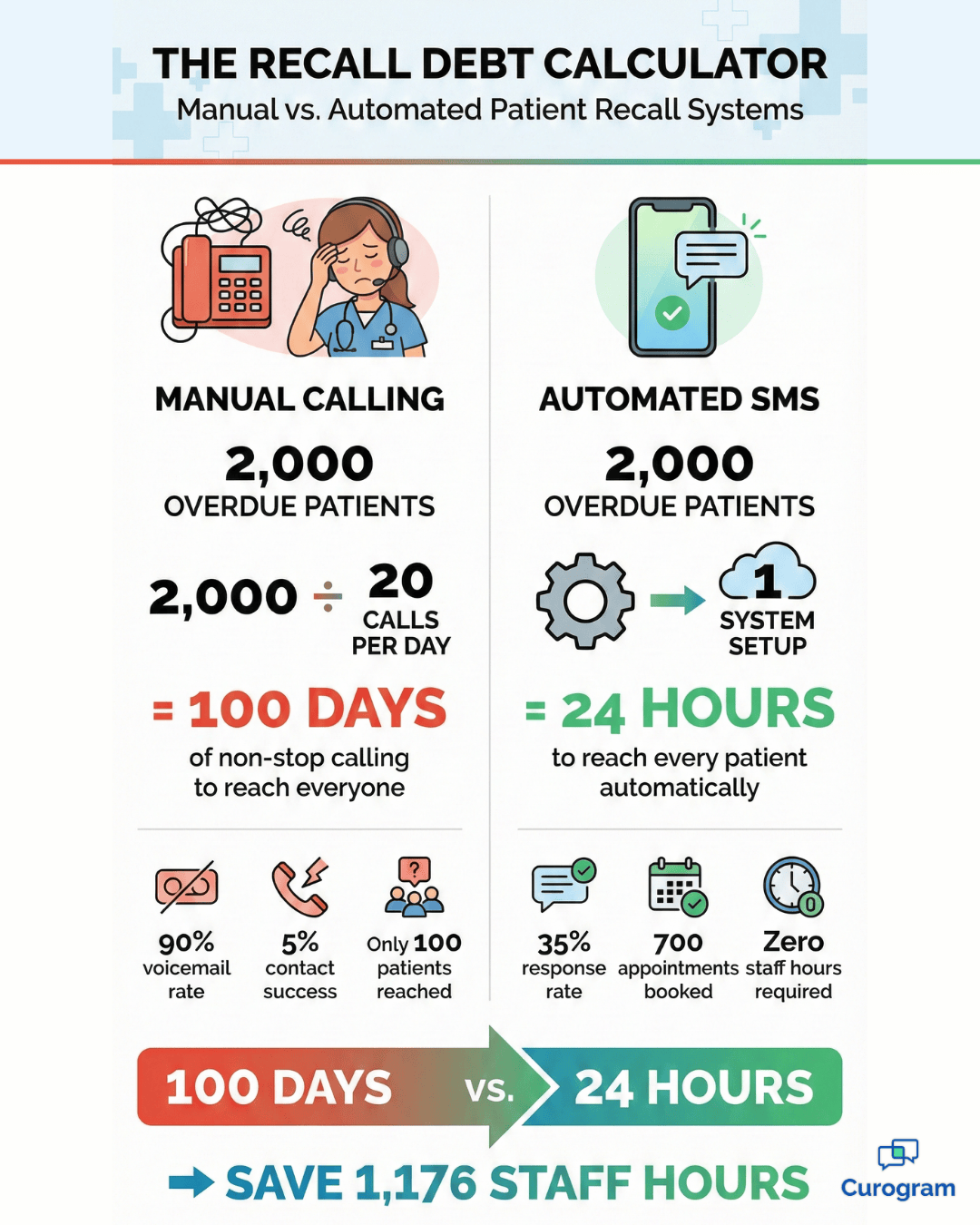
Here is the truth most practice managers do not want to admit: teams only manage to contact about 5% of overdue patients through manual outreach. That means 95% of your recall list never gets touched.
When you rely on manual recalls, here is what happens:
These are not just numbers—they are real patients who need dermatology recall strategy appointments, orthopedic checkups, or behavioral health follow-ups.
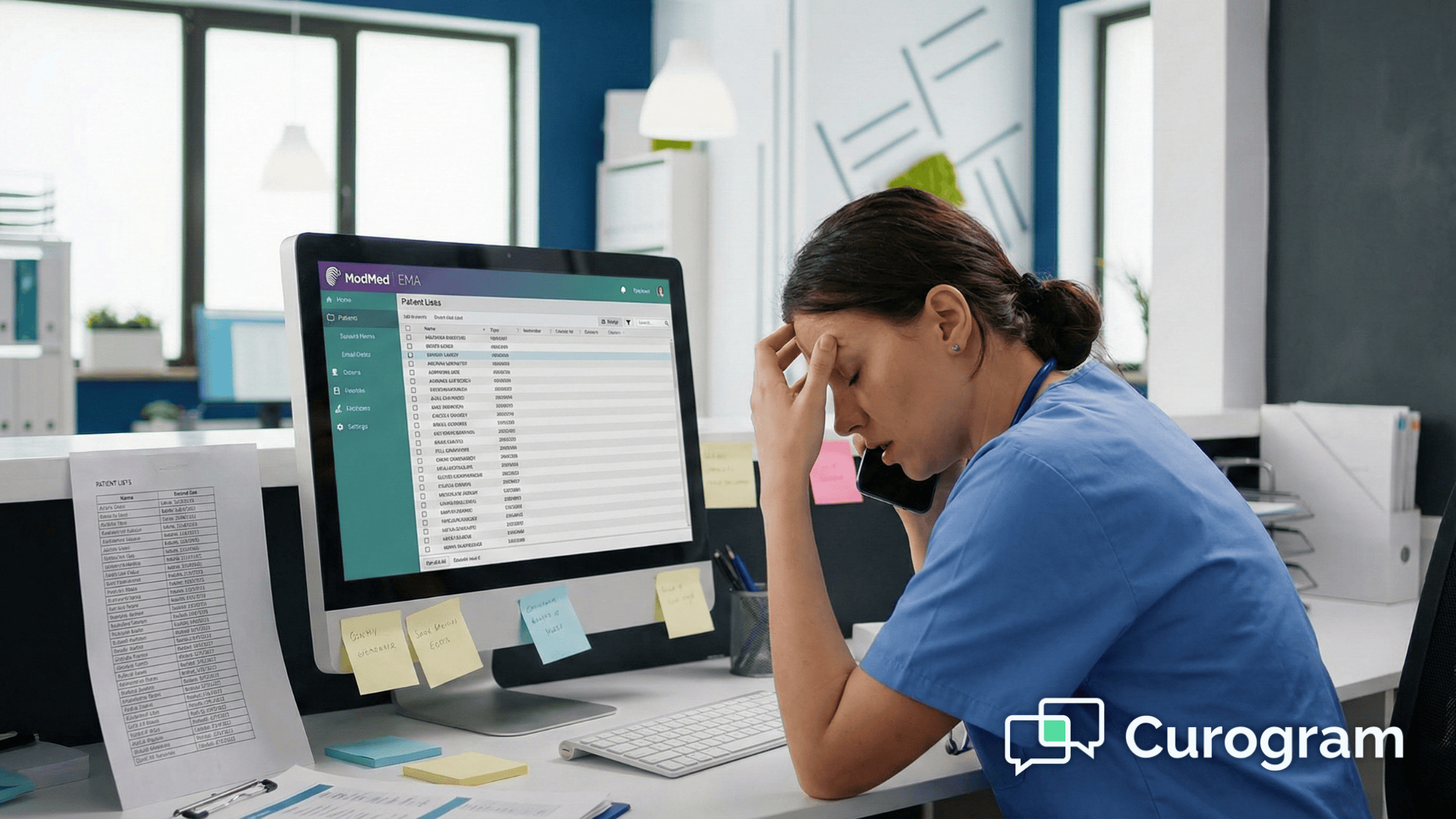
The phone tag problem makes everything worse. Without mass texting as an outreach option, your staff is forced to dial out, and nine out of ten calls go straight to voicemail.
Patients rarely call back.
Here is what your team experiences daily:
One office manager told us she dreaded Monday mornings because she knew her team would spend the entire day making calls that went nowhere.
Clinical oversight becomes a real danger in this environment. The patients who stay quiet are the ones most likely to be forgotten.
A post-op patient who feels fine might not think to schedule a follow-up, but their doctor needs to verify healing and check for complications.
A patient with a history of abnormal moles might assume everything is okay, while their dermatologist wants them in annually. Manual systems let these quiet patients disappear, putting their health at risk and exposing your practice to liability.
Automated recall systems flip the script entirely. Instead of your staff hunting down patients, the system does the work for you.
Curogram connects directly to your ModMed EMA database and pulls information based on last visit dates, specific diagnosis codes, or procedural codes. The system knows exactly who needs a checkup and when.
The system runs in the background, constantly scanning your database for patients who meet your recall criteria. You set the rules once—like "any patient with a diagnosis code for psoriasis who has not been seen in 12 months"—and the system takes it from there.
The automation identifies patients based on:
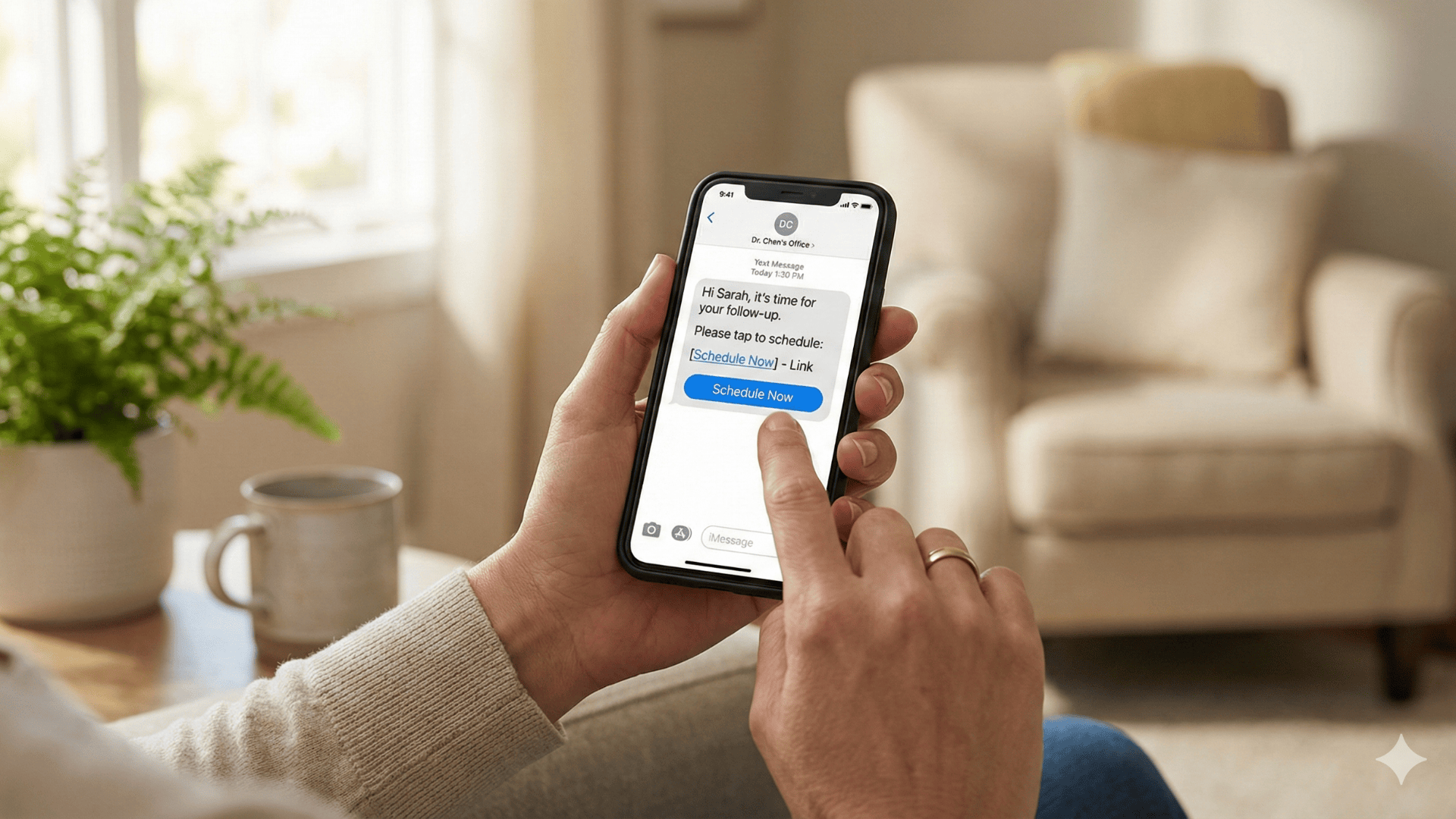
Once the system identifies overdue patients, it sends them a personalized text message. This is not a cold, robotic notification. The message feels friendly and professional, like a helpful reminder from someone who cares about their health.
Patients appreciate the convenience of receiving a text instead of an unexpected phone call during their workday. They can read it during a break, think about their schedule, and respond when it works for them.
The magic happens when patients respond. The text message includes a direct scheduling link that connects to your ModMed EMA calendar. Patients tap the link, pick a time that works for them, and book their appointment instantly.
What makes this system different:
The booking flows directly into your schedule with zero manual data entry required from your team. Your staff never touches the process, but your calendar fills up automatically.
This set-it-and-forget-it approach gives your team the relief they desperately need. You configure the workflow once, and it runs continuously in the background. Your staff can focus on the patients who are physically in your office, providing better care and feeling more connected to their work.

Different specialties need different recall approaches. A dermatology practice has different priorities than an orthopedic clinic, and the recall system needs to reflect that.
Automated workflows excel at customization, letting you create targeted campaigns that match your clinical needs.
Dermatology practices use recall automation to trigger annual skin check invitations for patients with a history of biopsies or abnormal lesions. These patients need regular monitoring to catch potential skin cancer early.
The system identifies anyone who has not had a skin exam in 12 months and sends them a friendly reminder. This ensures long-term preventative health while keeping your dermatology recall strategy consistent and reliable.
One dermatology clinic in Florida reported that automated recalls helped them catch three early-stage melanomas that would have been missed under their old manual system.
Orthopedic clinics schedule six-month post-surgical reviews automatically.
After a joint replacement or other major procedure, patients need follow-up visits to monitor implant integrity, assess mobility progress, and document surgical outcomes.
Automated recalls make sure these critical appointments happen, protecting both patient health and your practice from potential complications that could have been caught earlier. Proper follow-up also helps your surgeons track their outcomes and identify any patterns that need attention.
Behavioral health practices benefit from shorter recall cycles. Mental health and therapy patients need consistent touchpoints to maintain wellness and treatment continuity.
An automated system can reach out to patients who have not scheduled a session in 90 days, gently encouraging them to reconnect with their provider.
This kind of orthopedic patient re-engagement keeps treatment on track and shows patients that your practice genuinely cares about their ongoing well-being.
Custom recall campaigns can target specific providers who have open slots in their schedules. If one of your doctors has lighter patient volume for a few weeks, you can run a recall campaign specifically for their patients.
This helps balance workload across your practice and makes sure every provider stays busy.

The numbers tell a powerful story. One multi-location practice brought back 1,240 patients through automated recalls—a result that would have required several full-time employees working the phones for months.
Instead, they achieved it with zero additional labor costs. Those 1,240 appointments represent real revenue, improved patient outcomes, and better specialty clinic follow-up care across the board.
Staff productivity soars when you remove the burden of manual recall calling. Medical assistants and front desk teams no longer spend their afternoons dialing number after number, only to reach voicemail after voicemail.
Instead, they focus on patients who are actually in the clinic:
This shift creates a workplace where people feel respected and valued for their clinical skills rather than exhausted by administrative drudgery.
Burnout decreases dramatically when staff no longer dread their daily recall tasks. The emotional weight of knowing thousands of patients need follow-up care—but having no realistic way to reach them—creates constant stress.
Automation lifts that weight. Your team can breathe easier knowing the system is handling recalls efficiently and effectively. They stop feeling like they are failing at an impossible task and start feeling proud of the smooth operation they are part of.
One medical assistant told us, "I used to go home feeling guilty every day because I knew we were not reaching everyone. Now I can sleep at night knowing the system is doing what I never could."
Revenue stability improves significantly with automated recalls. New patient acquisition fluctuates throughout the year, with seasonal dips that can hurt your bottom line.
Automated recalls provide financial benefits:
Medical office patient retention becomes effortless when you stay connected with your patient base. Patients appreciate practices that remember them and make it easy to stay on top of their health. When they receive a friendly text reminder at the right time, they feel cared for and supported.
Yes, absolutely. Curogram checks your ModMed schedule daily to verify appointment status.
As soon as a patient books an appointment through the recall system, they are automatically removed from the recall sequence. You never have to worry about patients receiving redundant messages or feeling annoyed by over-communication.
You can customize recall campaigns to fill the schedules of specific providers who have open capacity.
If one doctor has more availability than others, you can target their patient list specifically. This helps balance patient load across your practice and ensures every provider stays productive.
Like all Curogram features, the recall workflow is fully encrypted and adheres to the highest HIPAA security standards. Patient data remains protected throughout the entire communication process.
Text messages are delivered through secure channels, and all information syncs safely with your ModMed EMA system. You can confidently use automated recalls knowing you are meeting all healthcare privacy requirements.
Patients overwhelmingly prefer text communication. Modern patients check their phones constantly throughout the day, and text messages fit naturally into their routine.
Response rates for text-based recalls are significantly higher than phone call attempts. Patients can read the message when convenient, tap the scheduling link, and book their appointment in under a minute. This low-friction experience makes them more likely to follow through.
When patients reply to recall messages, their responses route directly to your staff through the Curogram platform. Your team can answer questions, provide additional information, or help patients choose the best appointment time.
This creates a natural conversation that feels personal and supportive, reinforcing the positive patient experience your practice wants to provide.
Take control of your patient recall process today and give your staff the calm, confident workday they deserve instead of one defined by overwhelm and stress. The recall debt weighing down your practice doesn’t have to exist.
With automated recall workflows powered by ModMed EMA automation, you can transform how follow-up care and patient engagement are managed.
Imagine walking into your office and seeing a schedule filled with returning patients—without anyone on your team spending hours on the phone.
Qualified patients are booked automatically. Staff spend their time caring for patients instead of dialing numbers.
Front desk teams greet people instead of chasing them, and clinical teams feel confident knowing every patient who needs follow-up is reached professionally and consistently.
The technology to make this possible exists today. Practices across the country are already using these tools to eliminate recall debt, improve continuity of care, and create healthier, happier work environments.
Your practice can do the same with a system that integrates seamlessly with ModMed EMA, requires minimal setup, and begins delivering results within weeks.
This isn’t about replacing your staff or removing the human touch from care. It’s about giving your team an automated assistant that handles the tasks they dislike so they can focus on the work they love.
When your staff is freed from phone tag and manual list management, they have more energy for the patients right in front of them. That leads to better experiences for your team, your patients, and your practice.
Schedule a quick demo to see how Curogram’s ModMed patient recall workflow can automatically bring patients back to the clinic, support targeted campaigns by specialty, reflect your practice’s personality, and fill your schedule with zero manual effort.
Schedule a 10-minute demo today to see how Curogram's automated patient recalls for ModMed can protect your patients' continuity of care and bring everyone back under your medical supervision where they belong.
💡Specialty practices can protect patient recalls for ModMed by connecting Curogram as a guardian system to their EMA. This integration continuously...
💡 Exa mass texting needs a clear system for communication to not feel scattered. Patients miss updates, staff repeat the same calls, and your...
💡 Mass texting helps boost engagement Office Ally mass texting clinics depend on by sending short, clear updates that patients actually see. ...