
Patient Communication Efficiency for Meditab IMS Organizations
 Jo Galvez : Jan 12, 2026, 8:00:00 PM
Improve patient communication efficiency across Meditab IMS organizations with secure texting.
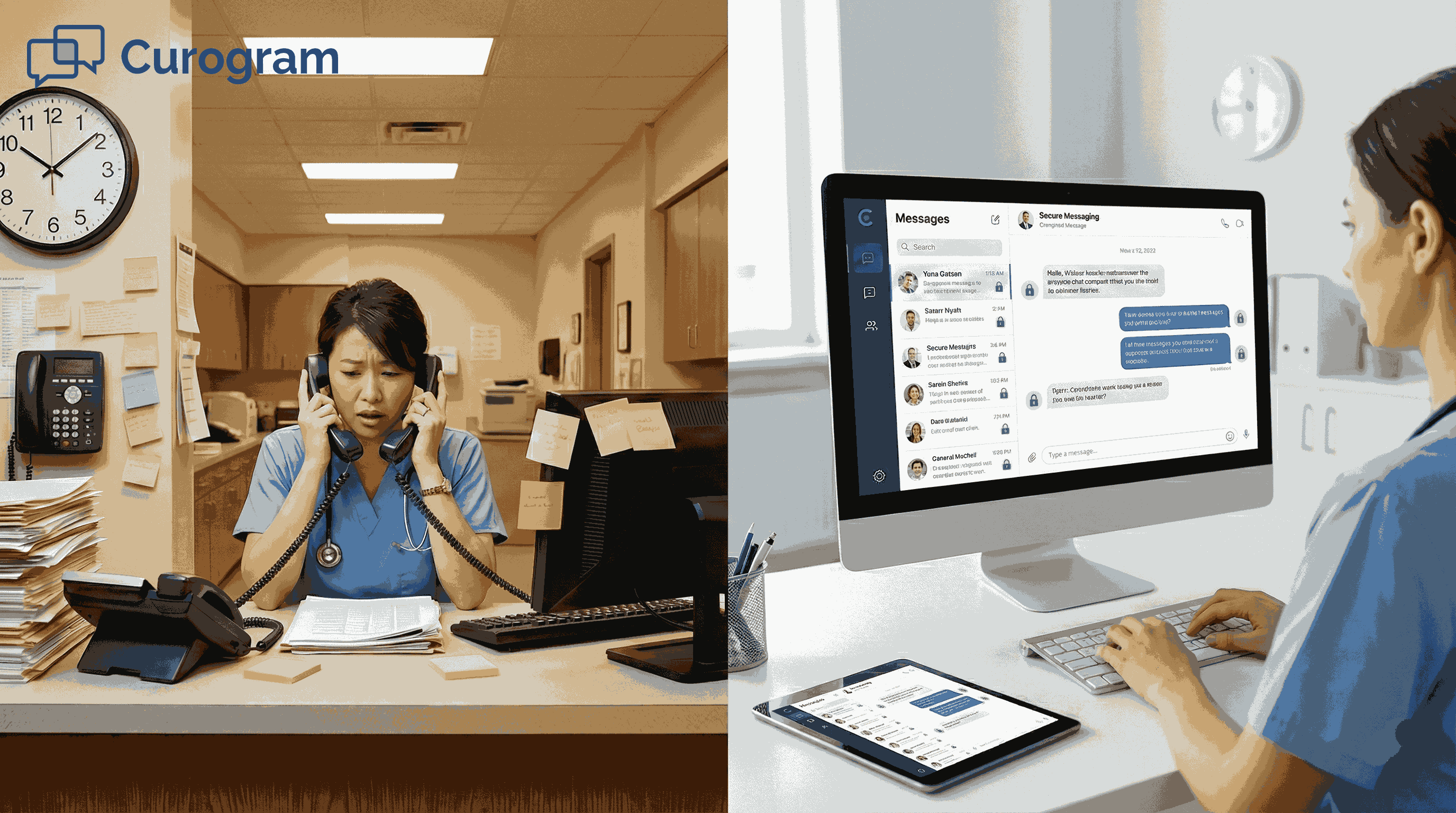
Patient communication is one of the most demanding parts of running a Meditab IMS practice. Front-desk teams manage a steady stream of calls, messages, and follow-ups throughout the day. Many of these interactions are routine, but they still require time, focus, and accurate documentation.
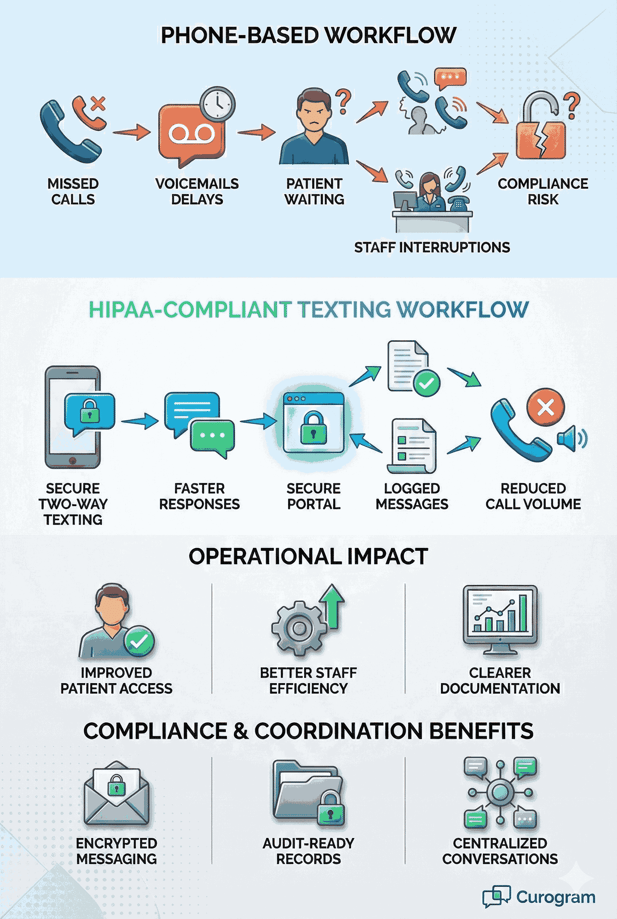
Phone-based workflows make this harder than it needs to be. Calls go unanswered. Voicemails stack up. Patients miss important updates because they cannot answer during work hours. Staff spend large parts of the day repeating the same conversations.
Texting seems like an easy fix, but standard texting creates new risks. Personal phones and consumer messaging apps are not designed to protect patient information. Messages are not encrypted. Access cannot be controlled. Conversations are rarely logged properly.
This puts Meditab IMS practices in a difficult position. They need faster communication, but they also need to protect patient data and meet HIPAA requirements. Choosing speed over security is not an option.
HIPAA-compliant texting for Meditab IMS practices solves this problem. It allows clinics to communicate quickly while keeping patient information secure, documented, and accessible only to authorized staff. Instead of working around compliance, staff can communicate confidently within it.
This article explains how HIPAA-compliant patient communication improves daily operations for Meditab IMS practices. We’ll cover why secure texting matters, how it improves patient access, and how it reduces front-desk workload. We’ll also look at how secure texting fits into real workflows without slowing staff down.
Meditab IMS practices handle a high volume of patient communication every day, and much of it is repetitive. Appointment confirmations, rescheduling requests, follow-up questions, and care instructions all require timely responses. When communication depends mostly on phone calls, even well-run clinics struggle to keep pace. The result is often delayed responses, frustrated patients, and staff who feel constantly behind.
Phone-based workflows introduce friction at every step. Patients miss calls while they are at work, driving, or caring for family members. Staff leave voicemails that are never returned or are listened to too late to act on. Important information stays unresolved simply because the timing did not line up. Over time, this turns routine communication into a daily bottleneck.
Some practices turn to regular texting to speed things up, but this creates a serious risk. Personal phones and consumer messaging apps were never built for healthcare use. They do not encrypt messages in a HIPAA-compliant way, limit access, or reliably log conversations. Even simple messages can expose patient information and create compliance gaps.
HIPAA-compliant texting for Meditab IMS practices solves both problems at once. It preserves the speed and convenience of texting while protecting patient data and maintaining full documentation. Secure texting becomes a safe replacement for many phone calls instead of a risky workaround. This allows practices to modernize communication without sacrificing trust or compliance.
Phone tag is one of the most expensive inefficiencies in clinic operations, even though it often feels unavoidable.
Staff routinely call the same patient multiple times to confirm an appointment or clarify instructions. Each attempt interrupts other work and pulls attention away from patients in the office. When multiplied across dozens of patients, this consumes hours of staff time every day.
Voicemail is unreliable by nature. Many patients do not check it regularly, and some never listen to messages at all. Staff are left unsure whether the patient received the information or understood what to do next, which forces follow-up calls.
Missed calls delay decisions. Appointments remain unconfirmed longer than they should. Reschedule requests arrive too late to fill open slots. Instructions may be followed incorrectly because clarification came after the fact.
Simple updates that could be resolved quickly by text often require multiple call attempts. This repetitive work increases fatigue and reduces the time staff can spend on more complex or sensitive patient needs. Over time, it contributes directly to burnout.
HIPAA-compliant patient communication replaces this cycle with secure two-way texting. Patients respond when it fits their schedule, not when the clinic calls. Staff manage more conversations in less time while keeping every message documented and compliant.
Patient access is about more than whether appointments are available on the calendar. It also depends on how easily patients can communicate with the clinic before and after visits. When communication relies only on phone calls, access becomes limited by office hours, hold times, and missed connections.
HIPAA-compliant texting improves access by removing these barriers. Patients can read and respond to messages when it works for them instead of waiting on hold or calling back later. This makes communication more reliable and less stressful for patients. It also reduces delays that affect care continuity.
For Meditab IMS practices, secure texting improves access across a wide range of patient needs. Patients with demanding jobs, caregiving responsibilities, or accessibility challenges can still communicate effectively. This creates a more inclusive and responsive communication experience without changing clinical schedules.
Secure two-way texting enables clinics to transfer routine communication from the phone without compromising control or context.
Text messages are typically read much faster than voicemails are returned. Patients are more likely to respond to a text than to answer an unexpected call. This shortens the time it takes to resolve common questions and confirm appointments.
Phone calls require both parties to be available at the same time. Texting allows asynchronous communication, so conversations continue even when schedules do not align. This keeps communication moving instead of stalled.
Some patients avoid phone calls or have difficulty hearing. Secure texting provides a comfortable and accessible option without compromising privacy. This helps practices serve more patients effectively.
Supporting Timely Patient Communication
HIPAA-compliant patient communication supports many everyday interactions that affect care quality.
Patients can confirm, cancel, or ask questions without calling the office. Staff receive responses quickly and can adjust schedules before gaps become losses.
Post-visit questions often involve simple clarification. Texting allows patients to ask when questions come up and receive written guidance they can refer back to later.
Text reminders are more likely to be seen and acted on than calls or voicemails. This improves adherence and reduces missed steps without increasing staff workload.
Meditab IMS practices often involve multiple providers, departments, or locations. Communication becomes difficult when patient messages are spread across personal phones, email inboxes, and voicemail systems. Important context gets lost, and patients may receive inconsistent answers depending on who responds.
HIPAA-compliant texting creates a shared communication layer that keeps teams aligned. Conversations are centralized, documented, and visible to authorized staff. This improves continuity and reduces internal confusion. It also ensures that communication does not depend on individual memory or availability.
Centralized communication improves consistency and accountability. When all patient messages live in one secure system, staff no longer search across devices or platforms. Conversations are easy to locate, review, and continue. This saves time and reduces errors.
Authorized team members can see message history and context. Patients do not need to repeat themselves when speaking with different staff. This improves trust and efficiency.
When communication lives on personal devices, work stops if someone is unavailable. Centralized messaging allows others to step in without losing context or continuity.
Secure texting supports coordination across teams and shifts. Message history remains intact during shift changes or escalations. This reduces mistakes caused by incomplete information. Teams stay aligned on patient needs.
With full context available, staff can respond quickly and accurately. Fewer back-and-forth steps are needed to resolve issues. Patients get answers sooner. Messages are not lost in voicemail systems or personal inboxes. Every interaction is logged and actionable. This improves reliability and accountability.
Scheduling questions, directions, and basic clarifications can be handled through secure texting. Staff can respond efficiently using templates while still personalizing messages. This reduces repetitive phone calls.
With fewer interruptions, staff can focus on patients at the desk and tasks that require attention. This improves accuracy, reduces stress, and leads to better patient experiences.
Maintaining compliance should not slow down daily work. Many Meditab IMS practices manage heavy message volume every day. Staff must respond fast while keeping patient data safe. HIPAA-compliant texting for Meditab IMS practices supports both goals without adding friction.
Consumer messaging tools are not HIPAA-compliant. These tools were built for personal use, not care settings. Messages may live on personal phones or shared devices. This creates risk and missing records.
These tools also add hidden friction. Staff must guess what is safe to send. Some messages get delayed or avoided. Others are sent without full protection.
Staff need safe tools that do not add friction. When tools feel simple, staff use them. When tools feel complex, staff work around them. HIPAA-compliant patient communication must support real workflows.
Protecting data should happen during normal, daily contact. Staff should not stop work to manage security steps. The system should handle safety in the background. This keeps communication fast and safe.
Secure message delivery protects patient data during routine updates. Messages travel through protected channels, not open apps. This lowers the risk of data leaks during daily contact. Staff can reply with confidence.
Secure delivery also supports quick responses. Staff do not switch tools or delay replies. Messages arrive fast and stay protected. This helps patient communication automation work as planned.
Controlled access limits who can view patient messages. Only approved staff can open or reply to conversations. This reduces risk when devices are shared. It also supports clear team roles.
Access control keeps messages within the care team. Each user sees only what they need. This prevents data from reaching the wrong person. It adds safety without slowing work.
Centralized logs keep all messages in one place. Staff do not search phones, emails, or notes. Message history stays tied to the patient record. This improves speed and accuracy.
Central logs also support teamwork. Any authorized staff member can review past messages. Patients do not need to repeat details. Communication stays clear and complete.
Compliance should support daily work, not disrupt it. Clear records and safe workflows reduce stress. Staff stay focused on care, not paperwork. Secure systems make this possible.
Clear records support audits and reviews. Each message includes time, sender, and content. Staff do not recreate past exchanges. This saves time during checks.
Having clear records also helps with daily work. Teams can confirm what was shared and when. Questions get resolved faster. Trust improves across teams.
Reduced risk comes from fewer gaps in records. Secure systems prevent lost or deleted messages. Personal devices are removed from patient communication. This lowers compliance risk.
Lower risk also protects staff. Teams do not worry about sending the wrong message. The system sets clear limits. Daily work feels safer.
Compliance-ready workflows help clinics stay prepared. Secure texting fits into daily tasks without slowing staff. HIPAA-compliant texting for Meditab IMS practices supports care, access, and safety. Compliance becomes part of how work flows, not a barrier.
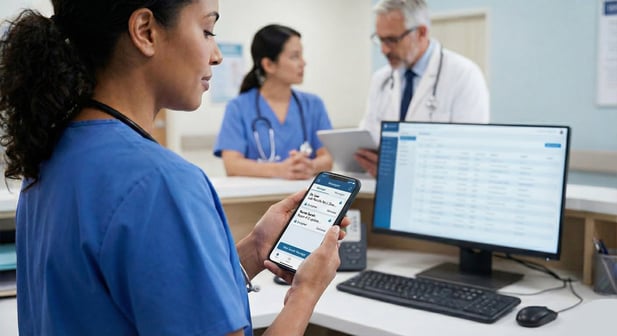
Secure texting supports core clinic tasks when used at the right time. Messages should match what staff and patients need at each step. HIPAA-compliant patient communication works best when it follows the care flow. This reduces missed steps and confusion.
Appointment coordination improves when texts connect to the schedule. Patients confirm or reschedule by reply. Staff see changes early enough to fill open slots. This reduces phone tag and last-minute gaps.
Texting also supports quick questions about visit time or place. Patients ask without calling. Staff reply without stopping other work. Schedules stay accurate.
Secure form delivery works well through text. Patients receive links to intake forms before visits. They complete forms on their own time. Staff receive clean data without paper.
This reduces check-in delays. It also lowers data errors from manual entry. Intake becomes faster and more reliable.
Care plan follow-ups benefit from written messages. Texts share next steps, reminders, or prep notes. Patients can read details again later. This lowers repeat calls.
Follow-up texts also support care clarity. Patients know what to do and when. Staff spend less time restating instructions. Care stays on track.
Automation helps clinics grow without adding staff. Messages should send at key moments with clear content. Patient communication automation reduces manual work while keeping tone consistent. This supports long-term scale.
Triggered messages are sent based on events. A booked visit sends a confirm text. A completed visit sends follow-up steps. Staff do not need to remember each send.
This reduces missed outreach. It also keeps timing consistent. Patients know what to expect.
Consistent delivery builds trust. Patients receive the same clear updates each time. Teams rely on a steady message flow. Fewer errors occur as steps repeat.
Consistency also helps training. New staff follow the same process. Work stays aligned across teams.
Predictable performance helps leaders plan. Message volume follows the schedule. Response time becomes easier to manage. HIPAA-compliant texting for Meditab IMS practices scales without strain.
When secure texting fits the workflow, speed and safety rise together. Disruption falls as tools align. Staff focus on care, not clicks. Communication stays clear, safe, and steady.
Meditab IMS practices face constant pressure to move fast without cutting corners. Staff handle high message volume while managing care, intake, and schedules. Tools must support this pace without adding risk or steps. HIPAA-compliant texting for Meditab IMS practices works best when it fits real clinic flow.
Curogram is designed for busy ambulatory environments. Clinics cannot pause work to manage complex tools. Texting must support fast replies during peak hours. Systems should reduce effort, not add more screens.
Curogram also scales across locations and teams. Many Meditab IMS practices grow over time. New sites and staff should not create chaos. A shared system keeps work aligned.
It also supports compliance without complexity. Staff should not memorize rules to stay safe. HIPAA-compliant patient communication should work in the background. This lets teams focus on care.
Curogram provides a secure texting setup built for daily clinic work. It supports speed, safety, and control without extra steps. Patient communication automation works best when it feels natural. This is where structure matters.
Centralized conversations keep all messages in one place. Staff do not rely on personal phones or email threads. Messages stay tied to the patient record. This supports teamwork and clarity.
Central access also helps coverage. When one staff member is away, others step in. They see the full message history. Patients do not repeat details.
Reliable delivery supports trust and flow. Messages are sent when expected and arrive on time. Staff do not chase patients with repeat calls. Patients know when to expect updates. It also helps with planning. Message volume follows the schedule. Teams manage load with less stress. Work feels steadier.
Compliance-first design keeps risk low. Messages are secure by default. Access is controlled by role. Records are logged without manual work.
This design protects both staff and patients. Teams do not guess what is safe to send. The system sets clear limits. HIPAA-compliant texting for Meditab IMS practices becomes routine.
Curogram supports daily work without pushing sales goals. It fits how clinics already operate. Patient communication automation runs quietly in the background. HIPAA-compliant patient communication becomes part of the workflow, not a burden.
For Meditab IMS practices, this balance matters. Speed and safety rise together. Growth stays manageable. Communication stays clear, secure, and steady.
HIPAA-compliant texting for Meditab IMS practices addresses a real operational challenge. Phone-only communication slows response times, increases workload, and frustrates patients. Unsecured texting creates compliance risks that clinics cannot afford.
Secure texting offers a practical alternative. It allows clinics to communicate quickly while protecting patient data. Messages are encrypted, logged, and accessible only to authorized staff. Compliance becomes part of the system instead of a manual task.
For Meditab IMS practices, HIPAA-compliant patient communication improves daily operations. Patient access improves because messages are easier to receive and respond to. Call volume decreases as routine questions move to text. Staff regain time without sacrificing quality or safety.
Secure texting also improves coordination across teams and locations. Conversations remain visible and documented. Handoffs are smoother. Important information does not get lost between shifts or departments.
Most importantly, secure texting supports staff instead of adding burden. Communication fits into existing workflows. Staff do not need to manage extra tools or worry about compliance steps. The system handles it for them.
As patient expectations continue to evolve, Meditab IMS practices need communication tools that are fast, safe, and reliable. HIPAA-compliant texting meets these needs without adding complexity. It supports better care, stronger operations, and long-term sustainability.
Book a demo to see how Curogram supports better care workflows with Meditab IMS.
 Jo Galvez : Jan 12, 2026, 8:00:00 PM
Improve patient communication efficiency across Meditab IMS organizations with secure texting.
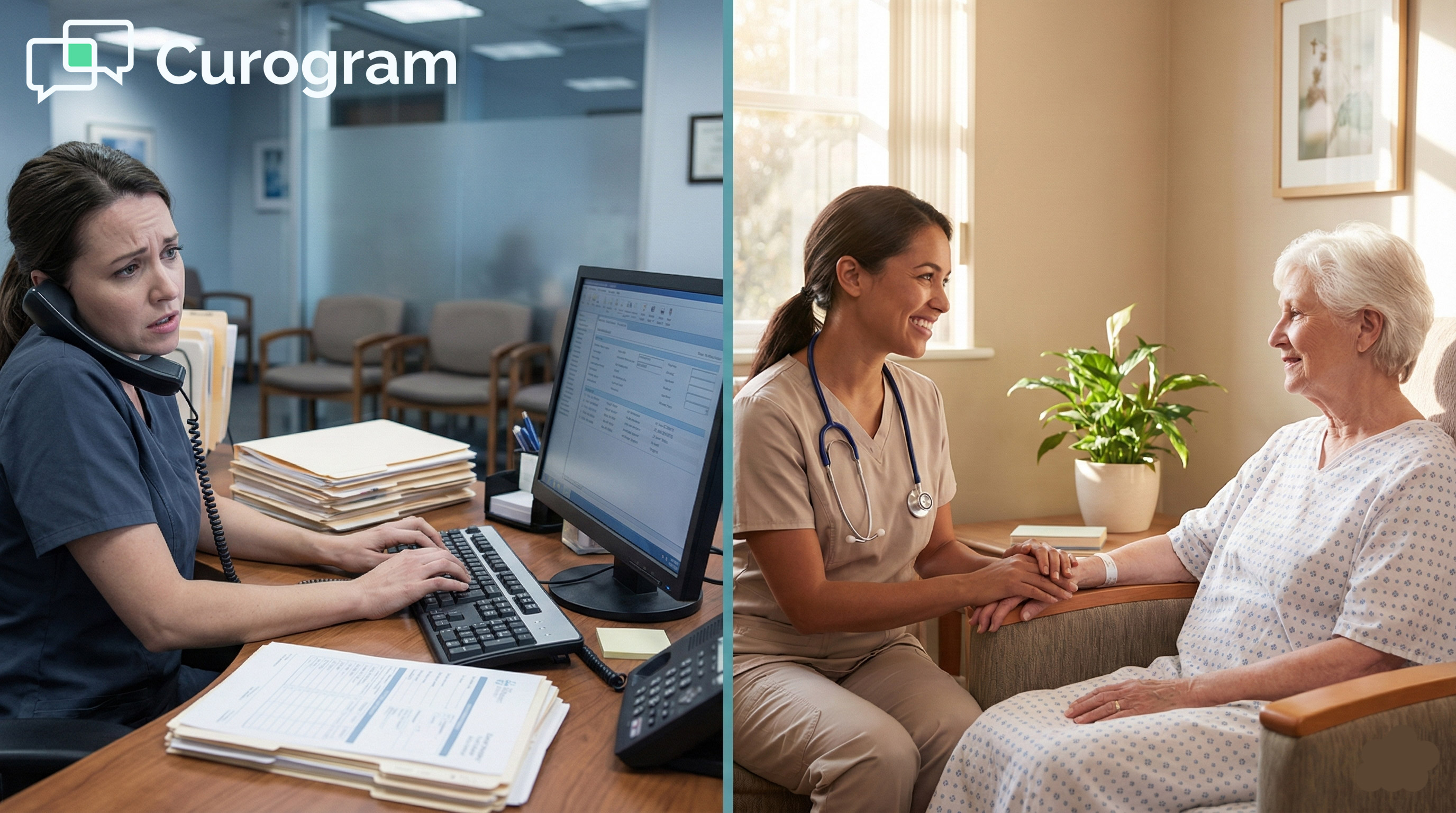 Jo Galvez : Jan 14, 2026, 6:00:00 AM
Improve bulk communication efficiency for Meditab IMS organizations using mass texting.
 Jo Galvez : Jan 12, 2026, 6:00:00 PM
Standardize secure patient messaging workflows across Meditab IMS teams.