
Secure Patient Messaging Workflows for Meditab IMS Teams
 Jo Galvez : Jan 12, 2026, 6:00:00 PM
Standardize secure patient messaging workflows across Meditab IMS teams.

Your front desk staff spent three hours calling patients about tomorrow's closure. By the time they finished, half the patients had already called asking what happened.
This scenario plays out daily in healthcare practices across the country. Staff members juggle phones while patients wait on hold. Confusion spreads as different team members share slightly different information. The practice falls behind while everyone scrambles to catch up.
Bulk communication efficiency for Meditab IMS organizations offers a better path forward. Instead of burning hours on individual calls, practices can reach entire patient populations with one message. The same information reaches everyone at the same moment.
Meditab IMS practices manage complex patient populations across multiple locations. Schedule changes, provider absences, and system disruptions create immediate communication needs. Manual calling cannot keep pace with these demands.
Mass texting transforms how practices handle patient notifications. A single staff member can notify 500 patients in under two minutes. Messages arrive instantly on patient phones. Everyone receives the same accurate information.
The impact extends beyond time savings. Clear proactive messages prevent confusion before it starts. Patients stop calling to ask basic questions. Staff members avoid repeating the same explanation 50 times. The practice maintains stability even during disruptions.
Patient communication automation does not replace human interaction. Instead, it handles routine notifications so staff can focus on patients who need personalized support. The phone lines stay open for complex questions. Team members have the bandwidth to provide quality care.
Healthcare organizations cannot afford communication breakdowns. Every missed message creates risk. Patients miss appointments. Staff members burn out. Trust erodes when information arrives late or varies by source.
Improving bulk communication efficiency protects both patients and staff. It builds operational resilience that withstands schedule changes, weather events, and unexpected disruptions. It creates predictable workflows that reduce stress and improve service quality.
This guide explores how mass texting delivers measurable returns through reduced call volume, improved staff productivity, and stronger operational stability. The focus stays practical: real challenges, proven solutions, and quantifiable outcomes for Meditab IMS organizations.
Meditab IMS practices serve thousands of patients across diverse locations and care settings. These organizations manage high volumes of appointments, referrals, and care coordination tasks daily. Communication demands grow as patient populations expand.
Manual calling worked when practices were smaller. A team of three could call 50 patients in an afternoon. But modern healthcare organizations schedule hundreds of appointments daily. Staff cannot physically make enough calls to keep everyone informed.
Schedule changes create immediate communication pressure. A provider calls in sick, and 40 appointments need rescheduling. The office closes for weather, and 200 patients need notification before they drive across town. System outages delay care, and staff must explain the situation to worried patients.
Each scenario demands fast, accurate communication. Delays create confusion. Incomplete information leads to frustration. Patients show up for cancelled appointments. Others miss important updates about their care.
Staff time represents the most visible cost of inefficient communication. One team member spends four hours calling patients about a closure. That same person could have processed referrals, answered complex questions, or supported walk-in patients during those hours.
The hidden costs run deeper. Staff members repeating the same message 100 times experience mental fatigue. They make small errors in wording. Some patients hear that the office "might" reopen tomorrow, while others hear it "will definitely" reopen. These inconsistencies create follow-up calls and additional confusion.
Inbound call spikes overwhelm front desk operations. When patients lack clear information, they call seeking answers. Hold times increase. Some callers give up and show up in person. Others miss their appointments entirely because they could not get through to ask questions.
Missed appointments due to unclear information damage both revenue and patient outcomes. A patient who misses a follow-up visit might experience complications. The practice loses revenue from the empty slot and faces challenges rescheduling the appointment. Trust suffers when patients feel uninformed about their care.
Staff stress escalates during disruption events. Team members feel pressure to communicate quickly while maintaining accuracy. They worry about patients who did not receive notifications. The constant interruptions prevent them from completing other essential tasks.
These costs compound over time. A practice that relies on manual calling faces these challenges weekly. Staff turnover increases as burnout takes hold. Patient satisfaction scores decline. The practice spends more on staffing but sees worse outcomes.
Inefficient communication also creates compliance risks. Staff members leaving voicemails might accidentally share protected health information on unsecured lines. Text messages from personal phones lack proper documentation. The practice cannot prove it notified patients when questions arise.
Bulk communication efficiency for Meditab IMS organizations addresses these challenges systematically. It removes the bottleneck of manual outreach. It standardizes message content to prevent inconsistencies. It documents all communications for compliance purposes.
The goal is not to eliminate human interaction but to use staff time wisely. Automated notifications handle routine updates. Staff members focus their energy on patients who need personalized support. The practice operates smoothly even during high-stress periods.
Organizations that improve bulk communication efficiency gain operational flexibility. They respond faster to disruptions. They maintain clearer patient relationships. They protect staff from unnecessary stress while delivering better service.
Mass texting delivers messages to entire patient groups simultaneously. One staff member composes a notification and sends it to 500 patients at once. Every patient receives the identical message within seconds. The entire process takes less time than making a single phone call.
This approach scales effortlessly. Notifying 50 patients takes the same effort as notifying 500. The practice can communicate with its entire patient base as easily as it reaches a small group. Geographic location does not matter—all patients receive timely updates regardless of where they live.
Delivery happens consistently across the patient population. There is no risk that some patients get called while others get missed. No patient waits until "later in the day" for their notification. Everyone receives information at the same moment with the same level of detail.
Patients can read messages at their convenience. Unlike phone calls that require immediate attention, text messages wait until the patient has a moment to review them. This flexibility improves patient satisfaction while ensuring important information gets delivered.
Manual outreach consumes enormous amounts of staff time. Calling 100 patients takes approximately six hours when factoring in voicemails, busy signals, and conversations with patients who have questions. Those six hours represent a full workday for one employee.
Mass texting reduces that six-hour task to two minutes. A staff member logs into the messaging platform, selects the patient group, composes the message, and clicks send. The system handles delivery automatically. No busy signals. No voicemails. No repetitive conversations.
The time savings multiply during complex events. A practice closing for three days needs to notify patients, reschedule appointments, and provide updates about reopening. Mass texting handles all three communications in under ten minutes total. Manual calling would require multiple days of concentrated effort.
Faster patient notification improves outcomes. Patients learn about schedule changes before they leave home. They can adjust their plans immediately. Last-minute surprises decrease, and patient satisfaction increases.
Reduced staff workload creates capacity for higher-value activities. Team members who previously spent afternoons calling patients can now support walk-in visits, process paperwork, or help with complex patient needs. The practice serves more patients without hiring additional staff.
Improving Message Consistency and Accuracy
Phone calls introduce variation into patient communications. Different staff members phrase information differently. Morning calls might emphasize different details than afternoon calls. Some staff members provide extra context while others stick to basic facts.
These inconsistencies create problems. Patients compare notes and receive conflicting information. Some feel they got incomplete details. Others worry they misunderstood important instructions. Follow-up calls increase as patients seek clarification.
Standardized content through mass texting eliminates these variations. Every patient receives the exact same wording. There is no room for misinterpretation or accidental omission of key details. The message gets reviewed before sending, ensuring accuracy.
Reduced risk of misinformation protects both patients and the practice. Patients trust that they received complete, accurate information. They do not second-guess whether they understood correctly. The practice avoids complications from patients following incorrect instructions.
Clear patient understanding improves compliance and outcomes. Patients who receive clear, consistent messages about appointment changes arrive at the correct time. They follow pre-visit instructions accurately. They know exactly what to expect from their care team.
Patient communication automation through mass texting also supports multiple languages. Messages can be sent in Spanish, English, or other languages based on patient preferences. This accessibility ensures all patients receive information they can understand and act upon.
The combination of speed, consistency, and accuracy makes mass texting significantly more effective than manual calling. Practices gain confidence that critical information reached every patient. Patients feel respected and well-informed. Staff members avoid the stress of repetitive outreach tasks.
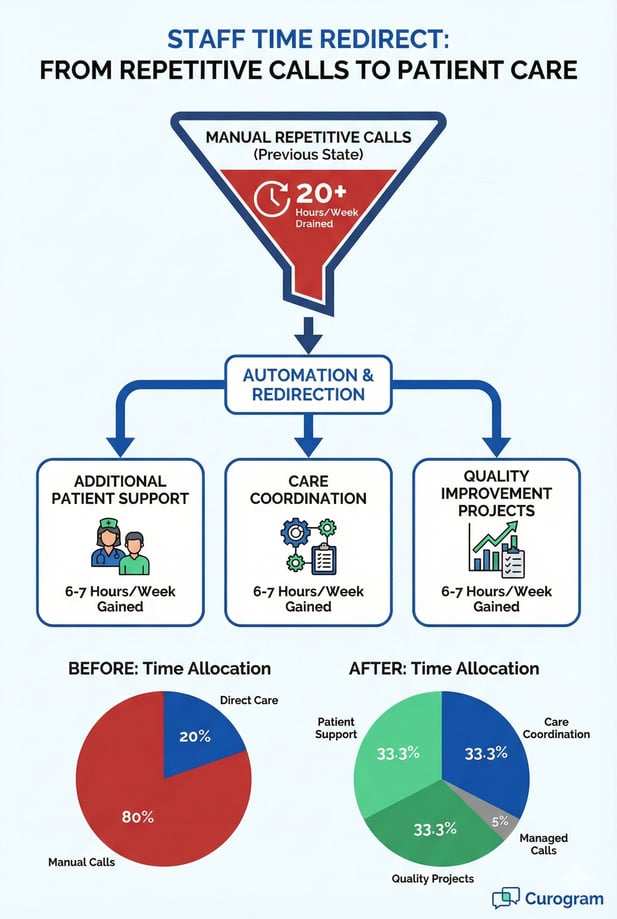
Clear proactive messages prevent confusion before patients ever pick up the phone. When patients receive timely notifications about schedule changes or closures, they have the information needed to adjust their plans. They do not need to call the practice seeking basic details.
The impact on call volume is immediate and measurable. Practices that send mass text notifications before disruptions report 60-70% reductions in inbound calls. Phone lines stay open for patients with genuine questions rather than those seeking basic status updates.
Staff disruption decreases proportionally. Front desk teams can maintain their normal workflow instead of dropping everything to answer repetitive questions. They assist patients who need complex support rather than explaining the same closure information 50 times consecutively.
This shift improves service quality for patients who genuinely need phone support. Hold times drop. Staff members have the mental bandwidth to address complex concerns thoughtfully. Patients with urgent needs receive faster, more attentive service.
Inbound call surges happen when patients lack information and seek answers urgently. A system outage occurs, and within minutes, the phone lines light up with patients asking if their appointments still stand. The practice cannot answer calls fast enough to keep pace with demand.
Patients informed before contacting the practice can eliminate this surge. Mass texting notifies patients the moment a disruption occurs. They receive clear information about what happened, how it affects their appointments, and what steps to take next. Most questions get answered before patients consider calling.
Reduced hold times benefit every caller. Patients who do call get through quickly. They do not spend 20 minutes on hold, growing increasingly frustrated. The practice maintains its reputation for accessibility even during challenging situations.
Improved call center flow creates better working conditions for staff. Team members answer calls at a manageable pace. They provide thoughtful responses rather than rushing through calls to clear the queue. Job satisfaction improves when work feels sustainable rather than overwhelming.
The practice can also redirect call center resources during low-volume periods. Staff members who would have spent hours on the phone can instead handle other patient needs. This flexibility improves overall operational efficiency.
Outbound calling consumes staff time even when patients do not answer. Each attempt requires looking up contact information, dialing, waiting through rings, leaving detailed voicemails, and documenting the attempt. These steps add up quickly across large patient populations.
Staff no longer call patients individually when mass texting handles notifications. The entire patient list receives information simultaneously. There are no unanswered calls to follow up on. No voicemails to leave. No callback logs to manage.
Faster resolution during changes improves patient experience. A provider reschedules their clinic day, and patients know within five minutes. They can adjust their schedules immediately rather than discovering the change when they arrive at the office. This respect for patient time strengthens relationships.
Improved staff productivity compounds over time. A team that saves three hours per week on outreach saves over 150 hours annually. That represents nearly a month of additional capacity for patient care activities, administrative tasks, or process improvements.
The productivity gains also reduce staffing pressure. Practices can serve growing patient populations without proportionally increasing front desk staff. The existing team manages higher volumes through improved efficiency rather than longer hours or additional headcount.
Bulk communication efficiency for Meditab IMS organizations creates sustainable workflows. Staff members complete their responsibilities within normal work hours. They avoid the burnout that comes from constantly playing catch-up on communication tasks. The practice operates predictably even during busy periods.
Some organizations worry that automation reduces personal connection with patients. In practice, the opposite occurs. When staff spend less time on repetitive notifications, they have more energy for meaningful patient interactions. The patient who calls with a complex insurance question receives full attention because the staff member is not simultaneously managing a call surge.
Mass texting also enables two-way communication when needed. Patients can reply with questions or concerns. These responses get routed to staff members who provide personalized support. The automation handles routine notifications while preserving human connection where it matters most.
The reduction in call volume creates measurable cost savings. Every hour saved on phone management represents direct labor cost avoidance. The practice operates more efficiently without sacrificing service quality or patient satisfaction. These savings can be redirected toward clinical improvements, patient programs, or staff development.
Organizations that implement patient communication automation report significant improvements in both staff morale and patient satisfaction scores. Staff members feel less overwhelmed by communication demands. Patients appreciate receiving timely, clear information without needing to chase down updates. Everyone benefits from a more organized, responsive communication approach.
The key is implementing mass texting as part of a comprehensive communication strategy. It handles high-volume, routine notifications efficiently. Staff members focus on situations requiring judgment, empathy, and personalized problem-solving. This division of labor optimizes both automation and human expertise.
Schedule changes, closures, and system outages create stress throughout healthcare organizations. Staff members scramble to notify patients while managing disruption impacts. Patients worry about their care and struggle to get answers. The practice risks reputational damage if communication breaks down.
Mass texting provides predictable communication channels during these challenging moments. The practice can notify its entire patient population within minutes of a disruption. Staff members focus on resolving the underlying problem rather than managing communication fallout.
This predictability builds organizational resilience. The practice knows it can communicate quickly regardless of the situation. Staff members trust that patients will receive timely information. Patients develop confidence that their healthcare provider keeps them informed.
Immediate patient notification prevents problems from escalating. A weather event forces office closure, and patients receive notification before they leave home. They avoid wasted trips and frustration. The practice maintains goodwill despite circumstances beyond its control.
Reduced confusion protects patient safety and satisfaction. When everyone receives the same clear message, no rumors or misunderstandings are circulating. Patients know exactly what to expect and how to proceed with their care needs.
Faster stabilization after disruptions improves operational efficiency. The practice can reopen without spending days catching up on communication tasks. Patients already know the new schedule. Staff can focus on delivering care rather than explaining what happened.
Clear, timely updates demonstrate respect for patient time and needs. Patients recognize when their healthcare provider makes communication a priority. They appreciate not being left in the dark during disruptions. This appreciation strengthens the patient-provider relationship.
Reduced frustration during challenging situations protects patient retention. Patients who feel informed and respected during closures or changes remain loyal to the practice. Those who feel ignored or confused might seek care elsewhere.
Improved confidence in the practice's management capabilities extends beyond communication. Patients who see their provider handle disruptions smoothly trust that the same competence applies to clinical care. Professional communication reinforces overall quality perceptions.
Communication tasks consume significant staff time in most healthcare practices. Front desk teams spend hours daily on patient notifications, appointment reminders, and status updates. These tasks are necessary but repetitive. They do not require specialized skills or clinical knowledge.
Efficiency gains from bulk communication efficiency for Meditab IMS organizations allow teams to focus on care. The same staff members who previously spent afternoons on phone calls can now assist with patient intake, insurance verification, or care coordination. The practice serves more patients without expanding payroll.
Fewer interruptions improve concentration and work quality. Staff members who answer repetitive calls all day struggle to focus on complex tasks. Those who use mass texting for routine notifications have sustained time blocks for meaningful work. They complete tasks more thoroughly and with fewer errors.
More time for complex needs improves patient outcomes. Insurance issues, care coordination, and patient education all require thoughtful attention. Staff members with adequate time provide better support in these areas. Patients receive higher quality service across all touchpoints.
Improved service quality creates positive feedback loops. Satisfied patients become practice advocates. They refer friends and family. They leave positive reviews. The practice grows through reputation rather than expensive marketing campaigns.
Reduced burnout risk protects the practice's most valuable asset—its people. Healthcare staff face high stress levels industry-wide. Practices that reduce unnecessary workload pressure retain employees longer. Lower turnover saves recruitment and training costs while maintaining institutional knowledge.
More predictable workdays improve job satisfaction. Staff members can plan their time effectively when not constantly interrupted by communication crises. They leave work feeling accomplished rather than perpetually behind. This satisfaction translates to better patient interactions and higher-quality care.
Improved staff morale creates a better workplace culture. Teams that feel supported by efficient systems perform better. They collaborate more effectively. They take the initiative on improvements. The practice benefits from engaged, motivated employees who contribute beyond their basic job requirements.

Broadcast messages often include sensitive information about appointments, health services, or clinic operations. Consumer tools like personal phones or unsecured apps increase risk when handling these communications. Healthcare organizations face substantial penalties for HIPAA violations related to patient communication.
Mass texting through proper platforms addresses these compliance concerns. Messages route through secure, encrypted channels. Patient information remains protected throughout the communication process. The practice maintains audit trails that document all patient notifications.
Secure delivery protects patient privacy while enabling efficient communication. Encrypted messaging platforms prevent unauthorized access to patient data. Messages are transmitted safely from the practice to the patient's phone. Third parties cannot intercept or view sensitive information.
Controlled content reduces accidental disclosure risks. The platform prevents staff members from including excessive detail in mass notifications. Templates guide appropriate information sharing. The practice balances communication needs with privacy protection.
Reduced compliance exposure saves money and reputation. A single HIPAA violation can cost thousands of dollars in fines. The reputational damage from privacy breaches can take years to repair. Compliant communication systems prevent these costly problems.
Centralized message logs document every patient notification. Auditors can review exactly what information was sent, when it was delivered, and which patients received messages. This documentation proves the practice met its notification responsibilities.
Clear accountability improves governance. Administrators can track which staff members sent which messages. This oversight ensures appropriate use of communication tools. It also identifies areas where additional training might be helpful.
Compliance-ready workflows integrate with existing quality assurance processes. The practice can incorporate communication audits into regular compliance reviews. This integration makes oversight easier and more consistent. Compliance becomes part of normal operations rather than a separate burden.
Healthcare practices investing in mass texting see measurable returns within weeks of implementation. The financial impact comes from two sources: direct cost avoidance and operational value creation. Together, these factors deliver ROI that justifies the platform investment many times over.
Reduced call volume lowers operational costs immediately. A practice that sends proactive text notifications avoids 60-70% of inbound calls during disruptions. Each prevented call saves 5-8 minutes of staff time. Over a year, these savings add up to hundreds of hours redirected from phone management to patient care.
Faster communication improves access for patients who need timely care. When schedule changes reach patients within minutes instead of hours, they can adjust plans quickly. This speed reduces no-show rates and keeps appointment slots filled. Better access translates directly to revenue protection and patient satisfaction.
Lower labor hours represent the most visible ROI component. A staff member earning $20 per hour who spends six hours calling patients costs $120 in labor. Mass texting completes the same task in two minutes for under $10 in platform fees. The practice saves $110 per notification event.
Reduced call handling costs extend beyond outbound calling. When patients receive clear proactive messages, they do not call seeking basic information. Front desk teams handle 40-50% fewer calls during typical disruptions. This reduction prevents the need to hire temporary call center support during busy periods.
Improved operational efficiency compounds these savings over time. Staff members who previously spent 10 hours weekly on patient notifications redirect that time to revenue-generating activities. They support more patient visits, process more referrals, and complete more insurance verifications. The practice gains capacity without adding payroll expenses.
Value Creation Through Operational Stability
Fewer missed appointments protect revenue while improving patient outcomes. Each prevented no-show saves the practice $100-200 in lost revenue per appointment slot. A practice preventing just five missed appointments monthly saves $6,000-12,000 annually. Most organizations see far greater improvements.
Improved patient satisfaction creates long-term value through retention and referrals. Satisfied patients remain loyal during competitive market pressures. They recommend the practice to friends and family. This organic growth reduces marketing costs while expanding the patient base.
Stronger organizational resilience protects against operational disruptions that might otherwise damage reputation. Practices that communicate effectively during closures maintain patient trust. They recover faster and avoid the long-term satisfaction impacts that poorly managed disruptions create. This stability becomes a competitive advantage in challenging healthcare markets.
Healthcare practices need communication tools built specifically for their operational realities. Consumer messaging apps lack necessary security features and integration capabilities. General business tools do not understand healthcare workflows. Practices require platforms designed for ambulatory and community care environments.
Curogram provides a mass texting infrastructure built for healthcare organizations. The platform integrates with Meditab IMS to access patient data securely. Staff members can send notifications without switching between systems. Messages reach patients reliably while maintaining all necessary compliance protections.
The platform scales across locations and provider types. Multi-site organizations send consistent messages from a central platform. Individual clinics maintain autonomy while benefiting from shared infrastructure. The practice grows its communication capabilities as the organization expands.
Reliable delivery ensures messages reach patients consistently. The platform monitors delivery status and alerts staff to any failures. Practices know their notifications arrived successfully. Patients receive critical information without technical barriers interfering.
Centralized governance maintains security and compliance standards. Administrators set policies that apply across all locations and users. Individual staff members operate within these guardrails. The organization benefits from consistent, compliant communication practices everywhere.
Workflow-driven messaging integrates communication into existing processes. Staff members send notifications as part of their normal appointment management or schedule coordination activities. There is no separate "communication task" to remember. The platform prompts appropriate notifications at the right moments.
Curogram also enables patient communication automation beyond simple broadcast messages. Appointment reminders, care instructions, and follow-up messages can be sent automatically based on patient status. This automation reduces manual workload while improving patient engagement.
The platform supports two-way communication when patients need personalized support. Responses are routed to appropriate staff members for follow-up. This capability preserves human connection while leveraging automation for efficiency. Patients receive the right type of communication for each situation.
Organizations implementing Curogram report measurable improvements in operational efficiency and patient satisfaction. They reduce time spent on manual outreach by 70% or more. Call volume during disruptions drops significantly. Staff members redirect their energy toward direct patient care activities.
The implementation process focuses on practical integration with existing workflows. Training takes hours rather than weeks. Staff members adopt the platform quickly because it simplifies rather than complicates their work. The practice sees returns within the first month of use.
Ongoing support ensures the practice maximizes its communication infrastructure. The Curogram team guides best practices, message templates, and workflow optimization. Practices continuously improve their communication effectiveness as they gain experience with the platform.
Faster notifications, fewer calls, and improved stability transform daily operations for healthcare practices. These improvements are not aspirational—they represent the measurable outcomes organizations achieve through effective patient communication automation.
Mass texting provides the operational infrastructure healthcare practices need in modern care delivery. Patient populations grow. Communication demands increase. Manual approaches cannot scale to meet these needs. Practices require systems that handle high-volume notifications efficiently while maintaining quality and compliance.
The returns extend beyond time savings. Staff members experience less burnout when freed from repetitive communication tasks. Patients feel respected when they receive timely, clear information. The practice builds reputation through reliable, professional communication.
Operational stability during disruptions protects both patient relationships and organizational resilience. Practices that communicate effectively during closures or changes maintain patient trust. They recover faster because patients already understand the situation. This stability becomes a competitive advantage in challenging healthcare markets.
Bulk communication efficiency for Meditab IMS organizations represents an investment in fundamental infrastructure. Like electronic health records or practice management systems, communication platforms enable sustainable operations at scale. Organizations that adopt these tools position themselves for growth and success.
The choice is not between automation and personal connection. Effective practices leverage both. They use automation for routine notifications that require consistency and speed. They preserve staff energy for interactions requiring empathy, judgment, and personalized problem-solving.
Healthcare practices cannot afford communication failures. Every missed notification creates risk. Every confused patient threatens satisfaction and outcomes. Every overwhelmed staff member moves closer to burnout. These problems compound until they become organizational crises.
Proactive investment in communication infrastructure prevents these crises before they develop. Practices gain capacity to serve growing populations. Staff members work sustainably. Patients receive consistent, high-quality service regardless of circumstances.
The path forward starts with recognizing that manual communication cannot scale. Practices must evolve their approach to match their operational complexity. Mass texting provides proven, accessible tools for this evolution.
Organizations ready to improve their communication efficiency should explore how secure messaging platforms integrate with their existing systems. The implementation effort is modest. The returns are substantial and immediate. Most importantly, the investment protects what matters most—patient care quality and staff wellbeing.
Book a demo to see how Curogram supports better care workflows with Meditab IMS.
 Jo Galvez : Jan 12, 2026, 6:00:00 PM
Standardize secure patient messaging workflows across Meditab IMS teams.
 Jo Galvez : Jan 12, 2026, 4:00:00 PM
Secure two-way texting for Meditab IMS practices to communicate faster while protecting patient data.
 Jo Galvez : Jan 13, 2026, 8:00:00 PM
Deliver consistent broadcast patient messaging workflows across Meditab IMS teams.