9 min read

How GE Centricity Clinics Streamline Telehealth Workflows

How GE Centricity Clinics Streamline Telehealth Workflows
💡 GE Centricity specialty clinics face unique workflow challenges when managing virtual visits across multiple locations. Traditional telehealth platforms create bottlenecks with app downloads, disconnected systems, and manual coordination.
  • Curogram delivers instant SMS-based telehealth links that sync directly with GE Centricity appointments
  • No-app solution automates reminders and standardizes workflows across all departments
  • Virtual visits for radiology reviews, pre-procedure assessments, and post-treatment follow-ups become faster
  • Clinical and scheduling staff save time while patients enjoy easier access to care
The result is improved operational efficiency and higher patient satisfaction across all specialty department

Multi-location specialty clinics face a persistent challenge with virtual visits. Front desk staff handle constant phone calls from patients asking how to access their telehealth appointments. Half the inquiries are about missing links. The other half involve troubleshooting technical issues. Meanwhile, providers wait in empty virtual rooms, uncertain whether patients will actually join.

This situation has become standard across specialty practices. The original promise of telehealth was simplicity and efficiency. Instead, virtual visits often create additional administrative work. Teams spend more time explaining technology than using it for patient care.

The core problem is straightforward. GE Centricity manages clinical workflows effectively, but it lacks integrated telehealth communication. Without proper connection, virtual visits require manual coordination. Staff members copy appointment details between systems. They send links through separate channels. When schedules change, the entire process repeats.

Virtual visits in GE Centricity clinics can function much more smoothly. When telehealth connects directly to your EMR through automated SMS delivery, the workflow changes completely. Patients receive visit links via text message at the moment of scheduling. Reminders arrive automatically. Staff workload decreases while appointment completion rates improve.

The impact reaches across all specialty departments. Radiology teams complete more results reviews without extending hours. Orthopedic practices reduce delays in pre-operative assessments. Chronic care programs maintain better patient contact. These improvements stem from one fundamental change: removing unnecessary friction from remote consultations.

Workflow Challenges in Multi-Location GE Centricity Clinics

Specialty clinics manage complex care pathways across multiple departments, each with distinct requirements. Cardiology teams need quick post-stress test follow-ups. Orthopedics requires precisely timed pre-surgical consultations. Radiology schedules results reviews with patients across wide geographic areas. Front office staff must coordinate all of these moving parts simultaneously.

Manual coordination creates significant overhead. Schedulers create virtual visits in GE Centricity, then switch to the telehealth platform to generate video links. They copy those links and distribute them via email or manual text messages. When appointments shift—a common occurrence—the entire sequence repeats. This workflow consumes hours each week and introduces frequent errors.

Patient access presents additional complications. Many specialty patients are older adults who check email infrequently. Others work during standard business hours and miss office phone calls. Even technically comfortable patients struggle when required to download specific apps for single appointments. These barriers reduce show rates and create constant rescheduling cycles.

Phone volume increases substantially around virtual appointments. Patients call seeking links they cannot locate. They request help with video connections. Some never received appointment information. Front desk staff handle these calls while managing in-person check-ins, insurance verification, and numerous other responsibilities. These interruptions make consistent workflow nearly impossible.

Post-procedure communication suffers particularly. After imaging studies or surgical procedures, patients need clear instructions about virtual follow-ups. When information arrives through multiple channels or gets buried in paperwork, patients miss appointments. Providers struggle to deliver timely results, affecting both outcomes and satisfaction metrics.

These problems amplify across multiple locations. Each office may develop separate systems for managing virtual visits. Some staff prefer email delivery while others use phone calls. Patients visiting different locations experience inconsistent communication. This fragmentation complicates standardization and extends training requirements for new team members.

How Traditional Telehealth Platforms Create Workflow Bottlenecks

Most telehealth platforms were designed for simple use cases involving one provider and one patient. These systems function adequately for solo practitioners conducting basic consultations. However, they struggle significantly when deployed in multi-specialty clinics managing hundreds of appointments across multiple locations.

Platform fragmentation creates immediate problems. Radiology departments select systems optimized for image sharing. Cardiology teams choose platforms with superior audio quality. The result:

  • Staff maintain multiple logins across different systems
  • Each platform has distinct interfaces and workflow requirements
  • Patients become confused about which app to use for which appointment
  • IT departments troubleshoot issues across unfamiliar systems

App downloads present a substantial barrier to patient participation. Specialty patients dealing with health concerns must download software, create accounts, verify email addresses, and configure permissions before appointments. A significant percentage abandon this process entirely, either skipping appointments or calling the office for assistance.

Manual link delivery adds unnecessary steps to every appointment. Staff members generate visit links individually, copy them, and paste them into emails or text messages. When schedules change, this entire sequence repeats. This workflow consumes several minutes per appointment, accumulating to hours each week.

Automated appointment reminders remain unavailable in most standalone telehealth platforms because these systems cannot access EMR data. Staff maintain parallel schedules in both GE Centricity and the telehealth system. Every patient reschedule requires manual updates in two places, creating opportunities for scheduling conflicts and no-shows.

Reminder systems send generic notifications without specialty-specific context. Pre-surgical consultations require different preparation than radiology results reviews, yet platforms treat them identically. Patients receive vague reminders without guidance about preparation requirements or expected duration, leading to delayed appointments when patients arrive unprepared.

How Curogram's No-App Telehealth Simplifies Daily Operations

The solution to telehealth complexity is simpler access. Curogram delivers virtual visits through text messages, eliminating downloads, accounts, or login credentials. Patients receive a text with a link that works immediately.

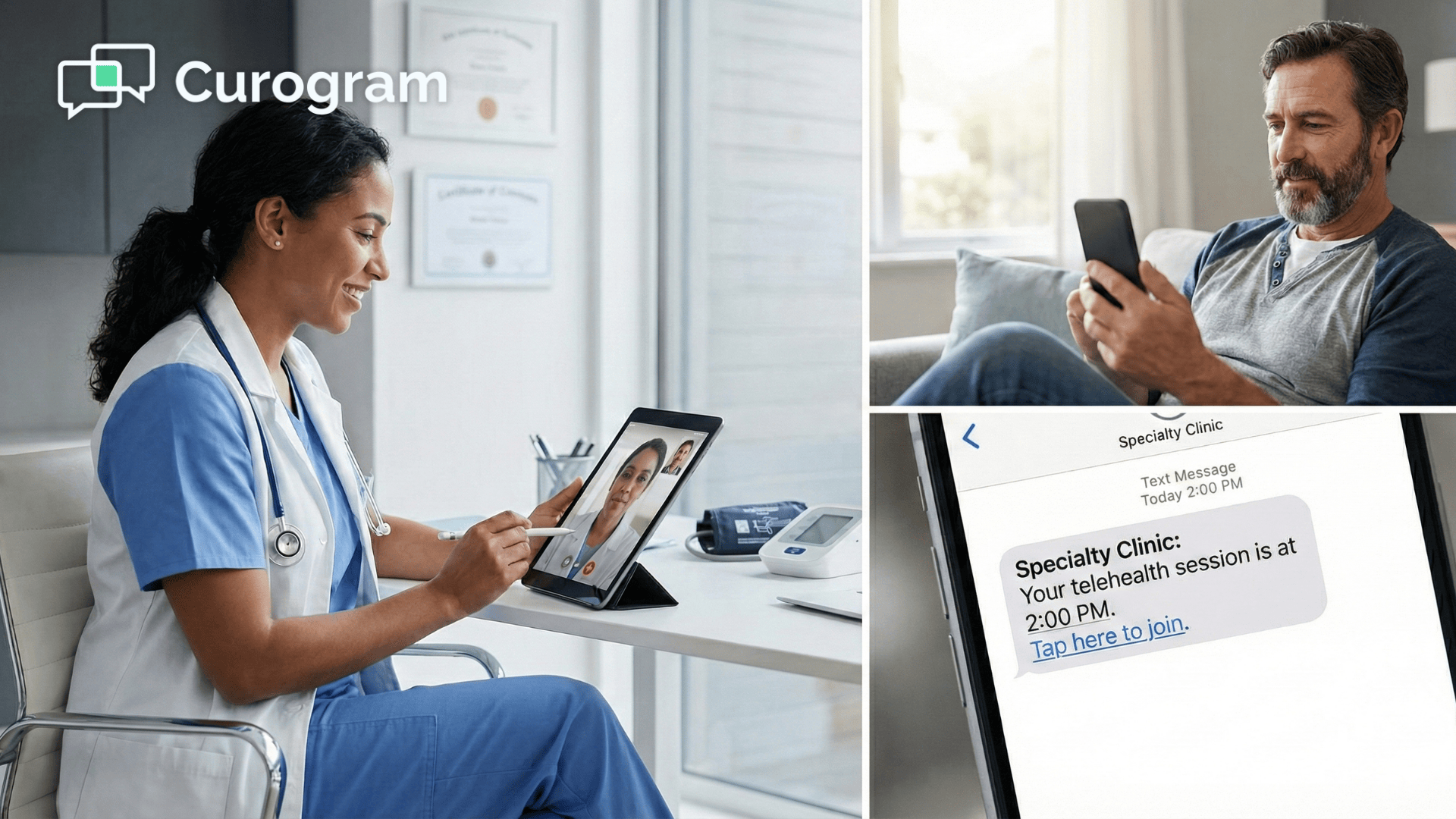
When schedulers book virtual visits in GE Centricity, HIPAA-compliant texting activates automatically. Patients receive text messages with appointment details and telehealth links. EMR-integrated telehealth pulls all details directly from GE Centricity schedules. When patients book imaging results follow-ups, the system generates telehealth links and schedules reminder texts automatically. Schedule changes trigger automatic updates without staff intervention.

Standardization becomes immediate across all locations. Every patient receives consistent communication regardless of specialty or provider.

Instant Access Drives Patient Response

Text messages achieve substantially higher open rates than emails. When telehealth links arrive via SMS, patients see them within minutes, translating directly into improved show rates.

Mass texting capabilities extend beyond appointment reminders. The simplicity particularly benefits older patients who manage text messages comfortably but struggle with app downloads.

Automated Workflows Reduce Staff Burden

Front office teams experience immediate improvements. Phone volume decreases as fewer patients request assistance. Automated reminder systems handle specialty-specific preparation through online patient forms. All automation occurs without staff intervention.

Faster Completion Benefits Everyone

When patients join virtual visits with single taps, completion rates increase significantly. Revenue per telehealth hour improves with reduced friction. Reputation management tools can automatically request reviews after successful visits. Staff efficiency increases capacity to handle additional appointments without new hires.

GE Centricity + Curogram Workflow Synchronization

True integration means systems communicate without human intervention. When Curogram connects to GE Centricity, appointment data flows bidirectionally—from EMR to telehealth platform and back with every status update.

Telehealth Sessions Triggered by Centricity Appointments

Synchronization begins immediately when schedulers save new virtual visit appointments in GE Centricity. The system recognizes telehealth encounters and triggers Curogram to generate video links instantly. No program switching occurs. No copying or pasting is required.

This automatic trigger functions identically across all specialties and appointment types. Radiology results reviews, pre-surgical consultations, and chronic disease check-ins all generate telehealth links through the same process.

Provider and Location Routing Accuracy

Curogram extracts provider assignments and location data directly from GE Centricity schedules. When cardiologists at downtown offices schedule follow-ups, virtual visits connect specifically to those cardiologists, not to any available providers. This routing precision preserves doctor-patient relationships that drive quality outcomes.

Automated Visit Reminders and Confirmations

Reminder sequences activate automatically based on clinic preferences. Most practices send first reminders three days before appointments, second reminders 24 hours prior, and final reminders one hour before visit times. Each message includes the telehealth link, ensuring patients maintain easy access.

Two-way confirmation systems close communication loops effectively. Patients text back to confirm attendance or request rescheduling. These responses flow directly into GE Centricity schedules without staff intervention.

Virtual Visits GE Centricity - mid

Telehealth Workflow Improvements for Specialty Departments

Different specialties operate on different schedules. SMS-based virtual visits provide flexibility that allows each department to optimize processes without technology constraints.

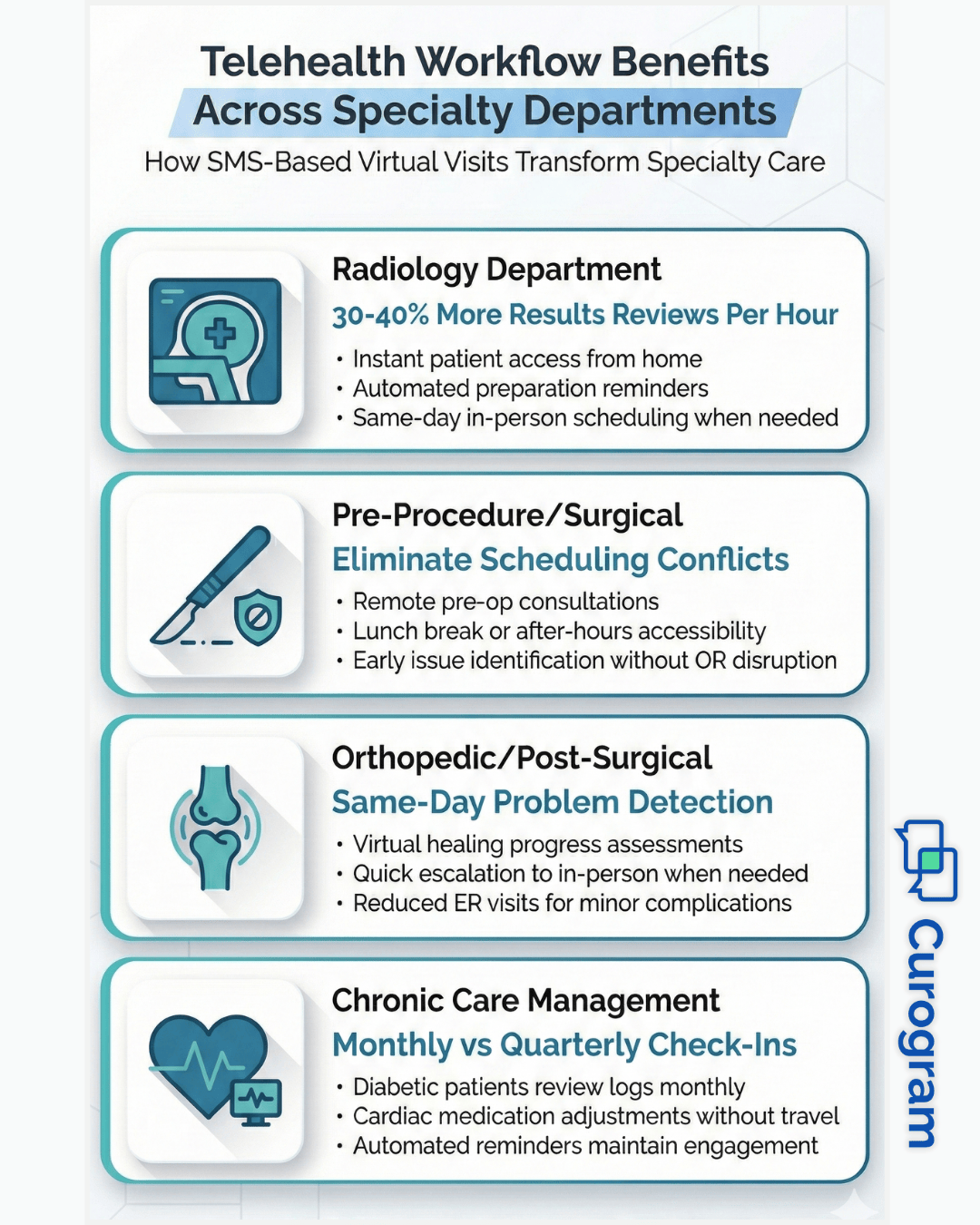
Radiology Results Review Visits

Radiology departments process hundreds of imaging studies weekly, most requiring patient follow-up. Virtual results reviews allow radiologists to conduct discussions efficiently while patients remain at home or work. Automated reminders send preparation instructions beforehand.

Radiologists report completing 30-40% more results reviews per hour with SMS-based telehealth. When imaging reveals findings requiring in-person follow-up, virtual visits provide opportunities to explain reasoning and schedule next appointments immediately.

Pre-Procedure Virtual Assessments

Surgical preparations move partially to virtual platforms. Patients meet with anesthesiologists through video consultations where medical history gets reviewed remotely. Pre-operative education happens more effectively through virtual visits where surgeons show patients what to expect during recovery. Online patient forms completed before these visits further streamline the workflow.

Pre-Procedure Remote Assessments

Virtual pre-operative consultations allow surgeons to review medical histories and address patient concerns without requiring travel. Patients working full-time or living far from facilities can complete consultations during lunch breaks or after work hours.

When virtual assessments uncover issues requiring in-person evaluation, early identification allows plan adjustments without disrupting operating schedules.

Orthopedic and Surgical Follow-Ups

Orthopedic surgeons can assess healing progress and troubleshoot concerns through brief virtual appointments. When patients report concerning symptoms during video visits, surgeons can schedule same-day in-person evaluations instead of waiting weeks. This rapid response prevents minor issues from becoming major complications.

Chronic Care Virtual Management

Virtual check-ins make regular contact sustainable for chronic disease management. Diabetic patients review blood sugar logs monthly instead of quarterly. Cardiac patients discuss medication adjustments without disrupting work schedules.

Automated reminders maintain engagement without requiring staff to make reminder calls. Providers can monitor larger patient panels effectively because virtual visits require less time than in-office encounters.

How Telehealth Improves Patient Preparedness and Visit Completion

Patient experience ultimately determines telehealth success or failure in practices. SMS-based telehealth works universally because text messaging requires no special setup or technical knowledge. Patient populations are diverse—not everyone owns high-end smartphones with unlimited storage, feels comfortable managing multiple passwords, or wants to download medical apps on shared family devices.

Automated preparation systems improve every appointment. Patients receive detailed guidance before visits as part of reminder sequences:

  • Post-imaging follow-ups instruct patients to prepare questions and expect 20-minute discussions
  • Pre-procedure assessments include medical information checklists
  • Chronic care check-ins remind patients to update symptom logs

This preparation transforms virtual visits from rushed interactions into focused, efficient clinical encounters.

Attendance rates improve substantially when access barriers are removed. Studies demonstrate telehealth no-show rates dropping by 50% or more compared to in-person visits when platforms are genuinely easy to use. Text-based reminders combined with one-tap access create optimal conditions for high completion. Patients who might skip in-person appointments due to transportation challenges or work conflicts can easily join virtual visits from any location.

Patient satisfaction scores reflect these improved experiences. When virtual care becomes actually convenient, patients notice. They rate practices more highly, recommend services to others, and remain loyal when other options appear. In competitive specialty markets, this satisfaction advantage directly impacts practice growth.

Efficiency Gains for Scheduling and Clinical Staff

Front office operations improve dramatically when telehealth integrates properly with scheduling systems. Phone volume decreases substantially when patients receive clear, automatic communication about virtual appointments. Staff members no longer provide technical support for confused patients seeking telehealth links. Phone lines remain available for questions requiring human judgment—insurance clarifications, complex scheduling requests, clinical concerns needing triage.

Missed follow-ups become rare when reminder systems function reliably. Patients receive prompts at three days, one day, and one hour before visits. Text-based access eliminates common excuses about missing links or lacking time for app downloads. When follow-up completion rates increase from 65% to 90%, clinical teams can deliver the continuity of care that improves outcomes.

Virtual visit coordination ceases to require special handling. Staff work in GE Centricity as usual while telehealth systems operate automatically. New employees learn standard workflows without mastering separate telehealth processes. The cognitive burden of managing technology disappears, allowing staff to focus on patient care responsibilities.

Conclusion

Multi-location specialty clinics require telehealth that integrates with existing workflows rather than disrupting them. Effective platforms adapt to how medicine is already practiced instead of forcing practice changes.

Consider what becomes possible when technology ceases to be the constraint. Radiology teams complete 40% more results reviews without extending hours. Surgical coordinators schedule pre-procedure assessments without phone tag. Chronic care programs maintain frequent patient contact that drives better outcomes, all without overwhelming staff with administrative work.

The transformation extends beyond operational metrics. Patients gain easier access to needed specialized care. Staff members spend time on meaningful clinical work instead of troubleshooting technology. Providers see higher completion rates for follow-up visits that actually matter for patient outcomes. These improvements accumulate, creating practices that are both more efficient and more effective.

Book a demo to see how Curogram and GE Centricity work together. 

Frequently Asked Questions

How does no-app telehealth work for patients who are not tech-savvy?

No-app telehealth works through text messages that patients already know how to use. When your clinic schedules a virtual visit, the patient receives a text with a web link. They tap the link and join the video call directly through their phone's web browser. This process requires no downloads, no account creation, and no special technical knowledge. Older patients and those uncomfortable with technology find this approach much easier than installing and configuring a dedicated app. The simplicity increases participation rates across all patient demographics, which helps you deliver care to your entire patient population rather than just the most tech-comfortable portion.

Why does SMS delivery improve appointment completion rates compared to email?

Text messages have much higher open rates than emails, typically above 95% compared to around 20% for email. Most people check text messages within minutes of receiving them, while emails might sit unread for days or get caught in spam filters. This immediate visibility means patients see their appointment reminders and virtual visit links right away. The convenience of having the link directly in their text messages also reduces the friction of accessing the appointment. Patients do not need to search through emails or remember passwords to find their telehealth information. This combination of high visibility and easy access drives completion rates significantly higher than traditional email-based systems.

How does automated integration reduce staff workload compared to manual processes?

Manual telehealth coordination requires staff to generate visit links, copy them into emails or texts, and send them to patients individually. They must also send separate reminders and handle rescheduling by repeating the entire process. This workflow can take 5-10 minutes per appointment when you account for all the steps. Automated integration eliminates all of this work by pulling appointment data from GE Centricity and sending visit links and reminders automatically. Staff members schedule the appointment once in your EMR, and the system handles everything else. This saves hours each week across a busy practice while reducing errors that occur during manual data entry.

How do specialty departments customize virtual visit workflows for their specific needs?

Specialty departments can set up appointment-type-specific reminder sequences and instructions within the integrated system. A radiology results review might trigger reminders that tell patients to prepare their questions and expect a 15-minute discussion. A pre-surgical assessment could send detailed preparation instructions about medical history and current medications. Chronic care follow-ups might include medication adherence reminders along with the visit link. The system recognizes appointment types from your GE Centricity data and applies the appropriate communication template automatically. This customization happens once during setup, then works automatically for every appointment of that type going forward.

Why is standardization across multiple locations important for patient experience?

Patients who visit different locations within your practice network expect consistent experiences regardless of where they receive care. When each office uses different telehealth platforms or communication methods, patients face confusion about how to access their virtual visits. Standardized workflows mean every patient receives their virtual visit information the same way, whether they see cardiology at your downtown office or orthopedics at your suburban location. This consistency improves patient satisfaction while also simplifying staff training and reducing operational complexity.


GE Centricity Workflow Fix: Automated Appointment Reminders

GE Centricity Workflow Fix: Automated Appointment Reminders

💡 GE Centricity clinics often face workflow challenges that slow down daily operations. Manual reminder calls create extra work for staff members....

Read More
GE Centricity Appointment Reminders: Reduce No-Shows With Curogram

GE Centricity Appointment Reminders: Reduce No-Shows With Curogram

💡 GE Centricity specialty clinics face ongoing challenges with patient no-shows and incomplete appointment preparation. Automated appointment...

Read More
GE Centricity Workflow Improvements With HIPAA-Compliant Texting

GE Centricity Workflow Improvements With HIPAA-Compliant Texting

💡 GE Centricity practices use HIPAA-compliant texting to solve radiology workflow problems. Instead of managing hundreds of daily phone calls,...

Read More