11 min read

GE Centricity Telehealth: No-App Virtual Care with Curogram

GE Centricity Telehealth: No-App Virtual Care with Curogram
💡 Curogram integrates directly with GE Centricity EMR systems to provide HIPAA-compliant telehealth for specialty and radiology practices without requiring app downloads.
  • Automated virtual visit links via SMS
  • Multi-location workflow support
  • Reduced no-shows and higher completion rates
  • Specialty features for radiology, orthopedics, and oncology
Simple text message access eliminates technical barriers. Security features include encrypted sessions and PHI-safe communication. Integration with EMR schedules means no duplicate data entry for faster care delivery across multiple locations.

Large multi-location specialty clinics using GE Centricity face mounting pressure to deliver efficient virtual care. Operations directors and clinical administrators struggle with high call volumes just to schedule post-visit follow-ups and results reviews. Patients can't or won't return in person for quick consultations that could happen remotely.

The problem intensifies across distributed networks. A radiology group with five locations needs standardized telehealth workflows. An orthopedic practice handling post-surgical follow-ups requires consistent virtual visit access. Oncology centers conducting results discussions need secure, compliant video communication tied directly to their scheduling system.

Traditional telehealth platforms fail these organizations in critical ways. They require app downloads that older patients struggle with. They create separate workflows disconnected from GE Centricity appointment schedules. They introduce HIPAA compliance risks when staff resort to personal devices or consumer video apps.

The real cost shows up in operational inefficiency and patient leakage. Scheduling managers spend hours coordinating virtual visits manually. Patients skip follow-ups when access isn't simple. Clinical time gets wasted on unnecessary in-person visits that could have been handled virtually.

GE Centricity specialty clinics need EMR-aligned telehealth that works as an extension of their existing scheduling workflows. The solution must handle pre-procedure assessments, post-procedure follow-ups, imaging results reviews, and chronic condition monitoring without adding training burden or compliance exposure.

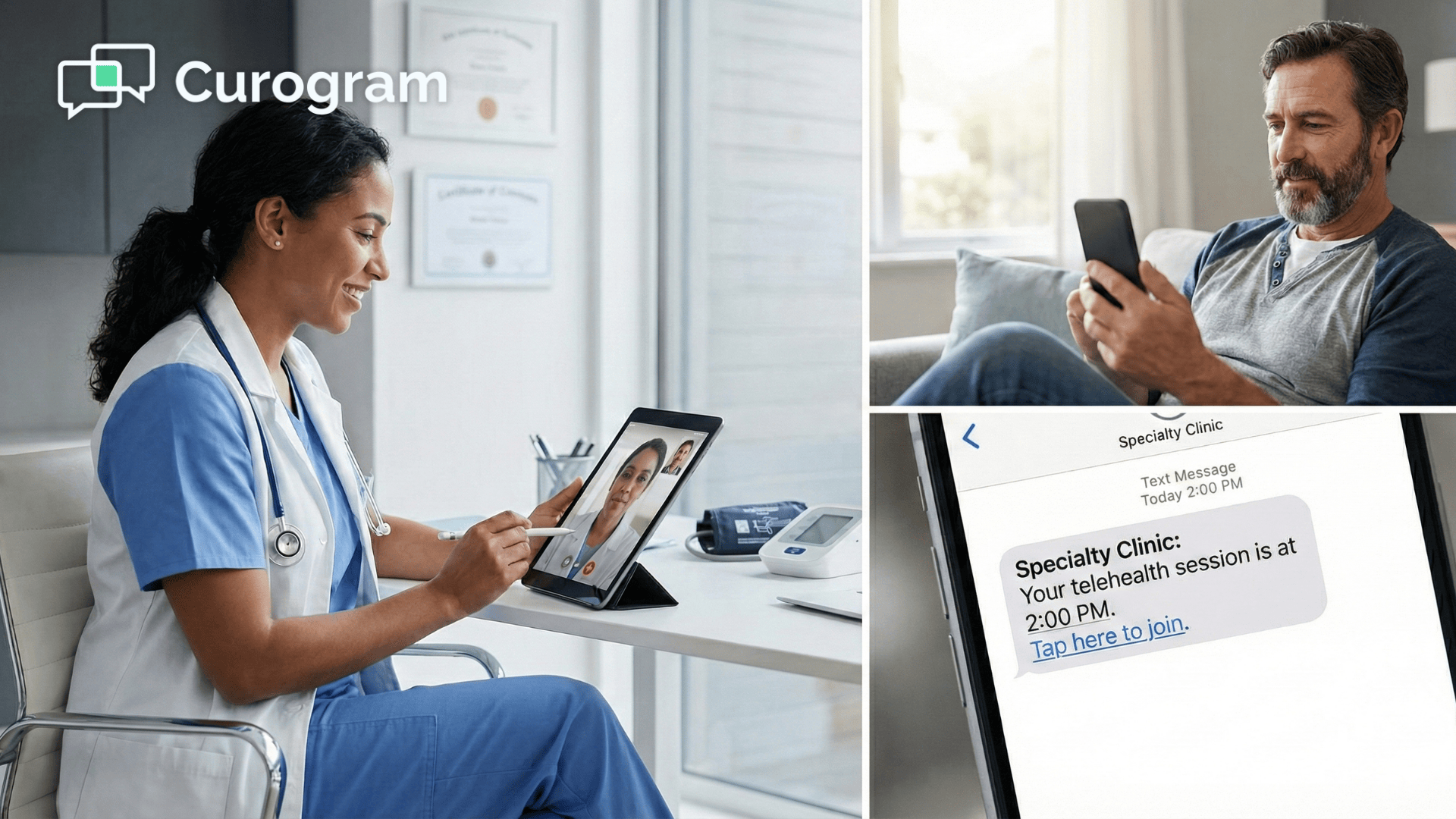
Curogram delivers no-app virtual care integrated directly with GE Centricity. Patients receive automated telehealth links via SMS based on appointment types and locations in the EMR. They click and connect without downloading software or creating accounts.

This integration solves the multi-location coordination problem. Virtual visits route automatically based on provider schedules and location-specific workflows. Staff members use one consistent system across all facilities and specialties.

The result is enterprise-scale efficiency. Radiologists review imaging remotely with patients. Orthopedic surgeons conduct post-op check-ins via video. Cardiologists manage follow-up care without requiring office visits. Oncologists discuss treatment plans through secure virtual consultations.

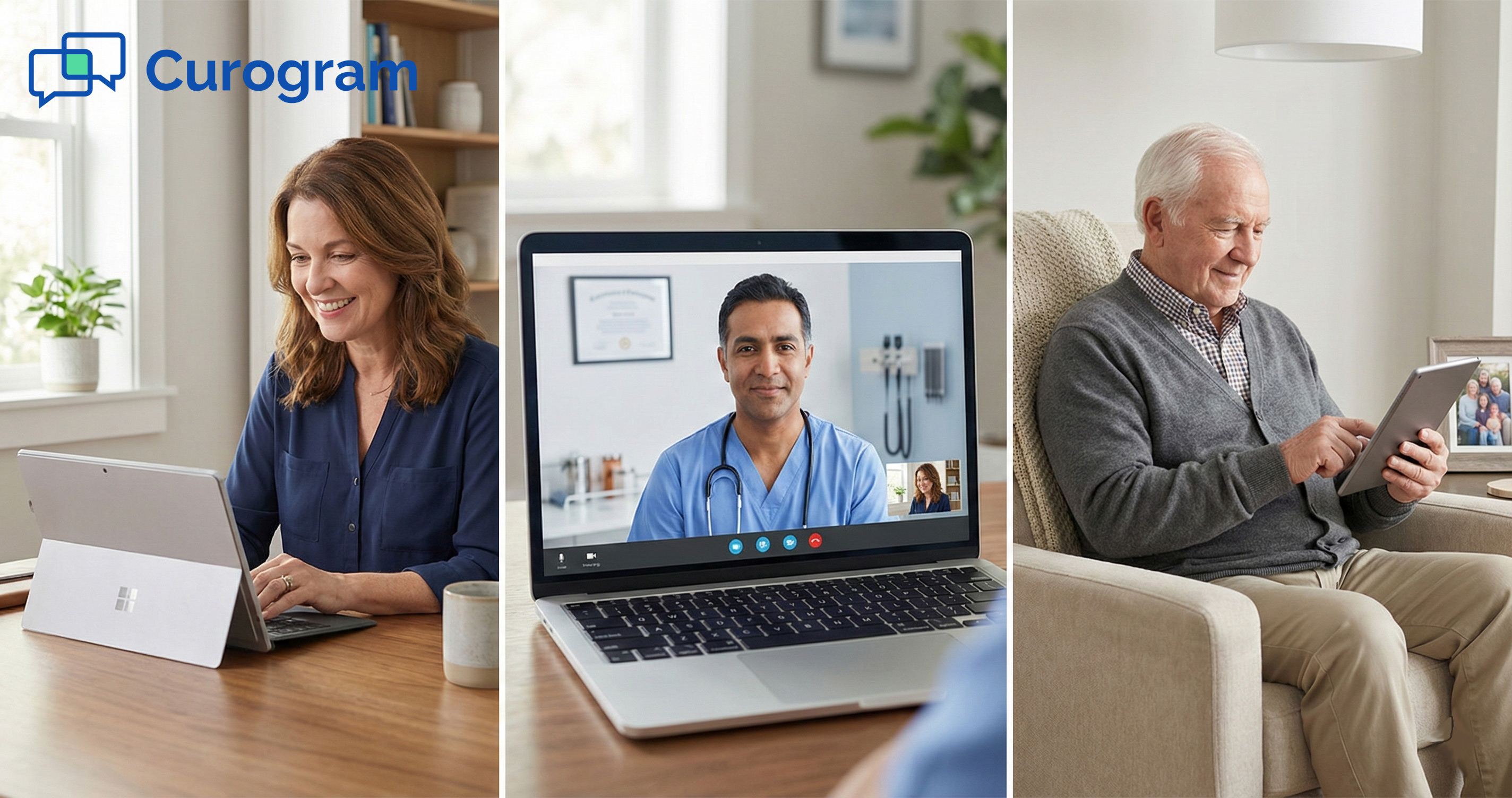
For patients, access becomes instant. They receive a text message with a secure link. One click connects them to their provider. No apps, no passwords, no technical barriers.

This article explains how HIPAA-compliant telehealth integration with GE Centricity transforms virtual care delivery for multi-location specialty practices.

Why GE Centricity Clinics Need a HIPAA-Compliant Telehealth Solution

Specialty practices face unique demands that make secure video visits essential. Unlike primary care, these clinics handle complex cases requiring coordinated follow-ups across multiple providers. Radiology departments need to discuss imaging findings. Oncology teams must monitor treatment responses. Orthopedic practices track surgical recovery.

The traditional model creates unnecessary patient visits. A patient gets an MRI on Monday. They return Thursday just to hear results that could be shared virtually. This wastes time for both patients and clinical staff. Patient expectations have shifted dramatically with 76% now preferring remote consultations when medically appropriate.

Multi-location operations add another layer of complexity. A health system might have orthopedic clinics in three cities. Each location needs standardized virtual care protocols. Patients should receive the same experience regardless of which facility they visit.

Here's where compliance becomes critical. Many clinics initially turned to consumer video platforms. These tools seem convenient but create serious legal exposure. They lack proper encryption for protected health information and don't maintain audit trails for regulatory requirements.

The consequences are severe. Healthcare organizations face fines up to $50,000 per violation under HIPAA rules. A single breach affecting 500 patients requires public notification and can destroy a clinic's reputation. Insurance companies may deny coverage for incidents involving non-compliant communication.

The administrative burden becomes overwhelming. Front desk teams schedule appointments in the practice management system, then manually send meeting links through a separate platform. No-shows increase because patients can't find their virtual visit information. HIPAA-compliant appointment reminders can significantly reduce this confusion.

GE Centricity clinics specifically need solutions built for their workflow. The EMR already contains appointment schedules, patient demographics, and clinical context. Virtual care should pull directly from this existing data. Specialty care has distinct requirements that generic telehealth platforms miss. Radiologists need to share high-resolution images during virtual consultations. Oncologists require secure messaging for sensitive diagnosis discussions.

HIPAA-compliant telemedicine protects the practice legally. Proper documentation of virtual visits goes directly into the patient record. Medicare and private insurers increasingly require certified telehealth platforms for reimbursement. Claims submitted for virtual visits conducted through non-compliant tools may be denied.

Multi-location practices face additional coordination challenges without integrated systems. A patient might see a surgeon at location A but need post-operative follow-up while traveling. Without a unified telehealth platform, that patient cannot easily connect with any provider in the network.

The bottom line is clear. GE Centricity specialty clinics need telehealth platforms designed specifically for healthcare. These systems must integrate with EMR workflows, maintain strict security standards, and support the complex coordination required in specialty care.

Challenges of Telehealth in Multi-Location Specialty Care

Multi-location specialty practices face distinct obstacles when implementing virtual care. These challenges compound the normal difficulties of telehealth adoption. Understanding these barriers helps explain why many clinics struggle with virtual visit programs.

Platform inconsistency across locations creates the first major problem. Location A might use one video system, Location B prefers a different tool, and Location C relies on whatever the IT department installed years ago. Patients visiting multiple facilities encounter completely different virtual care experiences.

A patient books an orthopedic consultation at the suburban clinic. They download the required app and create an account. Two weeks later, they need a follow-up at the downtown location. That clinic uses a different platform. The patient must repeat the entire setup process. Clinical staff face similar frustrations, learning multiple systems and doubling training time.

Patient app downloads represent a surprisingly large barrier:

  • Many specialty patients are older adults less comfortable with technology
  • 30% of patients abandon virtual visits due to technical difficulties
  • Phones lack storage space or have data limitations
  • Rural patients often have poor internet connectivity
  • Urgent consultations get delayed while patients figure out downloads

Scheduling complexity multiplies across locations. Each facility maintains separate appointment systems. Coordinating virtual visits between providers at different sites becomes a manual nightmare. Staff members make phone calls trying to align schedules while patients receive conflicting appointment information.

Lack of EMR integration creates documentation gaps. Providers complete virtual visits but must separately document the encounter. Information doesn't flow automatically into the patient chart. This double documentation wastes time and introduces errors. Important clinical details get lost between systems.

Multi-location practices also struggle with provider credentialing for telehealth. State regulations vary regarding where providers must be licensed. A specialist at location A might not be properly credentialed to provide virtual care to patients at location B in another state.

Additional operational challenges:

Chronic Care Virtual Management

  • Manual billing code entry without practice management integration
  • Fragmented quality monitoring across disconnected platforms
  • Inconsistent equipment quality at different locations
  • Endless staff training on multiple platforms
  • Difficult security policy enforcement across tools

The patient experience suffers most from these disconnected systems. They expect healthcare organizations to have modern, integrated technology. Instead, they encounter fragmented tools that vary by location. This perception of disorganization undermines confidence in the practice.

These challenges require a fundamentally different approach. Multi-location specialty practices need telehealth platforms designed from the ground up for their specific workflows and integration requirements.

How Curogram's Telehealth Integrates With GE Centricity

Integration with GE Centricity EMR transforms how specialty clinics deliver virtual care at enterprise scale. Curogram connects directly to the practice management system, pulling appointment data automatically. This automated telehealth delivery eliminates duplicate entry while ensuring EMR-integrated telehealth works seamlessly across 5 or 50+ locations.

Front desk staff mark appointments as virtual in GE Centricity. The system automatically generates secure links and delivers them via SMS. Patients click once to join without downloading apps. The system works across all devices.

Multi-location routing happens automatically. Completed virtual visits update in the EMR automatically. Documentation flows into patient charts while billing codes transfer to the practice management system. HIPAA compliance is built into every layer through end-to-end encryption and HIPAA-compliant texting.

The platform handles complex specialty care scenarios. Radiologists share DICOM imaging directly during consultations. Oncology practices use secure messaging that automatically attaches to patient charts. Video quality is optimized for movement assessment with healthcare-level technical support.

The system scales effortlessly as practices grow. Additional capabilities include automated patient forms, e-prescribing, and analytics tracking. This deep integration represents a fundamental difference from standalone telehealth platforms.

Telehealth in GE Centricity - mid

Key Benefits for GE Centricity Clinics

The right telehealth platform transforms how specialty practices deliver care at scale. When properly integrated with GE Centricity, virtual visits become a seamless extension of daily operations. The benefits align with core enterprise priorities: scalability, efficiency, continuity, and compliance.

Reduced unnecessary in-person visits (Efficiency):

  • Post-surgical follow-ups via video consultation
  • Remote orthopedic range of motion assessment
  • Radiology follow-ups happening in 3 days instead of 2 weeks
  • Chronic condition monitoring preventing emergency escalation

Virtual care eliminates trips to the clinic that don't require physical examination. An oncologist reviews blood work findings without requiring the patient to take time off work. This convenience particularly benefits patients undergoing frequent monitoring.

Higher show rates for follow-ups (Continuity):

  • 15-20% lower no-show rates versus traditional appointments
  • Automated appointment reminders with embedded visit links
  • No childcare or transportation barriers

Patients keep virtual appointments at significantly higher rates than in-person visits. This improved follow-up compliance reduces patient leakage and maintains care continuity.

Faster virtual care delivery (Efficiency):

  • No waiting room delays
  • Urgent consultations happening within 30 minutes
  • Specialists reviewing cases from any location

Virtual consultations eliminate the time spent walking between exam rooms. Multi-location practices deliver care across their entire network without providers driving between facilities.

Improved patient experience and accessibility (Preparedness):

  • 85-90% satisfaction scores for virtual consultations
  • Rural patients saving hours of driving time
  • Simple text message access across all age groups

The simplified technology removes barriers that frustrate patients. Online patient forms delivered before virtual visits further streamline the experience and improve preparedness.

Enterprise scalability (Scalability):

  • Consistent workflows across 5 or 50+ locations
  • No additional training burden for staff
  • Single platform managing distributed networks

The platform scales seamlessly as organizations grow. This scalability ensures operational consistency while accommodating enterprise expansion.

HIPAA compliance and security (Compliance):

  • Encrypted end-to-end communication
  • Audit-ready documentation for regulatory review
  • PHI-safe messaging and video

HIPAA-compliant telehealth protects both the organization and patients. Security features meet federal requirements automatically while audit trails support compliance documentation.

Clinical Use Cases for Telehealth in Specialty and Radiology Workflows

Different specialties benefit from virtual care in unique ways. Understanding these specific use cases helps clinics identify which appointments work best for telehealth conversion. The key is matching the clinical scenario to the technology's strengths while maintaining HIPAA-compliant communication throughout the patient journey.

Follow-Up After Imaging (CT, MRI, Ultrasound)

Radiology follow-ups represent the ideal use case for virtual consultations. Radiologists can share images on screen while explaining findings, allowing patients to see exactly what the doctor sees. Complex imaging results benefit from visual explanation where radiologists point to specific areas of concern during video calls.

Pre-Procedure Virtual Assessments

Surgical preparations move partially to virtual platforms. Patients meet with anesthesiologists through video consultations where medical history gets reviewed remotely. Pre-operative education happens more effectively through virtual visits where surgeons show patients what to expect during recovery. Online patient forms completed before these visits further streamline the workflow.

Post-Op Orthopedic Tele-Visits

Orthopedic surgery follow-up adapts well to telehealth. Surgeons assess surgical sites visually through video while patients demonstrate their range of motion on camera. Physical therapy integration improves post-operative care as patients perform prescribed exercises during virtual visits with real-time feedback.

Oncology Consult Follow-Ups

Cancer care coordination improves through regular virtual consultations. Oncologists check on chemotherapy side effects between in-person treatments. Treatment planning discussions happen virtually when appropriate with oncologists reviewing lab results and imaging with patients.

Chronic Care Virtual Management

Chronic disease management requires regular monitoring that doesn't always need in-person visits. Virtual check-ins become part of the care routine. Diabetes patients review glucose trends monthly while hypertension patients discuss blood pressure logs weekly. These quick consultations prevent problems from escalating while improving overall care continuity.

How Curogram's Telehealth Improves Patient Experience and Continuity of Care

Real-world implementation shows how EMR-integrated telehealth transforms specialty practice operations at enterprise scale. Consider a multi-location orthopedic group using GE Centricity across five clinics. Before Curogram, each location managed virtual care differently using various consumer platforms. Patients received inconsistent experiences.

After integration, the entire network operates on one unified platform. The surgeon reviews surgical sites through high-quality video. Range of motion gets assessed remotely. Documentation flows directly into GE Centricity without extra steps.

The radiology department sees dramatic efficiency gains. Follow-up consultations happen virtually the same day. The entire process from scan to results discussion takes less than 24 hours instead of a week.

Patient satisfaction scores increase by 23% in the first six months. Patients specifically praise the no-app approach through patient engagement tools. Virtual visit completion rates run 85% compared to 70% for in-person follow-ups. The increased efficiency allows providers to see more patients daily without extending hours.

Multi-location coordination becomes effortless. Providers cover multiple facilities without physically traveling. The virtual care platform unifies what was previously a fragmented system, delivering the scalability and continuity essential for enterprise operations.

Compliance and Security in Enterprise Telehealth Workflows

Healthcare organizations must protect patient information at every touchpoint. HIPAA telehealth platforms present specialized security features that consumer video tools lack. Telehealth for specialty clinics requires enterprise-grade compliance built specifically for healthcare regulations.

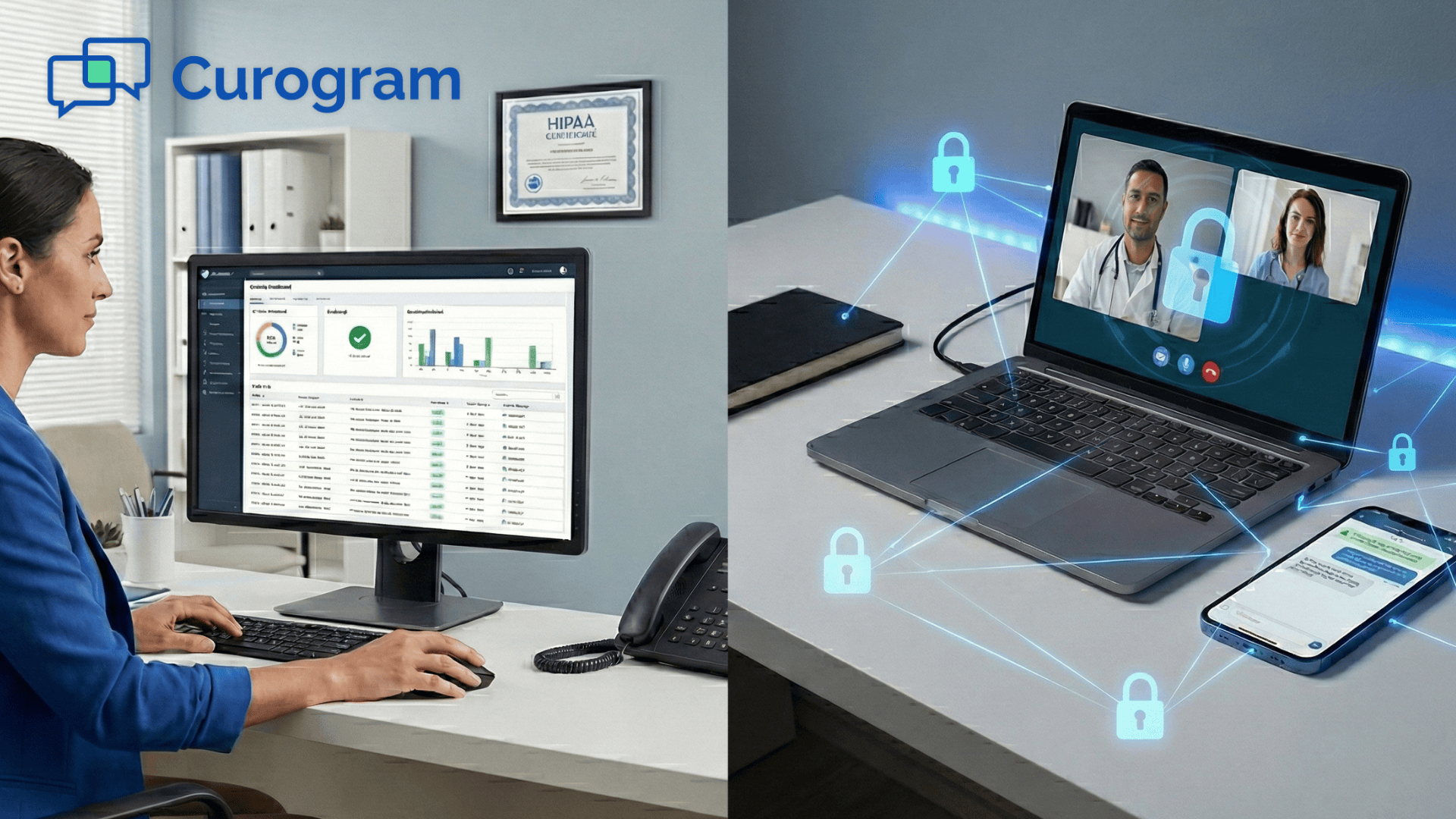
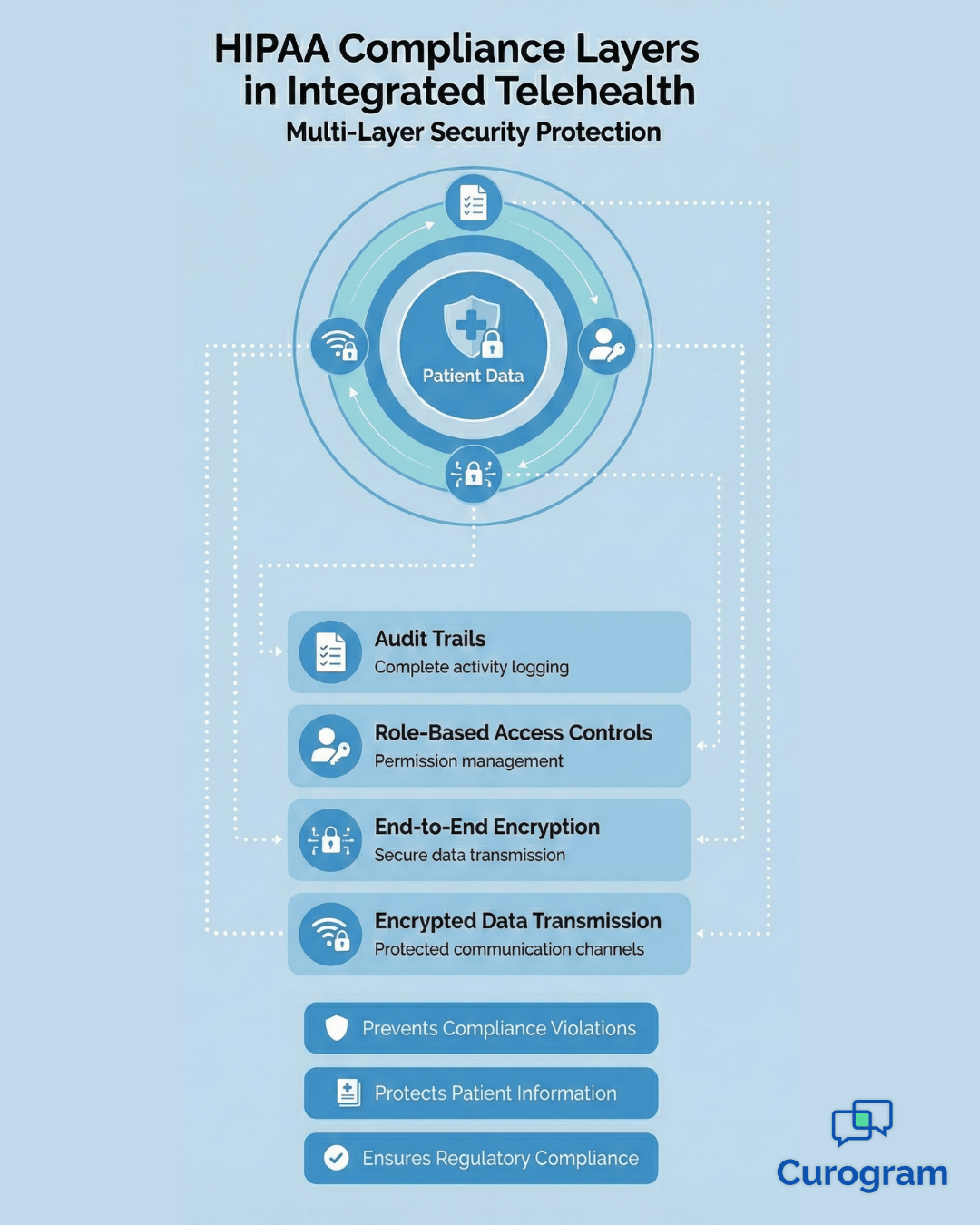
Encrypted virtual sessions protect conversations from unauthorized access through end-to-end encryption. This protection extends to video, audio, and any files shared during secure video visits. Text messages containing appointment reminders use encrypted channels with every interaction involving protected health information receiving the same level of protection.

Access controls for multi-location staff prevent unauthorized data viewing through role-based permissions. These controls mirror the permissions already established in GE Centricity. Audit-ready documentation tracks every system interaction with detailed logs supporting compliance audits.

Business associate agreements protect organizations legally with clear contracts defining responsibilities. Regular security updates address emerging threats automatically, ensuring continuous compliance with evolving regulatory requirements.


Why Curogram Is the Best Telehealth Solution for GE Centricity Clinics

GE Centricity practices require telehealth for specialty clinics built specifically for their workflows and enterprise needs. Generic video solutions create more problems than they solve for multi-location specialty networks.

EMR-aligned automation eliminates duplicate work. Virtual visit scheduling, link generation, and documentation happen within GE Centricity workflows. This EMR integration preserves efficiency while adding virtual care capabilities without additional training burden.

Enterprise scalability supports growth across multiple locations. The platform handles five clinics as easily as 50. Simple, no-app access removes technical barriers with one text message connecting patients to providers.

Specialty-ready workflows address complex care delivery needs. The platform supports image sharing for radiologists, movement assessment for orthopedic surgeons, and multi-provider consultations. HIPAA compliance and audit readiness protect organizations through PHI-safe standards with HIPAA-compliant messaging and encrypted video sessions.

Conclusion

GE Centricity specialty clinics deserve telehealth for specialty clinics built specifically for their workflows. Curogram transforms virtual care delivery through deep EMR integration. The platform becomes a natural extension of your existing system where staff don't learn new processes and patients don't download apps.

Schedule a demonstration to see the integration in action. Watch how appointment data flows seamlessly from GE Centricity into Curogram without manual entry. See exactly how patients receive and access virtual visit links through simple text messages. Experience the provider interface for conducting secure video visits with specialty-specific features.

Multi-location practices benefit most from unified HIPAA telehealth platforms. Your entire network operates on consistent systems with patients receiving the same high-quality virtual care at every facility. The technical team handles GE Centricity integration behind the scenes while your staff receives targeted training on the simple workflows. Patients start benefiting from convenient virtual care within weeks.

Questions get answered by people familiar with specialty practice workflows, not generic tech support. Updates happen automatically without requiring IT intervention. Support teams understand medical workflows and compliance needs specific to radiology, orthopedics, oncology, and other specialty practices.

Discover how other specialty practices transformed their virtual care delivery using EMR-aligned telehealth workflows. Learn about implementation timelines and expected outcomes. Get questions answered about your specific multi-location needs.

See how automated telehealth delivery integrates with your existing GE Centricity workflows. Book a demo today.

Frequently Asked Questions

How does telehealth integration with GE Centricity reduce administrative burden for clinic staff?

The integration eliminates duplicate data entry that burdens teams using standalone telehealth platforms. When staff schedule appointments in GE Centricity, virtual visit links generate automatically. Documentation from virtual visits flows back into patient charts automatically while billing codes transfer without manual entry. This streamlined workflow saves staff time while reducing errors.

Why do patients prefer no-app virtual care over traditional telehealth platforms?

Patients find app-based telehealth frustrating due to technical barriers. Downloading apps requires storage space that many phones lack while creating accounts adds unnecessary complexity. No-app solutions deliver visit links through simple text messages. One tap connects patients directly to their provider. This simplicity works across all age groups and leads to higher appointment completion rates.

How does HIPAA-compliant telemedicine protect specialty practices from legal liability?

HIPAA-compliant platforms provide encryption for all patient communication and data transmission. This protects practices from data breach penalties that can reach $50,000 per violation. Proper audit trails document all virtual visits for regulatory review. Compliance also affects reimbursement, as Medicare and private insurers increasingly require certified telehealth platforms.

How do multi-location specialty practices coordinate virtual care across different facilities?

Integrated platforms enable coordination through unified scheduling and provider routing. Virtual visit links route automatically to the correct provider regardless of physical location. This consistency eliminates confusion and improves the patient experience. Leadership can track virtual care metrics across the entire network through consolidated reporting.

Why do specialty care workflows require different telehealth features than primary care?

Specialty practices handle complex cases requiring specific technical capabilities. Radiologists need to share high-resolution imaging during virtual consultations. Oncologists require secure messaging for sensitive diagnosis communications. Orthopedic surgeons assess patient movement through video quality optimized for motion. Integration with specialty-specific systems like PACS for radiology becomes essential.