8 min read

Removing Barriers: Collecting Material Fees with Dignity

Removing Barriers: Collecting Material Fees with Dignity
💡 Collecting material fees for eKyros clinics does not have to mean awkward cash exchanges at the front desk. Text-to-pay solutions let clients handle small transactions — like workbook costs or lab fees — right from their phones. 

A simple payment link sent via SMS before an appointment can make the process feel natural and low-stress.

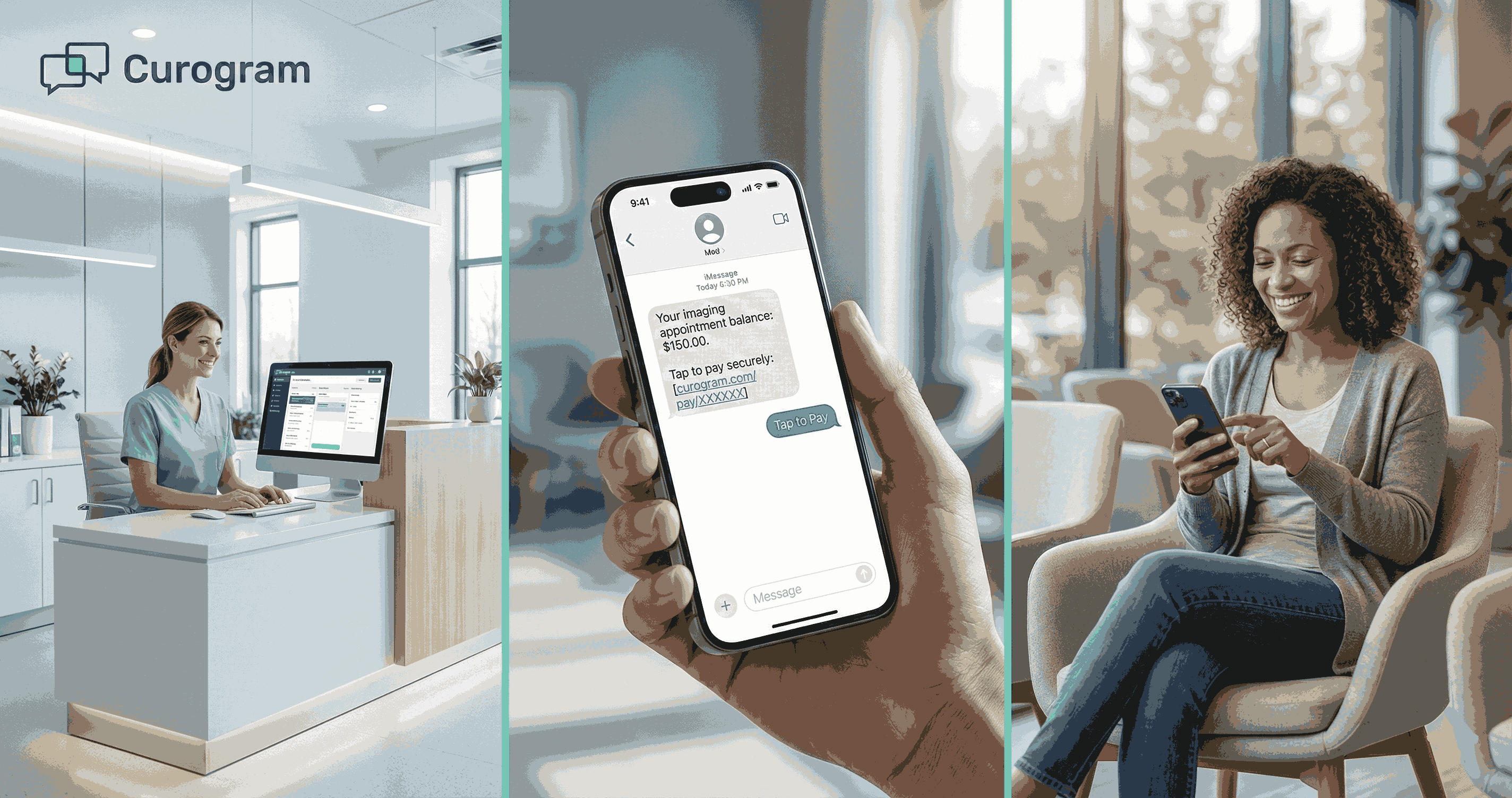
When Curogram integrates with eKyros, staff can send a discrete payment link in seconds. The client pays privately on her own phone, and the transaction posts directly to her record. 

No card declined sounds, no cash counting, no embarrassment.

This approach — the Dignified Transaction — increases fee compliance and ensures that financial barriers never block access to essential care. It protects the mission of the clinic while keeping the client relationship intact.

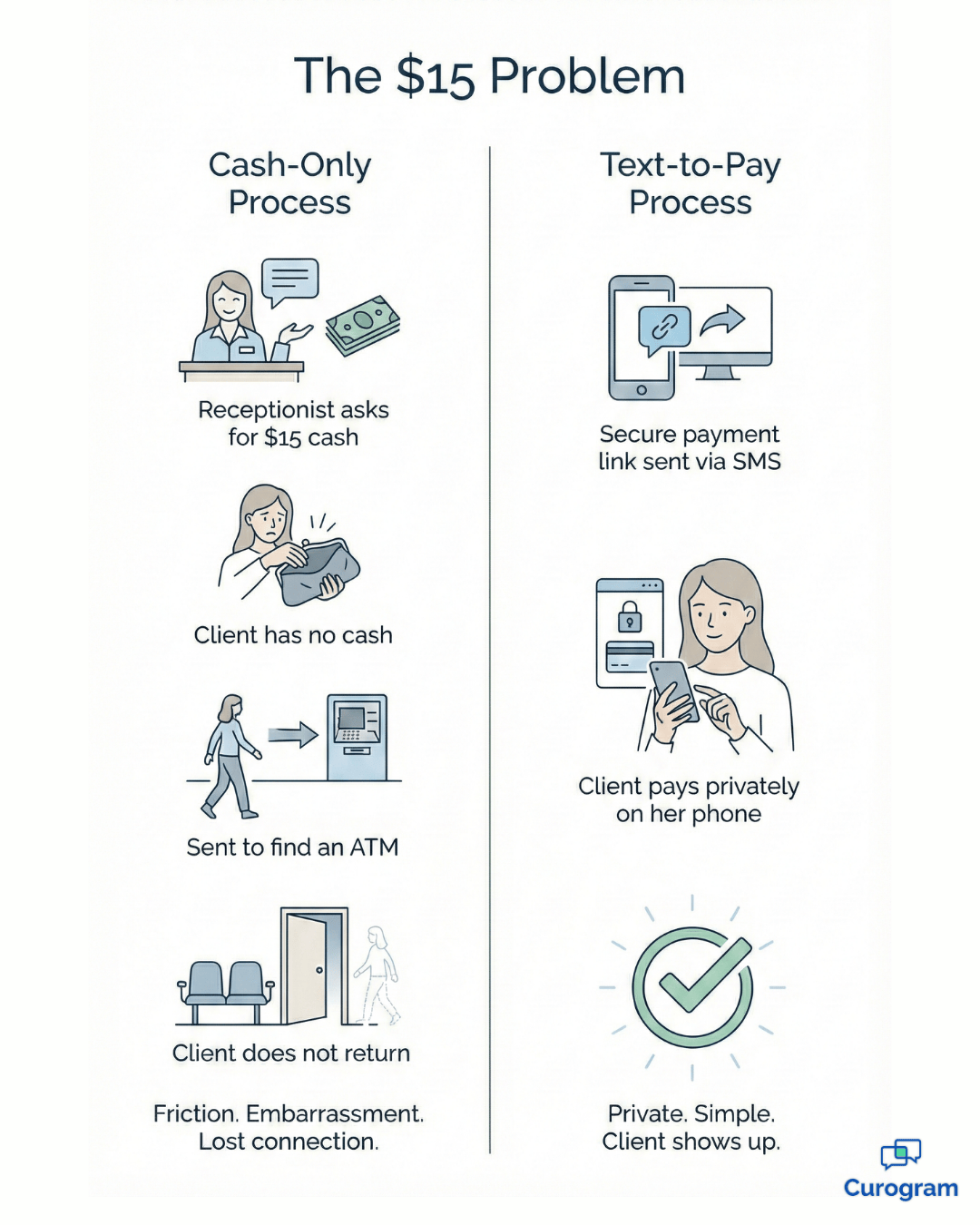
A young woman walks into your clinic for the first time. She is nervous, maybe a little unsure about being there. She signed up for the parenting class because she wants to do the right thing. She is ready to learn.

Then the receptionist smiles and says, "The workbook is $15. Do you have cash?"

She opens her purse.

No cash. She offers her debit card. The center does not have a card reader.

The receptionist suggests the ATM down the street. The client nods, says she will be right back, walks out the door — and never returns. Not because she did not want to. But because the moment felt too uncomfortable to push through.

This scene plays out in pregnancy resource centers every week. It is not about the $15. It is about what that moment communicates to a woman who is already in a vulnerable place.

When the payment process is clunky, it sends the wrong message — even when every person on staff has the right heart.

The good news is that this problem has a simple fix. Modern patient payment solutions for pregnancy centers already exist. They do not require a point-of-sale terminal, a complicated billing department, or a big budget. They require a phone number and a text message.

Curogram's text-to-pay feature gives eKyros clinics a clean, private, and fast way to handle small transactions. The client gets a link. She pays on her phone.

The center gets the funds.

No one has to say, "Do you have cash?" ever again.

This guide will walk you through how the process works, why it matters, and how eKyros fee collection becomes effortless when you bring text-to-pay into your workflow.

Whether you charge for workbooks, lab tests, or class materials, there is a better way to collect — one that puts your client's dignity first.

When Cash Becomes the Barrier to Care

Most pregnancy resource centers do not turn clients away over a $10 or $15 fee. Staff are kind, flexible, and mission-driven.

But many clients still leave when cash comes up — not because they refuse to pay, but because the friction of the moment is too much to work through. The barrier is rarely the money itself. It is the process.

The Reality of Who Your Clients Are

According to the FDIC,

Roughly 5.9 million U.S. households are unbanked, meaning they have no checking or savings account at all.

An even larger group is underbanked — relying on cash, prepaid cards, or informal methods to get by.

Young women in the age range most likely to visit a pregnancy center are overrepresented in both groups. Asking for cash is not a neutral request for this population.

Cash use among adults under 35 has also fallen sharply over the past decade. Many of your clients simply do not carry it anymore — not because they are careless, but because their daily lives run entirely through their phones.

For many, this looks like:

A cash-only counter is not just inconvenient for them — it feels like a foreign language.

Understanding that context changes how you think about the moment at the front desk. It is not a budgeting failure when a client does not have $15 in her wallet.

It is a sign that your payment options have not caught up with the way she actually lives.

What Gets Lost When the System Gets in the Way

Beyond the financial picture, there is a social cost that is easy to miss. When payment comes up at the front desk — even gently, even kindly — it happens in a semi-public space. Other clients may be nearby.

The exchange is visible.

For a woman already carrying emotional weight, that moment can:

  • Heighten embarrassment
  • Trigger shame about her situation
  • Reinforce a sense of instability

The impact far outweighs the amount on the workbook.

The shame that follows is quiet. She does not argue or complain. She says she will be back, and she does not come back. The center never finds out why.

That relationship — one that could have made a real difference in her life — ends before it begins. Reducing financial friction for non-profits means taking that pattern seriously and redesigning systems so they protect dignity as carefully as they protect budgets.

Side-by-side cash vs text-to-pay process for pregnancy clinics

A Discrete and Digital Way to Handle Payments

The fix does not require your center to become a tech company or hire a billing specialist. It just means meeting your clients where they already are — on their phones, in the apps and tools they already use every day.

Text-to-pay is not a new concept for them. It is already how they handle coffee, dinner, and rent. It can just as easily be how they handle a workbook fee.

How the Payment Flow Works, Step by Step

The process is simple enough that any staff member can learn it in a few minutes.

Before the visit, a payment link goes out with the appointment reminder — the client pays from home before she ever arrives. If she shows up without having paid, the staff member texts the link on the spot and the fee is handled in under 30 seconds.

Either way, the transaction posts automatically to her eKyros ledger with no manual entry needed.

Why Timing and Tone Make All the Difference

Sending the payment link before the visit removes the transaction entirely from the in-person experience. The client arrives already having paid, which means the first moment she walks through the door is a welcome — not a financial ask.

For clients who are nervous about showing up, that shift in tone matters more than it might seem on the surface.

When a client does arrive unpaid, the in-lobby exchange stays just as low-key.

The staff member does not ask for cash or announce a balance.

She simply says,

"No problem — I will send you a link right now."

The client pays on her own phone screen, privately, without any noise or public moment. It feels routine, because for her generation, it is.

This is what discrete medical payments look like when the system actually works. The technology disappears into the background, and what remains is a client who feels respected — and a staff member who never had to have an awkward conversation.

How eKyros Integration Makes It Work Seamlessly

Curogram does not just process the payment and leave your staff to sort out the rest. Because it connects directly with eKyros, every transaction automatically posts to the client's ledger inside the platform.

There is no double entry, no manual reconciliation at the end of the day, and no spreadsheet to keep updated.

The system handles the record-keeping so your team can focus on the client in front of them.

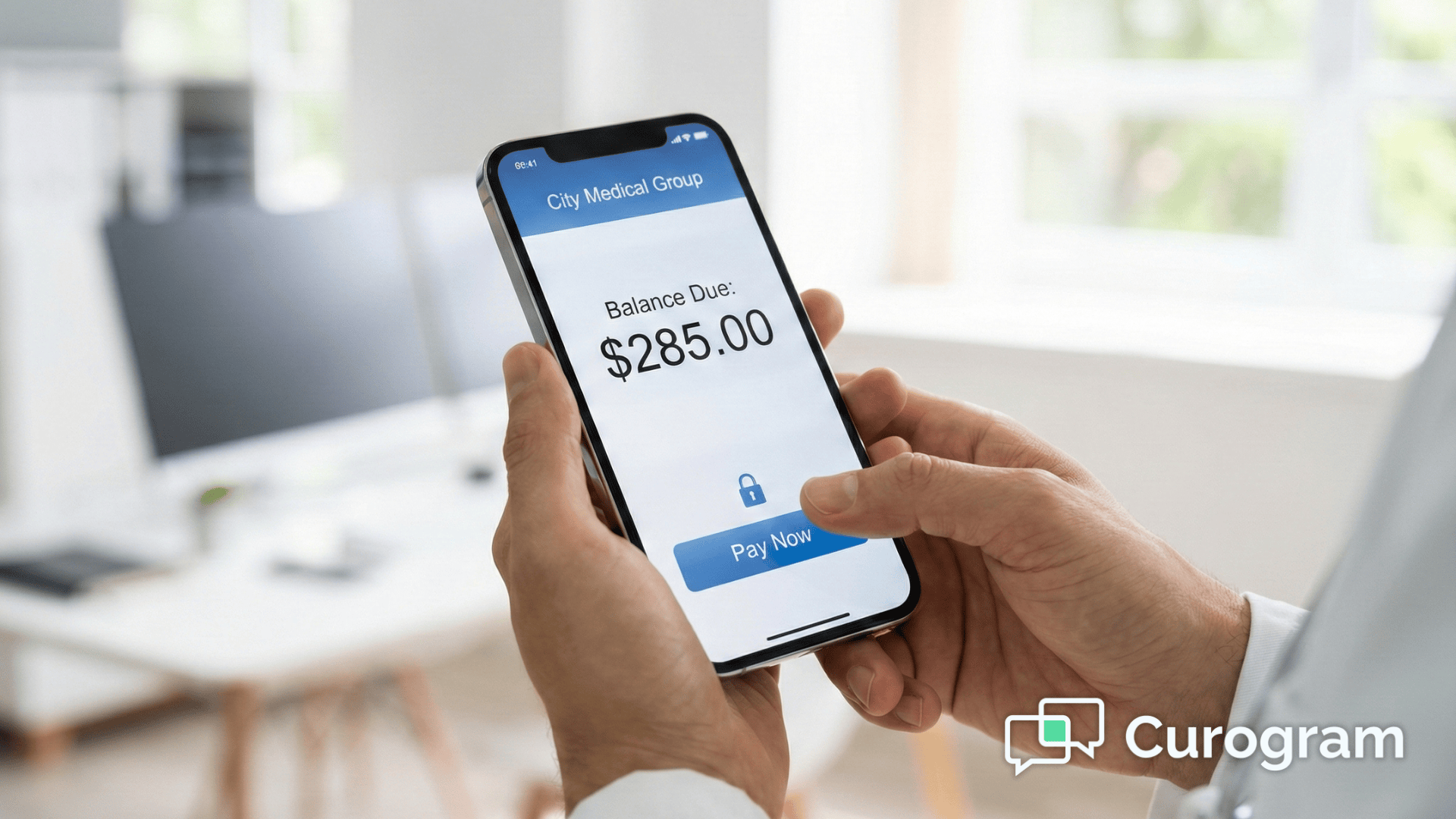
Client confirming secure text payment in private clinic room

Collecting Lab Fees Without the Uncomfortable Ask

For centers that charge for STD testing, ultrasounds, or sliding-scale clinical services, text-to-pay for lab fees changes the collections process in a practical way.

Instead of navigating a payment conversation at the end of a sensitive appointment, you can collect the fee before results are released — if that fits your clinic's policy. The client gets a link, pays on her phone, and your staff follows up once the financial side is settled.

This is especially useful when the conversation after the appointment needs to stay focused on the client and her health. When payment is already handled before that discussion begins, nothing pulls the staff member's attention away from what matters most.

The clinical moment stays clinical, and the administrative piece stays in the background where it belongs.

When a Client Cannot Pay — Keeping It Simple

Not every client will be in a position to pay, and Curogram makes that situation just as easy to handle as a successful transaction. A staff member can comp or waive a fee in a couple of clicks inside the platform. There is no approval chain, no paper form, and no explanation needed in the moment.

The client's dignity stays protected, the record stays accurate, and the mission of the center — to serve every woman regardless of her financial situation — stays completely intact.

This matters because the alternative is often an awkward conversation that leaves both the client and the staff member feeling uncomfortable.

When the tool makes it easy to say "we have got you covered" without a lot of process around it, generosity becomes the path of least resistance.

One Connected Workflow from Reminder to Record

One of the clearest advantages of using Curogram for eKyros fee collection is that nothing operates in isolation. The same platform that sends appointment reminders and manages digital intake forms also handles payment links and ledger updates.

Staff are not toggling between tools or re-entering information across multiple systems. Everything moves through one place, in one consistent flow.

That connected workflow covers the full arc of a client's visit:

  • Pre-visit payment link sent with the appointment reminder
  • In-lobby text-to-pay for clients who arrive without paying
  • Lab fee collection before results are shared, when applicable
  • One-click fee comp or scholarship recording with no paper trail
  • Automatic ledger sync back to the client record in eKyros

The table below maps each of those steps to what Curogram actually does in the background — so you can see exactly how the workflow holds together from start to finish.

What Happens What Curogram Does
Appointment reminder sent Payment link attached — client pays before arrival
Client arrives unpaid Staff texts link instantly; paid in ~30 seconds
Lab or clinical service fee Collected via text before results are shared
Client cannot pay Fee comped in one click — no forms, no delay
Payment completed Ledger in eKyros updated automatically

When every piece is connected like this, your team spends less time on administrative tasks and more time on the work that brought them here. The technology stays quiet and invisible — exactly where it should be.

Frequently Asked Questions

Does text-to-pay work securely with eKyros?

Yes. Curogram integrates directly with eKyros so that each completed payment automatically posts to the client’s ledger. Staff do not need to manually re-enter transactions, and payment links are sent through secure messaging channels.

The result is a streamlined workflow that protects both financial accuracy and client privacy.

What if a client does not have a smartphone or cannot pay digitally?

Text-to-pay is an added option, not a replacement for compassion or flexibility. If a client cannot pay digitally, your center can still handle the situation according to your existing policies.

The difference is that for the majority who prefer digital payments, the friction disappears. And when a client truly cannot pay, staff can comp or waive the fee quickly inside the system without creating an awkward moment.

Can we use text-to-pay for more than just workbook fees?

Absolutely. Clinics commonly use it for material fees, lab fees, class registrations, and other small charges tied to services.

Because payments sync directly to eKyros, the same workflow supports pre-visit payments, in-lobby transactions, and follow-up fees — all without adding administrative burden to your team.

Technology That Puts the Mission First

The goal of collecting a material fee was never really about the money. It was about making sure the center has what it needs to keep serving clients well.

When the payment process gets in the way of that goal, something has gone wrong — not with the client, not with the staff, but with the system itself.

In mission-driven environments, every operational detail should support trust, dignity, and continuity of care. Payment systems are no exception. When the checkout experience feels smooth and private, it reinforces professionalism and compassion.

When it feels awkward or outdated, it quietly undermines both.

Curogram gives eKyros clinics a way to modernize that system without losing anything that makes the center feel warm and personal. The client still talks to a real person at the front desk.

She still feels welcomed and seen. The only thing that changes is what happens at checkout — and it gets a whole lot easier for everyone in the room.

Instead of asking whether she has cash, staff can send a secure payment link directly to her phone. She pays privately, at her own pace, using the method she already trusts. There is no public exchange, no scrambling for bills, no uncomfortable pause while others wait behind her.

Text-to-pay removes the cash barrier. It makes the transaction invisible in all the right ways. And it lets your staff stay focused on what they came to do: build a relationship, offer support, and walk alongside a woman when she needs it most.

That is what dignified care looks like in practice — and it starts with something as simple as a text message.

If you are ready to remove friction from your front desk and protect the dignity of every client interaction, schedule a demo to see how Curogram simplifies fee collection for eKyros users — and how small operational changes can make a lasting mission impact.