When a nurse texts from her own cell, the patient gets help plus an unknown number and no privacy guarantee. The conversation never reaches their care record either.
Curogram gives every location a verified clinic number patients already recognize, on HIPAA-compliant, SOC 2 Type II certified infrastructure that syncs to the eCW chart.
Americans reported losing $470 million to text scams in 2024, according to the FTC. A mystery number carrying medical instructions is a problem for the patient long before it's a problem for the practice.
Americans lost $470 million to text scams in 2024, the FTC reported, and imposter scams alone took $3.5 billion in 2025 across all channels. Patients have been trained, correctly, to distrust texts from numbers they don't know.
Then your clinic sends one.
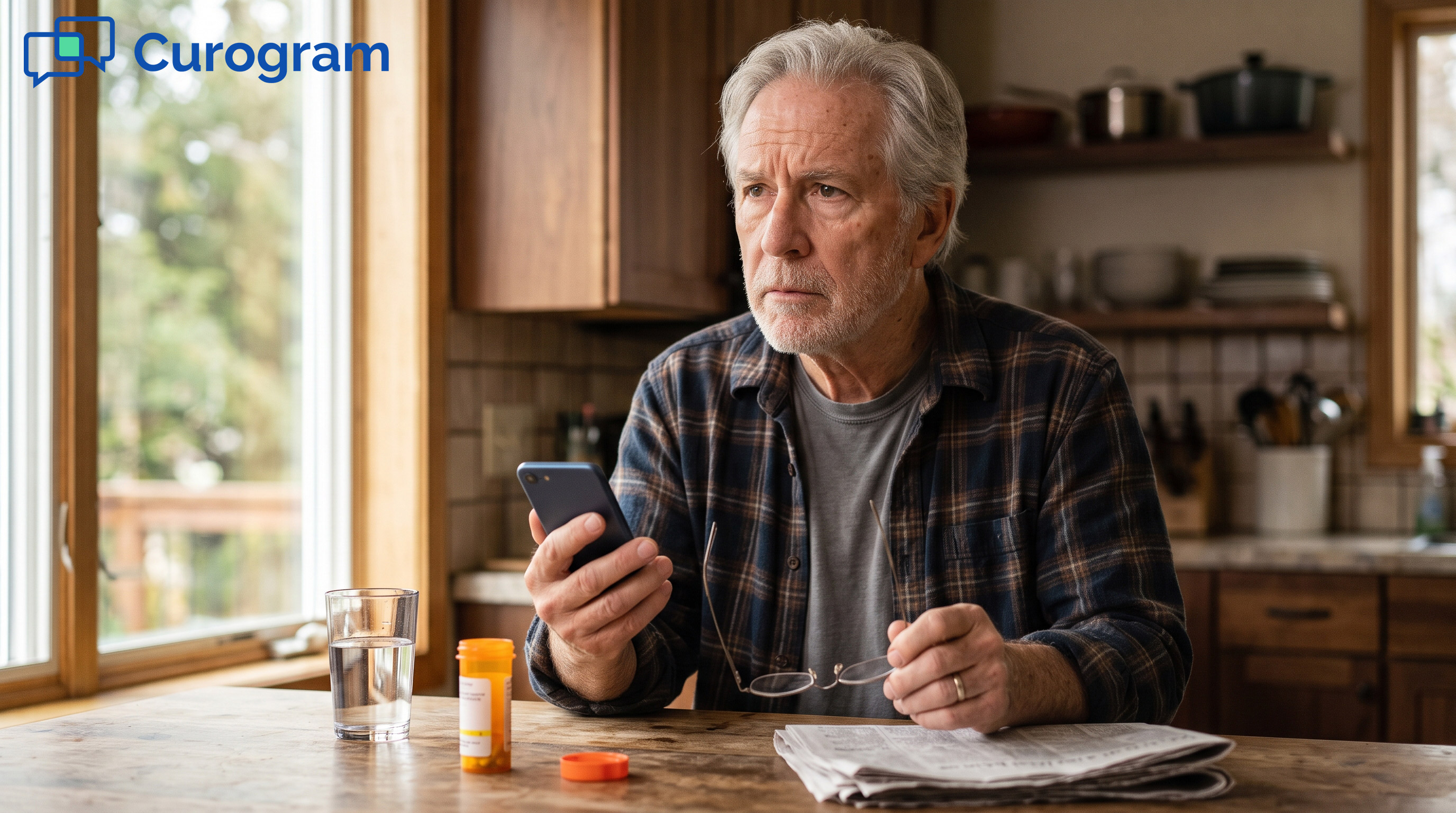
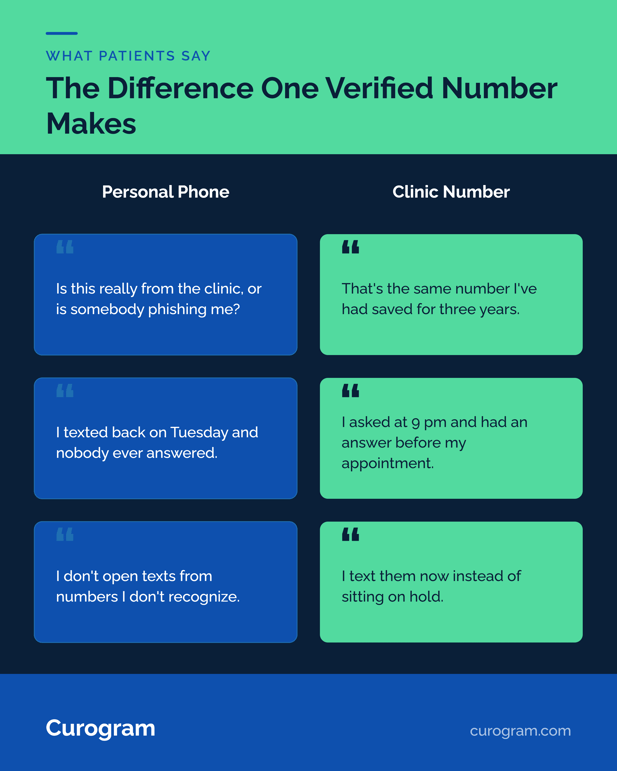
A nurse finishes a call, realizes the patient needs a dosage correction, and texts it from her own phone because that takes eleven seconds. The patient looks at an unfamiliar 617 number telling him to change how he takes a medication. He saves it as "clinic??" and hopes.
Our claim: the sending number is a clinical safety issue, not a branding preference. A patient who can't verify the sender can't act on the instruction with confidence. And a patient who learns to trust mystery texts has been trained into the exact behavior scammers rely on.
Nobody at the front desk is doing anything wrong on purpose. Staff improvise because patients need answers faster than the portal delivers them.
The improvisation moves every risk onto the person who didn't choose it. That's a patient privacy problem your texting clinic policy can't fix by asking people to stop helping.
What follows: what the patient actually experiences, what changes when every message arrives from one verified number, and where the conversation lives afterward.
The Villain: The Mystery Number
What the Patient Sees
"Take the second pill with food — Jenny from Dr. Park's office."
Helpful, and unverifiable. The patient can't confirm Jenny works there. He can't tell whether the number belongs to a clinic or to someone who scraped his appointment confirmation. An unknown number texting from the clinic asks him to make a judgment call about his own medication.
The 9 PM Follow-Up
He texts back that night with a real question about a side effect. Jenny is off shift. Maybe she sees it Thursday. Nobody else can see it at all, because the thread lives on one employee's device.
From the patient's perspective, secure messaging failed in the most ordinary way possible: he asked, and nothing came back.
Two Bad Outcomes, No Third
|
What the patient learns |
What happens next |
|---|---|
|
Ignore unknown numbers |
Legitimate care instructions get skipped |
|
Trust unknown numbers |
The next scam text works |
Personal cell phone PHI risk isn't only about the practice's exposure. The conversation is unprotected if the phone is lost, unavailable to the covering clinician, and gone entirely when Jenny takes a job across town.

The Guide: The Compliance Backbone
Put a Professional Channel Where the Improvisation Was
Curogram acts as the compliance backbone without taking away the speed that made staff improvise in the first place. Sending from the clinic line takes about as long as sending from a pocket — the difference lands on the patient's screen, not on the staff member's workload.
Curogram Highlight: Verified Location Numbers
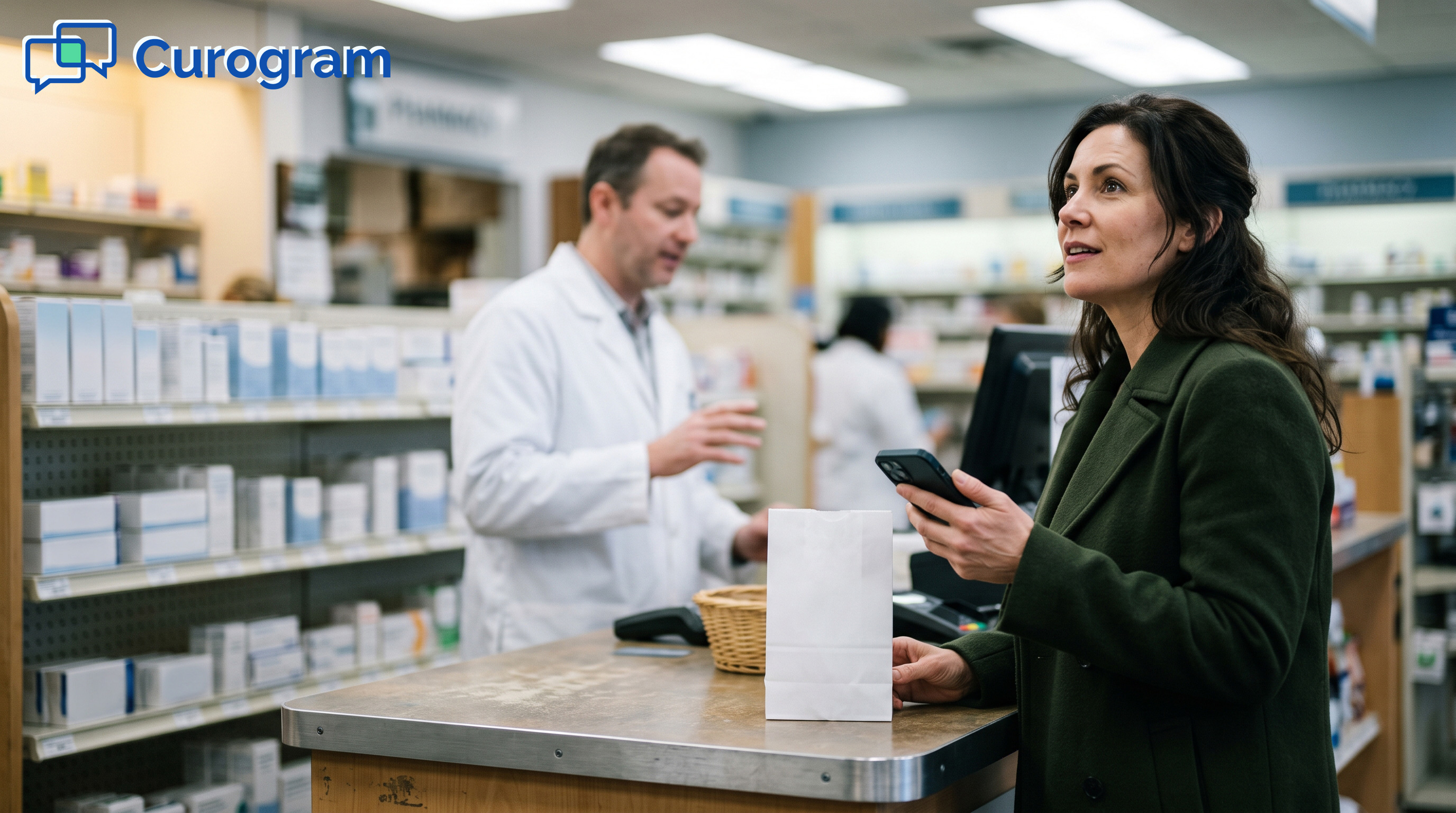
Verified Location Numbers give each site one number patients already have saved. Appointment reminders, prep instructions, billing questions, and clinical follow-ups all arrive from the same familiar line. Any member of the care team can pick up the thread.
That's why patients trust the official clinic number: it's the one on the appointment card, the website, and the voicemail they've heard for three years. Reminders arrive from it too, which is where centralized reminder governance and clinical messaging reinforce each other.
Where the Conversation Lives
Threads sync to the eCW chart. The 9 pm question is visible to whoever covers at 8 am, with the full exchange attached to the record rather than to a person.
Patient data protection in communication stops depending on one employee's lock screen settings, phone backup choices, and length of employment.
The Success: One Trusted Number, Total Continuity
Zero Conversations on Personal Devices
Every exchange protected, recorded, and continuable. A patient's medication question doesn't sit unanswered because of a shift change, and no thread walks out the door in someone's pocket.
What Patients Do Differently
They text back. Saved contacts get answered; unknown numbers get ignored. Give a household one verified line per location, and the reply rate on confirmations, prep instructions, and check-in requests follows.
Trust That Compounds
A patient who has texted your clinic number twelve times without incident opens the thirteenth message. That's the practical value of consistency from the secure messaging patient perspective — recognition does the work that a disclaimer never could.
Conclusion: Protect the Helpers and the Helped
Staff started texting from personal phones because patients needed speed. Both deserve a channel that delivers it safely, without risk of scams or HIPAA violations.
eCW protects your record. Curogram protects their conversation, on a number they recognize, with the history where the next clinician can find it.
Ask your teams this week, without blame, how often patients get texts from personal phones. The number will be higher than the policy assumes. Then make the safe way the easy way, which is where HIPAA-compliant texting governance stops being paperwork and starts being a workflow.
Book a demo and watch how quickly a message goes out on the governed channel. Speed is what converts the improvisers.
Frequently Asked Questions
Recognition is how patients verify a message is real. A known clinic number can be saved, searched, and texted back anytime. Unknown personal numbers teach patients to answer strangers.
Threads belong to the location rather than the individual, so any authorized team member continues the conversation and the history stays on the chart. Nothing depends on one person being on duty.
HIPAA-compliant, SOC 2 Type II certified infrastructure, plus automatic consent capture, opt-out handling, and content safeguards. A personal device offers none of those and can't be audited afterward.
Send the first governed message from the clinic line, ask them to save it, and let staff redirect existing threads there. Recognition builds within a few exchanges.
Mixed sending numbers reintroduce the verification problem. One line per location means every message a patient receives confirms the last one was also legitimate.