Automate Patient Recall Campaigns in Azalea Health
💡Automated patient recall campaigns for the Azalea Health front desk find your overdue patients and text them to rebook. They run entirely on their...
Your eClinicalWorks database is fuller than your schedule. That gap is quietly costing you far more than you might think.
Most practices store somewhere between 5,000 and 50,000 patient records. Yet in any given year, only a fraction of those people actually come in. The rest aren't gone for good. They're just unreached.
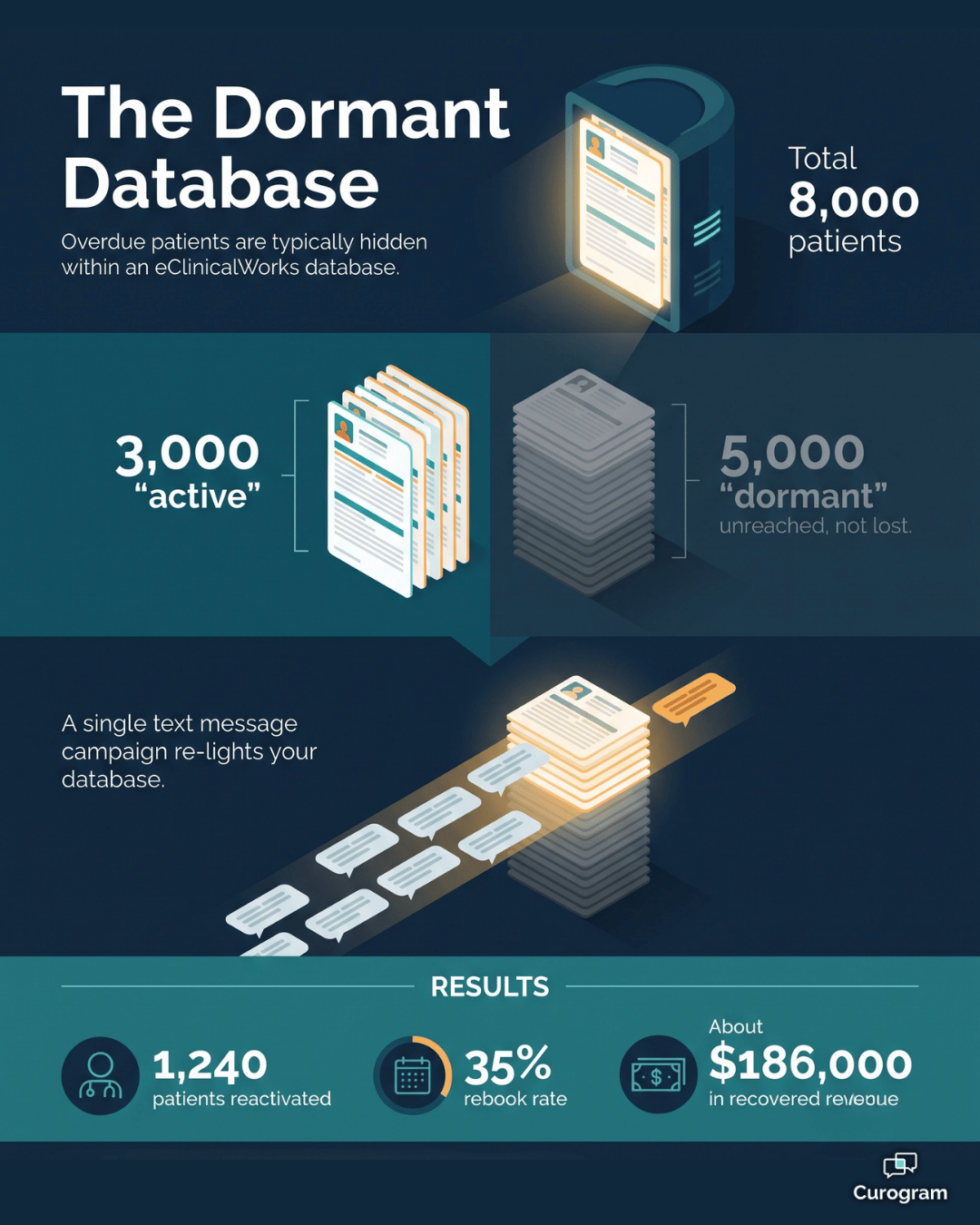
Think about a practice with 8,000 patients on file. Maybe 3,000 of them have been seen this year. The other 5,000 still trust you — they simply drifted away over time.
Life got busy. A reminder never came. And slowly, one by one, they wandered off to urgent care or nowhere at all.
Here's the frustrating part. The fix is already sitting inside eCW. You don't need brand-new patients. You need the ones you already have.
So why doesn't the front desk just call them? Because phones don't really work at scale anymore. Nobody answers unknown numbers these days.
One staffer can't dial 5,000 people between check-ins and refill requests. And a patient who misses a single appointment is 70% likely to disappear for 18 months if no one reaches out.
The schedule has gaps. The database has the answer. Those two facts should never sit side by side — yet for most eClinicalWorks practices, they do, week after week.
There's a better way to close that gap. It doesn't involve ad spend or a single extra hire. It means reaching your whole overdue panel in an afternoon and letting patients rebook themselves, by text, on their own time.
This article shows you exactly how that works. You'll see how to reactivate inactive patients in your eClinicalWorks database, what results real practices get, and why a friendly text beats a phone tree every time.
Let's start with the villain quietly draining your revenue.
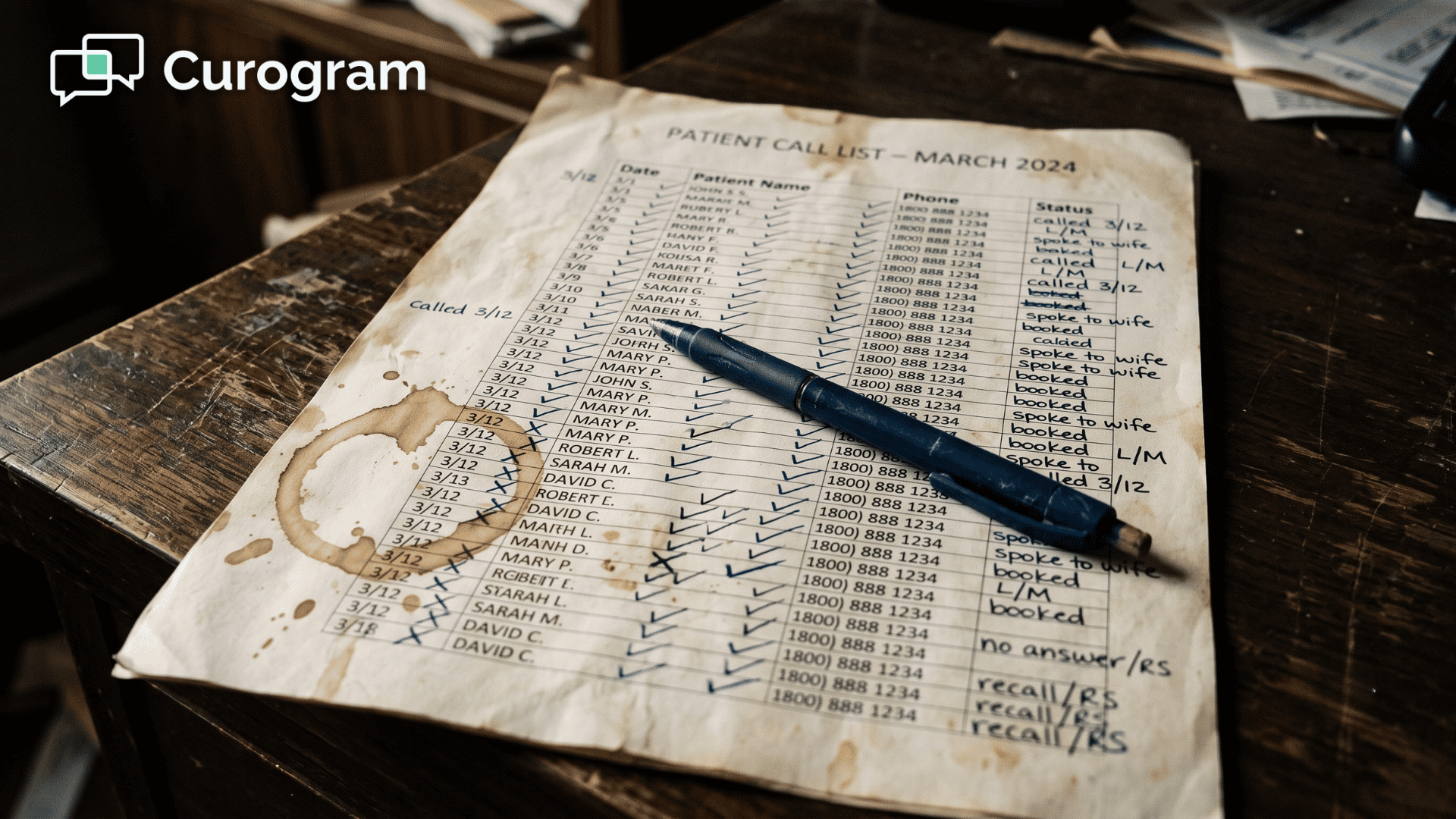
Every eClinicalWorks practice sits on a goldmine it can't quite dig into. Your database holds thousands of records, often 5,000 to 50,000, but eCW gives you no simple way to reach the large share of patients who are overdue for care.

The math is uncomfortable.
A practice manager knows the system holds 8,000 patients, yet only 3,000 have come in this year.
The other 5,000 aren't lost patients. They're unreached ones, and there's no realistic way to phone them all.
That's the bottleneck. Phone-based recall reaches fewer than 15% of patients, mostly because no one picks up an unknown number anymore.
Worse, a patient who misses one appointment is 70% likely not to return within 18 months without a nudge.
Quick look at the leak
Here's how it feels day to day. Your schedule shows gaps while the fix sits right there in eCW — thousands of people who already trust you, slowly drifting toward urgent care or a competitor down the street.
It sounds simple to solve. It isn't, at least not with a phone and a prayer.
So what actually closes the gap?
A tool that does what your front desk would do if it had unlimited hours:
Reach every overdue patient, personally, in a single afternoon.
That's Curogram — think of it as a virtual front-desk assistant that works alongside eClinicalWorks, not instead of it. eCW stays your system of record. Curogram handles the outreach eCW was never built to do.

The engine is mass messaging. You send targeted texts to large patient segments from your practice's existing number, and patients book a new appointment right in the reply — no app, no portal, no waiting on hold.
That's the real promise of patient recall campaigns eClinicalWorks teams can finally run at scale.
The messages aren't blasts, either. You can mass text patients from eCW database segments that make sense. Think people overdue for an annual visit, a chronic check, or a seasonal vaccine, so every text feels relevant.
This is the kind of overdue patient outreach eCW can support without a call center.
Different specialties, same engine.
Here's how it plays out:
| Specialty | Who you recall | Typical campaign |
|---|---|---|
| Primary care | Chronic-disease and flu-shot patients | annual wellness recall texts eClinicalWorks patients respond to |
| Pediatrics | Kids overdue for well-child visits and vaccines | Well-child and immunization reminders |
| OB/GYN | Patients due for annual exams or postpartum follow-up | Annual and postpartum recalls |
| Behavioral health | Patients who fell out of regular sessions | Gentle re-engagement texts |
The common thread is trust. You're reaching patients who already know you, and that's why an eClinicalWorks reactivation campaign converts far better than any ad ever could.
Numbers make this real. A comparable eClinicalWorks primary care practice reactivated 1,240 patients in one recall campaign, at a 35% reconversion rate.
Sit with that for a second. Passive self-rebooking means waiting and hoping patients return on their own. It usually recovers just 5% to 10% of a lapsed panel. A single campaign delivered a 3x to 7x jump over that baseline.
Here's what it means in plain terms.
Say 1,240 people rebook and your average visit is worth even $150. That's roughly $186,000 in recovered revenue from one afternoon of texting, with no ad budget touched.
Scale that out and the math gets hard to ignore:
The shift is the whole story: a dormant database becomes a reawakened panel, and next week fills with patients who already know and trust you.
Think about a slow week turned full without a marketing campaign, just a friendly text to people you already have. Beyond the revenue, there's continuity. Patients who had drifted away get back into care before a small issue becomes a big one.
That's the quiet win. Full schedule, healthier patients, zero acquisition cost.
The cheapest way to fill your schedule was never advertising. It's the overdue patients already sitting in eCW. These are people who chose you once and would happily come back if someone simply reached out to them first.
That's the reframe worth remembering. eClinicalWorks is built for your patient records. Curogram is built for their return. Put the two together and a dormant database quietly becomes a full week, over and over again.
Think about what that really changes.
Instead of buying attention from strangers, you're reactivating the trust you already earned. Instead of a front desk trapped on the phone, you're running outreach that reaches thousands in one afternoon. Instead of watching patients drift to urgent care, you're guiding them back with a single friendly text.
And it all happens without new hires, new software to babysit, or disruption to the eCW workflows your team already knows. You reach your whole overdue panel, patients rebook by reply, and eClinicalWorks stays exactly where it belongs, as your system of record.
This is how you fill the schedule without advertising, straight from eCW, using assets you have already paid for.
Every week you wait, more patients slip past the 18-month mark and become much harder to win back. The database won't reactivate itself. But it doesn't have to stay quiet, either.
So stop letting thousands of patients drift away unreached. See what a single recall campaign can do when it reaches the right people at the right time.
Schedule a Demo of Curogram's eClinicalWorks integration and watch a recall campaign work — the overdue panel reached, patients rebooking by text, your calendar filling up. No IT department required, and no changes to your existing eCW workflows.
Yes. Curogram is built for healthcare, so recall messaging is handled around patient consent and easy opt-out. Campaigns reach patients appropriately, not as random blasts. Recall and wellness reminders to your own existing patients are a standard, accepted use.
You target the segments that matter — patients overdue for an annual visit, a chronic-disease follow-up, or a vaccine — so outreach stays relevant instead of blanket. Curogram works alongside eClinicalWorks, so you're reaching the people who are actually due for care.
Campaigns focus on reachable, consented patients, and texting beats phone recall by a wide margin because people actually read texts. Start with your most recent overdue patients and expand from there. An aging list isn't a reason to wait.
Far less than you'd expect. Instead of your front desk dialing patients one by one for days, you build a single campaign and send it in an afternoon. Replies come in as texts your team handles between other tasks, not as a wall of phone calls. For most practices, that turns weeks of chasing into a few hours of work.
The patient rebooks right in the text thread, with no app to download and no portal login. Your staff sees the request and drops it into an open slot, the same way they would any other booking. Because eClinicalWorks stays your system of record, nothing about your existing workflow changes. You're simply filling gaps with patients who raised their hand.
💡Automated patient recall campaigns for the Azalea Health front desk find your overdue patients and text them to rebook. They run entirely on their...
💡 Patient reactivation texts eClinicalWorks patients can book from turn a forgotten follow-up into a scheduled visit. A patient who hasn't been...
💡CollaborateMD patient recall broadcast messaging campaigns turn an idle patient list into booked visits. CollaborateMD handles one-to-one billing...