8 min read
Why Rural Patients Pay Faster by Text | Azalea Health + Curogram
Aubreigh Lee Daculug
:
March 20, 2026
A text message arrives instantly, reads clearly, and links directly to a secure payment page. No envelope to open, no password to reset, no portal to navigate.
Curogram sends a single text: 'Your balance is $35. Tap here to pay.' The patient taps, enters their card, and pays in about 30 seconds. For elderly patients, working patients, and patients who misplace paper bills, this is the simplest payment experience possible.
Text-to-pay for Azalea Health practices turns a 90-day paper-statement problem into a same-day collection.
It meets rural patients on the one device they check constantly — their phone — and turns the act of paying a medical bill into something as easy as responding to a message.
There is nothing wrong with most rural patients who carry a 60- or 90-day medical balance.
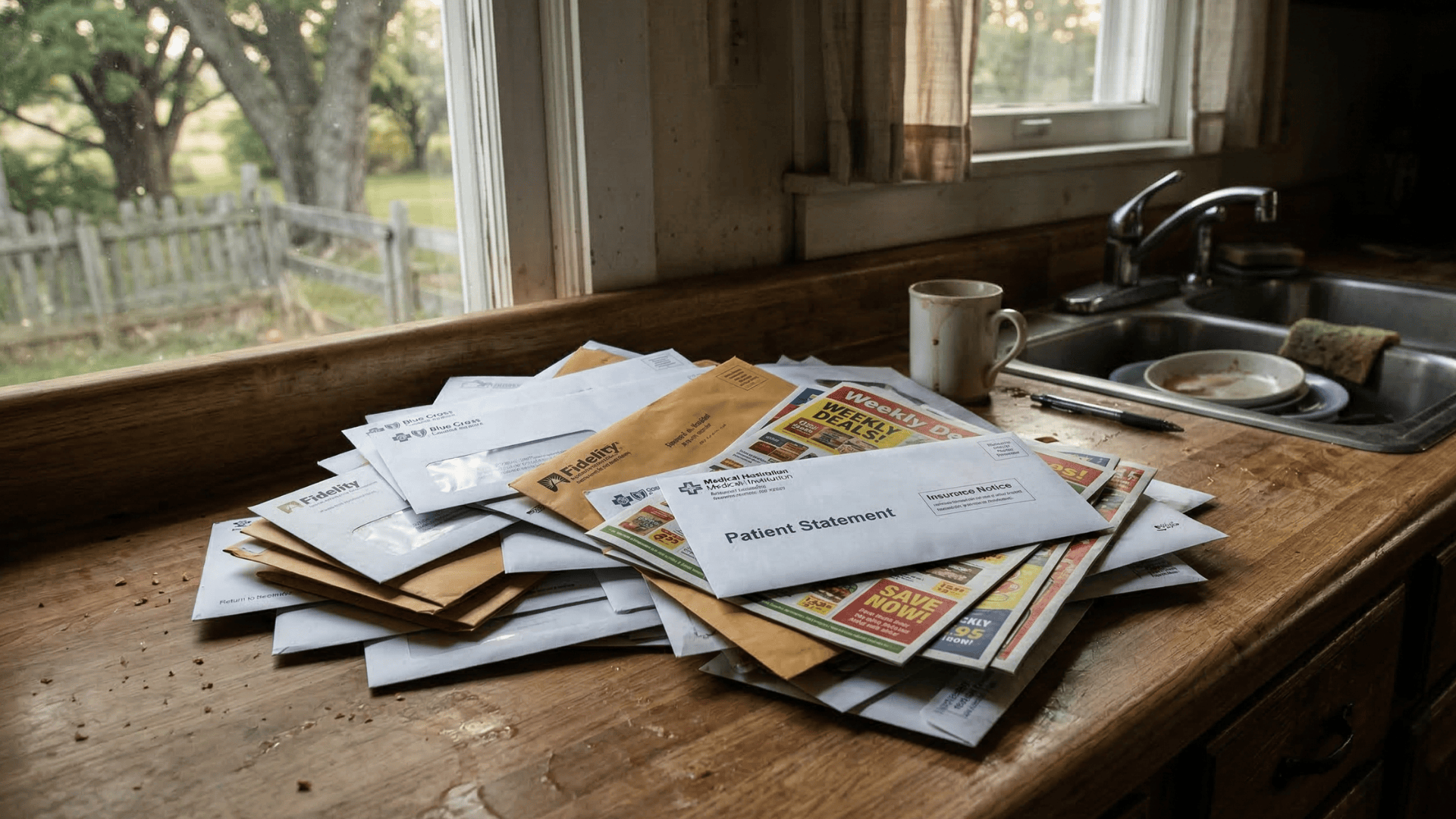
They are not ignoring their bill. The problem is almost always the same: the paper statement landed on the kitchen counter, slid under a stack of mail, and quietly aged into a collections problem.
Rural patient text message bill payment at Azalea Health clinics solves this — not with a patient portal, not with a payment plan, but with a text message. One tap. Thirty seconds. Done before dinner.
Think about how rural patients actually spend their day. They are checking their phones constantly — texts from family, updates from the local co-op, messages from church.
They are not sitting at a desktop computer, logged into a patient portal, ready to navigate a multi-step payment screen. The billing method has to meet them where they already are.
That is the gap most practices have not closed yet. Azalea Health gives you the billing infrastructure. Curogram gives your patients the one thing that makes them act on it — a text link that works as easily as replying to a message.
When those two things come together, outstanding balances stop aging and start clearing.
This article explains why the payment experience matters as much as the amount owed, and why the text channel consistently outperforms paper for rural, elderly, and time-pressed patients. If your practice is still mailing statements and waiting, this is worth reading.
Why Paper Statements Keep Failing Rural Patients
The Perception Gap
Most billing teams assume that patients who go 30 days without paying are choosing not to pay — despite ongoing shifts in patient balance collection performance across the industry. In rural communities, the reality is usually far more ordinary.
The envelope arrived. It looked like three other pieces of medical mail that week — an EOB from Medicare, a pharmacy notice, an insurance letter. The patient set it aside, fully intending to deal with it. Then life happened.
This is what we call the envelope on the counter problem. It is not a collections problem at its core. It is a medium problem. Paper billing does not create a moment of action — it creates a task for later. And later becomes 90 days faster than anyone plans.
Meet Mr. Whitaker
Consider a 69-year-old retired farmer on Medicare visiting his rural FQHC for a routine check-up. His copay is $20. The statement arrives three weeks later in an envelope that looks like every other piece of medical mail he receives.
He sets it on the counter, planning to deal with it on Saturday.
Saturday comes and goes. The envelope migrates to a basket. A second statement arrives at day 60 — he vaguely remembers seeing something about this, but cannot find the first one.
At day 90, the billing office calls. He is embarrassed, apologetic, and pays immediately over the phone. He was not avoiding the bill. He was defeated by the medium.
He was not the problem. The paper statement was.
The Portal Illusion
Some practices point to their patient portal as the digital payment solution. But portal adoption among rural and elderly patients is a fraction of what vendors promise, reflecting broader digital health adoption challenges among older adults.
The steps alone are enough to lose most of them:
- Create an account — which requires an email address many elderly rural patients do not have
- Set a password — which they will forget before the next bill arrives
- Log in through a multi-step process designed for a desktop, not a phone
- Find the 'Pay My Bill' button buried inside a cluttered, small-screen interface
The portal is not a payment solution for the patients who need one most. It is a convenience feature for tech-comfortable patients who would have paid anyway.
How Rural Patients Actually Use Their Phones
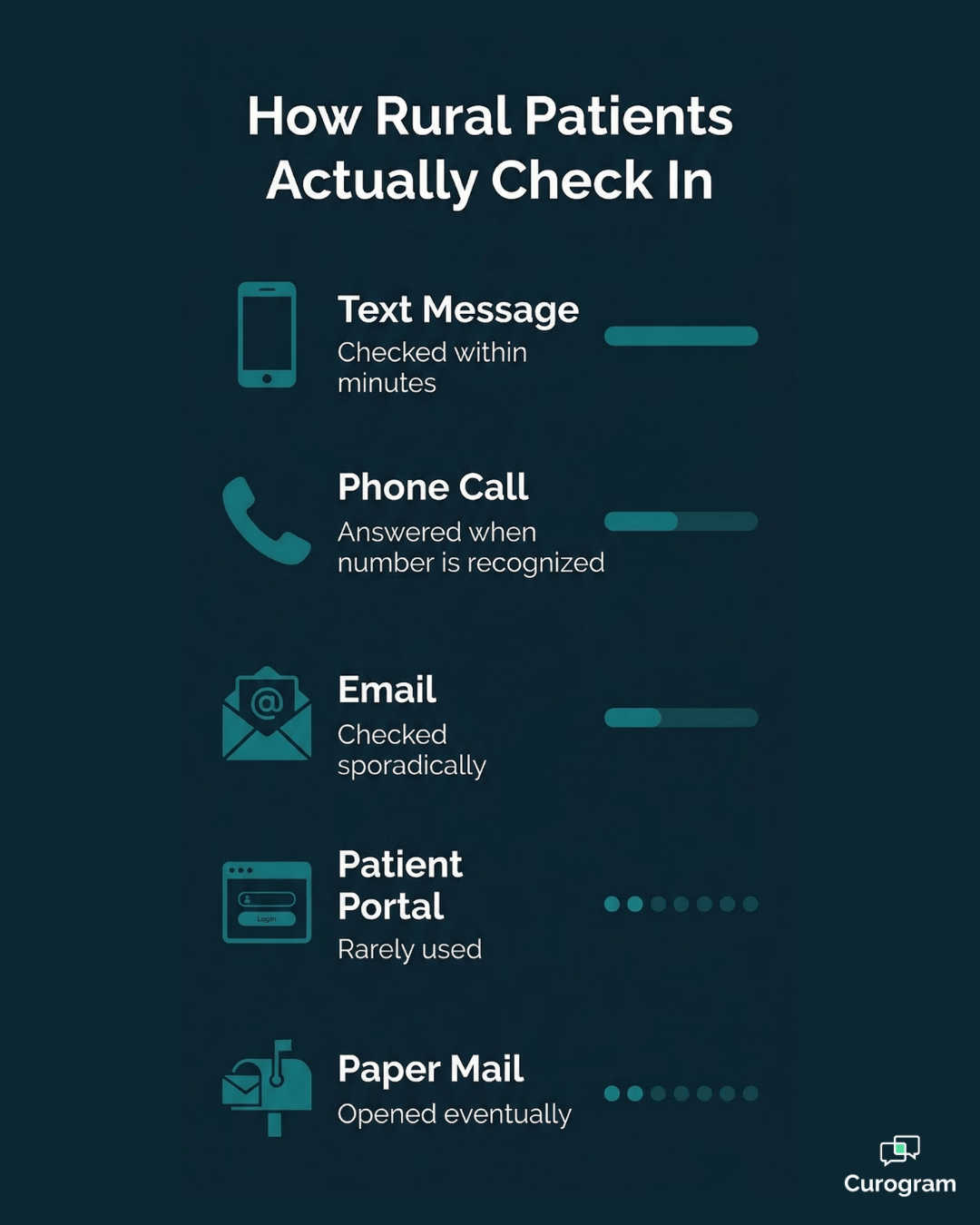
Rural patients interact with their phones very differently than urban patients interact with their computers. They check texts constantly — from family, from church, from the local co-op. They respond to text messages within minutes — especially when using two-way SMS communication that allows them to engage instantly.
But they check email sporadically, avoid portals entirely, and treat paper mail as a low-priority task.
98% open rate |
| Text messages — compared to 20% or less for email, based on our internal research |
Any payment method that does not land on their phone is working against the grain of their daily habits. The rural patient billing friction comes from paper vs text, and that gap is not small. Paper statements do not even register in that comparison.
Curogram's Text-to-Pay Meets Patients Where They Are

The Solution in Plain English
Curogram's text-to-pay sends a single text message to the patient:
'Your balance from Valley Health Clinic is $35.00. Tap here to pay securely.'
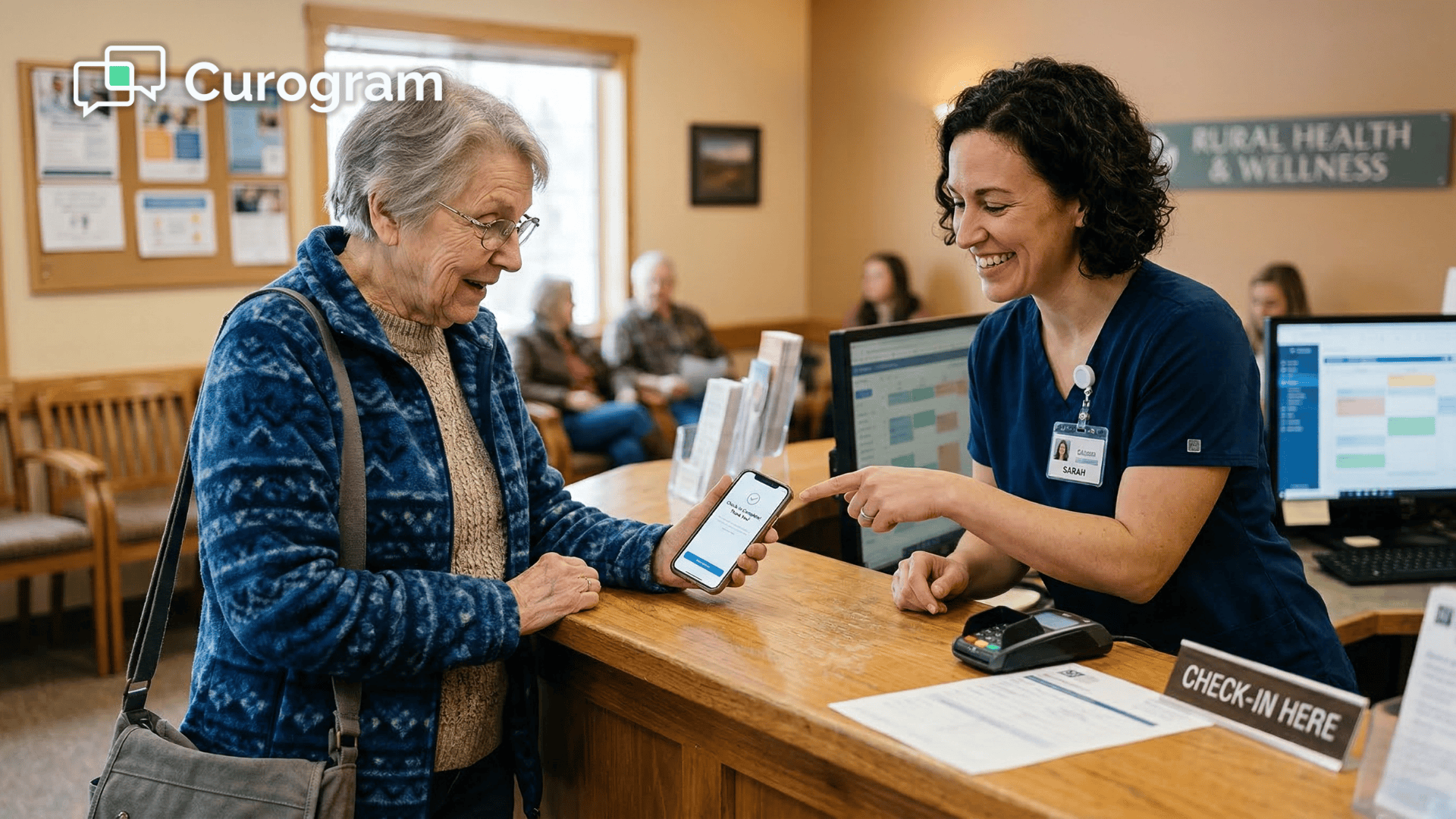
The patient taps the link, sees a clean payment page with one amount and one button, enters their card, and pays.
Thirty seconds. No account. No app. No stamp.
This is text-to-pay patient convenience at its most straightforward. The patient does not need to remember a password, find an envelope, or carve out time to sit at a computer. The bill arrives the same way a message from their grandkid arrives — and it gets handled the same way.
Built for Low-Tech Users
Curogram's mobile-optimized payment page is specifically designed for the patients least likely to navigate a portal: elderly patients with limited smartphone experience, patients on basic Android phones, and anyone who struggles with small text and complicated forms.
The entire experience comes down to three steps:
- See the balance amount displayed clearly at the top of the page
- Enter card details in large, easy-to-tap input fields
- Confirm payment with a single button
30 seconds |
| Average time it takes a patient to complete payment — from tapping the link to confirmation |
Patients can optionally save their card for future visits, making every bill after the first one even faster. Clinics consistently report that their oldest patients become among the most enthusiastic adopters once they try it once.
Azalea Health Integration: No Confusion, No Delays
Because Curogram integrates with Azalea Health, every text-to-pay link reflects the patient's current, accurate balance. There is no confusion about which bill this is for or whether insurance has already paid its share. The patient sees one number and one button.
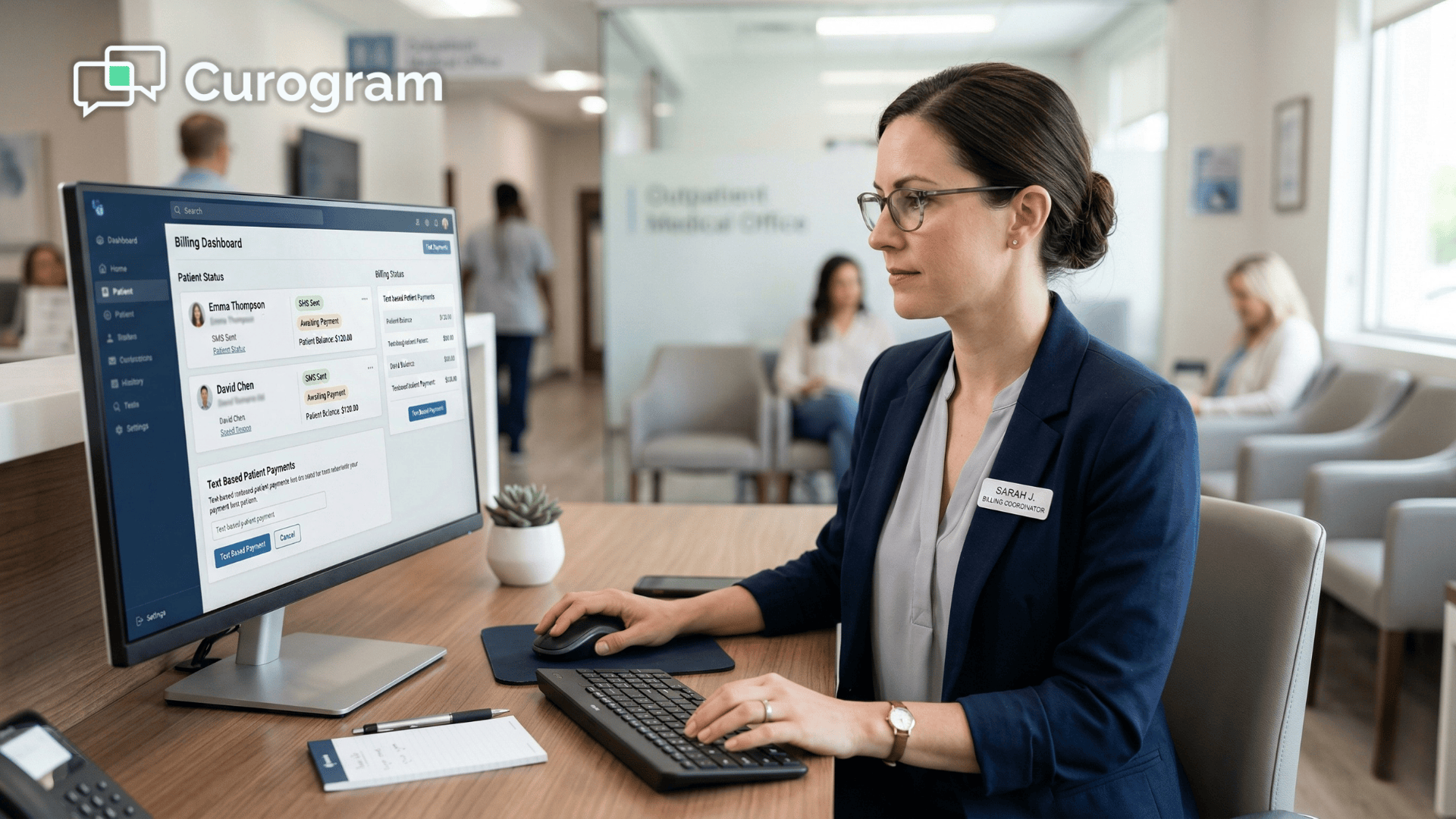
When they pay, the billing team is notified immediately and the balance updates automatically — no manual entry, no reconciliation delays.
This integration is what makes the patient payment experience via text link work so smoothly for rural healthcare practices. The data is accurate, the process is seamless, and the result shows up in your Azalea Health system the moment the patient taps pay.

Why Texting Works for Rural Patients Behaviorally
The real genius of text-to-pay for rural patients is not the technology — it is the behavioral fit.
Rural patients already use texting as a primary communication channel. Paying a bill through a text link does not feel like learning new technology. It feels like responding to a message.
That behavioral match is why text-to-pay converts at rates that paper statements and patient portals never achieve in rural and elderly populations. It is the payment method that feels native.
Think of it as the grandma-proof option — not because it is simple-minded, but because it respects how people actually live and communicate.
Paid Before the Envelope Would Have Arrived
What the Numbers Show
The speed difference between paper and text is not subtle. Paper statements take 3–5 days just to arrive by mail, and then sit unopened for days or weeks after that. The gap with text-to-pay is immediate.
The text-to-pay patient pays before the paper statement would have even reached their mailbox.
From the Billing Cycle to the Text Message
The transformation is straightforward: instead of a paper envelope that sits on the counter for two months, the bill arrives as a text — the same format patients use for everything else — and gets paid in the time it takes to respond to a message.
The emotional weight of 'I owe the doctor something' evaporates in 30 seconds.
This shift does not require chasing patients or hiring more billing staff. Based on our internal research, practices using Curogram's text-to-pay see meaningful improvements in both collection speed and patient satisfaction. It requires sending a text.
Mrs. Prescott's Experience
Consider an 81-year-old patient at a rural Critical Access Hospital on Azalea Health. She has always paid her bills — but it used to take three months.
The statement would arrive, she would set it aside, forget, get a second statement, call her daughter for help writing the check, and finally mail it around day 75.
After her clinic implemented Curogram's text-to-pay, she received a text after her last visit: 'Your balance from Mountain View Clinic is $22.00. Tap here to pay.' She tapped the link, entered her saved card, and paid in 15 seconds.
She called her daughter that evening: 'They sent me a text and I just paid it like ordering from the Walmart app. Why can't every bill work like that?'
That question is the whole point. It can work that way. It should work that way.
Stop Waiting for the Envelope — Give Your Patients a Text Link
Your rural patients want to pay. That has never been the issue. The issue is that the paper statement asks too much of them — too many steps, too many days, too many chances for the bill to get buried under the electric bill and the grocery circular.
Curogram's text-to-pay for Azalea Health practices removes every one of those friction points. It delivers a clear, secure payment request to the one device your patients check constantly, and it collects payment in 30 seconds or less.
That is the patient copay text message payment experience rural clinics have been looking for.
Azalea Health handles your billing calculations and claims management. Curogram handles the patient payment experience — making it so simple that an 81-year-old compares it to ordering from Walmart. Together, they close the gap between a patient who wants to pay and a practice that actually gets paid.
Your patients are already on their phones. They are already opening texts within minutes. All you need to do is meet them there.
Most practices see a clear difference in collection speed within the first week. The envelope on the counter becomes a payment before dinner — and your billing team gets to stop chasing.
Schedule a demo today find out how fast your rural patients will pay when the bill comes by text.
Frequently Asked Questions
Yes. Curogram's payment links open a secure, encrypted payment page that meets PCI-DSS compliance standards — the same security standard used by banks and major retailers. The text message itself contains no financial data; it simply provides a link to the secure payment page. The patient's card information is encrypted during transmission and never stored in an accessible format. It is as safe as paying on Amazon or any other major e-commerce site.
Curogram's payment page is specifically built for low-tech users. Large text, one clear amount, one button to pay. In practice, patients who can order from Walmart online, text their grandchildren, or tap a link in a church group message can use text-to-pay without any trouble. The interface is deliberately simpler than any patient portal — because it only does one thing: show the amount and accept the payment.
Absolutely. Text-to-pay is an additional payment channel, not a replacement for the ones you already have. Patients who prefer to pay at the front desk, mail a check, or call the billing office can still do so. Text-to-pay simply adds the fastest, lowest-friction option to the mix — and in practice, many patients who have been slow to pay by paper become prompt payers once they receive the text option.
Curogram integrates directly with Azalea Health, so there is no double entry and no manual reconciliation. When a patient's balance is ready, the practice sends a text-to-pay link through Curogram. The link pulls the current balance from Azalea Health automatically. Once the patient pays, the billing team is notified and the balance updates in real time. It works alongside the tools your staff already use — not instead of them.
Curogram allows practices to send follow-up text reminders to patients who have not yet paid. These are automated, so your billing staff does not have to track who responded and who did not. Most patients pay on the first message, but the follow-up option ensures that anyone who missed it still gets a second chance — without a phone call, a second statement, or any additional manual work from your team.