8 min read

Post-Procedure Follow-Up SMS: Automated Monitoring and Re-Engagement

Post-Procedure Follow-Up SMS: Automated Monitoring and Re-Engagement
💡 A patient recall text is a quick reminder from your imaging center. It tells you that follow-up imaging is due. Common examples include a yearly ultrasound, a repeat CT scan, or a screening study.

These messages are HIPAA-compliant and secure. They share only your name, the type of scan needed, and a short prompt to reply YES. No portal login, no app, and no long phone calls. You just text back to schedule.

This guide walks through the mass messaging patient experience radiology centers now offer. You will learn what the texts mean, why centers send them, and how to reply with confidence.

Years ago, your imaging center may have mailed a card or left a voicemail. The card got lost. The voicemail piled up with the rest. Follow-up scans slipped through the cracks.

Today, the message arrives on your phone. It is short, clear, and easy to act on. You can reply at lunch, during a commute, or even at 2 AM if that is when you remember.

This shift is more than tech polish. It is a real change in the mass messaging patient experience radiology centers now build for their patients. Texts close the gap that paper and phone tag left wide open.

Why does this matter for you? A missed follow-up scan can delay care that your doctor has already ordered. A simple text helps you stay on track without the back-and-forth of voicemail or hold music.

Curogram client data from clinical settings shows the impact is large. Multi-location practices recovered 1,240 patients from a single SMS recall push.

About 35% of those who got a recall text booked an appointment within the month. Those are real visits, real scans, and real peace of mind for people who had drifted away from care.

This article was written for patients, not staff. We will explain what these texts contain, why they are safe, and how to reply. We will also touch on accessibility, since not every patient feels at ease with a phone screen.

If you have questions as you read, hold them. We answer the most common ones at the end.

By the time you finish, the next text from your imaging center should feel like what it really is, a small nudge to take care of yourself.  

The Villain: The Patient Recall Disconnect

Imaging centers do clinical work very well. Yet many still rely on slow tools to bring patients back for follow-up scans. The result is a quiet gap between great care and weak communication.

This gap has a name. We call it the patient recall disconnect. It is what happens when paper letters and phone calls fail to reach patients who genuinely need a follow-up study.

The Problem: A Reminder That Often Gets Lost

A recall text reminds you that a scan your doctor ordered is now due. Common examples include an annual vascular ultrasound, repeat CT monitoring, or post-procedure imaging.

Centers send these messages for one main reason. People are busy, and the paper card from your last visit is easy to misplace. Recall texts are common in imaging practices and help keep your care on track.

Why Old Methods Fall Short

Mailed letters take days to arrive and often go straight to the trash pile. Voicemails get skipped or deleted before they are heard. Both rely on a single moment that the patient may not even notice.

Phones also create friction. Calling back means hold time, voicemail tag, and writing down a number. Many patients give up after the second try.

Where the Disconnect Hits Hardest

Patients with longer follow-up windows feel this gap most. A scan that is due in a year can drift to 14 months, then 18, then never. Each missed reminder widens the gap.

That delay can affect outcomes. Surveillance scans exist for a reason, and skipping them is not a small thing. The recall disconnect quietly turns small slips into bigger ones.

The Agitation: Why Texting Feels So Much Better

Texting fits how people already live. You can read it on the bus, between meetings, or while waiting for coffee. Replying takes about three seconds.

There is no voicemail tag and no need to write down a callback number. A quick YES sends a confirmation right back to your imaging center. The center knows where you stand without a single phone call.

The Consequence: Costs You May Not See

When recall messages fail, the cost lands on both sides. Patients miss care that has already been planned. Centers face empty appointment slots and rising staff costs from manual outreach.

Patient surveys show that more than 75% of people prefer text over phone calls for routine updates. SMS recall now matches what most of us expect from any modern service.

When centers stick to phone-only outreach, they fall behind hospital imaging departments with bigger teams.

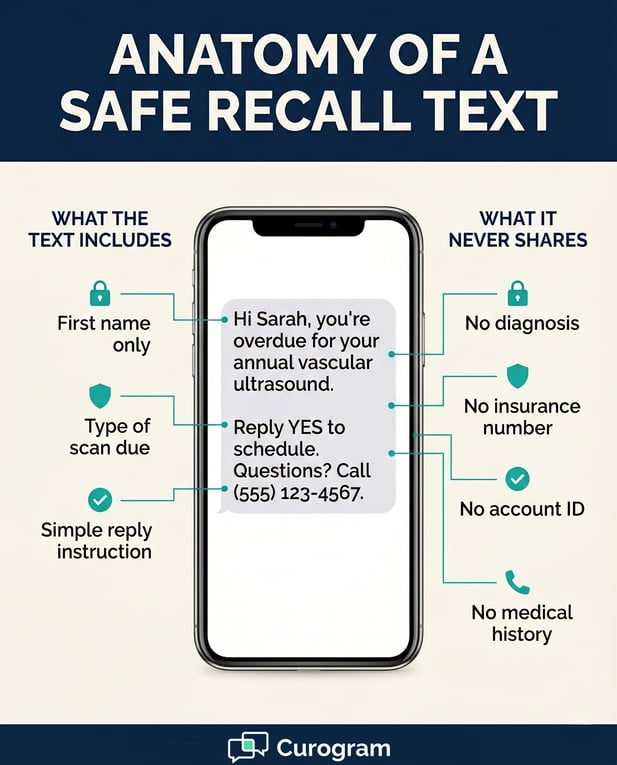
Anatomy of a safe healthcare recall text: HIPAA-compliant messaging features

The Guide: The Patient Recall Engine

So if texts close the gap, how do they stay safe and clear? That is where the patient recall engine comes in. It is the system your imaging center uses through Curogram to send reminders that work for both patients and staff.

Below is what makes it different from a generic group text or a robocall.

The Solution: HIPAA-Safe by Design

Patient recall texts follow strict federal privacy rules. The message does not include detailed health info. It only names the type of imaging, like vascular ultrasound, and your appointment status.

Curogram, the platform your center uses, is SOC 2 Type II certified. That means an outside audit confirms the platform protects your data. Your imaging center never shares your full record over text.

What a Real Recall Text Looks Like

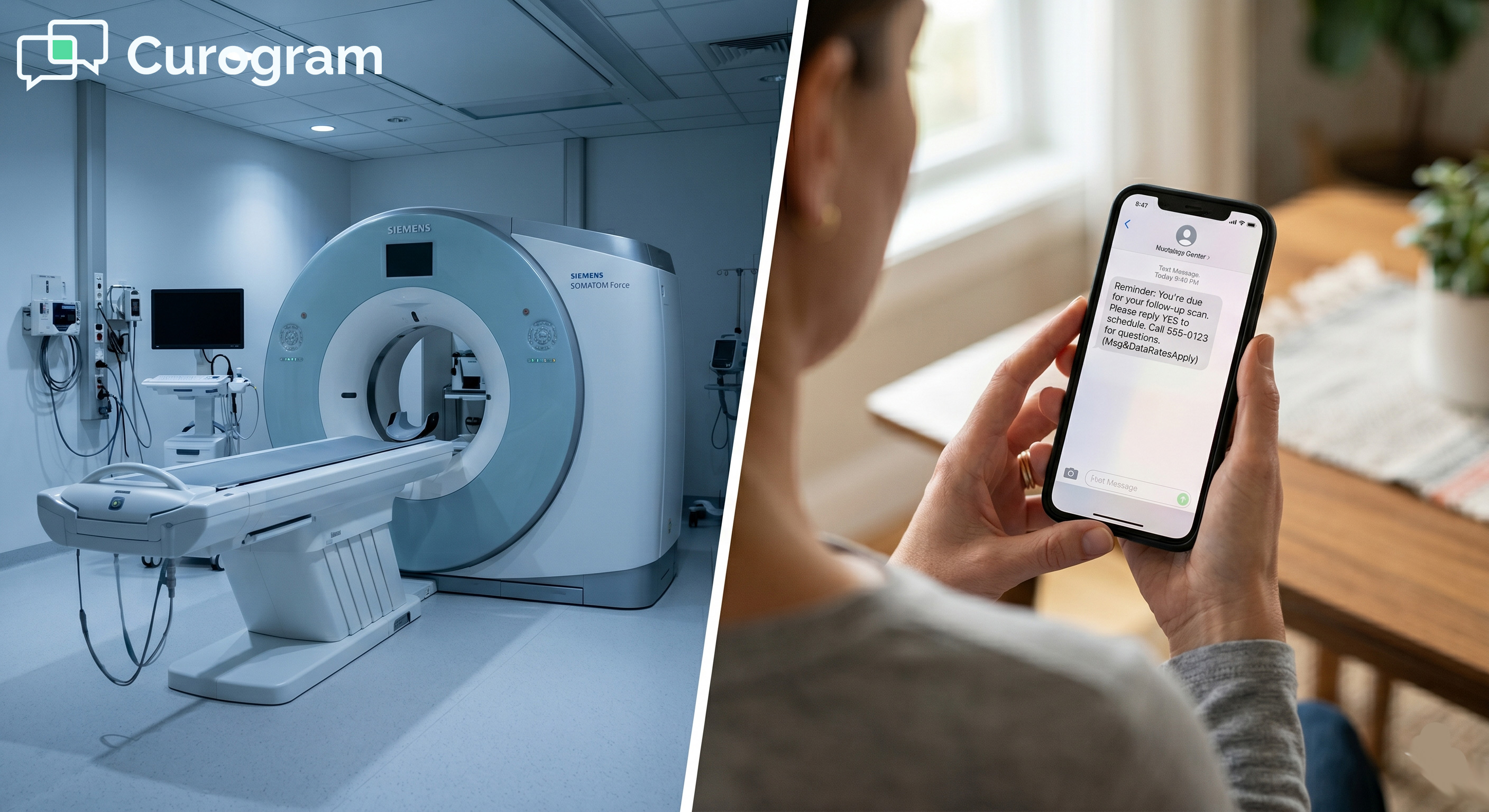
Here is a typical message: “Hi [Your Name], you’re overdue for your annual vascular ultrasound. Reply YES to schedule. Questions? Call [practice phone].”

Notice what is missing. There is no diagnosis, no insurance number, no medical history, and no account ID. The text is short, simple, and easy to act on.

How to Spot a Scam

Real recall texts come from your imaging center's known number or a number tied to your practice. Scammers sometimes send fake billing or scheduling texts. Be careful with any message that asks for sensitive info.

If you are unsure, call your imaging center directly. Never share your insurance card number, account number, or password through a text reply.

The Feature: Built for Real Patient Lives

The text uses friendly tone. It tells you what is due, why it is due, and how to act. That clarity is part of what raises SMS mass messaging patient satisfaction across imaging centers.

Many patients also worry about extra steps. They wonder if they need to install something new. The good news is that this is mass messaging without app download required.

Quick Compare: Recall Methods

Method

Speed

Effort

Reach

Paper letter

Days

High for staff

Low; often lost

Phone call

Hours

High on both sides

Mixed; voicemail tag

SMS recall via Curogram

Seconds

Low for both

High; 98% open rate


The Integration: Mass Messaging Accessibility Imaging Centers Need

Imaging centers serve a wide age range. Some patients are 30 and live on their phones. Others are 75 and have just learned to read texts. A good system must work for both.

That is why mass messaging accessibility imaging centers value is built around plain SMS. There is no app, no login, and no jargon. Mass messaging for elderly patients works because texts come through on any basic phone.

Mobile carriers deliver SMS to flip phones, smartphones, and old keypad models alike. The reading interface is the same one a grandchild uses. That keeps the patient population united, not split by tech skill.

The Specialty Fit

Curogram is built for radiology and interventional imaging workflows. It understands modality-specific needs that generic platforms miss.

A surveillance ultrasound recall is not the same as a routine cleaning reminder, and the system reflects that.

This is also where StreamlineMD plays a role. Curogram pulls from the practice database to flag which patients are overdue. The result is a recall list that is accurate, current, and easy for staff to act on. 


The Success: Mass Messaging Transformation

What happens when imaging centers move from paper and phone calls to SMS? The numbers tell the story. So do the patient and staff stories that sit behind those numbers.

Here is what the shift looks like in real practices.

The Metric: 35% Patient Reconversion

Curogram client data from clinical settings shows a clear pattern. Multi-location imaging practices saw 35% of contacted patients book an appointment within 30 days of a single SMS recall. That is from a population that had previously gone silent.

In raw numbers, that meant 1,240 patients seen from recall texts alone. Each scan was clinically needed. Each one had been delayed by the old system.

Why the 35% Number Matters

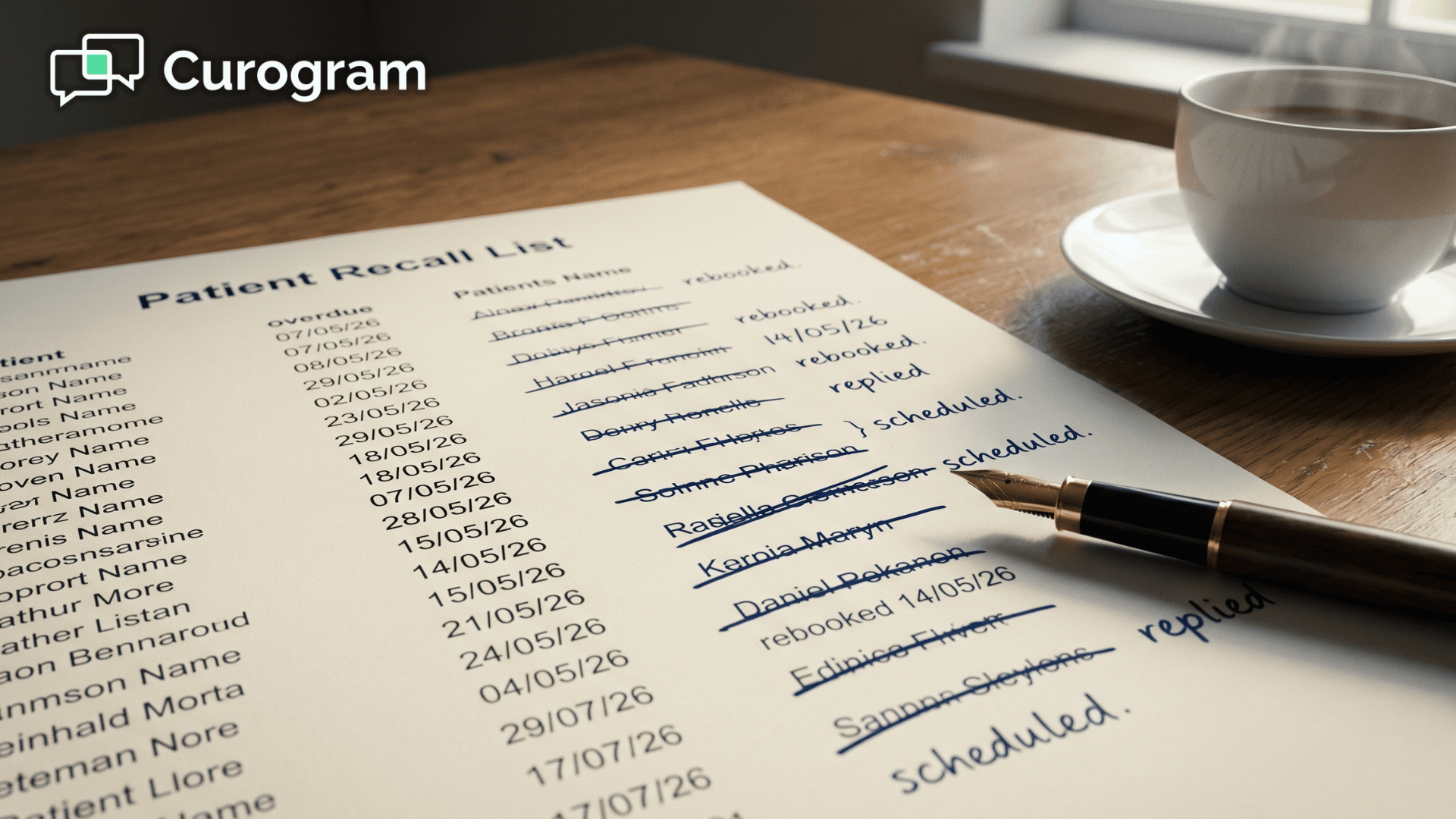
Paper-based recall typically returns 5% to 10% of lapsed patients. SMS recall lifts that figure by three to seven times. The change is not minor; it is a different order of impact.

For a practice with 10,000 lapsed patients, the math is simple. A 35% return rate means 3,500 visits that would not have happened. Many are screening or surveillance studies, which means earlier catches and better care.

The Patient Side of That Number

Behind 1,240 names are 1,240 stories. A patient who put off a scan because life got busy. A retiree who lost the reminder card. A working parent who never got to the voicemail.

Each text closed a gap that paper could not. That is the human core of the metric, not just a chart line.

The Shift: Staff Time Goes Back to Patients

When recall is automated, staff stop working as a callback team. They stop dialing, leaving voicemails, and updating spreadsheets.

Curogram client data from clinical settings indicates that recall workloads can drop by up to 80%.

That time then flows back into patient care. Front-desk staff greet people more warmly. Clinical coordinators focus on prep and education. The whole tone of the visit improves.

The Outcome: A Better End-to-End Experience

Patients feel the difference even before they walk in. Mass messaging keeps them informed, on time, and respected. That builds trust, and trust shows up in surveys and reviews.

It also shows up in retention. Patients who feel cared for between visits come back when new care is needed. The clinic becomes a long-term partner, not just a place for a single scan.

Visual comparison of data included vs. excluded in secure patient recall texts

ConclusionTransform Your Mass Messaging Workflow

The patient recall disconnect is a problem with a clear fix. Imaging centers no longer need to choose between strong clinical work and weak patient outreach. SMS-based recall closes that gap with very little extra effort.

The shift is not just about hitting more patients. It is about meeting them where they are.

Curogram links the strength of StreamlineMD to the daily life of a patient with a phone in their pocket.

Lists from the EHR turn into reminders that arrive in seconds. Replies turn into booked scans without anyone playing phone tag.

That bridge is the heart of modern imaging care. It cuts noise, lowers stress, and brings patients back to the care plan their doctor set up.

From the outside, a clinic looks like one team. Patients do not split your EHR from your communication tools in their head. They feel the visit, the wait, the texts, and the follow-up as one experience.

When recall texts are clear and respectful, the whole experience lifts. When they are missing, the experience drops, no matter how good the scans are.

Trust is built more in tiny moments than in big ones. A clear recall text. A reply that takes three seconds. A staff that does not need to chase you. These small wins add up.

This is also where mass messaging helps practices stand out. SMS mass messaging patient satisfaction tends to rise once patients feel both seen and not bothered. That balance is easier to hit with text than with phone calls.

If you got a recall text from your imaging center, you have a few simple options. Reply YES to schedule. Reply NO or STOP if you would rather not. Call your center if you want to talk it through.

Have questions about a specific message? Call the number on file or text YES to confirm. The team is there to help, and your reply is free.

If your reminder is overdue, today is a good day to act. Reply with your preferred date and time, or call your imaging center directly.

Schedule a Demo and explore how mass messaging can fit into your daily workflow.


Frequently Asked Questions

How should I reply to the text?

Reply YES if you want to schedule the imaging study listed in the message. The center will then send appointment options or call to confirm a specific time. Reply NO or STOP if you do not want to schedule, and you will be removed from future recall texts. There is no need to call unless you have a deeper question.

Why is my imaging center texting instead of calling?

Texting is faster, easier, and matches how most patients now prefer to be reached. Open rates for SMS sit near 98%, while voicemails often go unheard for days. A short text saves your time and the staff's time. You can also reply on your own schedule, even outside office hours.

If you are still unsure about safety, call your center to verify any message. That is always a good rule of thumb.

How does the system stay HIPAA-compliant?

Recall texts only contain a small set of details, like your name and the type of scan needed. Sensitive items like diagnosis, insurance number, and account info are never sent over SMS. Curogram is SOC 2 Type II certified, which means an outside audit confirms its safety controls. Your full medical record stays inside the secure system.

Why does the text look so short and plain?

Short, plain texts are not a sign of a low-effort tool. They are designed that way to protect your privacy and to be easy to read on any phone. Long messages can get cut off or feel pushy. A clean, short text respects your time and your data.

How do these texts work for older patients?

Texts arrive on any phone that handles SMS, including basic flip phones. There is no app to install, no portal to log into, and no password to remember. That makes mass messaging for elderly patients simple and stress-free. A family member can also help with replies if needed.