

Mass Text Notifications for Osmind Schedule Changes | End Phone Trees
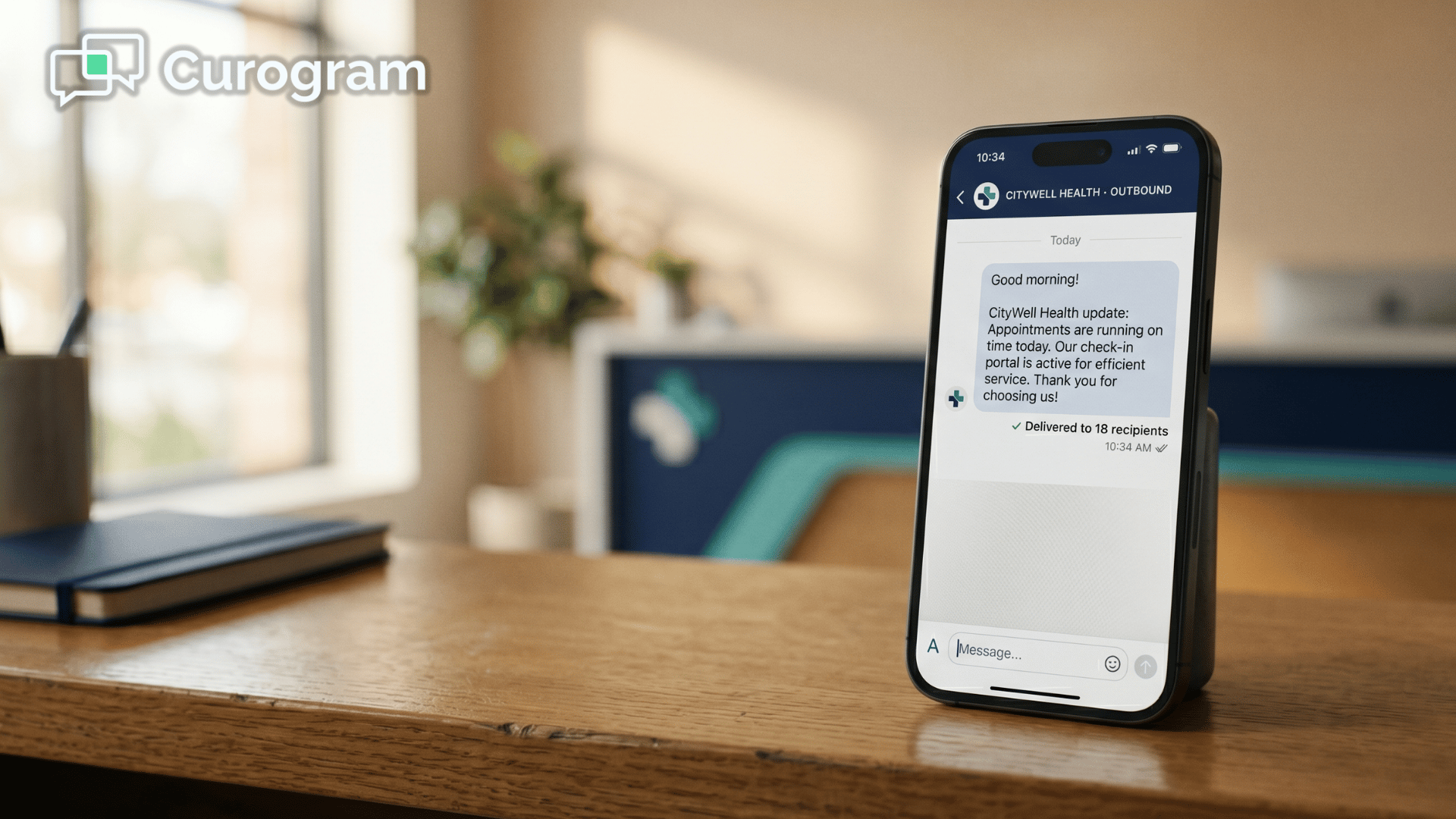
💡 Mass text notifications for Osmind practice schedule changes replace the slow phone tree — the hours of one-by-one calls when a provider is out,...

7 min read
Aubreigh Lee Daculug
:
July 3, 2026
A patient walks out of your clinic after finishing six ketamine infusions. Their depression has lifted. For the first time in years, they feel hopeful.
Then nothing.
No check-in. No reminder. No word about what comes next.
Three months later, the fog rolls back in. They don't know maintenance infusions exist, so they assume the treatment simply wore off. They start searching for other clinics.
You didn't lose that patient because your care failed. You lost them because the conversation stopped.
This happens far more than most practices realize. In interventional psychiatry, treatment isn't one event. It's a journey with stages.
Ketamine patients need maintenance. TMS patients benefit from booster sessions. Someone who tried one option might be a strong fit for another. The clinical work is solid, but the follow-through is where people slip away.
Here's the hard part. Your EMR tracks the journey beautifully, but it doesn't always carry the conversation forward.
Osmind charts every session, outcome, and safety note. Yet its app-based communication reaches only the patients who still open the app. The rest go quiet, and so do you.
That gap has a real cost. It's the difference between a patient who returns for maintenance and one who quietly disappears, even though they were getting better.
This is where patient engagement broadcast messaging for Osmind ketamine and TMS protocol adherence changes the math. Instead of hoping patients remember to return, you reach out first, on the channel they actually use: text.
In this guide, we'll break down why patients drift, what that silence really costs your practice, and how proactive broadcasts keep your panel connected from session one through long-term care.
The fix is simpler than you'd think, and it starts with a single, well-timed message sent to the right group of patients.
Osmind is excellent at managing active treatment. It charts each session, tracks outcomes, and monitors safety. But once a patient finishes their initial series, the proactive outreach often stops.
There's no built-in way to reach everyone who completed ketamine six weeks ago and should be thinking about maintenance. There's no simple broadcast to tell past patients you now offer Spravato. The clinical record stays open while the relationship goes quiet.
Think about a patient who finishes six ketamine infusions over three weeks. Their depression lifts. They leave feeling hopeful and head back to their life.
Then silence. Three months later, symptoms creep back. This patient never learned that maintenance infusions are recommended. No message ever reached them.
So they draw the wrong conclusion. They assume the treatment "wore off" and start looking elsewhere, at other clinics and other options. You lose a patient who was actually responding well, all because the bridge between active care and maintenance care never got built.
And this isn't a rare story.
30–40% |
| Of interventional psychiatry patients who respond well to initial treatment never return for maintenance. |
This means the treatment didn't fail. The follow-up did. For your practice, that's a third or more of your best responders quietly walking away over silence, not results.
Now put real numbers on it. A returning maintenance patient typically comes back for 4–8 infusions a year, at roughly $400–$600 each.
$2,400–$4,800 |
| The maintenance revenue a single returning patient is worth to your practice every year. |
This means each patient who drifts off isn't a small loss. It's thousands of dollars in care that never gets delivered, on top of a recovery that stalls for the patient. Multiply that by every responder who never hears from you, and the gap adds up fast.
Now flip the situation. Say your practice adds Spravato, a real game-changer for patients who didn't fully respond to ketamine. You have 80 former ketamine patients who might benefit.
But how do you actually tell them? Look at the usual options and where each one breaks down:
So the new treatment sits underused while the exact patients who need it never learn it exists. Strong clinical care, stalled by a communication gap.

Curogram acts as an engagement bridge that keeps patients connected throughout their treatment journey, not just during active sessions. Proactive broadcast messages reach people at the moments that matter most.
That includes when maintenance is due, when a new treatment becomes available, when insurance coverage shifts, or when a waitlist slot opens. The conversation continues instead of going dark.
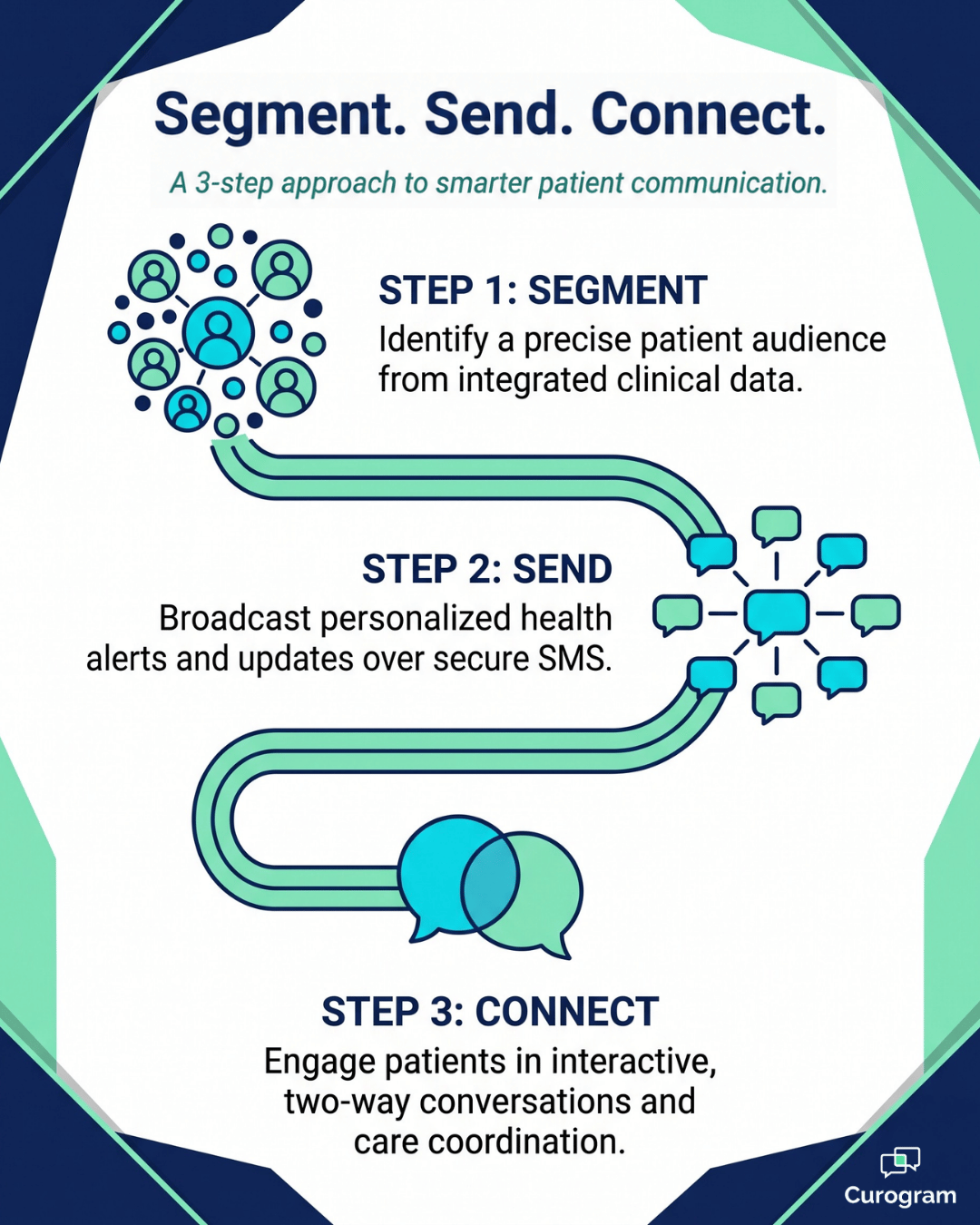
The core feature is segmented patient broadcasts. You target a specific group with a relevant message instead of blasting everyone the same note.
A few common segments:
You define the segment, and the message lands with exactly the right people. Nobody gets a note that doesn't apply to them, which is what keeps these broadcasts feeling personal instead of spammy.
This pairs with the clinical data you already keep in Osmind. Your team sets the audience criteria, and the broadcast reaches exactly those patients.
The message goes out by SMS, which skips the app barrier entirely. Patients get a personal-feeling text from your practice number, not a generic marketing email they'll ignore. Solid treatment protocol communication for interventional psychiatry over SMS is what makes the difference here.

This specialty runs on continuity. One patient moves from an initial series, to maintenance reminders, to a new modality, to booster availability over many months.
Broadcast messaging supports that whole lifecycle. For someone managing a treatment-resistant condition, a text that says "It's been 8 weeks since your last infusion. Want to schedule a maintenance session?" isn't a sales pitch. It's care, delivered on the channel they'll see.
That's the heart of strong between-session engagement at TMS and ketamine Osmind practices.
Proactive outreach pays off in a measurable way. Practices using broadcast communication report 30–50% higher maintenance return rates than practices that wait for patients to "call when ready."
Pair that with proven results: Curogram drove more than 8,159 patient interactions at a single multi-location practice. That's real patient retention through broadcast text messaging in psychiatry, turning a one-time treatment into an ongoing care relationship.
The change is bigger than a metric. You move from "patients fall off after their first round" to a connected, engaged panel.
Maintenance becomes expected, not forgotten. New treatments get announced, not discovered months later at a competitor. Your practice becomes the steady partner patients return to, instead of a one-time stop.
The upside here is just as concrete as the loss. For your team, reaching responders before they drift isn't a nice-to-have. It's the difference between a panel that slowly empties and one that keeps filling itself.
Picture the Spravato launch again, but this time you're ready.
You send a Spravato availability notification to ketamine clinic patients, reaching 80 people who already trust you:
"We now offer Spravato (esketamine nasal spray), a new option for patients who benefited from ketamine. Reply LEARN for more information, or call us to talk it through."
Within 24 hours, 35 patients reply. Twelve book consultations that same week. Your new modality fills to capacity within the first month. Not from advertising, but because you sent the right new treatment announcements to your Osmind patient panel at the right time, on the right channel.
Treatment in interventional psychiatry isn't a single appointment. It's a path that runs from the first session through maintenance, boosters, and new options that arrive over time.
Broadcast messaging keeps patients on that path. It carries the conversation forward at every stage, so people don't drift away over a communication gap that had nothing to do with whether their treatment worked.
Think of it this way. Osmind records the clinical journey, and Curogram helps make sure your patients keep walking it.
One captures their progress. The other makes sure they know the next step exists, and that your practice is ready to provide it.
So the question isn't whether your care is good. It clearly is. The real question is whether your best patients hear from you between visits, or hear only silence.
And silence is expensive. It costs you maintenance revenue, it costs patients momentum in their recovery, and it hands eligible patients to the competitor who reached out first.
The good news is you can close that gap this month. Stop losing patients to silence and keep your panel connected, informed, and moving forward through proactive broadcast communication that meets them where they already are: their text messages.
Here's the best part. Most practices map out their very first campaign, whether that's maintenance reminders or a new treatment announcement, during the demo itself. You'll walk away knowing exactly which patients to reach and what to say to them.
Schedule a Demo to see how segmented broadcasts work with your real patient population. In about half an hour, you'll know how many maintenance patients you could win back, and how fast a new treatment could fill your schedule.
Telling your existing patients about new treatments at your practice is care coordination, not cold marketing. These are people who already have a relationship with you and may benefit clinically from knowing their options. The broadcast shares no PHI, so it stays HIPAA-compliant, and patients can opt out anytime. In our experience, most patients are glad to hear about options that fit their care.
Segmentation does the heavy lifting. Targeting makes sure patients only get messages that actually apply to them, so maintenance reminders go to patients who finished treatment, new offerings go to clinically appropriate candidates, and operational updates go only to those affected. Most practices send just 1–2 broadcasts per month to any given segment. The platform also tracks engagement, so you can see what resonates and adjust how often you reach out.
Yes. Unlike one-way notification systems, Curogram broadcasts come from your practice's two-way texting number. When a patient replies, their message lands in your Curogram inbox as a normal two-way conversation, where staff can answer questions, share details, or book the appointment right in that same thread. The broadcast opens the door, and two-way texting carries the conversation the rest of the way.
Yes, and it's straightforward. Patients consent to be texted when they share their mobile number and opt in at intake, and every broadcast includes an easy way to opt out. Curogram tracks those opt-ins and opt-outs for you, so your team stays compliant without extra paperwork. You're only reaching people who already agreed to hear from you, which is part of why these messages land so well.
Osmind's communication lives inside its app, so it reaches only the patients who actively open it. Curogram sends to your whole panel by SMS, the channel people check dozens of times a day. Osmind is built to track the clinical journey, while Curogram is built to keep patients moving along it. The two work together, with your Osmind data defining who each broadcast should reach.
💡 Mass text notifications for Osmind practice schedule changes replace the slow phone tree — the hours of one-by-one calls when a provider is out,...

💡 Osmind's in-app notifications only reach the 20–40% of patients who actively open the app. That means most of your panel never sees your urgent...
💡 Interventional psychiatry patients often miss appointments because app-based reminders require effort their condition may limit. Depression,...