8 min read

Automated Appointment Reminders for Osmind | Keep Infusion Chairs Full

Automated Appointment Reminders for Osmind | Keep Infusion Chairs Full
💡 Curogram delivers automated appointment reminders for Osmind ketamine TMS practices through SMS — not app push notifications.   

Patients confirm, cancel, or reschedule by texting back, so reminders still land even when the Osmind app stays unopened.          

Practices using Curogram see a 75%+ confirmation rate and 52% fewer no-shows (11.03% vs. 23% industry average). For a 4-chair infusion suite at $400–$600 per session, that recovers $12,000–$24,000 in monthly revenue.


The platform is HIPAA-compliant, SOC 2 certified, and lets staff customize reminder timing and content per treatment type — ketamine, TMS, or Spravato.


Your 4th infusion of the day is scheduled for 2 PM. The chair is prepped. The medication is drawn. Your nurse is ready.

Then nobody walks through the door.

You check the system. The patient never canceled. They never called. The reminder was sent — through the Osmind app — but the notification quietly disappeared into a screen full of unread alerts.

That patient is now three days behind on a six-session ketamine series, and your clinical team is left guessing whether the gap will affect their response.

This is the version of the no-show that hurts most. Not the patient who calls to cancel. Not the one who reschedules. The silent one — the patient who simply does not show because the reminder never broke through.

App-based reminders look good on paper. The patient downloads the app, enables push notifications, keeps their phone off Do Not Disturb, and checks in regularly. That chain of assumptions works for some patients.

It breaks down for the ones who need reminders most — patients managing treatment-resistant depression, PTSD, or executive dysfunction.

For interventional psychiatry, this is more than a scheduling annoyance.

A missed ketamine session may close a critical neuroplasticity window. A skipped TMS appointment may dilute a 36-session protocol. A no-show on a Spravato observation day creates a REMS documentation problem you did not have yesterday.

This guide walks through how automated appointment reminders for Osmind ketamine TMS practices can close that gap.

You will see how SMS-first confirmation works, what the numbers look like in revenue, and how Curogram fits alongside Osmind without disrupting your clinical workflow.

Why App-Based Reminders Keep Failing the Patients Who Need Them Most

Osmind includes appointment reminders through its patient app. For patients who actively use the app, these reminders work. The problem is what app notifications require to land — and how often each of those requirements quietly fails.

A push notification has to clear four hurdles before a patient sees it:

  • The patient must have downloaded the app
  • They must have notifications enabled
  • Their phone settings cannot be suppressing alerts
  • They must check the app when the notification arrives

Each step is a potential failure point. In a general practice, one missed reminder means a rescheduled visit. In an interventional psychiatry EHR workflow, a missed reminder can mean a missed session in a time-sensitive protocol.

A Scenario That Probably Sounds Familiar

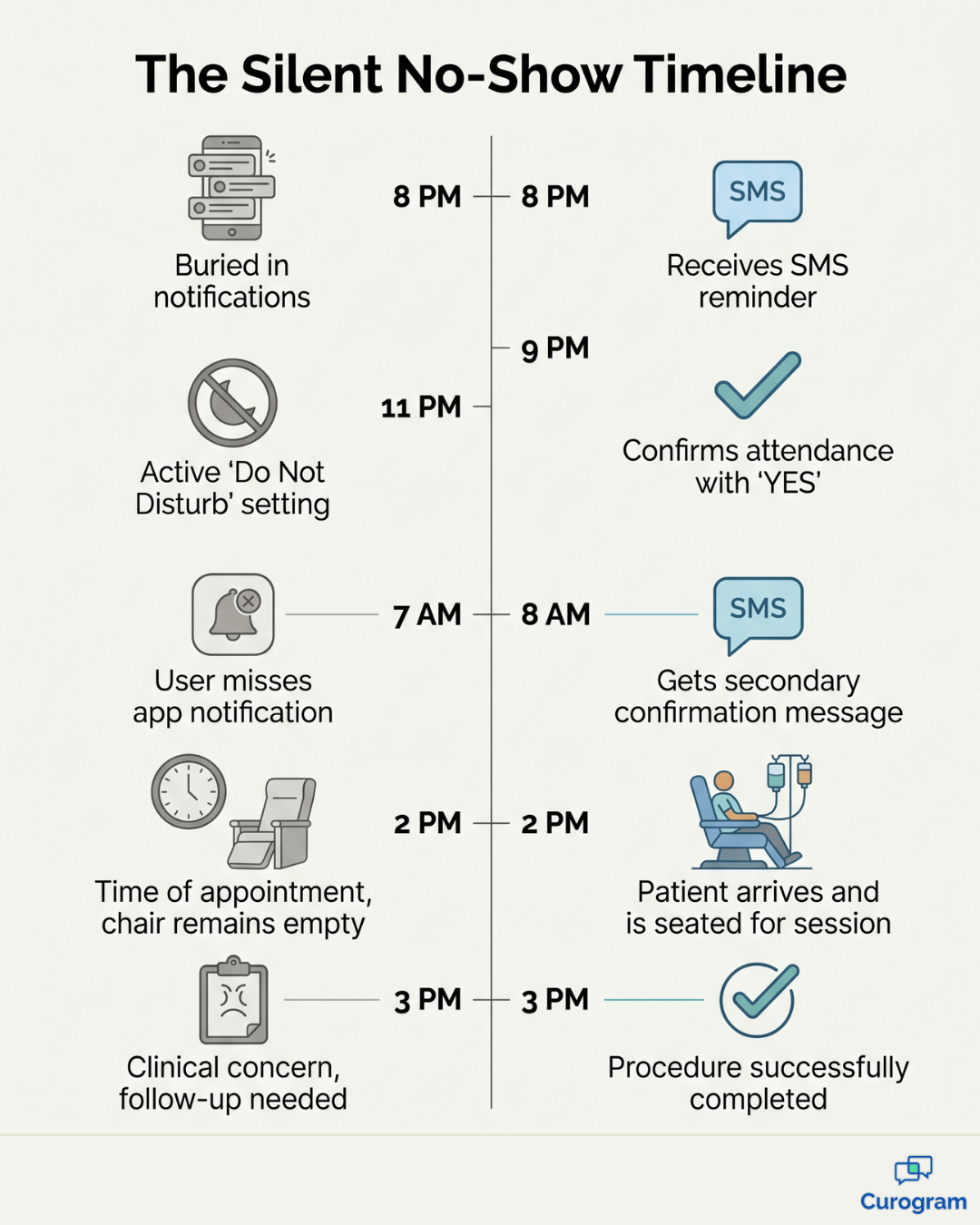
A patient is on day 10 of a six-session ketamine series. Their 4th infusion is set for tomorrow at 2 PM. The Osmind app sends a notification. Their phone is on Do Not Disturb.

The badge appears among 47 other unread alerts. The patient — already managing anhedonia and cognitive fog — does not open the app. The next afternoon, an infusion chair sits empty.

Nobody called to cancel. Nobody answered the phone. The protocol now has a gap, and your clinical team has to decide whether the spacing will affect outcomes.

The Real Cost of Silent No-Shows

Psychiatry no-shows average 23% industry-wide. For a 4-chair infusion suite running 6–8 sessions per day at $400–$600 each, the math is direct.

At the industry-average 23% no-show rate, you lose roughly $600–$1,200 in daily revenue — which adds up to $12,000–$24,000 every month. Compare that to Atlas Medical Center's 4.91% no-show rate, where the daily loss drops to $130–$260 and the monthly figure falls to $2,600–$5,200.

That difference — roughly $10,000–$19,000 per month — is what good reminders are actually worth. For practices trying to reduce no-shows in a ketamine infusion clinic Osmind workflow, that recovered revenue is usually what makes the operational change worth the effort.

The clinical cost compounds beyond the dollars.

A TMS patient who misses three sessions across a 36-session protocol may lose efficacy.

A Spravato patient who no-shows on an observed administration day disrupts REMS documentation.

The cruelest part is the silence — nobody called, nobody answered, you just discover an empty chair.

What This Feels Like for the Practice Owner

You built your interventional practice around a belief that these treatments work — and they do, when patients complete protocols. Watching patients drop off because of communication failures you cannot control is demoralizing.

You chose Osmind specifically because it understood your clinical model. Yet the reminder system — the single feature most tied to whether patients show up — depends on an app that your most symptomatic patients are least likely to engage with reliably.

Silent no-show timeline comparing app-based reminders vs SMS reminders for ketamine TMS appointments

How SMS-First Confirmation Closes the Reminder Gap

Curogram functions as the SMS layer Osmind does not provide. Every treatment session gets a direct-to-phone confirmation sequence — no app required, no notification permission needed, no extra step from the patient.

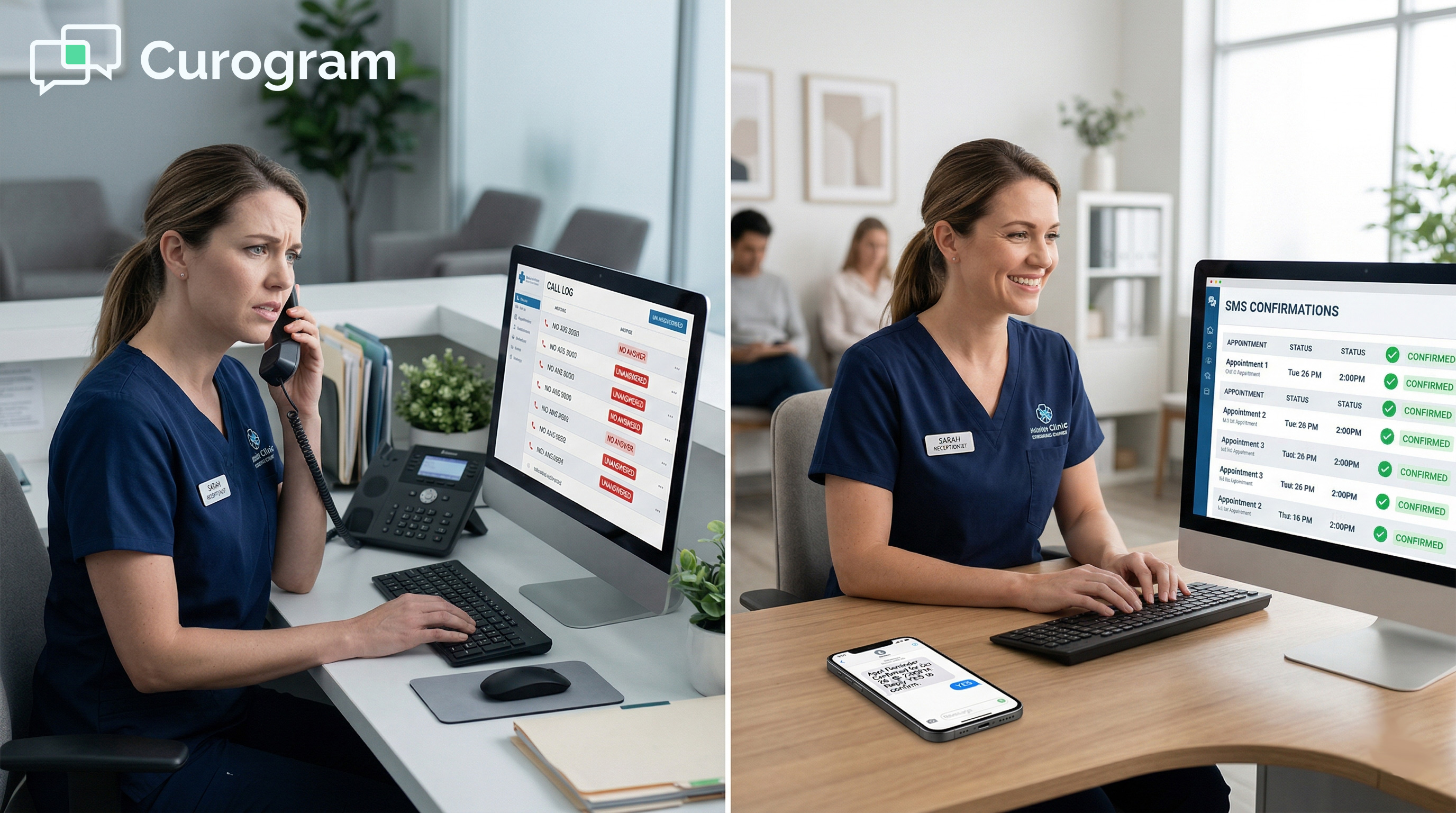
Reminders go out at clinician-configured intervals. Most practices use 48 hours, 24 hours, and 2 hours before the appointment. Patients confirm by replying YES, or reschedule by replying CALL.

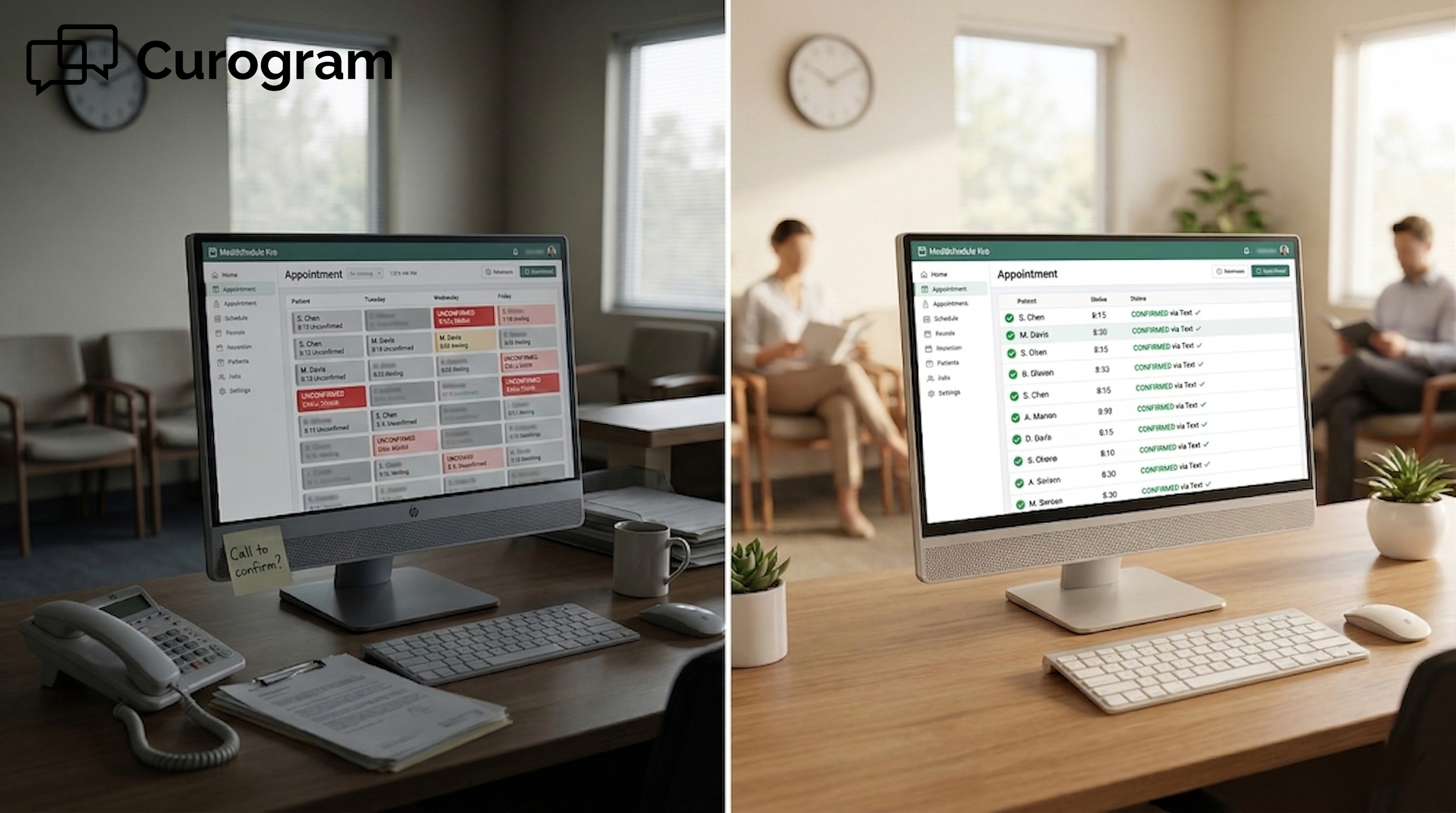
Staff watch a real-time dashboard showing which sessions are confirmed, which are pending, and which need follow-up. The Osmind SMS appointment confirmation system runs in the background while the clinical team focuses on patients.

What the Reminders Actually Send

Curogram's automated multi-touch SMS reminders carry more than a time and date.

You can configure reminders by appointment type, so each treatment modality gets the right context:

  • Ketamine infusion reminders can include fasting instructions and ride arrangement prompts
  • TMS appointment adherence Osmind text reminders can include session count — for example, "Session 22 of 36 tomorrow at 10 AM"
  • Spravato scheduling reminders Osmind HIPAA compliant content can include monitoring period expectations and what to bring

This matters because the reminder doubles as patient education.

A patient who reads "Session 22 of 36" is reminded of how far they have come, which itself supports adherence.

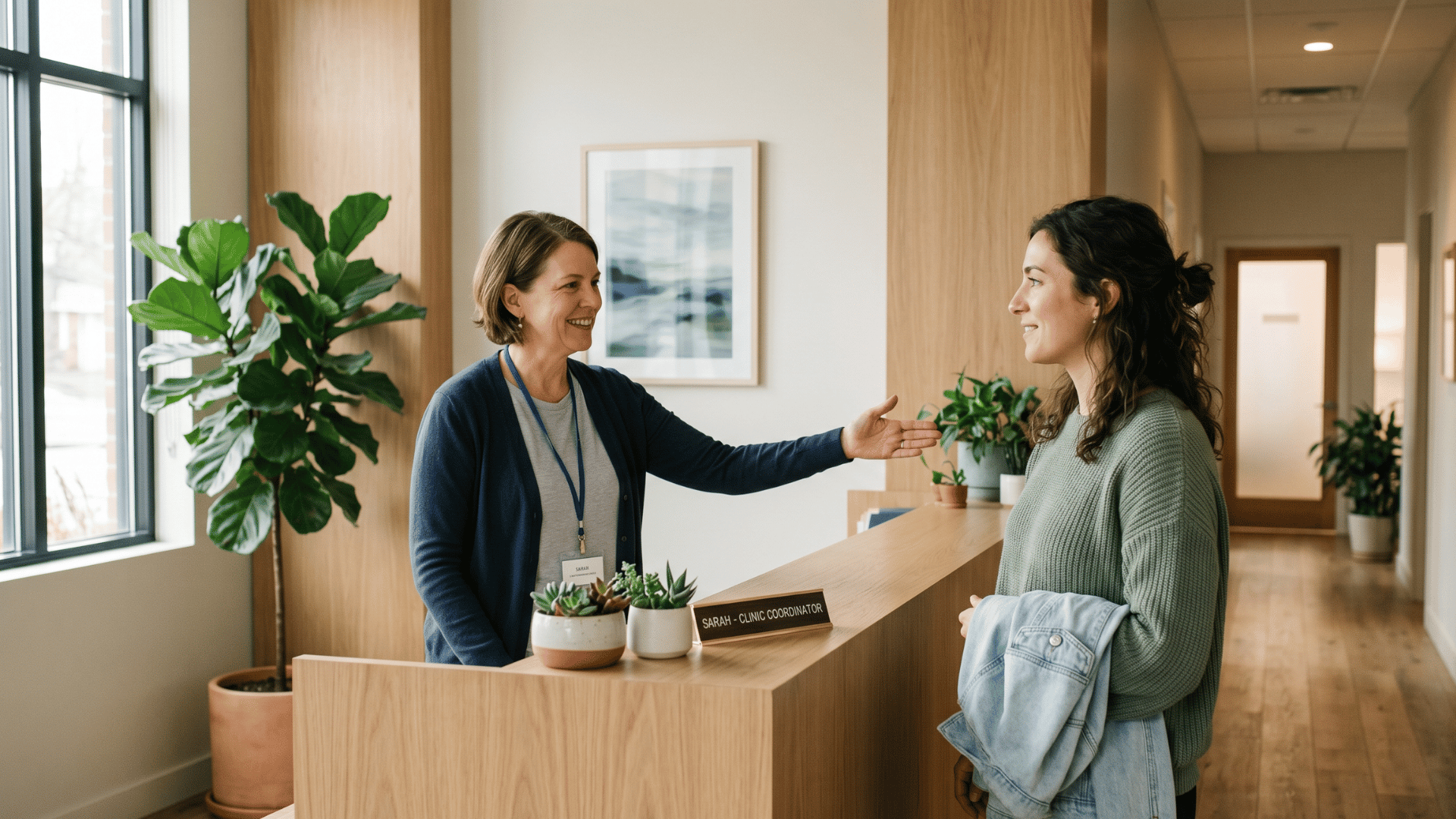
Clinic coordinator welcoming patient after confirmed automated appointment reminder in psychiatry practice

How It Works Alongside Osmind

Here is the honest part. Osmind does not currently offer a public API for third-party scheduling sync, so staff manage the reminder schedule through Curogram's dashboard while clinical scheduling stays in Osmind.

Yes, that means two systems. But the trade is favorable. Practices that previously spent 2–4 hours daily on manual confirmation calls shift that time into proactive schedule management — a much smaller and far less reactive workload.

The setup investment usually pays back within the first week of automated operation. After that, the system runs itself.

Built Around the Cadence of Interventional Treatments

Every interventional protocol has its own rhythm. A ketamine series runs six sessions over two to three weeks. TMS runs 36 sessions across six to nine weeks.

Spravato runs twice weekly during induction, then weekly during maintenance.

Curogram's reminder sequences can be configured per protocol.

A ketamine patient gets reminders that match their two-to-three-week cadence.

A TMS patient gets near-daily reminders during the intensive phase.

A Spravato patient gets a sequence built around twice-weekly observed administrations.

The reminder cadence matches the clinical cadence, which is how it should be.

What Changes When Every Session Gets a Text Confirmation

Curogram delivers a 75%+ average confirmation rate through automated SMS and a 52% reduction in no-show rates (11.03% vs. the 23% industry average).

Atlas Medical Center pushed their no-show rate down to 4.91% — three times better than the industry standard.

Covina Arthritic Clinic confirms more than 1,100 appointments monthly through the same automated reminder system.

For an Osmind practice running 30–40 sessions per week, those numbers translate into something simple. Your next-day schedule is confirmed by the evening before — not discovered the morning of.

From Empty Chairs to Confirmed Schedules

The shift is operational. Unconfirmed slots trigger automatic follow-up texts. Cancellations are identified early enough to offer the slot to a waitlisted patient. The infusion suite runs at capacity because the reminder system handles the work silently.

This means the practice gains visibility it never had before:

  • Confirmation rates broken down by appointment type
  • Average response times from reminder sent to patient reply
  • No-show patterns by provider, day of week, and treatment modality

You start managing scheduling with numbers instead of intuition. Patterns that used to be invisible — like a higher no-show rate on Monday mornings, or stronger confirmation among TMS patients in week three — become actionable.

A Tuesday That Ends Differently

By the end of the day, your coordinator opens Curogram's dashboard. All eight of Wednesday's infusion patients have confirmed via text. One TMS patient rescheduled — the system flagged it earlier that afternoon, and the slot was filled from the waitlist within the hour.

The Spravato patient for Thursday confirmed and asked a quick question about monitoring time. Staff answered via text in 30 seconds. The schedule is locked. The coordinator goes home knowing tomorrow's revenue is secured.

No phone calls were made. No chairs will be empty. The reminder system did exactly what a reminder system is supposed to do.

Stop Losing Sessions to Notifications That Never Arrive

Osmind is built for your clinical workflow — scheduling, charting, treatment documentation, outcomes tracking. That is exactly what you want it to be. Curogram handles the other half of the equation: making sure the patient actually arrives for the session Osmind has scheduled.

That division is the point. You do not need a new EHR. You need an SMS layer that closes the reminder gap your current app-based system cannot cover.

The math supports the decision quickly. If you cut no-shows from 23% to 11%, a 4-chair infusion suite recovers $6,000–$12,000 per month — before counting the staff hours freed from manual confirmation calls. Most practices see payback within the first few weeks of automated operation.

The clinical impact matters just as much.

Every confirmed ketamine session protects a treatment series. Every TMS appointment held supports the cumulative effect of a 36-session protocol. Every Spravato administration kept on schedule supports REMS compliance and clean documentation.

You built an interventional practice because you believe these treatments work when patients complete them. Your reminder system should reflect that belief.

SMS reaches patients where they already are — no app to download, no permissions to enable, no extra step to remember.

Schedule a Demo to see how automated reminders interventional psychiatry EHR workflows actually look alongside Osmind. We will walk through your scheduling volume, show you the dashboard, and map exactly how SMS confirmation slots into your clinical operations.


Frequently Asked Questions

Are automated SMS reminders HIPAA-compliant for sending appointment details to psychiatric patients?

Yes. Curogram is fully HIPAA-compliant and SOC 2 certified. Reminder messages are encrypted, logged, and sent through a BAA-covered platform. Message content can be configured to your practice's comfort level — from simple time-and-date confirmations to detailed pre-treatment instructions. All patient communication is auditable and compliant with ePHI handling requirements for behavioral health.

Can I customize reminder timing and content for different treatment types (ketamine vs. TMS vs. Spravato)?

Yes. Curogram's reminder system is fully customizable by appointment type. Ketamine infusion reminders can include fasting instructions and ride arrangement prompts. TMS reminders can include session count context. Spravato reminders can include monitoring period expectations. Timing is also configurable — set multi-touch sequences at intervals that match each protocol's cadence (for example, 48h + 24h + 2h for infusions, or daily reminders for intensive TMS schedules).

How does Curogram's reminder system work alongside Osmind if there's no API connection?

Curogram operates as a parallel communication platform alongside Osmind. Staff manage the reminder schedule through Curogram's dashboard while clinical scheduling stays in Osmind. Because Osmind does not currently offer a public API for third-party scheduling sync, staff maintain both systems — but the operational payoff is significant. Automated confirmation replaces 2–4 hours of daily phone calls, real-time status dashboards replace uncertainty, and the practice gains data it never had before (confirmation rates, response times, no-show patterns). The setup investment usually pays back within the first week of automated operation.

What happens when a patient replies to a reminder text with a question instead of a simple confirmation?

Curogram routes the reply into a two-way messaging inbox that your staff can monitor in real time. If a patient asks about timing, fasting rules, or what to bring, staff can respond via secure text from the same dashboard — no separate phone call required. Most practices report that 80–90% of patient questions get resolved within a few text exchanges. This keeps the confirmation workflow smooth and prevents minor questions from snowballing into rescheduled appointments.

Will automated SMS reminders work for patients who do not own a smartphone or who prefer not to use apps?

Yes — and this is one of the strongest reasons to add an SMS layer. Standard text messaging works on any mobile phone, including basic flip phones, and does not require app downloads, account logins, or notification permissions. For older patients, patients with limited tech comfort, or patients managing cognitive symptoms, SMS is often the most reliable way to deliver a reminder. Confirmation rates tend to be highest in exactly the patient groups that struggle most with app-based notifications.