
7 min read

Cerner Texting: Two-Way SMS for Oracle Health Ambulatory Practices

Cerner Texting: Two-Way SMS for Oracle Health Ambulatory Practices
💡Oracle Health Cerner two-way patient texting integration runs as a HIPAA-compliant SMS layer alongside the EHR, so patients reply from their phone with no portal login. Curogram supplies that layer for ambulatory practices on Oracle Health, formerly Cerner, while the EHR stays the system of record.

Staff work from one shared inbox tied to the clinic's own number. Reminder sequences accept replies, confirmations and cancellations surface for the scheduler, and every thread is logged for audit. Deployment happens clinic-side rather than through an EHR build request, and Curogram is SOC 2 Type II certified.

Curogram practices average above 75% appointment confirmation.


ASTP/ONC reported that 65% of US adults accessed a patient portal or online medical record at least once in 2024, up from 57% in 2022. Read the measure carefully. Once a year is the bar it clears.

Fine result for records access. Thin channel for a clinic needing an answer Thursday about a Friday appointment.

Oracle Health has been building toward the gap. Patient Administration covers intake, registration, scheduling, and appointment confirmation, and Unified Consumer Communications does conversational SMS with keyword routing to live staff. Those are real products from a serious platform company.

The question ambulatory practices bring us is narrower. What is turned on in our build, who approves a change, and how many months does the request sit? A 12-provider clinic inside a health system rarely controls the answer.

For most ambulatory clinics on Oracle Health, the fastest route to two-way patient texting is a layer that deploys clinic-side and leaves the EHR build alone. The rest of this article works through it. We'll cover what that layer does, how it connects, and where it stops.

Why the Portal Doesn't Cover the Front Desk

Portal access and portal cadence are two different measurements. Most vendor decks quote the first one.

What Oracle Health Ships Today

Credit where it belongs. Oracle Health Patient Portal, the cloud service that replaces the legacy HealtheLife branding on Cerner Millennium builds, handles records, results, messaging, and scheduling.

Oracle Health Patient Administration is the front-office companion. Unified Consumer Communications adds conversational texting with keyword automation.

Whether your practice has any of it is a separate question from whether Oracle sells it. Licensing, release timing, and deployment order all sit upstream of the clinic. Ask your Oracle rep what is contracted before assuming the feature is available to you.

Access Is Not Cadence

ASTP/ONC put portal access offered at 77% of adults in 2024, with 65% logging in at least once that year. The 2022 brief is sharper on frequency: 42% of app users reached six or more visits, against 28% of web-only users.

A clinic touches an active patient more often than that. Reminder, confirmation, form, balance, result question, recall. Six to ten contacts a year for one routine patient is normal, and the portal is carrying a fraction of them. See the ASTP/ONC data brief for the full numbers.

The Calls That Stay at the Desk

Watch a Monday morning at a multi-provider ambulatory clinic. A physician calls out sick, and someone works down a list of 14 patients by phone. Four voicemails, two wrong numbers, one callback at 4:40 pm nobody catches.

A second queue runs the whole time: am I supposed to fast, did my form go through, is my referral in. Each of those is 90 seconds of phone time, and the receptionist fielding them is checking in the 9:15 at the same moment.

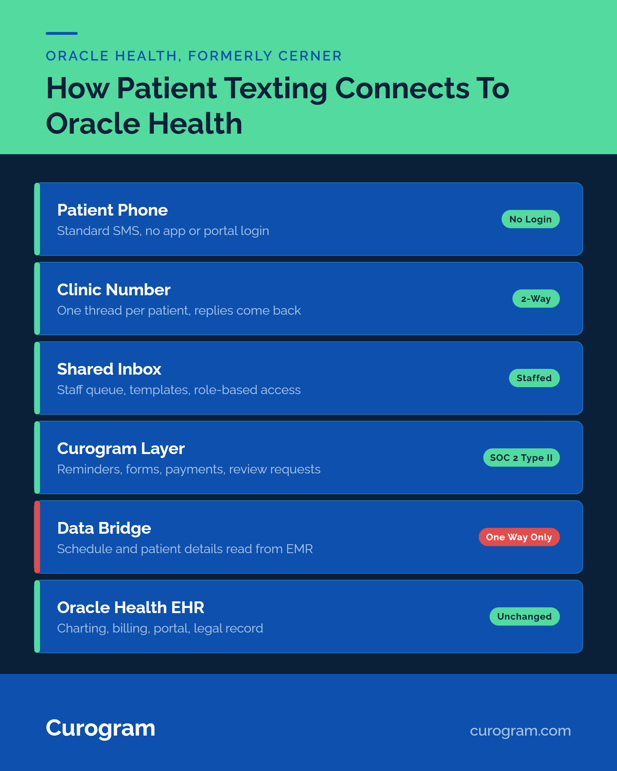
Infographic how Curogram and Oracle Health integration works

What Two-Way Texting Adds Alongside Oracle Health

Start from the phone number, because that is what changes for the patient.

One Clinic Number, Threaded

Messages go out from the practice number patients already have, and replies come back to the same thread. No app download, no login, no password reset call. Their phone shows a conversation with your clinic, not a no-reply alert.

Reminders That Accept an Answer

A notification tells a patient something. A two-way sequence asks them a question and does something with the reply.

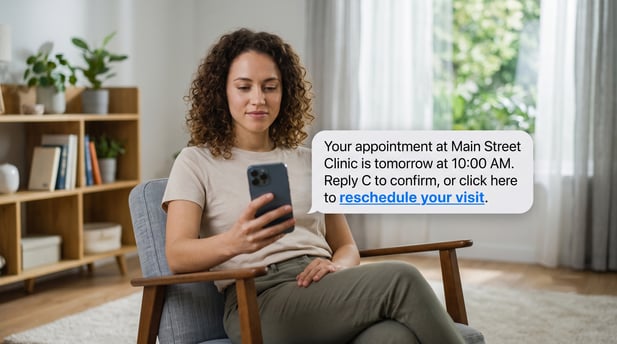
Patients answer C to confirm, R to request a reschedule, or X to cancel, and each reply routes to a schedule action for the front desk.

Cancellations are the underrated half. A cancellation that arrives 40 hours out is a slot you can refill. The same cancellation discovered at check-in is lost revenue plus an awkward call to whoever was next on the waitlist.

Timing carries more weight than message count. The interval that works for a 10-minute follow-up differs from a procedure with prep instructions, and both are configurable per appointment type.

Curogram Highlight: The Staffed Shared Inbox

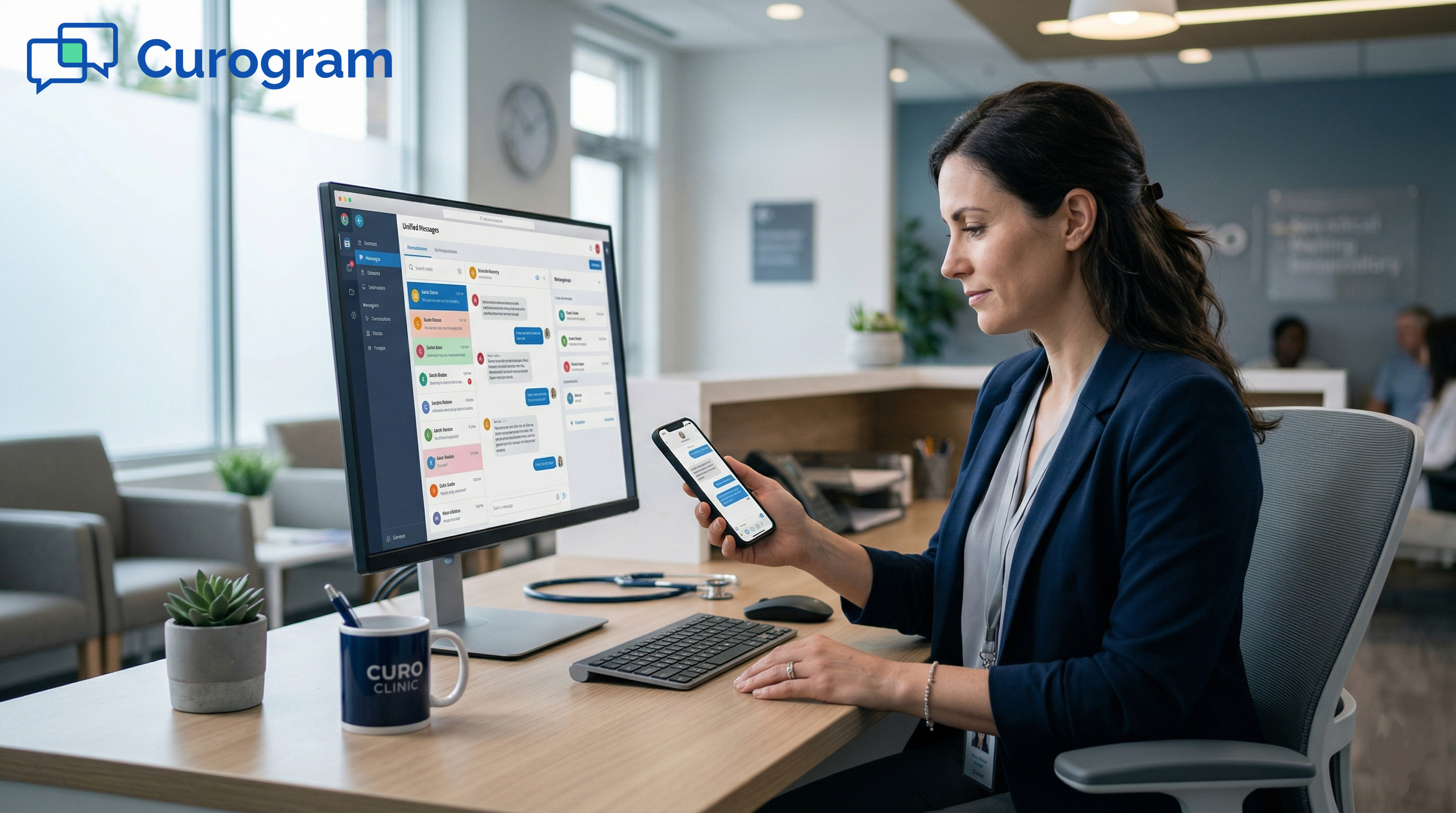
Shared Inbox is where the layer earns its keep. Every inbound message lands in one queue that your whole front-desk team watches, with assignment so two people do not answer the same patient.

Templates cover the calls that repeat: fasting instructions, form links, balance questions, directions to the second suite.

Role-based access controls who sees which conversations, and every message is retained with a timestamp and a user. Curogram works with Oracle Health rather than replacing any part of it. The EHR stays the record; the inbox is where the conversation happens.

Practices running several ambulatory sites share one inbox view across them, which matters when a patient texts the number on their card about an appointment booked at your other location. The staffing model behind this queue is covered in our front desk texting workflow for Oracle Health clinics.


How the Layer Connects to Oracle Health

Integration is the word that hides the most. The actual model, stated plainly:

A Parallel Layer, One-Way Data Flow

Curogram reads schedule and demographic data from the EMR and works from that. Data moves one direction, EMR to Curogram. We are describing a parallel communication layer, not a bidirectional write-back into the Oracle Health record.

That has a practical consequence worth stating up front. A patient who confirms by text shows as confirmed in Curogram, and your staff act on it there. If you want that status mirrored inside Oracle Health, ask about it in the demo rather than assuming it.

A Confirmation, Step by Step

Tuesday 9:00 am. The appointment list for Thursday loads into Curogram from the practice schedule.

Tuesday 10:00 am. The sequence sends: appointment day, time, provider, location, and the reply options. Patients get it on the phone in their hand.

Tuesday through Wednesday. Replies arrive. Confirmations mark the appointment. Two cancellations and one reschedule request land in the inbox as tasks rather than voicemails.

Wednesday 11:00 am. A scheduler works the two open Thursday slots against the waitlist by text and fills one within the hour. The reschedule becomes a two-message exchange instead of phone tag.

Thursday. Staff arrives to a schedule that reflects reality, and the small remainder who never replied are the only ones who get a call.

What IT and Compliance Will Ask

Three questions come up in almost every enterprise conversation. Does this touch the EHR build? Where does patient data live? Who can see it?

The answers are short. No build change is required, because the layer reads schedule data and runs its own messaging.

Data sits with the vendor under a BAA, on a platform that is HIPAA-compliant and SOC 2 Type II certified. Access is role-based, and every message is retained with a timestamp and a user.

Patients consent to text communication, and opt-out is honored going forward. Bring those answers to the first meeting rather than the third, because security teams move faster on a vendor review than on a change request.

Where This Stops

Curogram does not chart, bill, or hold the legal record. It does not replace the portal for records access, results release, or the clinical messaging your providers do inside Oracle Health.

Your health system stays in the conversation too. If reminders already go out from a central system, dedupe rules get set during configuration so patients receive one message rather than two.

The Rest of the Front-Desk Workload

Reminders are the first workflow practices move. They are rarely the last.

Forms and Payment

Digital intake forms go out by text link and come back completed before arrival, which removes the clipboard handoff from a crowded waiting room. Text-to-pay sends a balance and a payment link in the thread the patient already answers.

Recalls, Reviews, and Video Visits

Mass messaging covers closures, provider schedule changes, and seasonal campaigns without a call list.

Recall texts reach patients overdue for follow-up: one multi-location practice saw 35% of recall recipients schedule within a month, which brought back 1,240 patients from messages alone.

Post-visit review requests route satisfied patients to Google. Telemedicine visits launch from a text link rather than a portal login, for the same reason texting works everywhere else here. More in our Oracle Health telehealth guide.

What Changes at the Clinic

Based on our internal data across Curogram clients:

Measure

Result

Appointment confirmation rate

Above 75%

No-show rate vs industry average

53% lower

Atlas Medical Center no-shows

14.20% to 4.91% in 3 months

Covina Arthritic Clinic confirmations

Above 1,100 per month

Revenue lift from recovered appointments

10% to 20%

Reviews at one multi-location practice

1,064 five-star reviews in 3 months


Reading the Numbers Honestly

These come from Curogram clients across specialties and practice systems, not from an Oracle Health deployment specifically. We will not dress them up as Cerner-specific results we have not measured.

What they establish is the mechanism. Patients answer texts at rates that make a confirmation workflow viable, and schedule effects follow.

The reminder side is covered in depth in our guide to two-way appointment reminder texts for Oracle Health practices.

Patient at home getting a two-way text message

Getting the Conversation Off Hold

Ambulatory clinics inside enterprise health systems have gotten used to a particular kind of waiting. The fix is obvious, the ticket is filed, the quarter ends.

Patient communication does not have to sit in that queue. A texting layer deploys at the clinic, on the number patients already dial, and the EHR build stays as your health system governs it.

Oracle Health runs the enterprise record. Curogram runs the patient conversation. Both statements can be true in the same clinic on the same Thursday.

For a side-by-side on how we compare against other patient texting vendors, see our patient texting platform comparison. For the wider category, start with our guide to HIPAA-compliant patient texting.

Schedule a demo, and we will run a Thursday schedule through a confirmation sequence, live, with your questions in the room.


Frequently Asked Questions

How do Oracle Health (Cerner) ambulatory practices text patients today?

Oracle Health sells Unified Consumer Communications for conversational SMS, though availability depends on what your health system licenses and deploys. Many ambulatory clinics add a texting layer alongside the EHR instead of waiting.

How do we add two-way texting to an Oracle Health ambulatory practice?

Schedule and demographic data flows from the EMR into Curogram, and messaging runs clinic-side from your existing number. No EHR build change is required, though your compliance team should review the vendor.

How does texting Cerner patients stay HIPAA-compliant?

A BAA covers the platform, which is HIPAA-compliant and SOC 2 Type II certified. Patients consent to texting, access is role-based, and every message is retained with timestamp and user attribution.

Why keep the Oracle Health patient portal if we add a texting layer?

The portal holds records access, results release, and clinical messaging, and Curogram replaces none of it. Texting carries the scheduling and front-desk traffic that patients rarely log in to handle.

How does a clinic-side texting layer avoid duplicating reminders our health system already sends?

Dedupe rules get configured during setup so a patient receives one reminder rather than two. Map which sequences your central system already runs before go-live, and confirm the scoping with product.