
9 min read
Zero-Download Telemedicine for Oracle Health | Curogram
Aubreigh Lee Daculug
:
May 8, 2026
Patients click a single text link and join the visit instantly, while providers stay inside their EMR workflow.
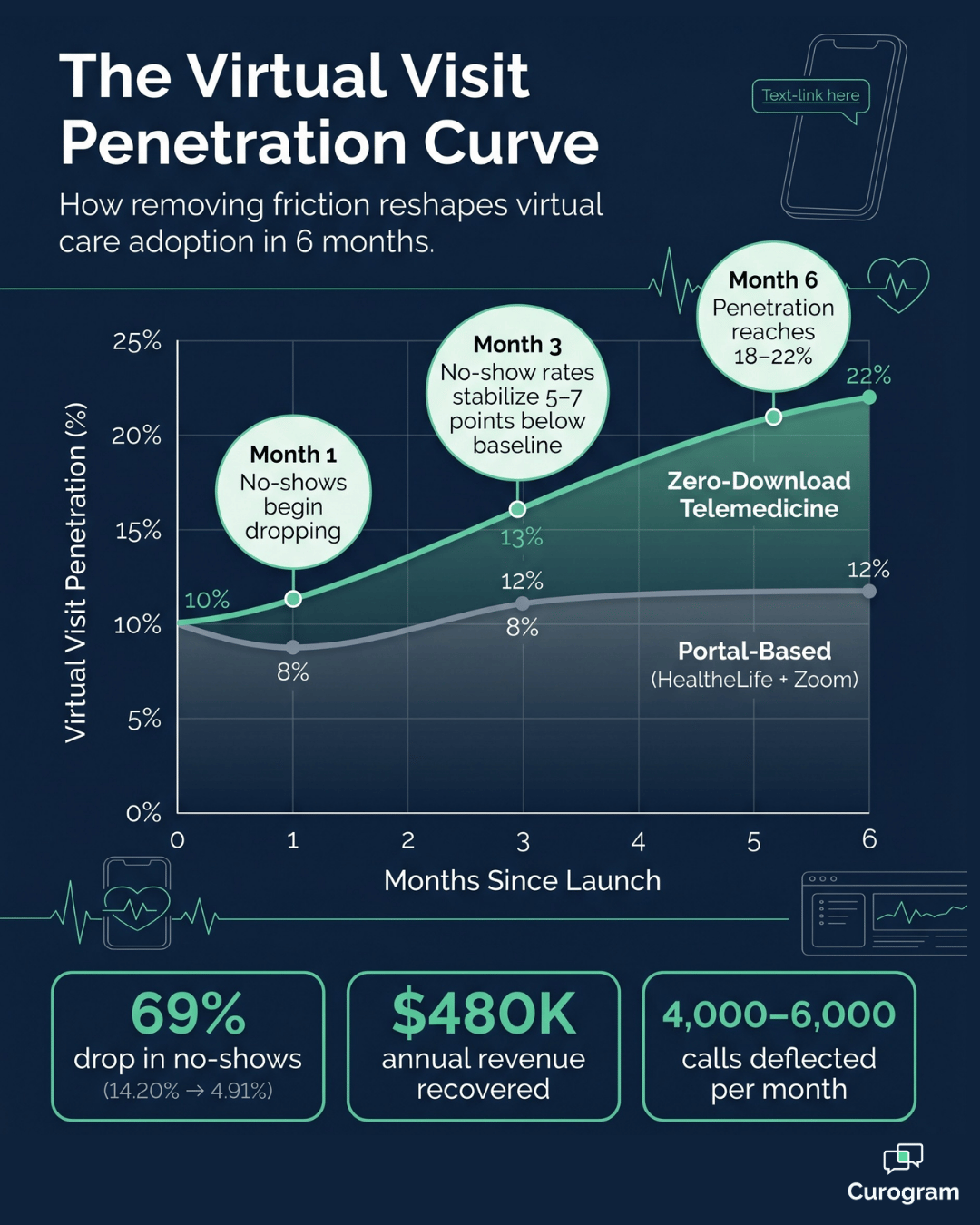
Health systems using this approach have cut virtual visit no-show rates from 14.20% to 4.91%, a 69% improvement. Virtual visit penetration also climbs from 8–12% of total volume to 18–22% within six months.
For Oracle Health environments, the gain comes from bridging read-only FHIR data with secure write-back, so appointment status, no-show events, and clinical notes flow back into the EMR without manual work.
Imagine this. A patient gets a virtual visit reminder. They tap the link, hit a portal login screen, forget their password, request a reset, wait for the email, try again, get a "session expired" error, then bounce to a Zoom download prompt.
Five minutes turn into twenty. The provider sits in an empty video room. The slot is gone.
This is the daily reality of telemedicine on Oracle Health's HealtheLife portal paired with Zoom. It sounds simple. It isn't.
The friction is not a small annoyance. It is a financial leak. Virtual visit no-show rates in Oracle Health environments often sit between 12% and 16%, almost double the 5–8% benchmark seen on frictionless platforms.
For a 500-provider system, that gap quietly burns $300K to $750K a year in wasted provider time, scheduling overhead, and lost revenue.
It also kills momentum.
When no-shows spike, providers stop trusting the virtual visit channel. Clinical leadership stops promoting it. Patients quietly drift to competitors who make joining a video visit feel like opening a text message.
The good news? The problem is fixable, and it is not a HealtheLife replacement project. Zero-download telemedicine for Oracle Health works alongside your existing EMR.
Patients click a single text link and join in under two minutes. Providers stay in their native workflow. Appointment data flows both ways.
In this guide, you will see exactly where the friction lives, why FHIR alone cannot fix it, and how a zero-download architecture lifts virtual visit penetration from a stalled 8–12% to a healthy 18–22%.
You will also see the dollar impact in clear, line-item terms.
Let's start with where the leak begins.
Where Oracle Health Telemedicine Actually Loses Patients
Most virtual visit problems get blamed on patients.
"They are not tech-savvy."
"They forgot their login."
"They did not check their email."
That framing is comforting, but it misses the real story.
The real story is that the architecture creates the abandonment. The patient is just the messenger.
How HealtheLife Turns a 2-Minute Task Into a 20-Minute Ordeal
HealtheLife asks a lot of a patient before they ever see a doctor's face.
Before joining a single video visit, they have to clear several gates:
- Create a portal account
- Remember (or reset) credentials
- Pass through portal authentication
- Navigate to the telemedicine section
- Authenticate again inside Zoom
For patients over 65, who make up 35–40% of many health systems' rosters, this gate is a wall. Studies show that 40–50% of invited patients never complete their initial portal login. They simply give up.
Mobile patients face an extra layer. They have to choose between a clunky browser experience and a native app download. Then come session timeouts, "forgot password" loops, and plugin prompts. The window from invitation to actual join stretches from 5 minutes to 15–20 minutes.
Patients who only carved out 30 minutes for a visit lose half of it before they even see their provider.
Now layer in Zoom. Patients authenticate inside HealtheLife, then authenticate again inside Zoom.
This double-gateway model reduces adoption by 25–35% compared to single-link approaches, reflecting broader telemedicine usability and access barriers.
If either layer fails, the appointment is lost and the call gets bounced to a scheduler for a manual reschedule.
What That Friction Costs You Every Month
Friction is not abstract. It shows up on your P&L.
| Impact Area | Typical Range | What It Means in Practice |
|---|---|---|
| Virtual visit no-show rate | 12–16% | Roughly double the frictionless benchmark |
| Cost per no-show | $75–$150 | Lost provider time + scheduling overhead |
| Annual friction cost (500-provider system) | $300K–$750K | Pure waste, not patient care |
| Virtual visit penetration | Stalls at 8–12% | Below the 18–22% industry benchmark |
| Support call spike post-launch | +15–25% | Patients calling to ask "how do I join?" |
Look at the support call line. In the weeks after a telemedicine launch, scheduling and contact center call volume jumps 15–25%, reflecting known operational strain from telehealth implementation challenges. Patients call to troubleshoot logins, reset passwords, or simply ask how to enter a virtual room.
That load pulls FTEs away from revenue-generating tasks like insurance verification and new patient intake.
It also poisons the program internally. Providers see no-shows climbing and start dropping virtual slots from their schedules. Clinical leadership stops investing. The whole telehealth strategy stalls, not because virtual care is bad, but because the front door is broken.
Why Oracle FHIR APIs Cannot Fix This on Their Own
A reasonable question at this point is, "Why not just build it on FHIR?" It is the right instinct. The answer is harder than most teams expect.
Oracle Health's FHIR API infrastructure is primarily read-only. You can pull appointment data, demographics, and clinical summaries out of the EMR. What you cannot easily do is push real-time data back in. Patient join status, no-show flags, and post-visit clinical notes have nowhere to go through the API.
Without a write-back path, you are stuck.
You either run secondary sync processes (batch jobs, HL7 interfaces, manual workarounds) or you fragment the patient record across systems.
Both options stretch implementation timelines from a clean 8–12 weeks to a painful 16–24 weeks.
The Hidden Compliance Cost of the Read-Only Constraint
The read-only constraint also creates compliance risk. Custom workflows, communication templates, and pre-visit forms end up living outside the EMR. That fragments your HIPAA audit trail and your consent documentation, which is exactly where you do not want gaps.
This is why "just use the API" advice misses the point. The architecture problem is not access to data. It is the missing return path.
How a Single Text Link Replaces the Whole Friction Layer
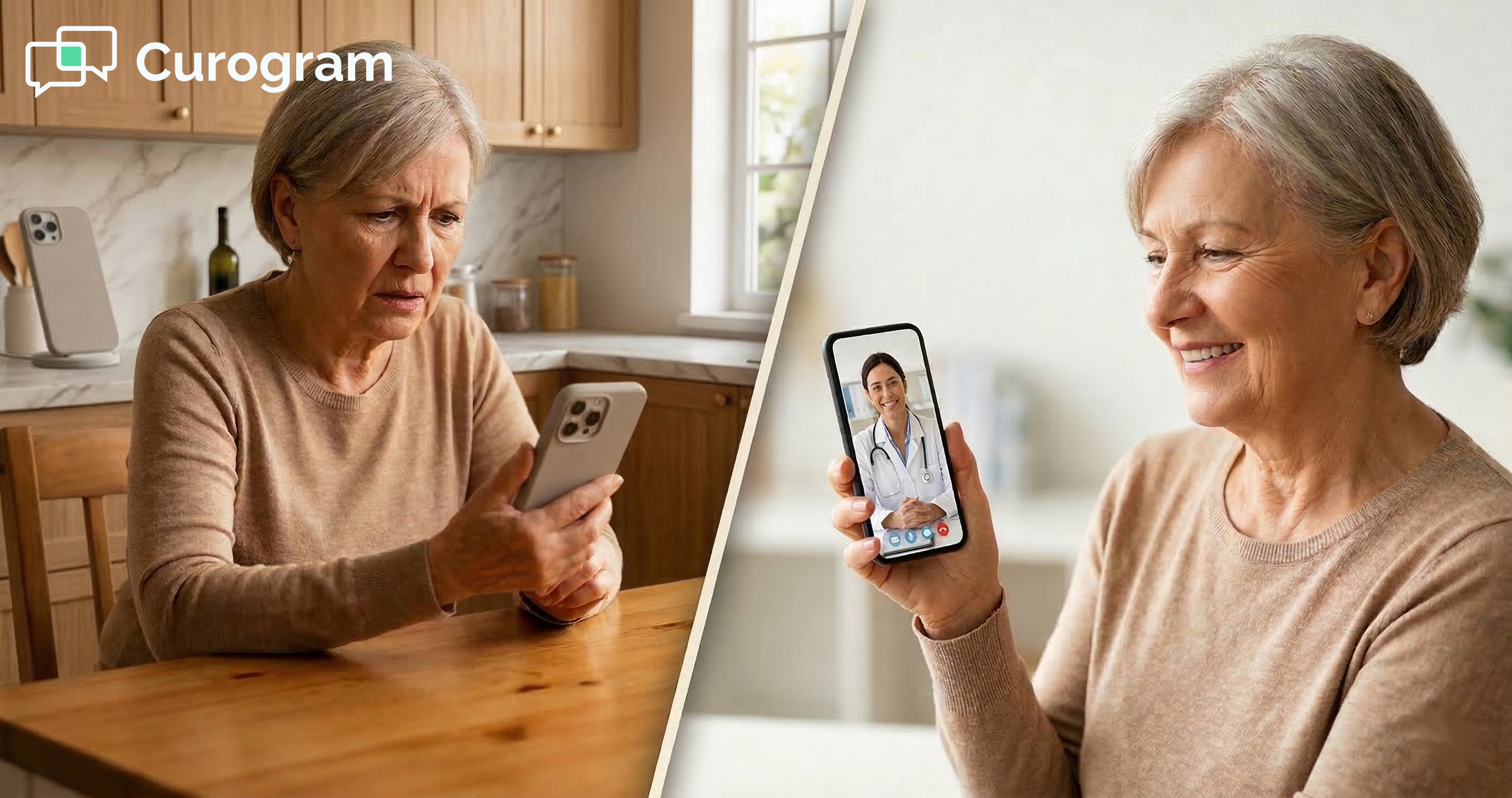
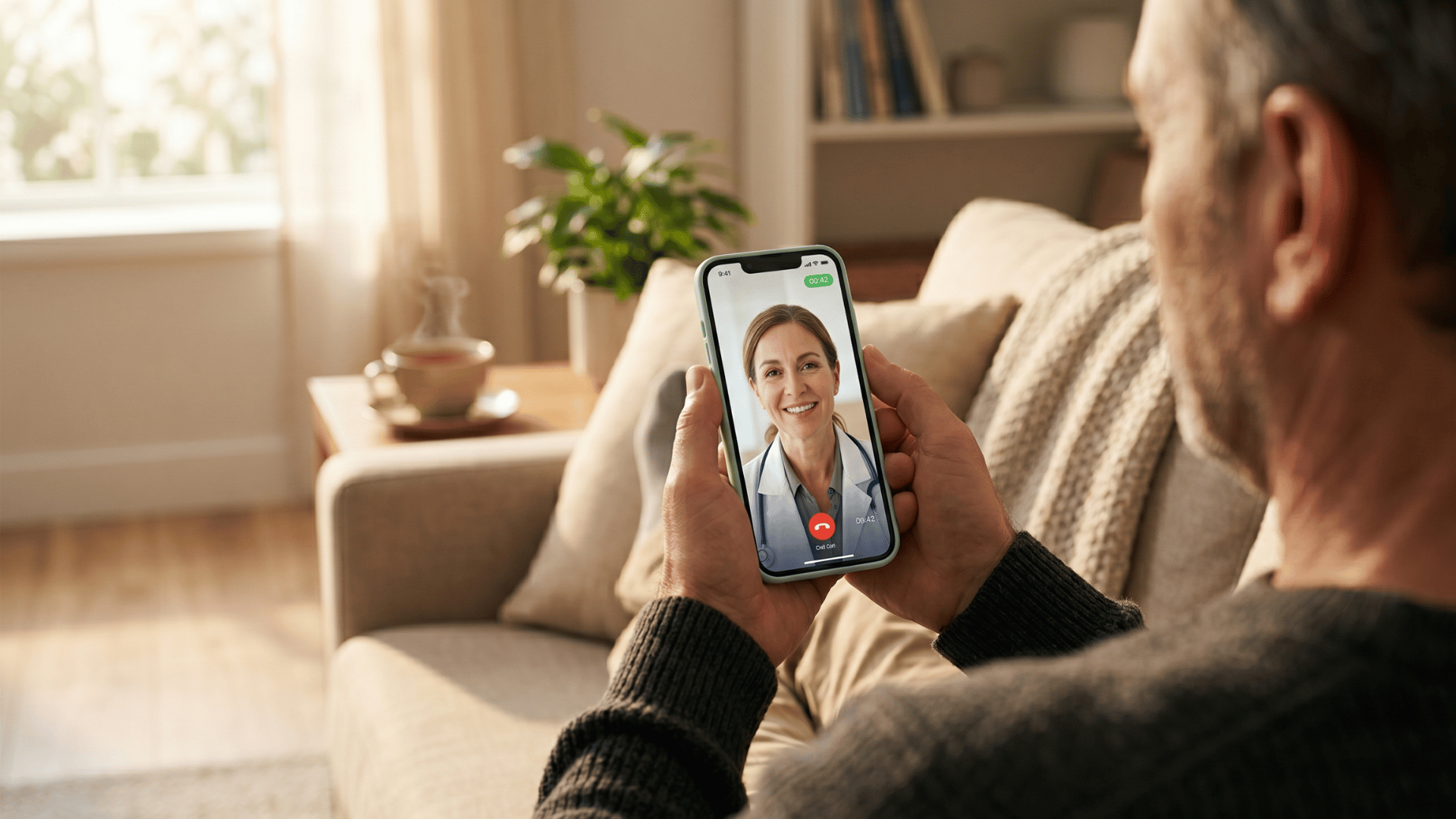
Now flip the experience. The patient gets a text. They tap the link. They see their provider's face within seconds. No login, no install, no portal.
That is the entire pre-visit workflow. Two minutes, one click, no questions.
What Happens Behind That Single Link
A zero-download telemedicine platform delivers the visit through a simple link sent by SMS, email, or portal notification.
When the patient taps, the platform reads the appointment metadata (name, DOB, appointment ID) and auto-authenticates them straight into the video room.
The pre-visit window collapses from 15–20 minutes down to under 2 minutes. That alone removes the biggest reason patients abandon virtual visits: the feeling that joining is harder than driving in.
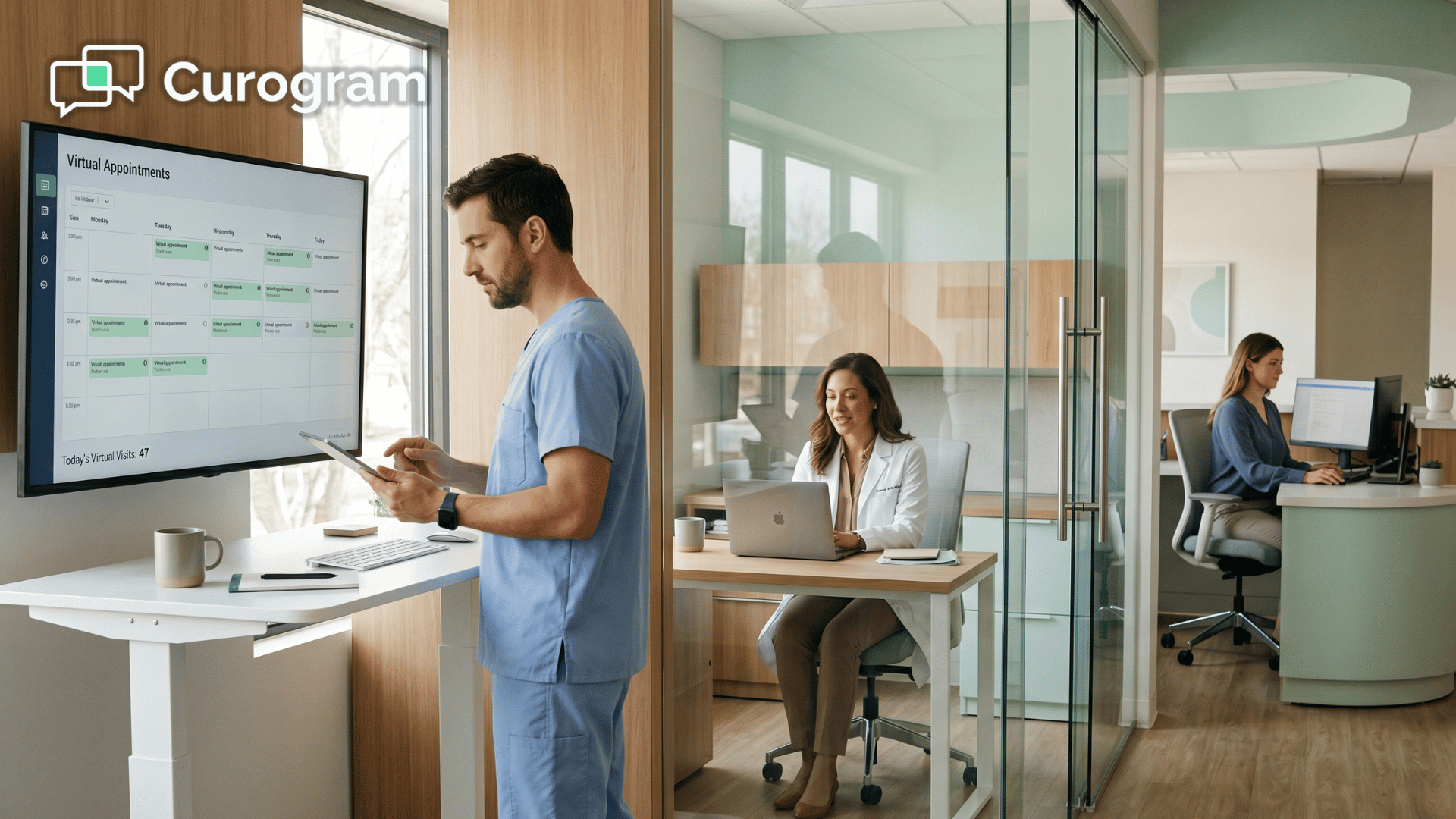
For providers, nothing changes. The video visit launches from inside Oracle Health's provider interface. Appointment rosters show virtual visit status. Post-visit notes flow back into the EMR record.
They never leave their clinical workflow to launch a visit, and they never have to coach a patient through a login.

Bridging Oracle Health's FHIR With a Real Write-Back Path
The technical heart of the solution is the integration layer. Curogram's approach wraps Oracle Health's read-only FHIR capabilities and adds a secure bidirectional bridge.
Here is what flows in each direction:
- Outbound from Oracle Health: appointments, provider credentials, patient demographics
- Inbound back to the EMR: appointment status (joined, no-show, completed), visit duration, post-visit flags, event logs
This is the missing piece. You get the EMR integration benefits of two-way data flow without asking Oracle to expand FHIR write permissions, which many organizations restrict for governance reasons.
The write-back layer maintains HIPAA compliance, SOC 2 Type II audit trails, and clean data governance.
The integration also pulls in clinical context. Pre-visit questionnaires, allergy and medication flags, and provider notes are surfaced before the call starts. After the visit, summaries are auto-drafted in the chart. That alone saves clinicians 10–15 minutes per appointment in documentation time.
The Compliance and Infrastructure Backbone
A telemedicine platform without compliance is a liability dressed as a feature. Zero-download telemedicine has to clear a strict bar before it earns a place in your stack.
The non-negotiables include:
- SOC 2 Type II certification and full HIPAA compliance
- TLS 1.2+ encryption in transit, AES-256 at rest
- Role-based access controls with full audit logging
- BAA coverage for every patient interaction
Video performance matters just as much. Platforms using VP8 or VP9 codecs compress better than older H.264 streams, dropping bandwidth needs from 2.5 Mbps to about 1.5 Mbps per stream.
That difference is meaningful for rural patients on weak connections, where a stable connection determines whether the visit happens at all.
Uptime is the last piece.
A serious telemedicine platform should guarantee 99.95%+ uptime with geographic failover and load balancing.
A single 15-minute outage during peak hours can hit 50–100 concurrent visits and undo months of provider trust.
You want infrastructure that disappears into the background.
What Friction-Free Virtual Visits Actually Deliver
Architecture is interesting. Outcomes are what get budget approved. Here is what changes when you remove the friction from the front door.

The No-Show Drop That Pays for the Project
The Atlas Medical case study is the cleanest example. After deploying zero-download telemedicine, they pulled their virtual visit no-show rate from 14.20% down to 4.91%. That is a 69% improvement.
Translated into dollars: at 500 virtual visits per month and an average revenue per visit of $120, the 9.29 percentage point gap recovers about $480K in annual revenue.
That is not soft savings or productivity hand-waving. That is appointments that now actually happen.
Three forces drive the improvement:
- Pre-visit abandonment plummets. Patients who get a text link join at a 92% rate. Portal-based invitations sit at 55–60%.
- Cancellations from technical issues nearly disappear, so providers run on schedule.
- Patients build psychological commitment when joining is one tap away.
Most organizations see no-show rates stabilize 4–6 weeks after launch. By month three, rates settle 5–7 percentage points below baseline and stay there. That recovered revenue compounds month after month.
Higher Virtual Visit Penetration and Real Call Deflection
Baseline virtual visit penetration in large ambulatory Oracle Health networks usually stalls at 8–12% of total visit volume. Patients self-select away from virtual care because enrollment feels difficult, not because they prefer driving in.
Zero-download deployment lifts that number to 18–22% within 3–6 months.
Once friction disappears, patients self-elect virtual visits when it makes sense. The mix shifts on its own.
The downstream effect on your contact center is substantial. Each virtual visit deflects 2–3 phone calls (confirmations, pre-visit questions, reschedules). For a 500-provider organization running 2,000 monthly virtual visits, that is 4,000–6,000 deflected calls per month. That frees 8–12 FTEs from low-value call handling.
Average handle time improves too. Reps stop spending 5–6 minutes walking patients through portal logins and start handling higher-value work like insurance verification. AHT drops 10–15% on the calls that remain.
For your team, this means call center capacity expands without new hires.
Provider Satisfaction and Cleaner Clinical Outcomes
Friction does not just hit revenue. It hits the people delivering the care.
Less Time on Tech, More Time on Patients
Providers report a 25–35% bump in telemedicine workflow satisfaction once friction is removed. Administrative time per appointment drops from 5–7 minutes spent troubleshooting logins to under 30 seconds.
That is time that goes back to patient care, charting, or simply not feeling rushed.
Patients Show Up Ready to Engage
Patient satisfaction scores rise too, climbing 12–18% when join friction disappears. Patients who arrive without a technical struggle are mentally ready to engage.
Follow-up appointment continuity, the rate at which patients return for the next visit, jumps from 65–70% to 78–85%.
A Quiet Win for Workforce Retention
There is a workforce angle as well. Burnout related to "fighting technology instead of treating patients" goes down.
Clinicians who initially resisted telehealth often become its strongest advocates once the friction is gone. That cultural shift is hard to put on a spreadsheet, but it shows up in retention numbers and provider engagement scores.
Make Virtual Visits the Easiest Part of Your Patient's Day
The hardest part of telemedicine is not the video call. It is everything that happens before it.
If your patients are bouncing off a HealtheLife login screen, you are not losing them to bad clinical care. You are losing them to architecture. That is fixable, and it is fixable without ripping out Oracle Health.
A zero-download approach gives you the outcomes the original telemedicine pitch promised. No-show rates drop from 14% to under 5%. Virtual visit penetration rises from 8–12% to 18–22%.
Providers stop troubleshooting and start practicing. Your contact center stops answering "how do I log in?" calls and starts handling work that actually grows the practice.
The ROI math is straightforward. A 500-provider system can recover roughly $480K a year in no-show revenue alone, deflect 4,000–6,000 monthly calls, and free 8–12 FTEs for higher-value work.
Those numbers are not aspirational. They are what organizations like Atlas Medical have already produced.
What makes Curogram different is the integration model. Instead of forcing you to choose between HealtheLife governance and a frictionless patient experience, the platform bridges both. Read-only FHIR data flows out. Secure write-back flows in.
Your EMR stays the source of truth. Your patients get a link that just works.
If your virtual visit program has stalled, or if you are about to launch one and want to skip the painful first year, this is the conversation worth having now.
Schedule a demo with Curogram to see exactly how zero-download telemedicine works inside an Oracle Health environment. We will walk through your current workflow, map the friction points, and show you the EMR-native experience your providers and patients deserve.
Frequently Asked Questions
Traditional portal-based telemedicine, like Oracle's HealtheLife and Zoom model, asks patients to authenticate to the portal, navigate to a telemedicine section, and join a video room. That usually involves multiple credential entries and download prompts.
Curogram pulls appointment data, provider credentials, and patient demographics through Oracle Health's read-only FHIR API. It then implements a dedicated write-back interface for two-way data flow.
Weeks 1–2 cover discovery and compliance review: auditing current HealtheLife and Zoom workflows, checking FHIR API access, and documenting security requirements. Weeks 3–6 are integration development: appointment data sync, patient authentication logic, and EMR write-back workflows. Weeks 7–9 are testing and UAT with providers, patients, and IT. Weeks 10–12 cover staff training, patient communication, and phased provider activation.
No special device or app is required. Zero-download telemedicine works on any modern smartphone, tablet, or desktop browser, including Safari, Chrome, Edge, and Firefox. Patients simply tap the text link and the video room loads inside the browser.
Identity verification happens through secure appointment metadata, not through a password. The link sent to the patient is unique, time-limited, and tied to their specific appointment ID, name, and date of birth on file in Oracle Health. The platform validates these data points before the video room loads.