

7 min read

Text Payments for BH Consumers | No App Needed

Text Payments for BH Consumers | No App Needed

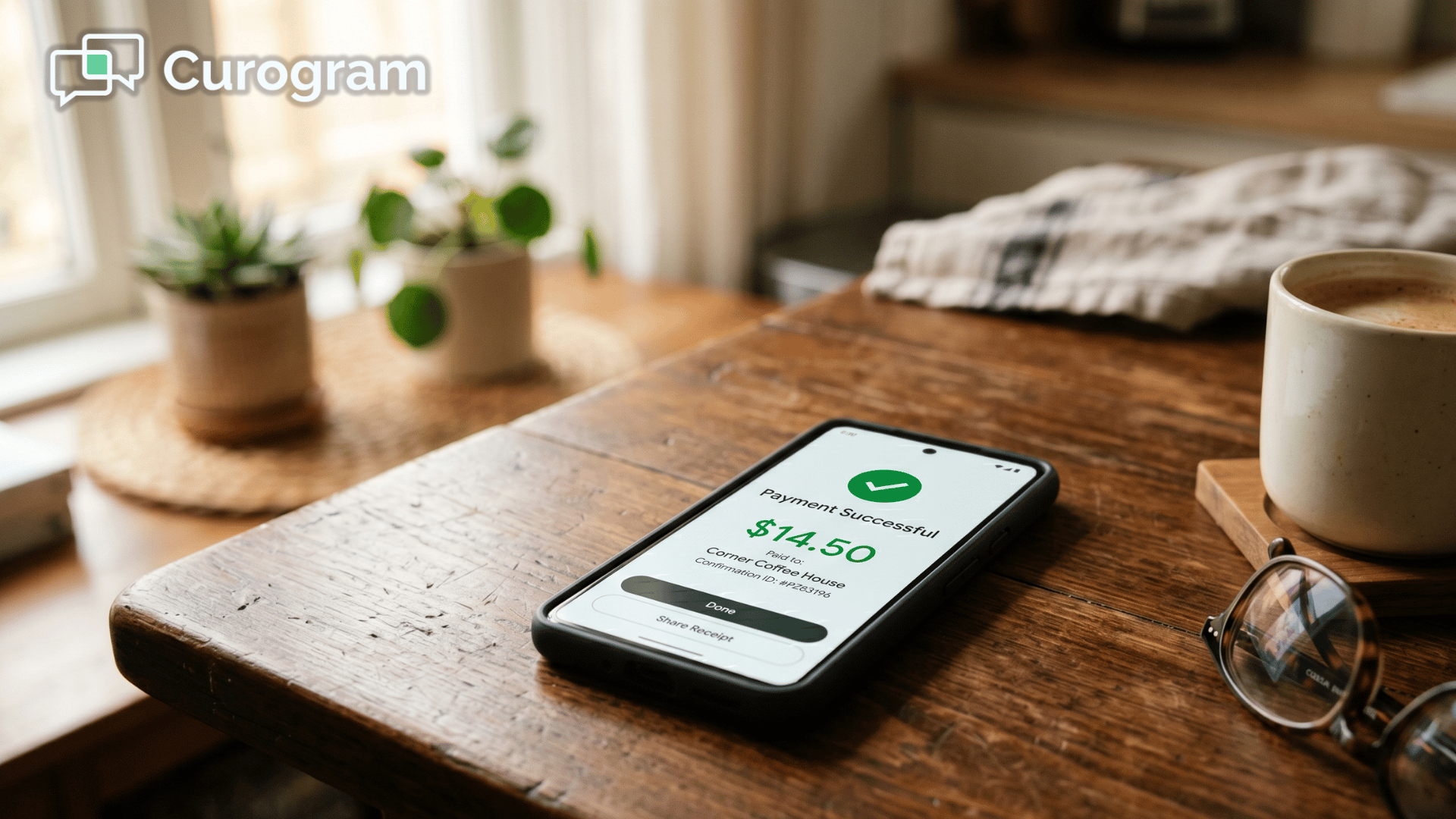
💡 A behavioral health consumer can pay a balance in under 30 seconds. A text arrives with a secure link.

They tap it, see the amount owed, enter a card, and confirm — no app to download, no portal login, no paper check.   

This matters most for self-pay and sliding-scale clients, where each extra step is a chance the payment never happens. Meeting people on the phone they already carry removes that friction.                 

Paper statements cost practices $800–$1,000 a month and collect only 20% of balances. Text-to-pay alongside Netsmart trades that whole cycle for a single tap.


Most behavioral health consumers want to pay their balance. The money is rarely the real problem. What stops them is everything standing between the bill and the payment.

A paper statement shows up two to four weeks after the visit. It gets set aside, slips into a stack of mail, and quietly becomes tomorrow's problem. A second statement arrives. Now a little stress is attached to it, and the billing office starts to feel like someone to dodge.

None of that is refusal. It is a process that asks too much at the wrong moment.

For someone managing depression, ADHD, or a hard week, "find the checkbook" or "log into the portal" is enough friction to stall the whole thing.

Multiply that across a panel of self-pay clients, and the lost revenue adds up fast. The practice absorbs the write-off. The balance keeps growing. A relationship that should feel supportive slowly turns adversarial, one unanswered call at a time.

Here is the part worth sitting with.

The payment was never unwanted — the path to it was just too long.

So what happens when you shorten that path to one tap on a phone?

A text shows up with a secure link. The consumer opens it, sees the balance, enters a card, and confirms in under 30 seconds.

No app to download. No password to recover. No envelope, stamp, or phone call to the billing office.

That is the behavioral health text payment consumer experience with no app in the way, and it quietly changes the math on collections for your entire panel.

This article walks through why paper billing fails, how text-to-pay actually feels for the person receiving it, and what the shift means for your revenue.

Let's start with the statement sitting in someone's mail pile right now.

Why the Paper Bill Keeps Going Unpaid

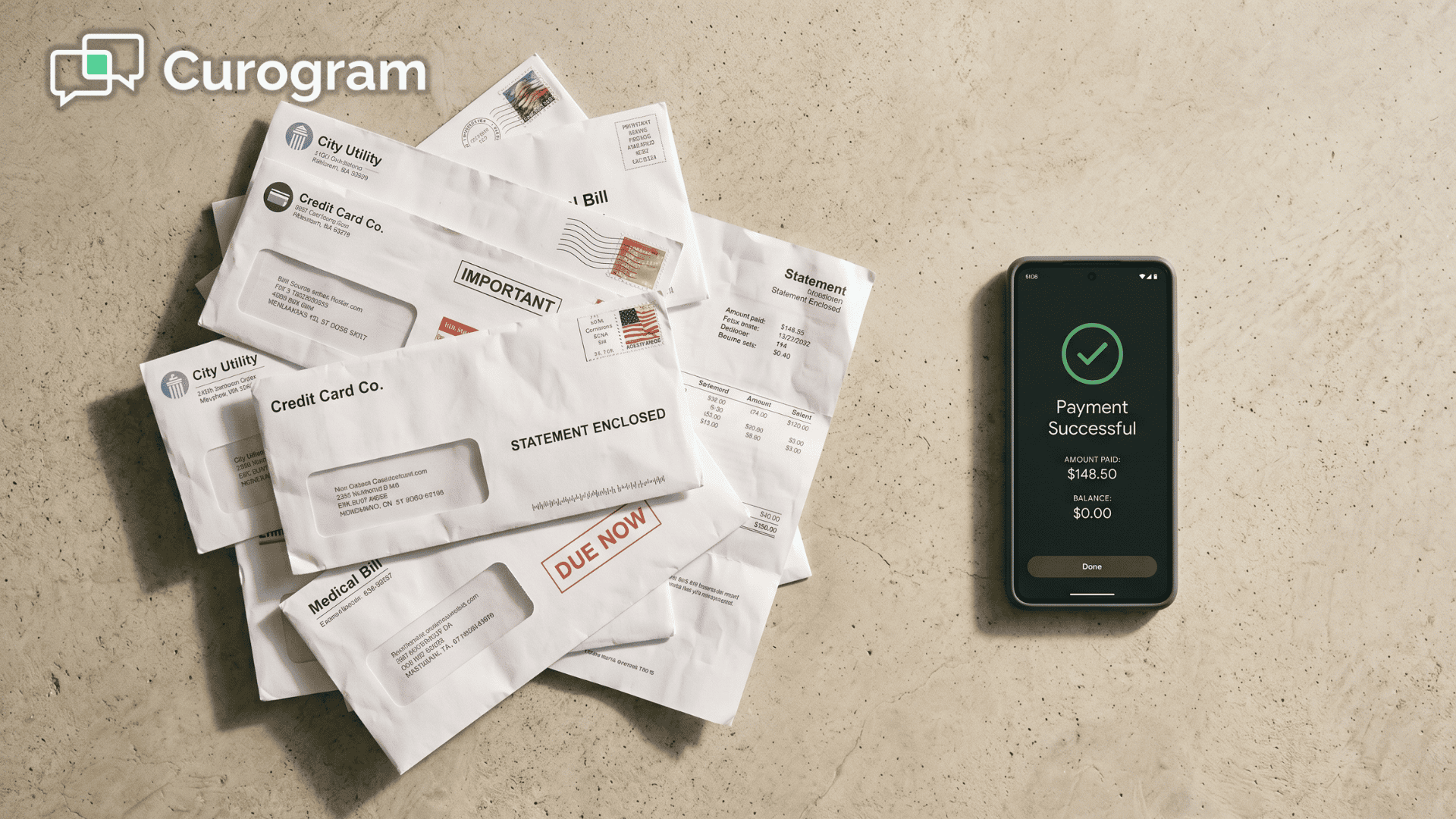
Paper billing makes a quiet assumption. It assumes the consumer will receive the mail, open the envelope, read the statement, and then take action — write a check, call in a card, or log into a portal to pay.

That is a lot of steps. And every step is a place to drop off.

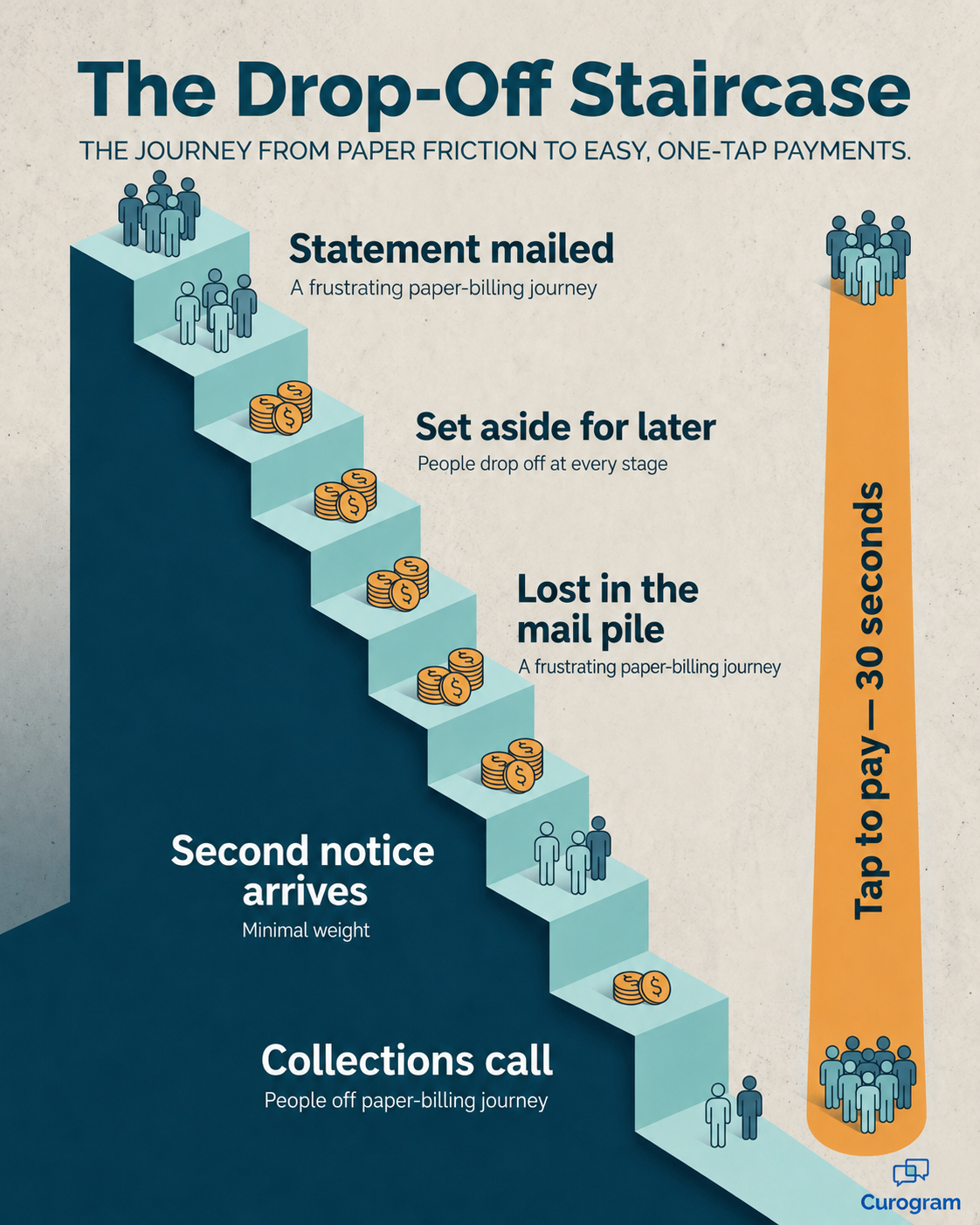
Walk the journey the way a consumer actually lives it:

  • The statement arrives two to four weeks after the visit, long after the appointment is out of mind.
  • It gets set aside "to deal with later."
  • It disappears into a pile of other mail.
  • A second statement comes, now carrying a faint sense of being behind.
  • The billing office calls. The consumer lets it ring.

By the end of that chain, a payment someone was perfectly willing to make has turned into an overdue balance and an awkward phone call. Nothing about the money changed. The process simply wore the person down.

For consumers on sliding-scale fees with limited disposable income, that friction is even costlier. A manageable balance becomes a collections issue. The practice eats the loss, the balance grows, and the billing relationship turns tense instead of supportive.

This is exactly where an SMS payment for a mental health practice changes the dynamic. The bill stops living in a mailbox and starts living on the device the consumer checks dozens of times a day.

Here is the bottom line on paper.

It achieves roughly a 20% collection rate while costing $800–$1,000 a month to run. You are paying real money to collect a small fraction of what you are owed. For your team, that is the worst of both worlds — high cost, low return.

Staircase infographic: paper billing drop-offs vs one-tap text-to-pay payment

What Actually Happens When the Link Arrives

Now picture the other path.

A text lands on the consumer's phone with a secure payment link. They tap it, see their balance, enter payment details on a secure page, and confirm.

The whole thing takes under 30 seconds. No app, no portal, no stamps, no phone calls.

That is the entire experience. It is meant to be boring in the best way.

A payment page built for a thumb

The page a consumer lands on is built phone-first, not squeezed down from a desktop screen. Large buttons. A clear balance at the top. Standard payment fields and nothing extra.

If the phone has a saved payment method, auto-fill handles most of the typing. Repeat payments get even faster — close to a single tap. This is what a real mobile payment for a behavioral health consumer should feel like: quick, obvious, and over before it becomes a chore.

Why "one tap" matters more here

For someone managing executive-function challenges from ADHD or depression, the number of steps is not a small detail. A five-step process is five chances to stall. A one-step process is one chance to finish.

Cutting a payment down to a single tap is not just a convenience. It is often the difference between paying and not paying. The text arrives, the balance clears, and the consumer moves on with their day.

Easy payment with no portal, by design

There is no account to create and no password to recover.

That easy patient payment with no portal is the point, not a missing feature. Every login screen you remove is one fewer reason for the payment to die in someone's pocket.

This is also what frictionless payment in behavioral health looks like in practice — you are not adding tools for the consumer to learn. You are removing the ones standing in their way.

Privacy that protects the relationship

The text itself contains no clinical information. Just a balance amount and a secure link, in line with HIPAA-compliant messaging. There is no app icon sitting on the home screen and no hint of the behavioral health relationship for anyone who happens to glance at the phone.

For a population where discretion is part of trust, that quiet design matters as much as the speed.

Person relaxing at home, relieved after a quick behavioral health text payment

What Easier Payment Does to Your Numbers

Speed is nice. Revenue is the point. So let's put plain numbers on the difference.

Say a practice sends $20,000 in monthly balances to a self-pay panel.

Here is how the two approaches stack up:

  Paper statements Text-to-pay
Monthly balances sent $20,000 $20,000
Collection rate ~20% higher, with less effort
Collected per month ~$4,000 meaningfully more
Cost to run $800–$1,000/mo no paper, postage, or printing
Time to pay 2–6+ weeks under 30 seconds

Read that top to bottom. With paper, you spend close to $1,000 a month to collect about $4,000 — and the other $16,000 ages, gets chased, or gets written off. Lift collection even modestly with text-to-pay and the recovered revenue is not rounding error. It is rent, payroll, or a new clinician.

This is the heart of the text-to-pay patient experience in behavioral health:

Every consumer who taps a link instead of ignoring an envelope is revenue you would otherwise have lost.

More than the dollars

The payoff is bigger than any single statistic. The consumer's experience changes from "get a bill in the mail and figure out how to pay" to "tap a link and you're done." Payment becomes an afterthought instead of an ordeal.

Get paid faster! Strengthen your balance sheet by simplifying patient payments via secure SMS with Curogram.

For your practice, that compounds in good ways. Consumers pay faster, so AR aging shrinks.

There are no collections calls and no overdue notices, so the billing relationship stays warm. In practice, your team spends less time chasing money and more time on work that actually needs a human.

One Familiar Channel for Everything You Send

By the time a payment link arrives, most consumers already know the drill. They have gotten appointment reminders by text. They may have filled out intake forms from a link on the same phone.

Paying a balance the same way feels like second nature, not a new task to learn.

In a single text thread, a consumer might receive:

  • A reminder before the appointment
  • An intake form to fill out on their phone
  • A payment link for the balance afterward

Three different needs, one familiar motion. The consumer never has to bounce between a portal for one thing, an app for another, and the mailbox for a third.

It also keeps the relationship in one place. If a consumer has a question about a balance, they reply to the same thread that sent the link and reach your billing team directly. No hold music, no separate phone call, no hunting for the right number.

For your practice, that means fewer dropped balls and fewer channels to manage.

One inbox holds the reminder you sent Monday, the form a new client returned Tuesday, and the payment that cleared Wednesday. In practice, your team stops juggling tools and starts working from a single, tidy conversation per person.

And for the consumer, every new request feels familiar instead of foreign. The first text might be a reminder, the next a form, the one after that a bill.

Same channel, same easy tap — which is a big part of why more of those bills actually get paid.

Payment Should Feel Like Replying to a Text

Your consumers are not avoiding their bills. They are avoiding the process you hand them.

A paper statement asks for too many steps at a moment when daily life may already feel like a lot. A text asks for one. That single difference is where the lost revenue hides.

Set the two paths side by side. One starts with an envelope and ends, weeks later, in a collections call no one enjoys. The other starts with a buzz in someone's pocket and ends 30 seconds later with a balance marked paid. Same person, same willingness to pay, completely different result.

This is the quiet logic behind frictionless payment in behavioral health. You are not pushing people to pay. You are removing the reasons they didn't — no app to install, no portal password to recover, no phone call to dread.

Just a secure link and a balance they can clear in the time it takes to read this sentence.

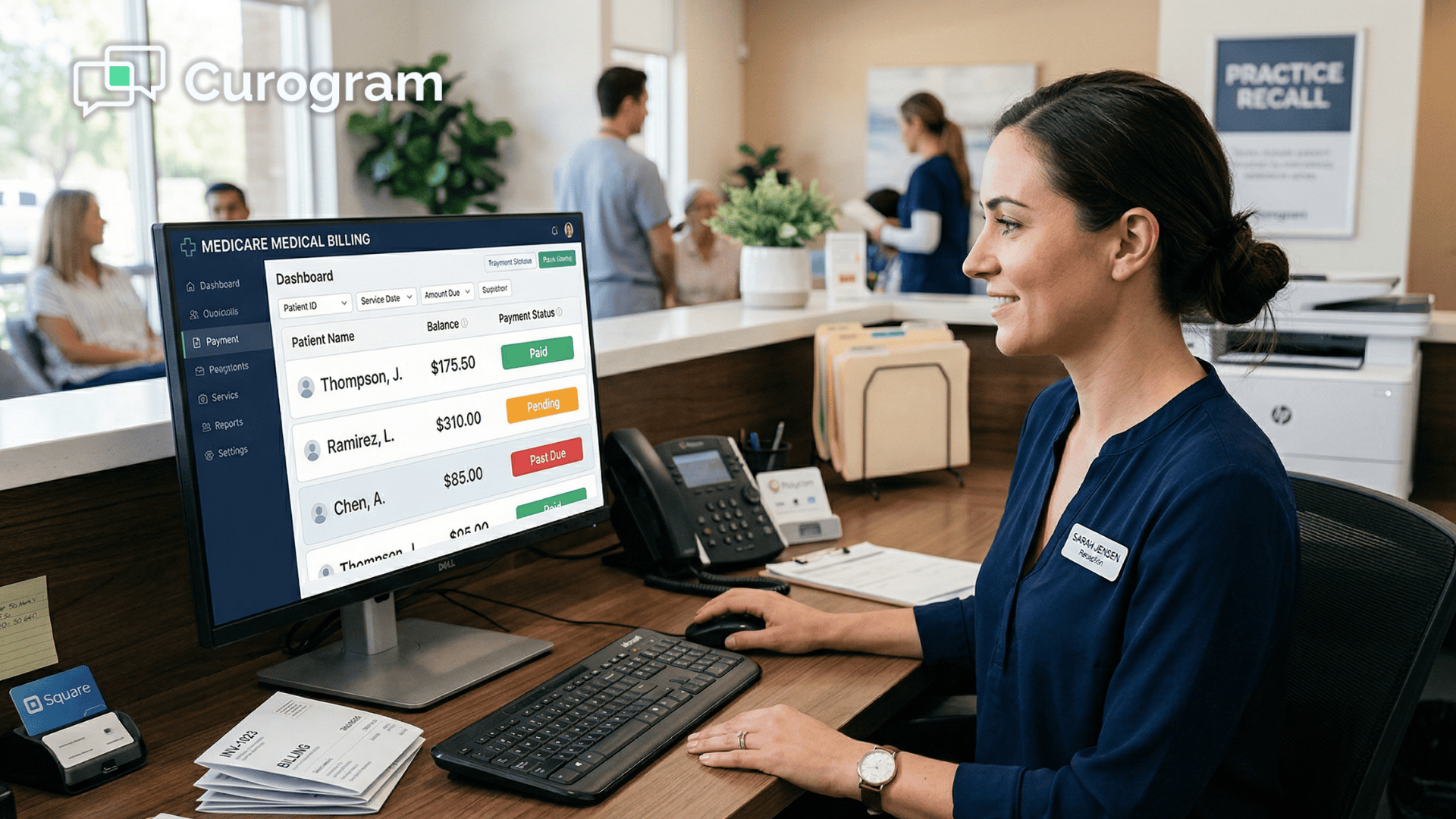
The tools work together cleanly. Netsmart holds the billing record and tracks what each consumer owes down to the dollar. Curogram makes sure that balance can actually be paid without a hassle, sending the link by text and routing any questions back to your billing team through the same thread.

The EHR documents the balance. The text collects it.

For your practice, that means faster payments, lower AR aging, and a billing relationship that stays warm instead of turning tense. For your consumers, it means being treated like the adults they are — glad to pay when paying is easy.

So make it easy. Make settling a balance feel as simple as replying to a text.

Schedule a demo and see how text-to-pay works alongside Netsmart — and watch how quickly a single tap on a phone can change your collections.


Frequently Asked Questions

Is it safe to pay a medical bill via text message?

Yes. The text contains only a secure link to a payment page — no billing or clinical details show up in the message itself. The payment page uses industry-standard encryption. And no payment data is stored on the consumer's phone after the transaction is complete.

Do consumers need a credit card, or can they use other payment methods?

Consumers can use credit cards, debit cards, or other accepted methods through the secure payment page. The mobile-optimized interface also supports phone auto-fill for saved payment methods, which makes the process even faster on repeat payments.

What if a consumer has questions about their balance before paying?

They can simply reply to the text to reach your billing team through Curogram's 2-way texting. Questions about balance amounts, insurance adjustments, or payment plans get resolved right in the thread, before the consumer completes payment.

Does text-to-pay work for sliding-scale or partial payments?

Yes. The balance shown on the payment page reflects whatever your billing team has set, including sliding-scale amounts. If a consumer needs a payment plan, they can ask about it by replying to the same text rather than calling the office.

What happens if a consumer doesn't pay right away?

The link stays valid, and your team can send a gentle follow-up text rather than mailing another statement or making a collections call. Because the reminder lands on the device they already check constantly, it usually takes far less nudging than paper ever did.