Streamlining Specialty Workflows with ModMed HIPAA Texting
💡 A ModMed patient messaging workflow replaces phone calls with secure text messages and connects directly to ModMed EMA for automated...
9 min read
Aubreigh Lee Daculug
:
January 27, 2026
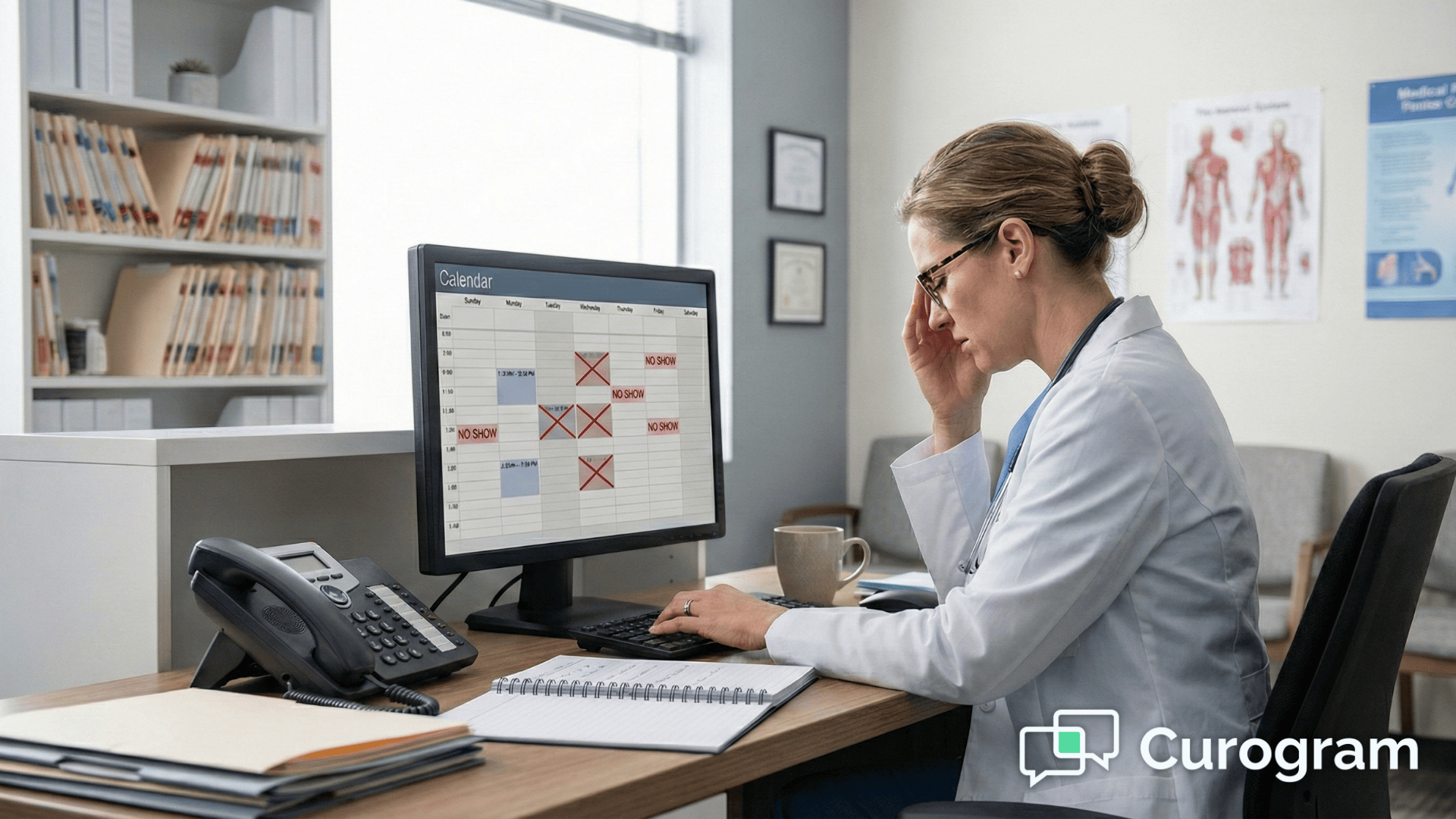
It's Monday morning, and your front desk manager pulls up the schedule. Three no-shows already, and it's not even 10 AM. That's not just frustrating—that's money walking out the door.
For specialty practices, every empty chair tells an expensive story. A dermatology patient who ghosts their Mohs surgery consult? That's $800 gone. An orthopedic patient who skips their post-op follow-up? Another $500 vanished into thin air.
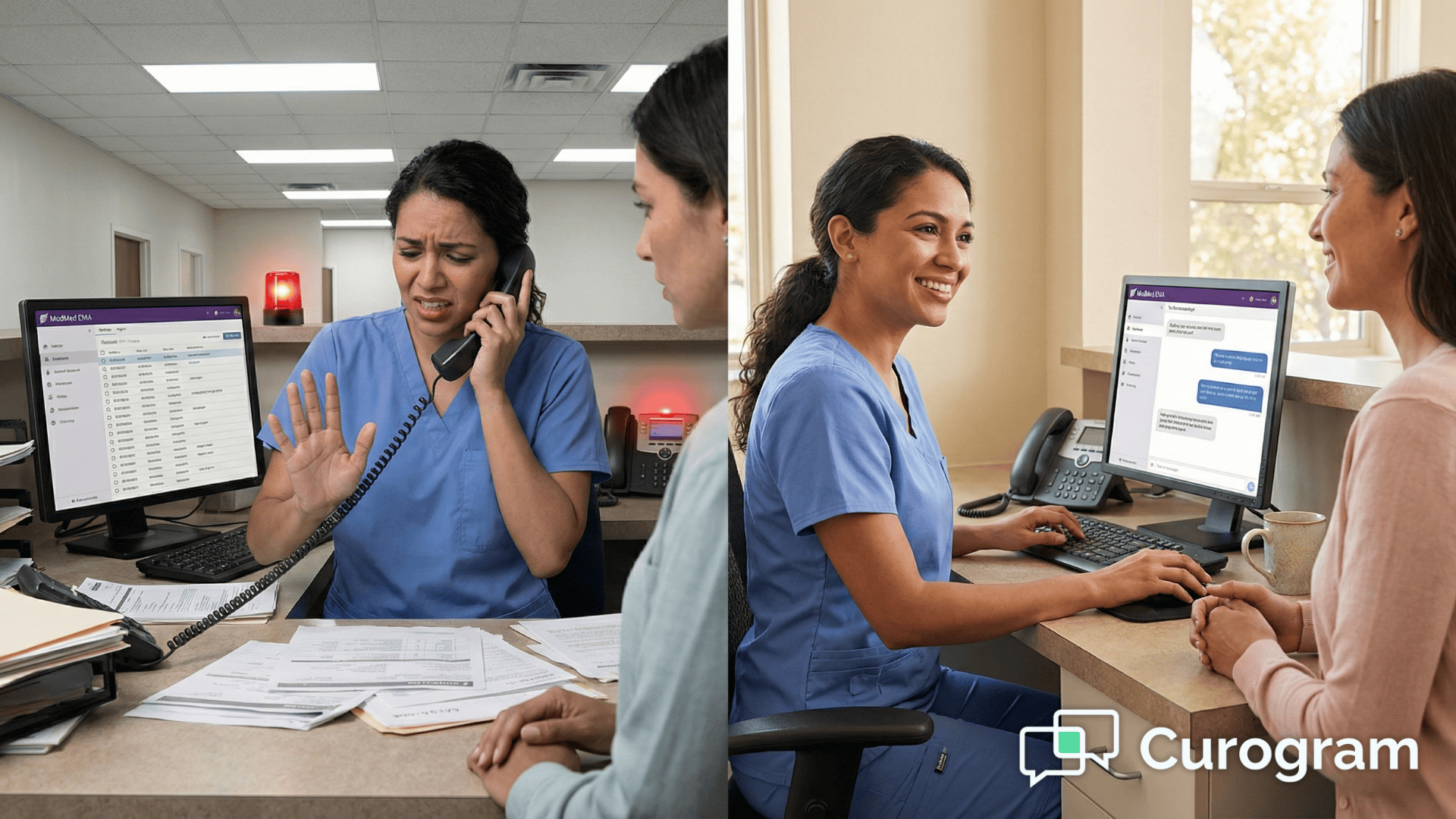
But here's what really stings: while those appointments sit empty, your staff spent the entire morning trying to reach patients by phone. Call after call. Voicemail after voicemail. Meanwhile, your waiting list grows longer, and patients who actually want to be seen can't get in.
Sound familiar? You're not alone. This is the reality for thousands of specialty practices still relying on outdated communication methods. The good news? There's a better way, and it's already helping practices like yours turn the tide.
ModMed ROI for patient texting isn't just another tech buzzword. It's a proven solution that's helping specialty practices plug revenue leaks and grow without adding headcount. We're talking about real results: a 53% drop in no-shows, 30% boost in staff productivity, and 10-20% increase in overall revenue.
The secret? Two-way HIPAA-compliant texting that works seamlessly with your existing ModMed system. Patients get reminders they actually see and respond to. Your team gets their time back. And your bottom line gets healthier, fast.
In this article, we show how specialty practices use smart automation to lower overhead and increase revenue. You’ll see real results from dermatology and orthopedic practices, along with patient retention strategies that work in 2025—when most patients prefer texting over calling.
Let's talk about the elephant in the waiting room: your practice is probably bleeding money, and you might not even realize how much.
Every empty appointment slot is like throwing cash in the trash. Except worse, because at least with trash, you're getting rid of something. With a no-show, you prepared the exam room, pulled the chart, blocked the time—and got absolutely nothing in return.
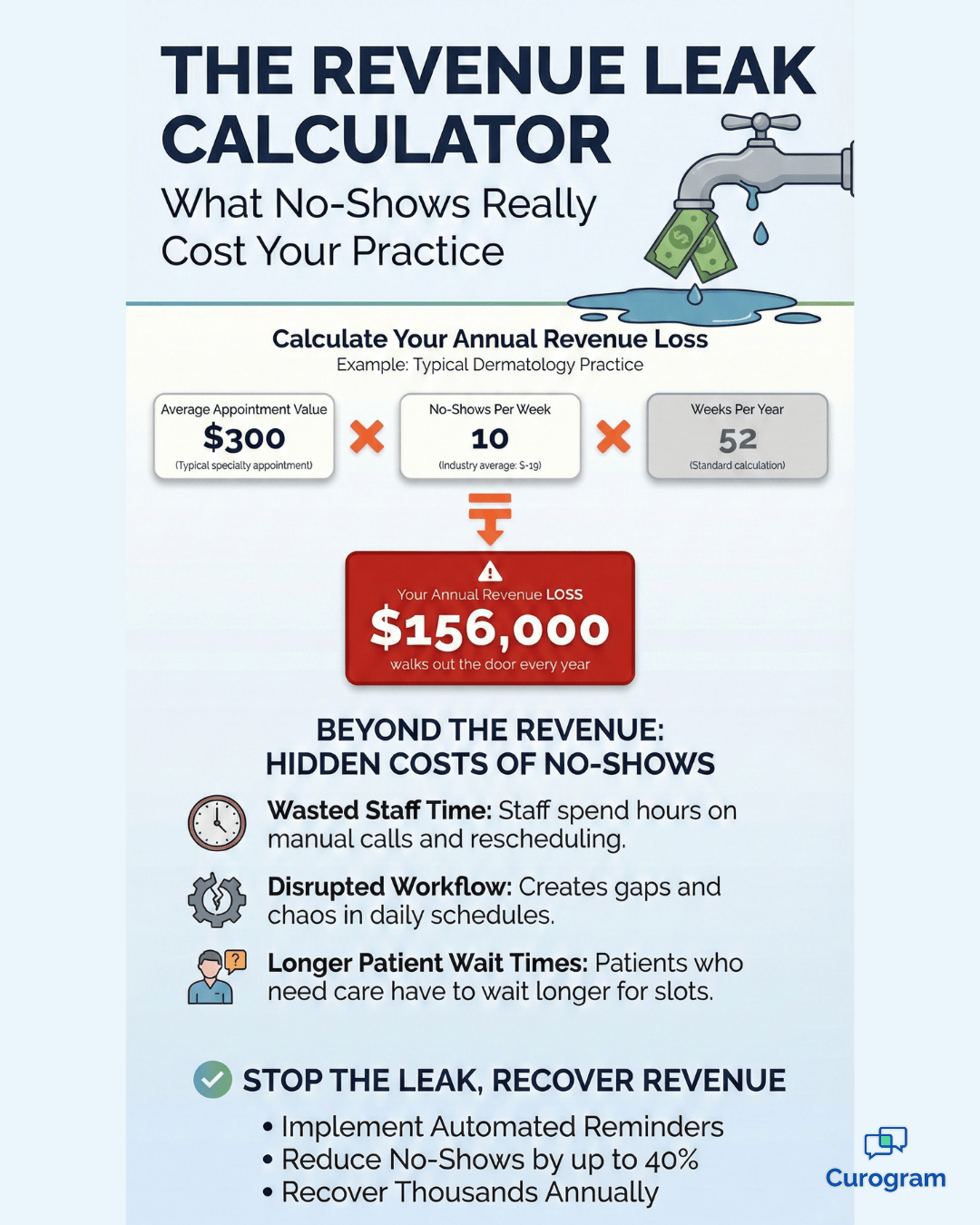
Here's the brutal math: If you're running a dermatology practice and averaging 10 no-shows per week at $300 per visit, that's $156,000 in lost revenue every year. For orthopedic practices where procedures run higher, the numbers get even uglier.
And it's not just the immediate loss. That slot could've gone to someone on your waiting list—a patient who's actually trying to get in. Instead, you're stuck with empty chairs and frustrated patients who can't get appointments when they need them.
The traditional phone-based reminder system? It's failing you. Patients don't answer unknown numbers anymore. They let calls go to voicemail, then forget to call back. By the time anyone realizes there's a problem, it's too late to fill the slot.
Want to know what's eating your budget? Look at your front desk phone bill—not just the actual bill, but the hidden cost of all those hours.
Your staff is spending half their day playing phone tag with patients. That's not what you hired them for. You need them handling insurance questions, managing check-ins, and solving real problems. Instead, they're leaving their 47th voicemail of the morning.
Do the math: if phone reminders cost you four times more than automation (and they do), you're paying premium prices for worse results—while secure messaging and automated reminders do the work for you. Your team is exhausted, patients are annoyed, and you're footing the bill for maximum inefficiency.
Here's what really hurts: when you finally reduce medical office overhead through automation, your staff will tell you they should've done it years ago. Nobody enjoys being a human reminder machine. Give your team better work to do, and watch morale—and results—improve.
You know what's expensive? Getting new patients. You know what's even more expensive? Getting new patients to replace the ones who quietly drifted away because your communication made them work too hard.
Modern patients—especially in elective specialties—have choices. When one practice makes them log into a clunky portal to reschedule, and another lets them shoot off a quick text, which one do you think they'll choose?
This is the leaky bucket problem. You're constantly marketing to fill your practice while existing patients slip away through the cracks. Every lost patient costs you twice: once in lost future revenue, and again in marketing dollars to replace them.
Strong patient retention strategies don't have to be complicated. Sometimes it's as simple as meeting people where they already are: on their phones, texting.
Okay, enough doom and gloom. Let's talk about what actually works. Curogram's integration with ModMed isn't just fixing problems—it's actively making you money. Here's how.
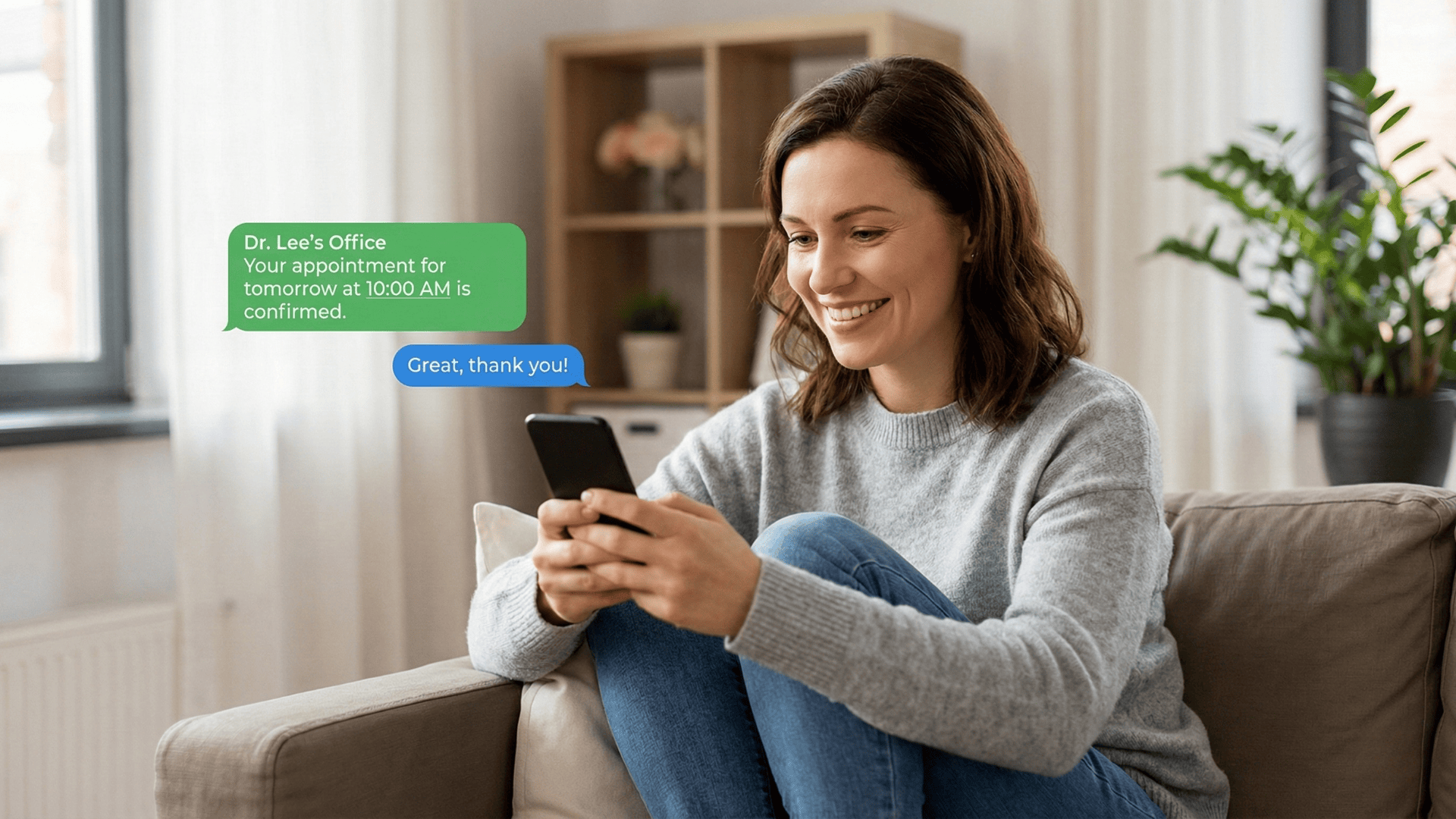
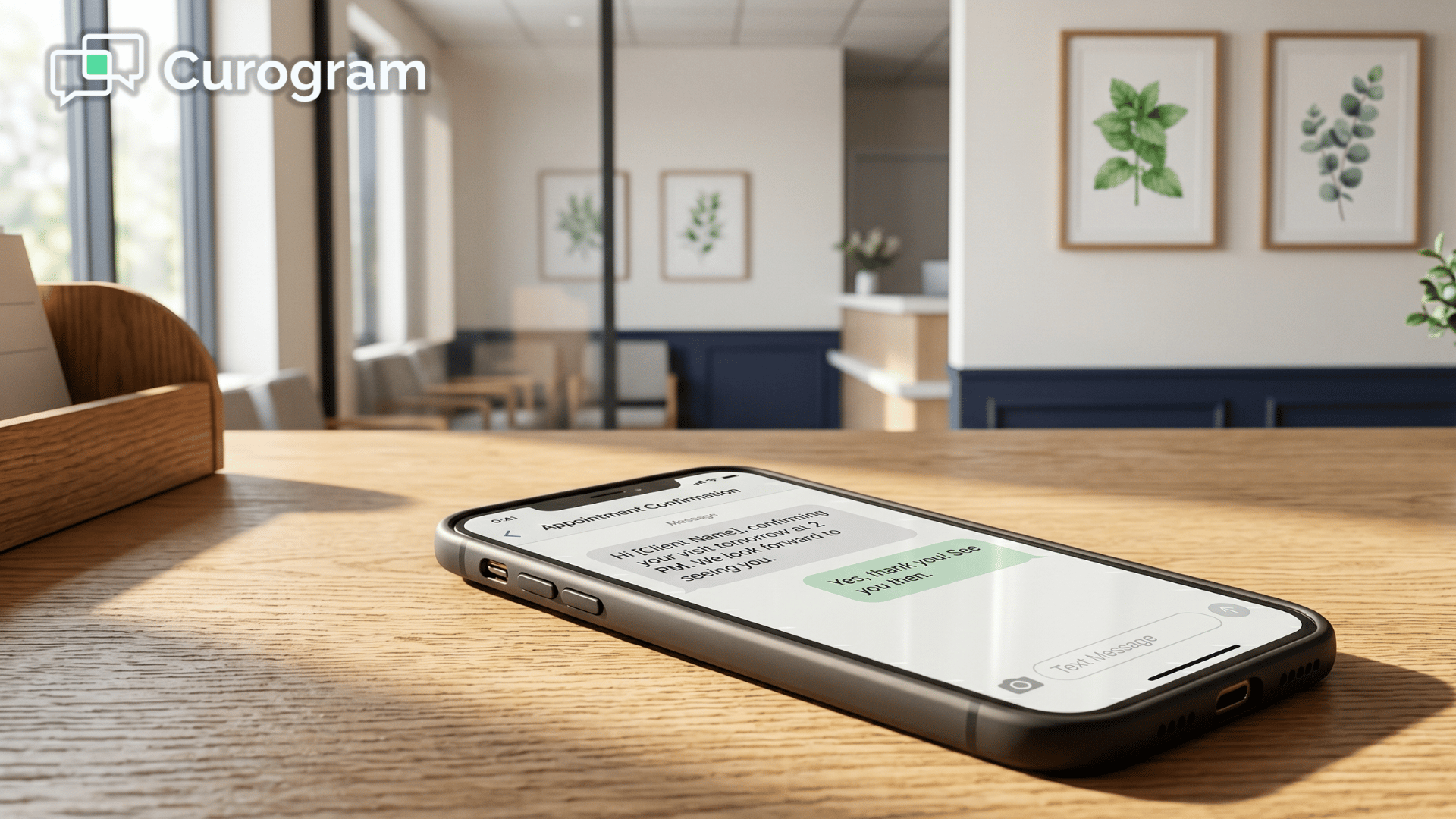
Imagine your reminder system actually working. Patients get a text three days before their appointment—using secure messaging and best practices that keep communication compliant and efficient. They can confirm with one tap, or reschedule right there in the message. No phone tag. No missed connections.
When someone cancels or doesn't confirm, your team knows immediately—not the day of the appointment when it's too late. You've got time to reach out to your waiting list. "Hey, we just had a cancellation tomorrow at 2 PM. Want it?"
Boom. Slot filled. Revenue saved.
This is where the impact on dermatology practice profitability gets real. Instead of losing that $800 Mohs consult, you're seeing the patient who's been trying to get in for weeks.
Everyone wins. The same principle applies to orthopedic clinic ROI, where high-value procedures mean every recovered appointment makes a significant difference. When you're talking about specialty care, filling those slots isn't just nice—it's essential.
Here's a question: when was the last time you asked happy patients for a Google review? And when they said yes, did you actually make it easy for them to do it?
rogram does this automatically. Right after a positive visit, while the patient is still feeling good about the experience, they get a text. "How was your appointment today?" If they respond positively, the system sends a direct link to leave a Google review.
Timing is everything. Catch patients when they’re happy, make it easy, and watch five-star reviews stack up. Those reviews bring in new, high-value patients who are ready to book and often have better insurance. Plus, you can boost retention with HIPAA-compliant texting that keeps patients engaged and coming back.
Plus, the system helps you catch problems before they become public disasters. Unhappy patient? Your team gets an alert immediately and can reach out to make it right. That's how you protect your reputation while improving care.
Nobody likes waiting room paperwork. Absolutely nobody. Patients hate it. Staff hate processing it. It's a universal source of misery.
So why are you still doing it the old way?
Text those intake forms before the appointment. Patients fill them out at home, on their couch, while watching TV. They show up ready to go. No clipboard. No writer's cramp. No bottleneck in your waiting room.
The time savings are real. When patients aren't spending 15 minutes on paperwork, your whole schedule flows better. Providers can see 1-2 more patients per day. That might not sound like much, until you calculate what an extra patient per day is worth over a year.
And here's the kicker: the integration is seamless. Information flows smoothly from the patient's phone straight into their chart, and everyone moves on with their day. Your staff isn't juggling multiple systems or copying information between platforms. It just works.

You didn't get into healthcare to crunch spreadsheets, but let's look at some numbers that actually matter. These aren't projections or best-case scenarios. This is what's actually happening at real practices using Curogram with ModMed.
Let that sink in for a second. A 53% reduction in no-shows. Not 5%. Not 15%. Over half of your no-shows, gone.
Here's what that looks like in the real world:
|
Practice Type |
No-Shows/Week |
Avg. Visit Value |
Annual Loss |
Recovery at 53% |
| Dermatology | 10 | $300 | $156,000 | $82,680 |
| Orthopedics | 8 | $500 | $208,000 | $110,240 |
| Multi-Specialty | 15 | $350 | $273,000 | $144,690 |
That’s real money flowing back into your practice instead of disappearing. For orthopedic clinics, where procedure costs are higher, the impact is even more significant.
To calculate your ROI, multiply your average no-show value by your weekly no-shows, then multiply by 53%. That’s your ModMed ROI for patient texting—and it’s likely larger than you expect.
Atlas Medical Center wasn't some special case. They were just like you—dealing with the same no-show headaches, the same frustrated staff, the same revenue drain.
Their no-show rate was 14.2%. Typical for specialty practices. Not great, but "normal." Then they implemented Curogram, and something shifted.
Within weeks, their no-show rate dropped to 4.9%. That's 9.3 percentage points of pure improvement. For a practice seeing 100 patients weekly, that's 9 extra patients actually showing up every single week. That's 468 additional appointments per year that generate revenue instead of sitting empty.
The best part? These results stuck. This wasn't a honeymoon period. This is the new normal at Atlas Medical Center, and it can be your new normal too.
Here's a problem every growing practice faces: you're seeing more patients, but you can't afford to hire more front desk staff. Or worse, you hire more people, and your margins shrink.
What if you could grow your patient base by 30% without adding anyone to payroll?
That's what SMS automation does. Your current team handles more volume because they're not spending all day on phone calls. They're three times more efficient, not because they're working harder, but because the system is working smarter.

The efficiency gains break down like this:
This directly impacts your bottom line. More patients, same staffing costs? That's margin improvement that shows up immediately. You're also avoiding recruitment costs, training time, and the risk of bad hires.
Your existing staff will thank you, too. Nobody got into healthcare to leave voicemails. Give them interesting work, and they'll stick around longer. Lower turnover saves money and preserves institutional knowledge. It's a win all around.
Let's address the questions that are probably running through your head right now.
How quickly will we see ROI? Most practices see positive ROI within the first month. No-show reduction begins immediately once automated reminders start, and staff stop making endless phone calls on day one.
By month two, you typically see the full 53% reduction in no-shows, and the revenue recovered often exceeds the platform cost by 10x or more. Track your no-show rate before implementation, then watch it drop.
No. Curogram is cloud-based and runs on your existing computers, tablets, and phones. No servers, no new equipment, no IT nightmare. Setup takes less than an hour, and training is about 10 minutes per person. Integration with ModMed happens securely in the cloud, so you could be up and running by tomorrow.
Will it help with patient retention? Yes. Modern patients expect modern communication. Texting reduces friction and makes patients feel respected and connected.
When communication is easy, patients keep appointments, return for follow-ups, and refer friends. Practices using texting see higher retention because patients don’t drift to competitors.
So where does this leave you?
Right now, your practice probably has revenue leaks you've learned to accept as normal. No-shows. Staff burnout from phone tag. Patients who ghost because communication is too hard. These problems feel inevitable, but they're not.
The ModMed ROI for patient texting isn't theoretical. It's happening right now at practices across the country. Real practices seeing real results: fewer empty slots, happier teams, better patient satisfaction scores. The system transforms communication from a cost drain into an actual growth driver.
Your practice can grow without big changes or big investments. Let automation handle repetitive tasks so your team can focus on what truly needs human judgment. Scale without increasing payroll.
The math is simple: 53% fewer no-shows means thousands of dollars recovered each month. Better profitability and ROI come from filling more slots with paying patients using your existing schedule.
Patient retention strategies work best when they're easy. Text messaging is easy. Patients get the mobile-first experience they expect everywhere else in their lives. Your team saves hours every week. Everybody wins.
This investment makes sense whether you're a solo provider or a multi-location group. Reducing medical office overhead improves your margins immediately. The cloud-based platform needs no hardware investment. Setup is fast. Results show up within 30 days.
Here's the thing: every week you wait is another week of no-shows draining your revenue. The solution exists right now. It integrates seamlessly with ModMed. Other practices are already using it to fill their schedules and grow their bottom line.
Schedule a quick demo and calculate your actual ROI based on your real numbers.
💡 A ModMed patient messaging workflow replaces phone calls with secure text messages and connects directly to ModMed EMA for automated...
💡 Specialty practices using ModMed can cut no-shows by 53% with automated appointment reminders. The system syncs with ModMed EMA to send smart...
💡 In Practice Fusion, patient communication through text messaging gives clinics a powerful tool. This simple solution reduces missed calls, cuts...