
 Sharee Narciso
HIPAA-Compliant Texting for NextGen Users: The Complete 2026 Guide
Learn how HIPAA-compliant texting helps NextGen users improve communication and reduce no-shows. Discover benefits and secure integration with...
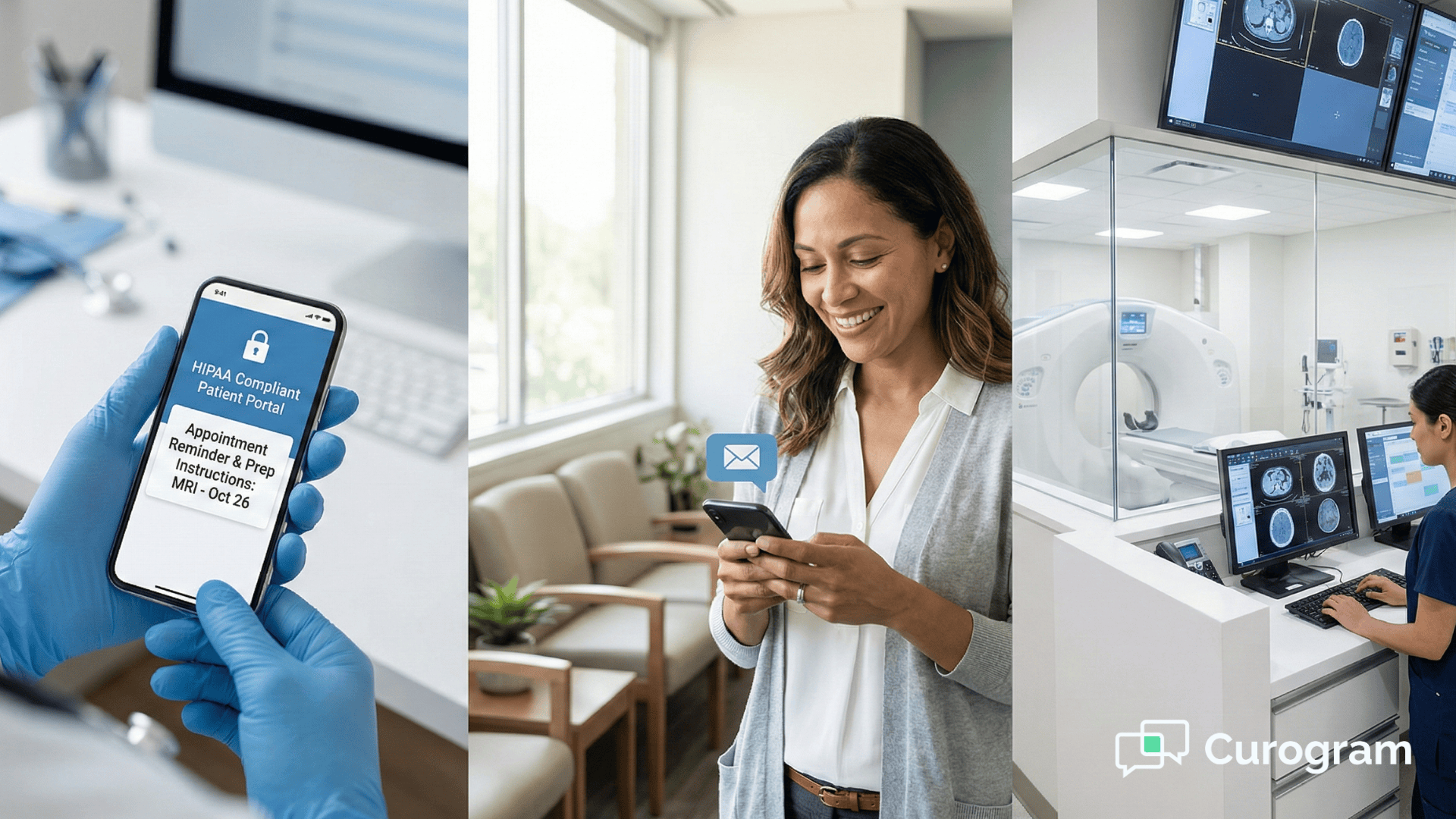
Your front desk staff answers the same questions 50 times a day. Patients call asking about prep instructions for their MRI. They want to confirm their appointment time. They need directions to your satellite office. Meanwhile, your radiology scheduler is buried in voicemails from three different locations.
This is the daily reality for multi-location specialty clinics using GE Centricity. Your team works hard, but phone calls eat up hours that could go toward patient care. Missed calls turn into missed appointments. No-shows drain revenue and leave expensive equipment sitting empty.
The problem gets worse as you grow. Each new location means more phone lines, more staff time, and more chances for messages to slip through the cracks. Your GE Centricity system has all the patient data you need, but staff still waste time looking up information and making manual calls.
HIPAA-compliant texting changes everything. Instead of playing phone tag, your staff sends quick text messages that patients actually read. Appointment reminders go out automatically. Prep instructions for that contrast CT scan arrive at exactly the right time. Patients can ask questions and get answers in minutes, not hours.
The best part? It connects directly to your GE Centricity system. No double data entry. No switching between screens. Your existing workflows stay the same, just faster and smoother.
This guide shows you how enterprise texting solution platforms work with GE Healthcare secure messaging to cut no-shows, reduce call volume, and give your staff time back. You'll learn what makes texting work for specialty clinics, how to keep patient data safe, and why large healthcare groups trust this technology.
Running a specialty clinic network means managing communication chaos every single day. Your staff at the main office needs to coordinate with satellite locations. Radiology prep varies by site. Patients get confused about which office to visit.
Phone calls pile up fast. A typical multi-location clinic handles 200 to 400 calls daily. Half of those are basic questions that don't need a phone call. Patients want to confirm appointments, ask about parking, or check if they need to fast before their ultrasound.
Your front desk team spends hours on hold transfers. A patient calls the wrong location. Staff has to look them up in GE Centricity, find the right site, and transfer the call. If that office is busy, the patient gets sent to voicemail. They call back frustrated, and the cycle starts over.
Each location handles communication differently. The downtown office texts appointment reminders through someone's personal phone. The suburban site still makes manual reminder calls. The satellite clinic near the hospital uses whatever system the last office manager set up. None of it connects to your GE Centricity data.
Radiology creates even bigger headaches. MRI prep instructions differ from CT protocols. Some scans need contrast, others don't. Patients need to know about metal restrictions, fasting requirements, and arrival times. When staff explains this over the phone, details get missed. Patients show up unprepared, and you have to reschedule.
No-shows hit hard when you run expensive imaging equipment. An empty MRI slot costs $400 to $600 in lost revenue. Multiply that by 5 or 10 no-shows per week across multiple locations. The numbers add up fast.
Staff burnout is real. Your team didn't go into healthcare to spend all day on the phone. They want to help patients, but administrative work takes over. Good employees leave for less stressful jobs. Training new staff takes months, and turnover costs thousands.
Patient satisfaction drops when communication fails. Someone waits on hold for 10 minutes. Another person never gets their callback. A third patient shows up at the wrong office because nobody confirmed the location. They complain on Google reviews and tell their friends.
Your GE Centricity system holds all the data you need. Patient schedules, insurance info, visit history, and prep requirements all live in one place. But staff can't easily turn that data into patient communication. They toggle between screens, copy information by hand, and hope they don't make mistakes.
The bigger you grow, the worse these problems become. Adding a fourth or fifth location means more complexity, not more efficiency. You need systems that scale without adding headaches.
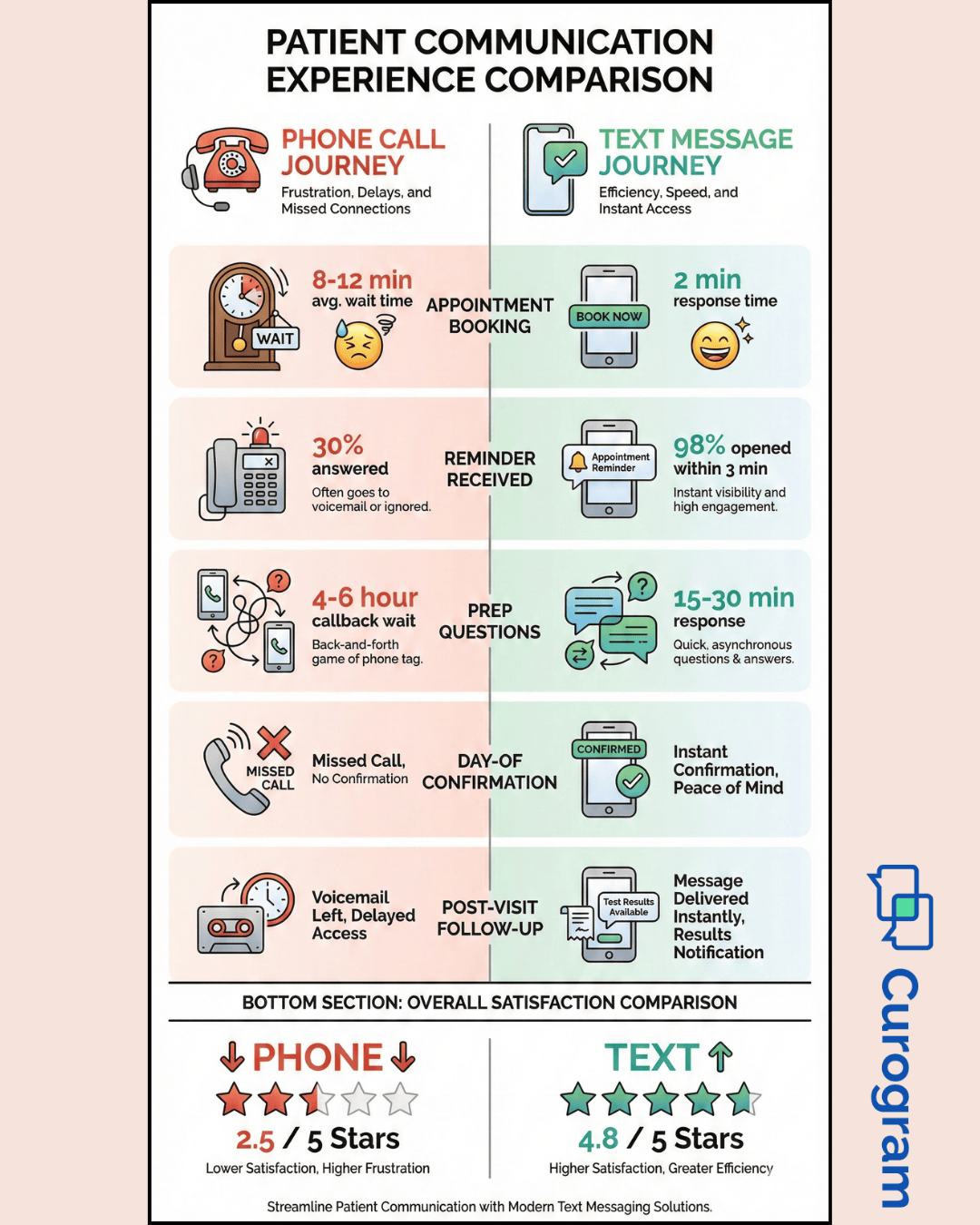
Text messages get read. Phone calls get ignored. That simple truth changes how specialty clinics communicate with patients. When your staff sends a text, 98% of patients open it within three minutes. Compare that to phone calls where 70% go to voicemail.
But personal phones create huge compliance risks. When staff text patients from their cell phones, every message contains protected health information. That violates HIPAA rules. A single breach can cost your clinic $50,000 or more in fines.
HIPAA-compliant texting in GE Centricity fixes this problem. The platform encrypts every message automatically. Patient data stays protected from the moment staff hits send until the message reaches the patient's phone. If someone loses a phone or leaves your clinic, you can shut off their access instantly.
Audit trails matter more than most clinics realize. When a patient claims they never got their prep instructions, you need proof. Compliant texting platforms track every message sent, delivered, and read. You can pull up exact records showing when staff sent the MRI prep protocol and when the patient opened it.
Multi-location clinics need central control. Your downtown office shouldn't use different messaging than your suburban site. One platform across all locations means consistent patient experience and easier staff training. New employees learn one system, not three different approaches.
Speed saves appointments. A patient gets stuck in traffic and texts your clinic. Staff sees the message immediately and adjusts the schedule. That appointment stays on the books instead of becoming a no-show. The same thing happens when patients have quick prep questions. Fast answers keep them coming in.
Reliability builds trust. Patients know they can text your clinic and get a real answer, not an automated robot response. They ask about medication timing before their CT scan. They confirm parking details at the new location. They feel heard and supported.
Enterprise texting solution platforms handle high volumes without breaking. Your radiology department books 100 MRIs this week across four locations. The system sends 100 different reminder messages with location-specific details. Everything goes out on time, and staff doesn't touch a single button.
Accountability matters in healthcare. When you use personal phones or informal texting, nobody knows who said what. Compliant platforms tie every message to a specific staff member. This protects your clinic and keeps communication professional.
Cost control comes from better no-show rates. Specialty procedures cost hundreds or thousands when equipment sits empty. A 20% reduction in no-shows translates directly to revenue. Most clinics see this improvement within the first three months of using GE Healthcare secure messaging with texting.
Your compliance officer sleeps better too. They don't worry about staff texting from personal phones. They don't scramble to respond to breach notifications. The system handles security automatically, and you have records to prove it.
Integration sounds complicated, but it doesn't have to be. Curogram connects directly to your GE Centricity system through standard healthcare interfaces. Your IT team doesn't need months of custom programming. Most clinics go live in two to three weeks.
The connection works in real time. When your scheduler books an MRI in GE Centricity, Curogram sees it immediately. The system pulls patient name, phone number, appointment time, and location. Staff doesn't enter anything twice. They work in the same GE Centricity screens they always use.
Patient data flows both ways. If a patient texts to confirm their appointment, that confirmation gets logged in GE Centricity. Your staff sees the response without switching systems. Everything stays in one central record.
Automated messages run on your schedule. Set up appointment reminders to go out 48 hours before each visit. Add a second reminder the morning of the appointment. Include location-specific parking instructions for each of your sites. The system handles it all based on the data in GE Centricity.
Radiology prep gets easier with automation. Create message templates for every scan type. MRI prep instructions mention metal restrictions and arrival time. CT contrast protocols explain NPO requirements and medication timing. Ultrasound messages cover different prep based on which body part you're scanning. Match each template to the right appointment type in GE Centricity.
Staff controls when and what to send. Your radiology coordinator reviews tomorrow's MRI schedule in GE Centricity. She clicks to send prep instructions to five patients at once. Each message includes the right protocol for that specific scan. The system personalizes every message with patient name, time, and location.
Two-way texting keeps patients engaged. Someone has a question about their prep instructions. They text back asking if they can take blood pressure medication before their CT scan. Your clinical team sees the message and responds in seconds. The conversation stays professional and HIPAA-compliant.
Multi-location support works seamlessly. Each of your four offices has its own phone number in Curogram. Patients text the right location automatically. Messages route to the staff at that specific site. Your downtown team doesn't see texts meant for the suburban office.
Broadcast messaging reaches groups fast. You need to close the west side office tomorrow for emergency maintenance. Send one message to all patients with appointments at that location. The system pulls the list from GE Centricity automatically. Patients get notified instantly, and you avoid 50 angry phone calls.
Confirmation requests reduce no-shows further. Send a text asking patients to confirm their appointment. They reply with YES to confirm or NO to cancel. Confirmations update GE Centricity automatically. Staff sees who confirmed and who needs a follow-up call.
Waitlist management gets smarter. A patient cancels their 2pm MRI slot. The system automatically texts three patients on your waitlist. First person to respond YES gets the appointment. GE Centricity updates with the new booking. You fill the slot without staff intervention.
Staff permissions keep everything secure. Your front desk can send appointment reminders but not medical results. Clinical staff can discuss test findings. Billing staff can send payment reminders. Each team member gets exactly the access they need, nothing more.
Message templates maintain consistency. Your clinic director writes approved messages for every situation. New staff uses those templates without making up responses. Patients get the same quality information regardless of who's working that day.
Reporting shows what works. Track how many patients open your messages. See which reminder timing reduces no-shows most. Compare response rates across locations. Use that data to improve your communication strategy.
Language support helps diverse populations. Send messages in English, Spanish, or other languages based on patient preference in GE Centricity. Patients understand their prep instructions better and show up prepared.
Mobile access keeps staff connected. Your radiology tech is prepping a room but sees an urgent patient question. They check and respond from their phone using the Curogram app. The message stays in the secure platform, and GE Centricity logs the interaction.
The system scales as you grow. Add a fifth location next year? Connect it to Curogram in hours, not weeks. Hire 10 new staff members? They get access the same day. Your enterprise texting solution grows with your clinic without extra complexity.
Call volume drops by 40% to 60% in the first three months. Patients text instead of calling for basic questions. Your front desk staff handles twice as many patient interactions in the same amount of time. Phone lines stay open for urgent matters that actually need a conversation.
No-show rates fall 20% to 30% across all appointment types. MRI no-shows cost the most, so even small improvements matter. A 25% reduction on 40 monthly MRI no-shows saves $4,000 to $6,000 per month. That's $50,000 to $70,000 annually from better communication alone.
Staff productivity increases when administrative burden decreases. Your team spends less time on the phone and more time on patient care. They handle prep questions faster. They resolve scheduling issues quicker. Morale improves because work feels manageable again.
Consistency across locations improves patient experience. Someone visits your downtown office one week and your suburban site the next. They get the same quality communication both times. That consistency builds trust and loyalty.
Patient satisfaction scores rise when people feel heard. Quick responses to text messages make patients happy. Clear prep instructions reduce anxiety. Easy appointment confirmations show you respect their time. These small improvements show up in your satisfaction surveys.
Standardizing workflows across multiple locations used to take months of training and endless reminders. Staff at different sites developed their own habits. Some called patients. Others sent emails. A few used personal phones for texts.
HIPAA-compliant texting in GE Centricity creates one standard process for everyone. Each clinic follows the same communication playbook. New locations start with proven workflows instead of making up their own.
Every scan type needs different preparation. MRI patients can't have metal. CT with contrast requires fasting. Pelvic ultrasounds need a full bladder. Abdominal ultrasounds need an empty stomach.
Manual communication fails here. Staff forgets details or explains things differently. Patients get confused and show up unprepared. You reschedule, and everyone wastes time.
Automated prep messages solve this problem. Create one perfect message for each scan type. Include fasting requirements, medication timing, what to wear, and arrival instructions. Link each message to the right appointment type in GE Centricity. The system sends the correct prep automatically when staff schedules the scan.
Results take time to review and share. Radiologists read scans. Referring physicians review findings. Staff schedules follow-up visits. Each step involves phone calls and coordination.
Texting speeds this up. Send a message when results are ready for pickup. Alert patients they need a follow-up appointment. Route them to the right specialist at the right location. Staff handles coordination in minutes instead of playing phone tag for days.
Streamlined Scheduling Using Integrated Reminders
Scheduling works best with multiple touchpoints. Patients need appointment confirmation right after booking. They need a reminder a few days before. They need location details the morning of their visit.
Integrated reminders from GE Healthcare secure messaging make this automatic. The system tracks every appointment and sends reminders at the perfect times. Patients stay informed without staff doing manual outreach. No-shows drop, and schedules stay full.
HIPAA compliance isn't optional. Every text message containing patient information must meet federal security standards. Enterprise texting solution platforms like Curogram handle this automatically, but you should understand what protects your clinic.
Encryption protects every message from start to finish. When staff sends a text, the system encrypts the data before it leaves your network. It stays encrypted as it travels through phone networks. Only the intended patient can decrypt and read the message on their device.
Device control prevents data leaks. Staff members leave jobs. Phones get lost or stolen. Compliant platforms let you shut off access instantly. That employee or lost phone can no longer see patient messages. Compare this to personal phones where texts stay forever.
Audit logs track everything. Who sent what message? When did the patient read it? Which staff member responded? Complete records prove compliance during audits. They also protect your clinic if a patient disputes what was communicated.
Access management controls who sees what. Front desk staff can't view clinical messages. Billing staff can't send medical information. Each role gets appropriate permissions. This limits exposure if someone's account gets compromised.
Business associate agreements formalize security responsibilities. When you use a HIPAA-compliant platform, the vendor signs a BAA. This legally obligates them to protect your patient data. Without a BAA, you're breaking HIPAA rules even if the technology seems secure.
Regular security updates keep systems protected. Compliant vendors patch vulnerabilities quickly. They monitor for threats. They maintain security certifications. Your IT team doesn't have to become security experts because the platform handles it.
Theory sounds good, but real results matter more. Multi-location specialty clinics using Curogram see measurable improvements in the first 90 days.
No-show rates drop between 20% and 35% depending on specialty type. Radiology sees the biggest impact because expensive equipment sits empty when patients don't show. A large imaging center with four locations cut MRI no-shows from 12% to 7% in three months. That improvement saved them $60,000 in the first year.
Patient response times improve dramatically. Before texting, the average patient waited 4 to 6 hours for a callback. With Curogram, most questions get answered in 15 to 30 minutes. Patients notice the difference and mention it in satisfaction surveys.
Operational throughput increases when staff work more efficiently. A five-physician cardiology practice processed 18% more patient visits per month after implementing HIPAA-compliant texting. The physicians didn't work longer hours. Front desk staff just spent less time on the phone.
Staff workflows become consistent across all locations. Every clinic follows the same reminder schedule. Every team member uses the same message templates. New employees get up to speed faster because they're learning one system, not adapting to local variations.
Call volume reductions free up staff for higher-value work. One multi-specialty group reduced daily calls by 45% after six months. Those phone hours converted into time for insurance verifications, care coordination, and patient support. Revenue per employee increased because staff could handle more complex tasks.
Implementation happens fast compared to other health IT projects. Most clinics go live within two to four weeks. Staff training takes 30 minutes per person. You don't need new hardware or major IT infrastructure changes. The platform works with your existing GE Centricity setup.
Many vendors claim they integrate with EMR systems. Few actually deliver seamless workflows. Curogram connects to GE Centricity through proven healthcare interfaces that work with any EMR. You're not locked into one system or forced to switch vendors if you upgrade.
Staff adoption happens quickly because the interface makes sense. Your team learns the basics in 30 minutes. Power users master advanced features in a week. Compare that to most healthcare software that requires days of training and months of frustration.
Enterprise scalability means the platform grows with your organization. Start with two locations and 10 staff members. Add a third location next year. Acquire another practice in five years. The system handles hundreds of providers across dozens of sites without performance issues.
Specialty workflow expertise sets Curogram apart from generic messaging tools. The platform understands radiology prep, specialty referral patterns, and multi-location coordination. Features are built specifically for how healthcare organizations actually work, not adapted from consumer messaging apps.
All-in-one communication puts everything in one platform. Send appointment reminders. Handle two-way conversations. Broadcast urgent messages. Request confirmations. Manage waitlists. You don't need five different tools for five different communication needs.
Multi-location specialty clinics face communication challenges that grow worse as you expand. Phone calls overwhelm staff. Messages get lost between sites. Prep instructions vary by location. No-shows cost thousands in empty appointment slots.
Watch how two-way texting reduces staff workload. See automated prep messages prevent scheduling issues. Learn how other specialty clinics improved patient satisfaction and filled more appointment slots.
HIPAA-compliant texting in GE Centricity solves these problems with technology that actually works. Messages reach patients instantly. Automated reminders go out on time. Prep instructions match scan types automatically. Staff communicate faster without sacrificing security.
The benefits show up fast. Call volume drops within weeks. No-shows decrease in the first month. Staff spend less time on phones and more time on patient care. Your compliance officer stops worrying about HIPAA violations from personal texting.
Integration with GE Healthcare secure messaging keeps everything connected. Patient data flows from your EMR to text messages and back again. Staff work in familiar screens. IT doesn't rebuild your entire technology stack.
The best enterprise texting solution scales as you grow. Add locations without adding complexity. Train new staff in minutes, not days. Build consistent workflows that work the same everywhere.
Book your demo today to discover how HIPAA-compliant texting transforms multi-location clinic communication.
Learn how HIPAA-compliant texting helps NextGen users improve communication and reduce no-shows. Discover benefits and secure integration with...
See how HIPAA-compliant texting helps Tebra users reduce no-shows and improve communication. Learn use cases, benefits, and secure messaging with...
See how Curogram integrates with Cloud 9 Software for HIPAA-compliant texting, reducing calls and improving patient communication in ortho practices.