
9 min read

The Community Megaphone: Mass Messaging for Fusion Clinics

The Community Megaphone: Mass Messaging for Fusion Clinics
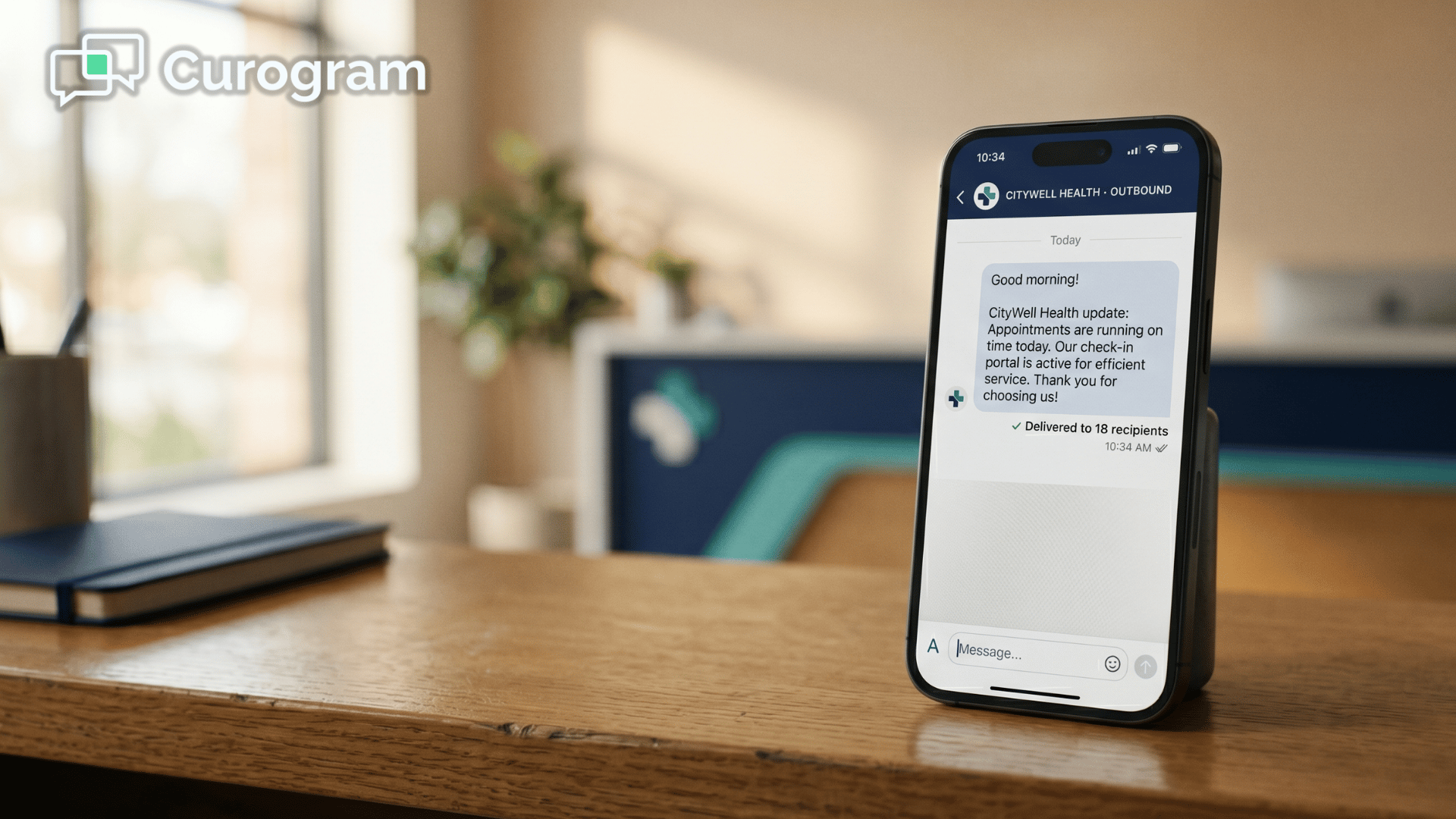
💡 Curogram is the leading mass messaging tool for Fusion Web Clinic pediatric practices. It lets clinics send bulk SMS alerts to all families — or just a filtered group — in under 60 seconds.      

When clinics face unexpected closures, weather delays, or urgent policy changes, Curogram's SMS platform ensures every parent gets the message instantly.    

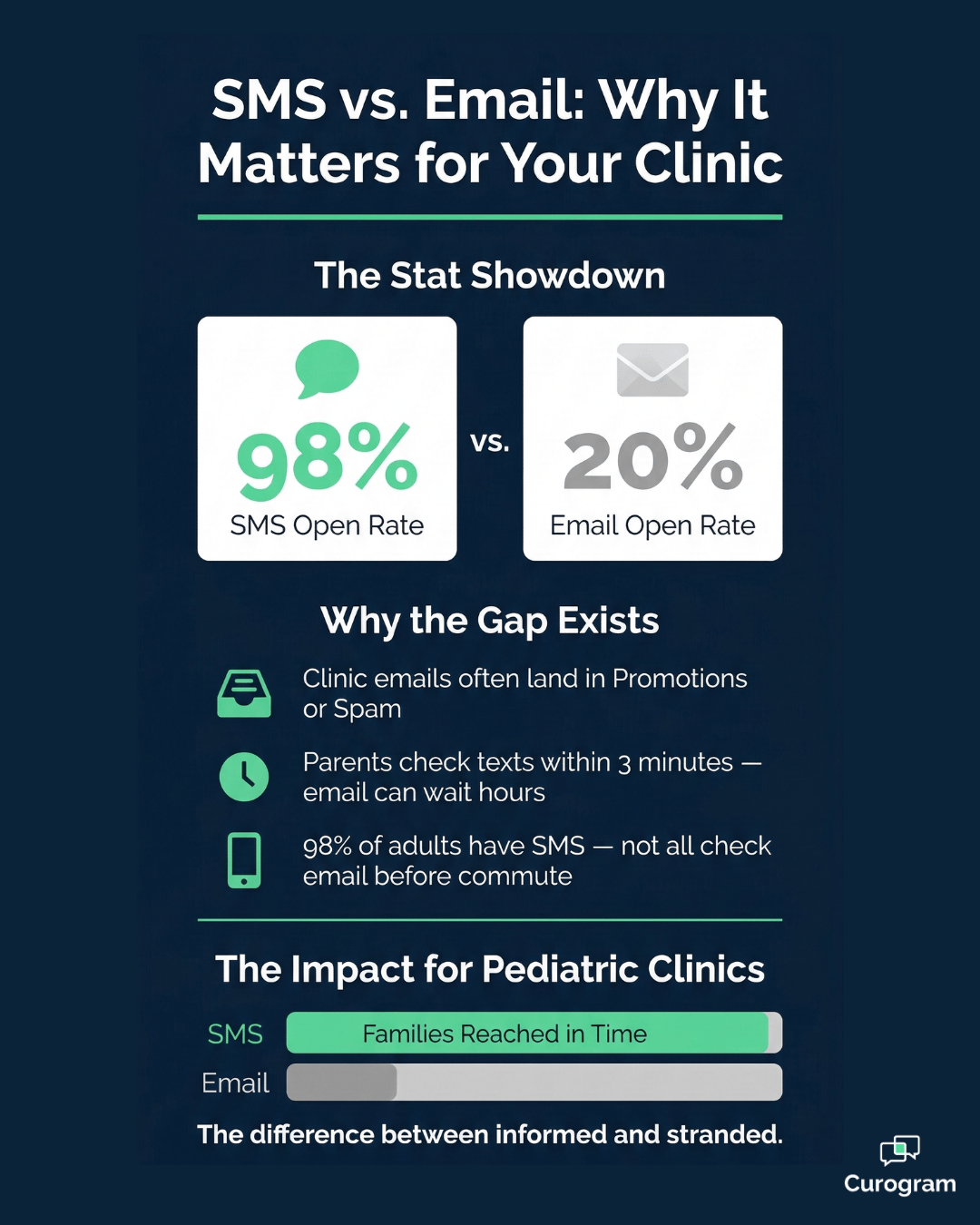
Unlike email, text messages have a 98% read rate, so nothing gets buried in an inbox.
  

Curogram integrates directly with Fusion Web Clinic, pulling current contact data to reach the right families at the right time — all while staying HIPAA compliant and audit-ready.

If you run a pediatric therapy clinic, you know the panic that sets in when something goes wrong at 7 a.m. The AC is broken. A therapist called in sick. A snowstorm is rolling in.

And your front desk team is staring at a list of 150 families that all need to be notified before drop-off time.

There is a better way. Mass messaging for Fusion Web Clinic pediatric practices gives your team the ability to reach every family at once — with a single text that gets read in minutes.

No phone trees. No voicemail black holes. No frustrated parents showing up to a locked door.

Running a pediatric clinic is not just about delivering great therapy. It is about managing every touchpoint that shapes how a family experiences your practice — including the moments between sessions.

Communication is one of the most visible parts of that experience. When it goes well, families barely notice it. When it fails, they remember it for a long time.

Most clinic owners already know their current communication setup has cracks. Calls go unanswered. Emails get buried. Staff spend hours doing outreach work that should take minutes. The problem is not effort — it is the tool.

Phone trees and email blasts were not built for the speed and specificity that pediatric clinic families need today.

Curogram connects directly to your Fusion Web Clinic database and turns your contact list into a live communication channel. Whether you need to send pediatric clinic emergency alerts, update families about a policy change, or announce a new therapy program opening, you can do it in under a minute.

This article walks through how it works, why it matters, and what it could mean for your clinic starting on day one.

When Phone Trees Break Down: Why Pediatric Clinics Need a Better Way to Reach Families

Picture this:

A pipe bursts in your clinic at 6:30 a.m. Your front desk coordinator has one hour to notify every family before the morning rush begins. With a standard phone tree, that means dozens of calls — most of which go to voicemail.

By 8:00 a.m., confused parents are pulling into the parking lot with anxious kids in tow.

This kind of scenario is not rare. Unexpected closures, staff absences, weather delays, and facility issues happen at every clinic eventually — which is why clinics should include communication in their emergency preparedness plans.

The question is not whether your team will face a communication emergency — it is whether your system can handle it when the moment arrives. Most manual processes cannot keep up, and the fallout lands squarely on your families.

The Real Cost of Getting There Too Late

For families of children with special needs, a failed communication is more than an inconvenience.

A parent who has spent 30 minutes preparing their child with autism for a transition — and then drives 40 minutes to find a locked door — has had their trust shattered. That kind of experience is hard to walk back, and it often shows up as a one-star review before noon.

The emotional weight of that moment is real.

Families who depend on consistent routines feel the disruption physically, not just logistically.

Children in therapy often need advance notice to handle changes well.

When a clinic fails to communicate in time, the fallout extends well beyond that single morning — it can set back progress that took weeks to build.

There is also a practical cost. Staff who spend an hour making emergency calls are not checking in patients, handling billing, or managing the front desk. Every minute spent on damage control is a minute pulled away from the work that keeps your clinic running smoothly.

That hidden cost adds up quickly, especially during already stressful situations.

Why Email Is Not Enough

Email seems like an easy fix, but it is not reliable enough for urgent situations. Parents of children receiving therapy are already flooded with messages from schools, specialists, and insurance companies.

A few key reasons your critical update gets missed:

  • Most clinic emails land in Promotions or Spam tabs by default.
  • Email open rates in healthcare average around 20%, compared to 98% for SMS.
  • Parents rarely check email before their morning commute begins.

Pediatric parent communication tools need to work faster and more reliably than a newsletter.

Bulk SMS for medical practices closes that gap — a text lands on the lock screen and gets read within three minutes on average. That is the difference between a parent who is informed and one who is standing in your parking lot wondering what happened.

The shift from reactive to proactive communication starts with having the right tool in place before you need it — something every business plan should account for.

Clinics that build their communication infrastructure around SMS are not just better prepared for emergencies — they also deliver a consistently better experience on ordinary days. Families feel more connected, and staff spend less time chasing down responses that never come.

SMS vs email open rates comparison for pediatric clinic mass messaging

Sending the Right Message to the Right Families Using Your Fusion Data

Not every message needs to go to every family. That is where smart filtering makes a real difference. Curogram connects to your Fusion Web

Clinic database and lets you sort your patient list by day, service type, provider, or other criteria — so you can text all Monday patients about a schedule change without reaching families who were not coming in that day.

This level of control matters more than most clinic owners realize at first. Broad, untargeted messages can feel impersonal — or worse, confusing.

A parent who receives a message about a Wednesday cancellation when their child is only seen on Fridays starts to wonder if the clinic knows who they are. Precision in communication is a form of respect, and Fusion's data makes that precision possible.

Targeted Outreach That Feels Intentional

This kind of precision is especially useful when you want to announce new therapy programs.

Launching a summer sensory camp?

Opening Saturday slots for occupational therapy?

You can send that message directly to the families most likely to enroll — the ones already waitlisted or receiving a related service.

The message lands as helpful information rather than a generic blast, and families notice the difference.

Enrollment response rates improve significantly when outreach is relevant. A parent who receives a message about a program that directly fits their child's needs is far more likely to respond than one who gets a catch-all announcement buried in a long list of updates.

Targeted broadcasts do not just feel better — they perform better, and that shows up in your schedule.

Beyond new programs,

Targeted outreach also strengthens the day-to-day relationship between your clinic and each family.

When parents receive only the messages that are relevant to them, they start to trust that every text from your clinic is worth reading. That trust makes your communication more effective across the board — not just during emergencies, but every time you reach out.

Common Use Cases for Filtered Broadcasts

  • Fusion Web Clinic closure notifications sent only to patients scheduled that day
  • New program announcements sent to parents of children currently on a waitlist
  • Policy updates delivered to your full patient base in a single click
  • Billing or insurance changes sent to families in specific coverage groups

Each of these scenarios requires the same thing: accurate, current data and a fast delivery channel. Curogram pulls directly from Fusion, so the contact information you are messaging is always up to date.

There is no manual export, no spreadsheet to maintain, and no risk of texting an old number because someone forgot to update the system.

The result is a communication workflow that runs with minimal effort from your team.

Once the integration is in place, sending a filtered broadcast takes less time than drafting a single email.

Staff can focus on patient care while Curogram handles the delivery — and every family gets the information they need, when they need it.

mass messaging for Fusion Web Clinic pediatric practices - landscape

How Proactive Messaging Strengthens the Relationship Between Clinics and Families

Communication is a form of care.

When a pediatric clinic takes the initiative to keep families informed before they have to ask, it sends a message beyond the words in the text. It tells parents that their time matters, that the clinic is organized, and that the team is thinking ahead.

That kind of reliability builds loyalty that no marketing campaign can manufacture.

Most clinic owners think of mass messaging as a tool for emergencies. That framing undersells what it can do.

Consistent, proactive communication — even about routine updates — shapes how families perceive your practice over time.

A clinic that texts ahead of schedule changes, program openings, and policy updates feels like a partner in a child's care, not just a service provider they visit twice a week.

Less Incoming Chaos, More Focused Staff

One of the most overlooked benefits of mass messaging is the relief it brings to your front desk. A single text about a 30-minute clinic delay can prevent 50 back-to-back calls asking if you are open.

That is a meaningful chunk of the morning returned to your staff — time they can spend on patients who are actually in the building.

Front desk teams in pediatric therapy clinics carry a heavy load. They manage scheduling, insurance verification, patient intake, and a constant stream of parent questions — all at once.

When mass messaging handles the broadcast work, staff are freed to give their full attention to the families in front of them. That shift improves the quality of every in-person interaction, which in turn improves the family experience without any additional effort.

Proactive communication also leads to fewer negative reviews. When parents feel informed and respected, frustration has nowhere to build.

Clinics that use mass messaging consistently report stronger patient retention and fewer complaint calls, because the parent-provider bond is built on transparency rather than guesswork. Families who trust that your clinic will keep them in the loop are far less likely to leave in the first place.

The Professional Edge It Gives Small Practices

There is also a perception benefit that is easy to underestimate. When a small therapy practice communicates with the speed and clarity of a large healthcare system, it earns a level of trust that takes years to build through other means.

Families notice when a clinic has its act together. They talk about it to other parents, and those conversations turn into referrals.

In a competitive local market, small details drive big decisions. A parent choosing between two therapy clinics often cannot evaluate clinical quality directly — they rely on how a practice makes them feel during every interaction.

A clinic that communicates clearly, responds quickly, and never leaves families guessing creates an impression that is very hard for a competitor to match. Mass messaging is one of the simplest ways to build that impression consistently.

The clinics that invest in communication infrastructure early tend to grow faster than those that do not. It is not because they have more patients — it is because they keep the ones they have and convert more referrals.

Proactive communication is not just good service. It is a long-term growth strategy that pays off in patient volume, staff morale, and practice reputation.

Staying Safe and Compliant When Sending Messages in Bulk

One of the first questions clinic owners ask about patient mass texting is whether it creates HIPAA compliance issues.

The short answer is no — when it is done correctly.

Curogram is designed with healthcare privacy standards in mind, making it easier for clinics to stay compliant while communicating efficiently with patients.

Healthcare communication rules can feel intimidating, especially for smaller practices without a dedicated compliance officer. In reality, bulk SMS compliance is more straightforward than many clinic owners expect.

The key is understanding which types of messages require additional protection and which ones are safe to send through standard SMS.

General announcements — like Fusion Web Clinic closure notices, schedule changes, or updates about new programs — do not contain protected health information.

Because they do not reference diagnoses, treatments, or personal health data, they can safely be sent through standard SMS without triggering HIPAA concerns.

Curogram also protects more sensitive communications automatically. Messages involving clinical details, test results, or personal health information are routed through encrypted channels instead of standard SMS.

This built-in safeguard helps staff communicate confidently without needing to manually evaluate every message before sending it.

Curogram also supports TCPA compliance with simple opt-out options. Parents who prefer not to receive general announcements can opt out at any time while still receiving essential messages like appointment reminders.

The platform keeps these channels separate so clinics never miss critical patient communication.

In addition, every broadcast message is logged with a timestamp, recipient count, and delivery status. This audit trail gives clinics a clear record for internal reviews or compliance checks whenever questions arise.

Schedule a demo with Curogram to see how secure, HIPAA-compliant bulk messaging can streamline communication for your team.


Frequently Asked Questions

Does Curogram pull the phone numbers directly from Fusion?

Yes. Curogram syncs with your Fusion Web Clinic database, so you are always messaging the most current contact information on file. When a parent updates their number at the front desk, that change is reflected in Curogram automatically. There is no manual export or import required.

Can parents reply to a mass message?

Yes. Unlike no-reply short-code systems, Curogram supports two-way communication. If a parent has a question after receiving a closure notice or a program announcement, their reply goes directly to your clinic's unified inbox. Your team can then respond in the same thread — just like a regular text conversation.

Is there a limit to how many messages we can send?

Curogram is designed to handle real-world clinic volume at any scale. Whether you are alerting 50 families about a local power outage or notifying 5,000 patients about a new clinic location, the platform processes the broadcast instantly. There is no batch delay or message queue to work around.

How quickly can our staff learn to use the mass messaging feature?

Most front desk staff are up and running within a single session. Curogram was built specifically for clinic staff — not IT teams — so the interface is designed around the workflows your team already uses every day. Sending a mass message takes the same amount of effort as sending a single text, and training typically takes less than ten minutes from first login to first broadcast.

Can we send messages in languages other than English?

Yes. Curogram supports multilingual messaging, which is especially valuable for pediatric clinics serving diverse communities. You can compose and send messages in any language your patient population uses. This means families who are more comfortable in Spanish, Tagalog, Vietnamese, or another language can receive clinic updates in a way that actually reaches them — not just in a language they can technically read.


Office Closures & Prime Clinical | Notify Patients Instantly

Office Closures & Prime Clinical | Notify Patients Instantly

💡 Broadcasting office closures for Prime Clinical Systems works best when you replace manual phone trees with automated mass text alerts. With the...

Read More
Fill Schedule Gaps in Prime Clinical | Revenue on Demand

Fill Schedule Gaps in Prime Clinical | Revenue on Demand

💡 To fill schedule gaps in Prime Clinical Systems, the most direct method is targeted broadcast messaging through Curogram. Practices filter...

Read More
Mass Texting in InSync EMR with Curogram

Mass Texting in InSync EMR with Curogram

💡 Mass texting in InSync EMR helps behavioral health organizations reach many patients fast. Being secure, compliant, and simple, it improves...

Read More