
1 min read
Online Patient Forms in InSync EMR with Curogram
💡 Online patient forms in InSync EMR simplify intake for behavioral health practices. Paper forms are replaced with secure, digital versions...
10 min read

Reduce front desk bottlenecks from paper packets.
Capture complete information in one structured flow.
Use secure intake forms InSync that support HIPAA rules.
Let patients upload IDs and insurance from home or phone.
Protect data quality for therapy workflows and billing.
Give new clients a calmer, more private first step into care.
With Curogram, intake becomes a smoother part of care instead of an obstacle at the front door.
Think about the last time your waiting room felt tense. Phones rang. Patients stood at the desk trying to balance clipboards, insurance cards, and pens. New clients for therapy sat quietly, filling out long forms while they wait for their turn. You could feel that the paperwork was getting in the way of care instead of preparing for it.
Long waits, repetitive questions, and misdirected referrals all come from messy intake workflows. At the same time, research on digital intake shows the impact of electronic forms. These forms improve accuracy, reduce errors, and make it easier to collect information. For new therapy clients, secure online forms can lower stress and make it easier to begin care.
In this blog, we look at the challenges you face when you rely on paper packets and manual data entry in InSync. We also explore the benefits for staff and patients, especially around privacy. By the end, you'll find practical next steps you can take to bring digital intake into your workflows.
In our complete guide, we discussed how online patient forms for InSync EMR can transform behavioral practices. The following pain points emphasize the urgency to move from manual to digital intake.
When intake depends on paper, the waiting room often becomes a holding area for unfinished tasks. Patients arrive early and spend their first minutes filling out forms on clipboards. Front desk staff then review each page, ask follow up questions, and try to read handwriting that is sometimes unclear. This stops the line and adds pressure to everyone in the room.
Research on intake and front office workflow highlights how manual forms create bottlenecks and make lobbies feel crowded and chaotic. In behavioral health, long waits are more than a minor annoyance. People often arrive anxious, uncertain, or carrying trauma. Sitting in a busy room while filling out detailed mental health questions can make that anxiety worse. Studies of mental health access show that long waits and confusing processes can lead to people walking away before they fully engage in treatment.
Every time staff re type information from paper into InSync, there is a chance for mistakes. A missed digit in a phone number, an incorrect medication, or a swapped insurance ID can cause problems that ripple through care. A recent framework on intake errors in healthcare points out that manual data entry, disjointed systems, and miscommunication are major causes of intake related safety risks.
In behavioral health, the stakes are especially high. Intake forms often include history of self harm, substance use, trauma, and family context. If these details are captured in a rushed or messy way, your clinicians may not have the full picture they need. Correcting errors later takes extra effort and may require uncomfortable follow up questions. This can erode trust and make patients feel like their stories were not truly heard the first time.
Patients often feel like they are telling their story over and over at intake. First on the phone, then in paper packets, then again in the room with a clinician. Long paper forms can be especially heavy for new therapy clients who may struggle with concentration or emotional overwhelm. Articles on mental health intake note that the combination of privacy worries, long forms, and unfamiliar questions can raise stress and lower the chance that someone finishes the process.
Repetition also affects people who use your services frequently. Existing clients may need to update address or insurance details but end up redoing sections of forms that feel unnecessary. When intake feels repetitive and slow, patients start to see it as a barrier instead of a bridge into care. Over time, this can show up in feedback and satisfaction surveys, with comments that point to paperwork and check in as weak spots in an otherwise caring program.
Curogram lets you send digital intake links to patients before their appointments, using text or email. The forms open on any phone, tablet, or computer, so people can fill them out at home or in a private place. This gives new therapy clients more time to think through sensitive questions without feeling rushed at the front desk. It also means that when they arrive, check in can focus on greeting and support instead of paperwork.
Because the forms are connected to InSync, the fields match the data you actually need. That alignment helps patients give information that maps directly into your EMR, such as contact details, emergency contacts, and clinical history. Behavioral health intake best practice guides emphasize the importance of collecting the right information in a clear, patient centered way, and pre visit digital forms support that goal.
With secure intake forms InSync, patients can upload photos of their insurance cards and IDs through encrypted links instead of handing over physical cards at the front desk. These uploads become part of the digital intake packet, available to billing and registration staff without extra scanning or copying. Articles on digital intake and HIPAA compliance explain that secure online forms can support privacy requirements while reducing the risk of lost or misfiled documents.
For behavioral health programs, this also protects your patients from awkward moments in the lobby. They do not need to fumble with wallets or worry about others seeing personal details. Staff can review coverage in advance and resolve many questions before the visit starts. This makes the intake experience feel more respectful and reduces last minute surprises about eligibility or benefits.
One of the most tiring parts of paper intake is manual data entry. Staff read handwriting, interpret checked boxes, and then type everything into InSync. Digital intake InSync behavioral health workflows with Curogram cut out that extra step by sending structured fields directly into the EMR or into a review screen where staff can quickly verify information.
Reports on patient intake software show that when forms are integrated with clinical systems, practices see fewer errors and more consistent data across departments. For your team, this means less time chasing down missing details and more time on tasks that require human judgment, like calming a nervous patient or answering nuanced questions about therapy programs. Over time, this smoother flow also supports more reliable therapy workflows, because clinicians can trust that intake data is complete and up to date when they open a chart.
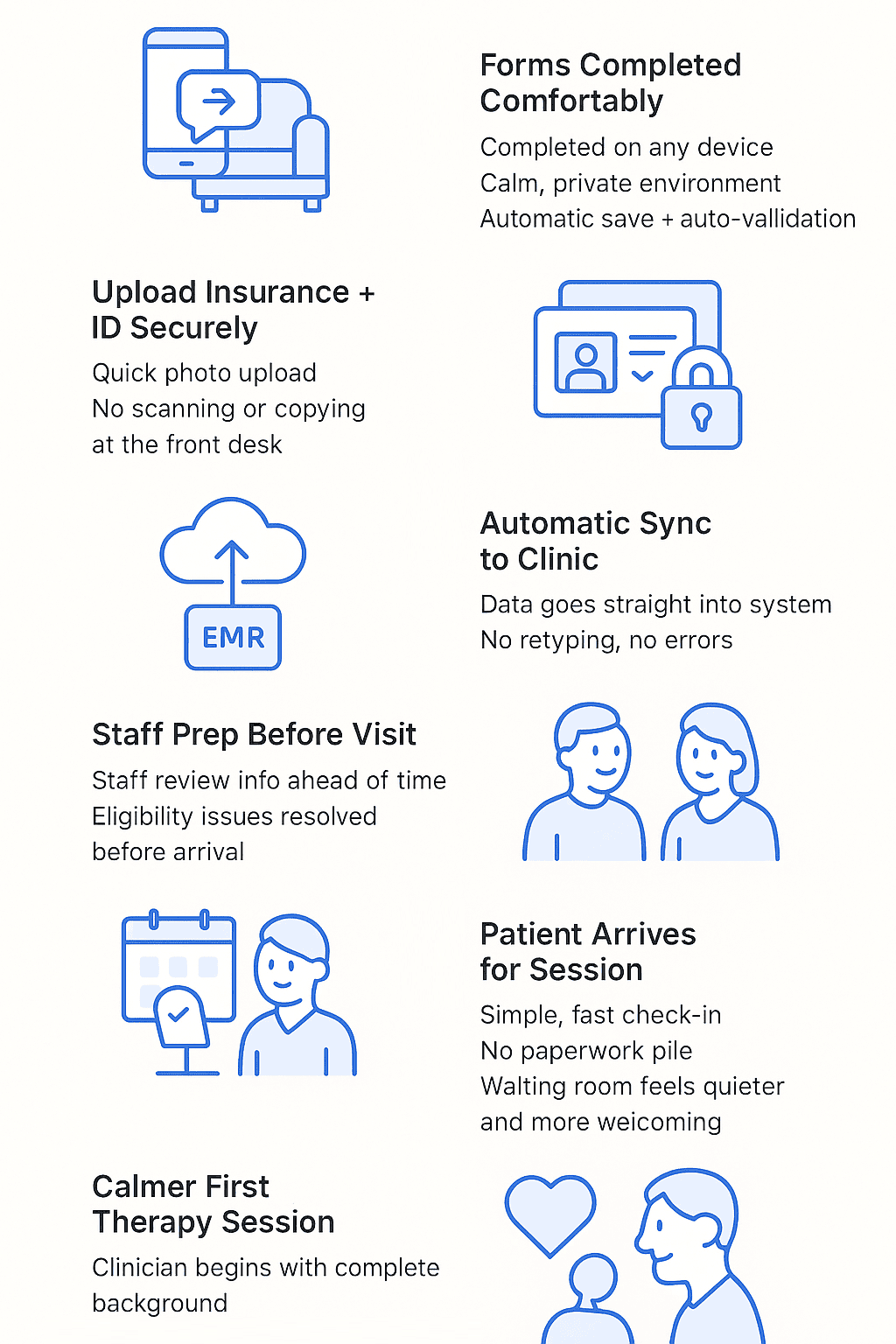
When intake moves from clipboards to secure online forms, the waiting room feels different. Patients who arrive with forms already completed can check in with a quick confirmation instead of a packet. For new therapy clients, that means less time staring at detailed questions about symptoms and more time settling their nerves before the first session. Articles on mental health intake show that lowering stress at this first step helps patients stay engaged in treatment.
When patients use structured digital forms, you are less likely to receive partial or unreadable answers. Electronic forms can require key fields before submission and can guide patients through sections in a logical order. Research on electronic intake tools notes that this structure improves accuracy and lowers the risk of missing information that could affect care or safety.
In many programs, each department keeps its own version of intake documents. Clinical notes live in one place, billing details in another, and consent forms in a third. Integrated digital intake with InSync creates a single source of truth. Online patient forms in InSync with Curogram send the same information to clinical, billing, and compliance teams, so everyone is looking at consistent data.
Front desk work in behavioral health is emotional as well as technical. Staff greet people who may be in crisis, answer phones, handle scheduling, and manage paperwork at the same time. Studies on front office burden describe how manual intake adds to this load and increases stress. When you move to digital intake, you remove repetitive tasks like handing out packets, checking every line for signatures, and re typing long histories.
Patient experience researchers emphasize that the intake process sets the tone for the rest of care. When intake is smooth and respectful, patients are more likely to feel that the program is organized and that their time is valued. Digital intake forms are associated with higher satisfaction in multiple healthcare settings, partly because they cut down on perceived hassle and confusion.
Paper forms can be misplaced, left on counters, or filed in the wrong chart. This is a serious concern when you are handling mental health histories and other sensitive details. Guides to HIPAA compliant digital intake explain that secure online forms can use encryption, access controls, and audit logs to protect patient data.
When intake information arrives in the same structured way every time, therapy workflows become more predictable. Clinicians know where to look in InSync for specific details, and they can rely on fields being filled out in a consistent order. Articles on behavioral health intake best practices note that standardized intake supports triage decisions and program matching.
In outpatient mental health projects, researchers have found that poor intake processes contribute to misreferrals and gaps in follow up. When information is incomplete or scattered, it is easier to assign someone to the wrong level of care or miss important context. Digital intake forms let you ask targeted questions that tie directly to program criteria and clinical pathways.
Because digital intake data is structured, you can analyze it for patterns that support quality projects. You can track how many patients report certain concerns, how often forms are fully completed, and how long it takes for forms to be submitted before visits. Guides on digital intake and automation show that these metrics help leaders understand where workflows are working well and where adjustments are needed.
Many behavioral health programs now mix in person and virtual visits. Digital intake forms fit these models naturally. Patients can complete forms for telehealth sessions through secure links and have their information sync into InSync along with telemedicine encounter details. Curogram resources on telehealth preparation show how integrated forms and messaging prevent delays and confusion on the day of a virtual visit.
This flexibility means you do not need separate intake processes for different visit types. Whether a patient joins from home or in the clinic, their information flows through the same secure path. That consistency supports smoother therapy workflows and reassures patients that their care is being handled in a unified way.
Imagine a multi-site behavioral health center that relied on clipboards, thick packets, and phone based registration. New clients often spent their first visit focused on forms instead of preparing emotionally for therapy. Staff regularly stayed late to finish data entry into InSync, and small errors in medications or contact details showed up in charts. Feedback surveys frequently mentioned frustration with check in and confusion about what information was needed.
The center decided to implement Curogram digital intake integrated with InSync. Patients began receiving secure links by text and email that guided them through clinical, demographic, and consent forms before their first visit. IDs and insurance cards were uploaded through encrypted forms, so staff could verify coverage in advance. Over the next few months, lobby traffic felt lighter, and clinicians reported that first sessions started with more complete information and calmer patients.
Leaders also noticed that different departments were finally looking at the same intake data. Billing staff no longer chased missing coverage details that were stuck on paper, and supervisors could review consent histories with a few clicks. The center used structured reports from the intake system to identify common needs, such as housing stress or school difficulties, and adjusted group offerings accordingly. What began as a paperwork project became a broader shift in how the organization welcomed people into care.
Curogram focuses on HIPAA compliant workflows for sensitive information. Secure intake forms InSync connections rely on encryption, role based access, and audit trails to protect patient data, including uploaded IDs and consent forms. For your behavioral health team, this means you can confidently gather detailed histories and documentation without sacrificing privacy.
With secure online forms integrated with InSync, you transform the intake process. Digital intake workflows let patients complete forms in private, on their own time. For your front desk, less manual intake means more room to offer welcome and support. For clinicians, better data means more focused sessions and clearer therapy workflows.
A thoughtful review of your current process, a small pilot, and simple forms are enough to start. As you listen to feedback from patients and staff, you can refine the process and expand step by step. In the end, modern intake is not about chasing a trend. It is about aligning your intake process with the care you want to offer.
Want to see exactly how you can streamline you patient intake process? Book a quick demo today.

1 min read
💡 Online patient forms in InSync EMR simplify intake for behavioral health practices. Paper forms are replaced with secure, digital versions...

1 min read
 Jo Galvez : Apr 30, 2026, 6:56:04 PM
💡 Manual patient intake slows clinics down and increases the risk of errors. Long check-in times can reduce patient satisfaction and limit patient...

1 min read
💡 A Ramsoft digital intake workflow changes how you manage your front desk. By integrating online forms into your EMR, you can streamline the...