7 min read
Digital Intake Forms for InSync EHR | No Portal Required
Aubreigh Lee Daculug
:
September 16, 2026
Curogram sends the whole packet by secure text. No sign-up, no app, no password. Clients finish screeners and consent forms on their phone before the visit. Your staff stop retyping paper.
Atlas Medical Center used Curogram's text-first pre-visit workflow. No-shows fell from 14.20% to 4.91% in three months, 3X better than the industry average.
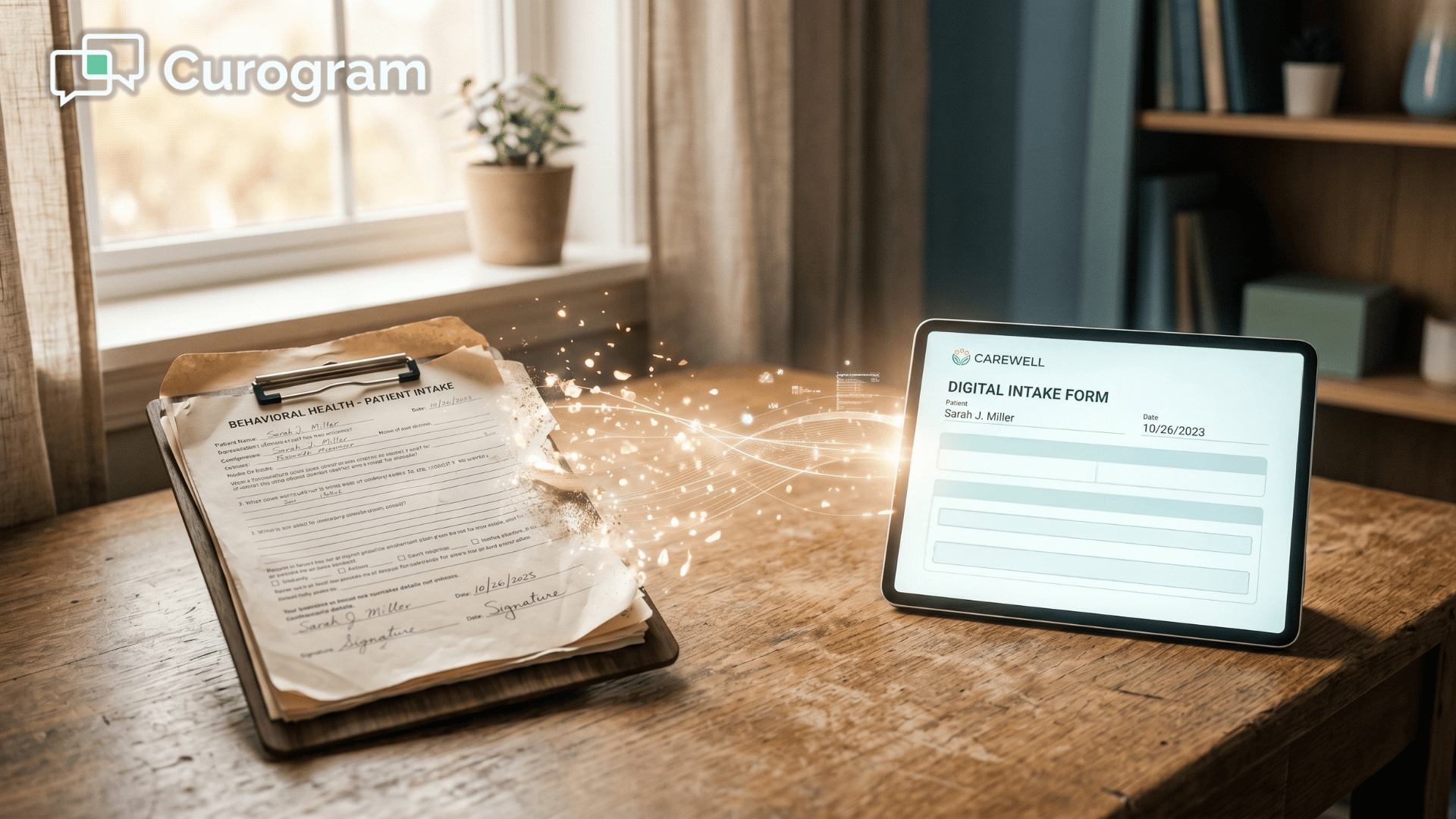
A new client sits down for a first therapy session and spends the first 25 minutes with a clipboard. The packet was emailed to them two weeks ago. It included a portal link. They tried it once, hit a password reset loop, and gave up.
The packet was never the problem. The delivery route was.
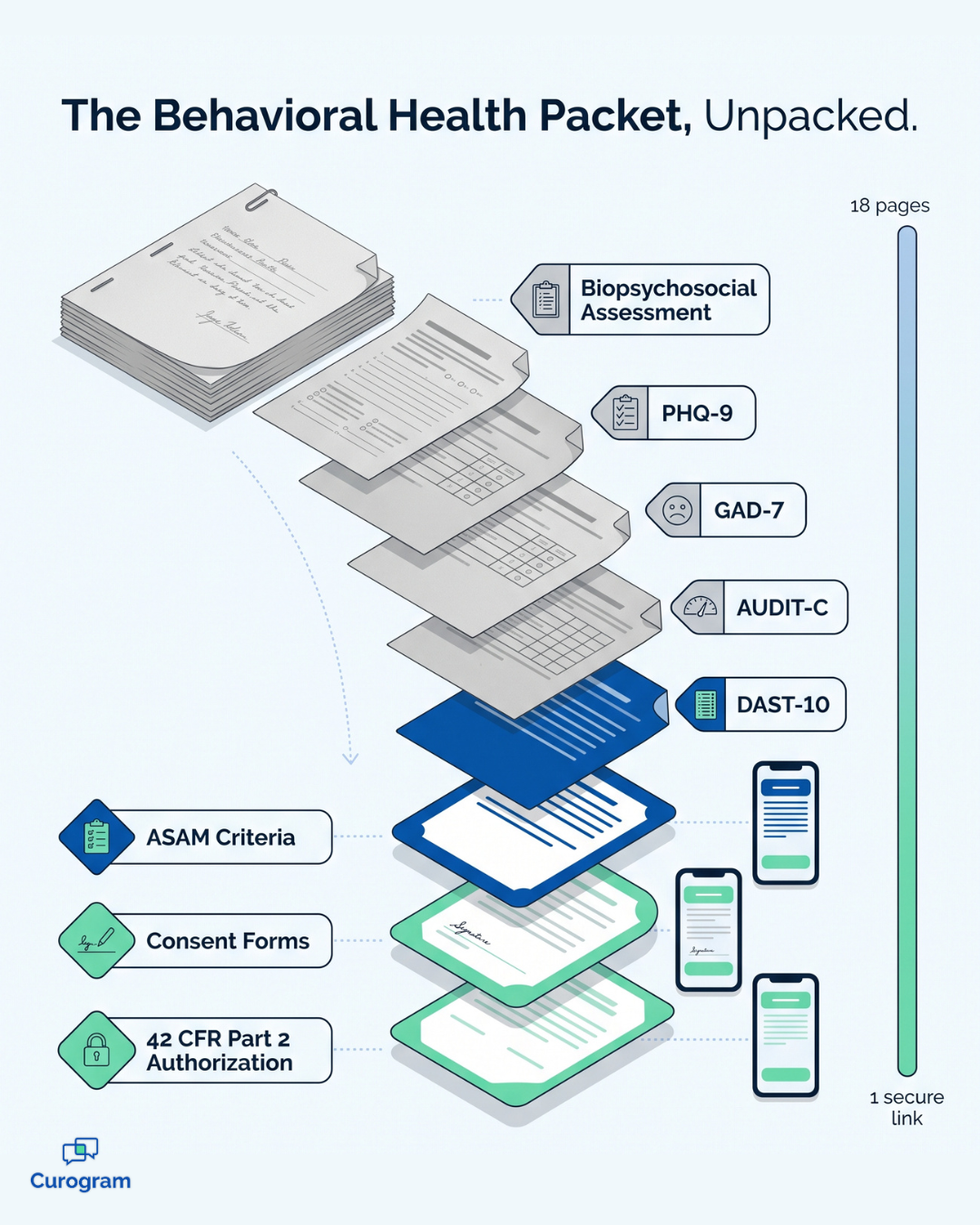
InSync EHR by Qualifacts builds some of the best clinical documentation in behavioral health. Biopsychosocial assessments, PHQ-9, GAD-7, AUDIT-C, DAST-10, ASAM criteria. About 96% of reviewers praise how configurable it is, and that praise is earned.
But your forms only help if patients actually finish them, and that is exactly where the trouble starts.
Pre-visit forms in InSync live inside a browser-based portal. Patients have to register. They have to clear identity verification. They have to do all of this before your practice has earned a single ounce of their trust.
Call it the Portal Paradox. You pay for digital intake infrastructure, and most clients never log in to use it.
So the packet gets printed. An 18-page bundle of screeners, consents, and authorizations comes back half-done on visit day. Your front desk retypes handwriting into a system that was built to score those answers automatically.
There is a better route, and your patients already carry it in their pocket.
Digital patient intake forms for InSync EHR practices work far better when they arrive by text link. No login. No app. Just a tap.
Curogram sends the full packet that way, and the results follow. Atlas Medical Center used text-first pre-visit workflows and cut no-shows from 14.20% to 4.91% in three months. That is 3X better than the industry average.
This guide walks through why the portal stalls completion, what a text-delivered packet changes, and what your first visits look like when everyone arrives finished.
Why Great Forms Still Come Back on Paper
InSync does the hard part well. The behavioral health intake forms InSync EHR Qualifacts customers rely on are a real differentiator. Most systems treat scored screeners as an afterthought, and InSync clearly does not.
The friction sits somewhere else entirely, and it has nothing to do with clinical quality.
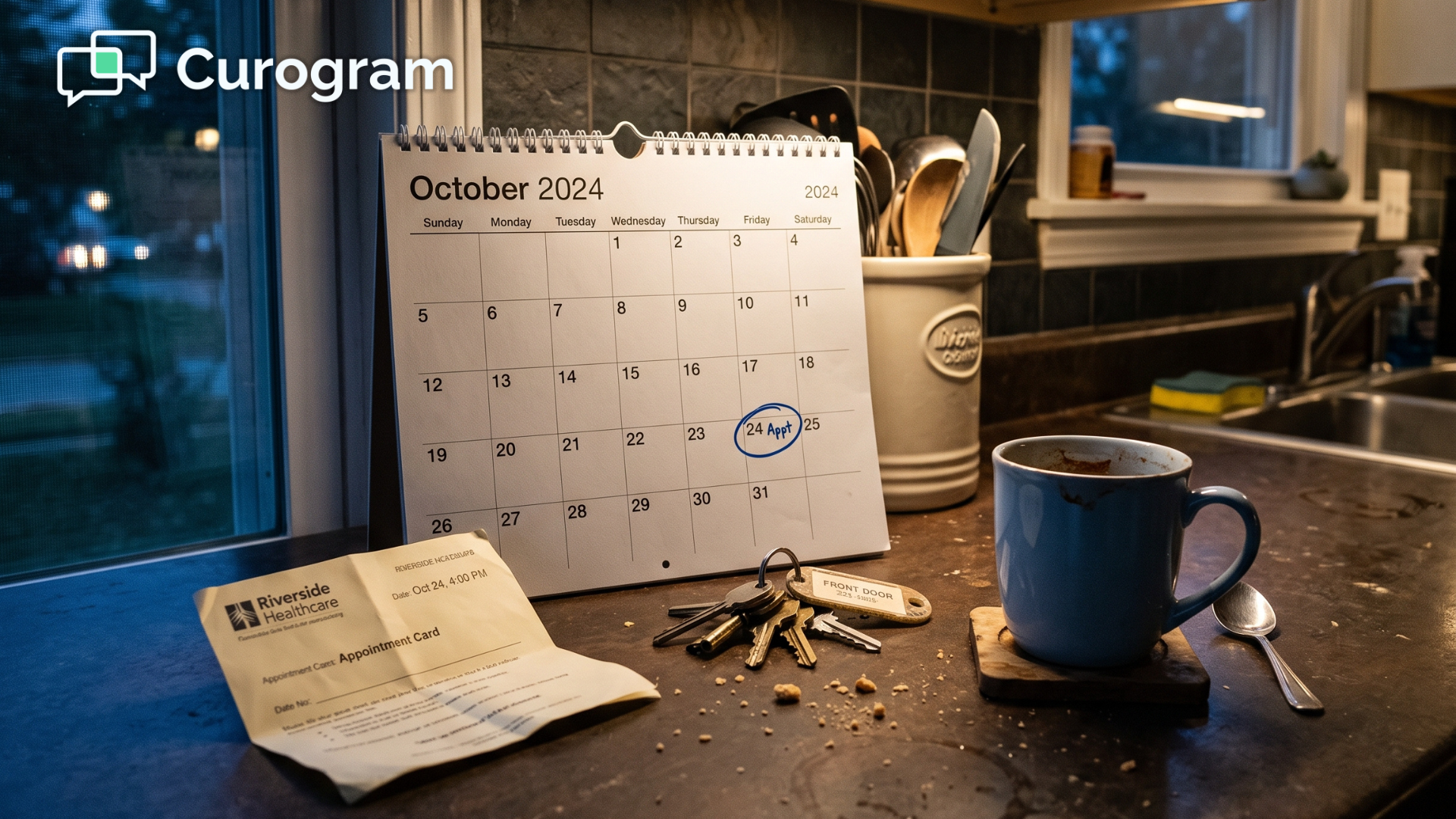
Portal sign-up asks for effort at the most fragile moment. There is no habit yet. There is no trust yet. There is only a new client, a link from a practice they have never met, and a login screen.
Watch how it plays out in a substance use program. Staff email a portal invite. The ID check fails, or the password reset loops back on itself.
So the 18-page packet gets printed instead, and it walks in on visit day half done, with your intake coordinator sorting through it.
Now watch a physical therapy patient. They work full time and juggle three visits a week. They get the same portal invite and never open it. Medical history, referral details, and insurance forms land on a clipboard.
Different clinics. Same ending.
What the paper actually costs
Practices at this tier report about 19 pages of paper per patient. Here is what that looks like when you stack it up across a month.
These figures are illustrative, built from sample inputs to show the shape of the problem.
| Hidden cost | What it looks like | Monthly impact at 50 new patients |
|---|---|---|
| Printed packets | 19 pages per new patient | ~950 pages printed, scanned, shredded |
| Staff transcription | ~12 minutes retyping each packet | ~10 staff hours |
| Late first visits | 20–30 minutes lost per evaluation | ~20 clinical hours |
| No-shows | 23–50% rates in behavioral health | $15,000–$25,000+ at 10–15 providers |
That last row is the one that stings the most. New patients who never confirm are the ones most likely to vanish. Behavioral health already carries the highest no-show rates in outpatient care.
In practice, it means a clinical director watches a 50-minute first session shrink to 25 minutes of paperwork.
It means an office manager who pays for a portal every month still spends Friday afternoon squinting at handwriting on a DAST-10.
Send the Packet Where Their Thumbs Already Are
Curogram is the pre-visit packet that works alongside InSync. It is a HIPAA-compliant forms tool. It sends your intake by text, a channel with a 98% open rate. Behavioral health portals often see just 15–20% of patients engage.
Same forms. Different road.

What patients receive
The packet arrives as one secure link. A tap opens forms built for a phone screen. There is nothing to install and no account to set up.
- Scored screeners, including PHQ-9 and GAD-7 screening forms online, plus AUDIT-C and DAST-10
- Consent and privacy documents with e-signature
- Digital consent forms for SUD treatment programs, including 42 CFR Part 2 authorizations
- Therapy bundles: medical history, referral confirmation, insurance authorization, and functional assessments
That last detail matters more than it sounds. Zero setup on the patient side is what makes paperless intake for addiction treatment centers real instead of aspirational.
How it connects to your system
Here is the honest version.
Finished forms flow into your practice workflows as data, so nobody retypes 19 pages of handwriting.
InSync stays your clinical system of record.
InSync's FHIR R4 API is stronger than most tools in this space. It is well documented, and it supports Smile CDR, OAuth 2.0, and SMART App Launch. Deeper links still take work. Expect BAAs with Qualifacts and your practice, sandbox sign-up, and sign-off from an API coordinator.
We would rather say that up front than promise plug and play. The workflow pays off on day one either way.
The rest of the Qualifacts family is worth naming too. Qualifacts iQ speeds up charting and OnCall covers telehealth. Neither one sends intake by text. And since Curogram works with any EHR, your intake workflow survives a later move to Credible or CareLogic.
Why it fits both sides of your schedule
In behavioral health, a text packet meets people where their capacity really is. Tapping through a screener alone, at their own pace, asks far less than a portal or a busy waiting room. That is true for clients with serious mental illness, anxiety, or active substance use.
Therapy practices get a different win. Their model runs on 2–3 visits a week for 6–12 weeks, and it only works if week one starts clean.
Evaluation day begins on time. Coverage is checked early. Care starts a week sooner.
That is what sending therapy practice intake forms without portal login friction actually buys you. It also feels warmer, not colder. Your clinician walks in already knowing the score.
What Changes When Everyone Arrives Finished
Atlas Medical Center:
No-shows dropped from 14.20% to 4.91% in three months. That is 3X better than the industry average.
Pre-visit engagement is what drives that number. A patient who finished their packet by text has already put something into the visit. That investment shows up as attendance.
Strong InSync EHR pre-visit form completion changes the first visit itself. Screeners are scored before the session starts. Part 2 authorizations are signed before the first group. Therapy referral paperwork is charted before the evaluation.
The clipboard retires.
Your front desk stops retyping and starts welcoming people. That shift alone is worth real hours. Curogram clients report front-desk productivity gains of 30% or more once texting takes over the repeat work.
Your clinician opens the session differently, too.
Instead of "let's get through this paperwork," it becomes "I saw your answers, let's talk about question seven." For your team, that is 25 minutes of clinical time handed back on every first visit.
You win back what 19 pages of paper used to eat. Staff hours. Session minutes. And the goodwill of a new client who never had to fight a login screen.
Give Your Forms a Route Patients Will Actually Take
InSync gives your practice best-in-class intake documentation. Scored assessments, configurable templates, clinical records that hold up under audit. None of that is in question.
What it does not give you is a delivery route people finish.
Curogram supplies that route: a text link, sent before the visit, opened on the phone your patients already answer.
InSync is for your templates, your scoring, and your records. Curogram is for their thumbs.
Think of it as a division of labor, not a replacement. Nothing about your clinical records changes. Only the path the paperwork travels does.
The Portal Paradox has a real cost, and it is not abstract. It is the 950 pages your team printed and scanned last month. It is the $15,000 or more in monthly revenue that walks out with patients who never confirmed. It is a world-class assessment library quietly converting itself back into a waiting-room clipboard.
You do not need better forms; you need a better way to hand them out. The fix is not a new assessment library. It is a shorter distance between your packet and your patient.
Practices that switch to digital patient intake forms for InSync EHR practices delivered by text tend to notice the change within the first week. Completion rates climb. Front desks get quieter. First sessions start on time and stay focused on care.
Stop letting a login screen decide whether your intake gets done.
Book a Demo and see how text-delivered intake works with your own packet, in about 20 minutes. Bring your longest bundle, the 18-page one nobody ever finishes. We will show you what it looks like on a phone, walk through what connects to InSync and how, and answer the integration questions honestly.
Frequently Asked Questions
Yes. Curogram is HIPAA-compliant and signs Business Associate Agreements. It is built to support 42 CFR Part 2 rules for substance use programs. The text itself carries a secure link, not health details, and consent forms are signed inside the secure workflow. The 2024 Part 2 final rule also makes well-documented electronic consent easier for SUD programs, not harder.
No. The whole point is to remove re-entry, not add it. Finished forms reach your workflows as data instead of 19 pages of handwriting to retype, and InSync stays your clinical system of record. We are also clear about how deep the link goes. InSync's FHIR R4 API gives us a real pathway, and we walk you through exactly what connects during the demo.
No. InSync stays your clinical system of record, and your assessment library does not change at all. Curogram handles delivery: getting the packet out to the patient and back again before the visit. Think of it as a new front door, not a new house. You keep the templates you configured and the scoring you rely on. What changes is that answers arrive as data instead of handwriting.
Most patients work through a full behavioral health bundle in one sitting. Scored screeners move quickly on a phone because each question is a single tap. Longer histories and consent forms take more time, and patients can pause and come back without losing what they have already entered. Completion is highest when the link goes out several days ahead of the visit. That gives people a quiet evening to finish it rather than a rushed morning in your parking lot.
Nothing breaks. Your portal and your paper packets stay open for the few who want them. Curogram just moves the default to a channel with a 98% open rate. Staff can see who has finished a packet and send a one-tap nudge to anyone who has not. Most practices keep a tablet at the front desk for the rare same-day finish.