Opus EHR was designed from the ground up for substance use disorder treatment. It handles the clinical complexity that general-market EHRs struggle with.
42 CFR Part 2 compliant record-keeping, ASAM-level-of-care documentation, drug screening tracking, group therapy session notes, and integrated billing for residential, IOP, and outpatient programs. For SUD treatment centers that need a system built around their regulatory and clinical requirements, Opus delivers.
The platform understands the distinction between IOP and PHP scheduling, tracks bed census for residential programs, and maintains the confidentiality walls that federal substance use regulations require. This is exactly what a BH-native EHR should do — own the clinical record and the compliance framework.
The question for Opus users is not whether the EHR works for clinical documentation. It does. The question is what happens outside the clinical record — when a patient needs to confirm admission, complete intake from their phone, receive a reminder, or leave a review after discharge.
.png)
 42 CFR Part 2 compliant patient texting.
SUD centers operate under heightened confidentiality. When patients text back to confirm or ask about intake, messages must be encrypted, logged, and handled within 42 CFR Part 2 boundaries. Opus manages clinical records within those boundaries — but patient-facing text communication is outside its scope. Most centers default to personal cell phones or non-compliant messaging apps, creating regulatory risk and a documentation gap.
"Patients reply to our reminder texts and the messages go into a void."— Practice manager · SUD program
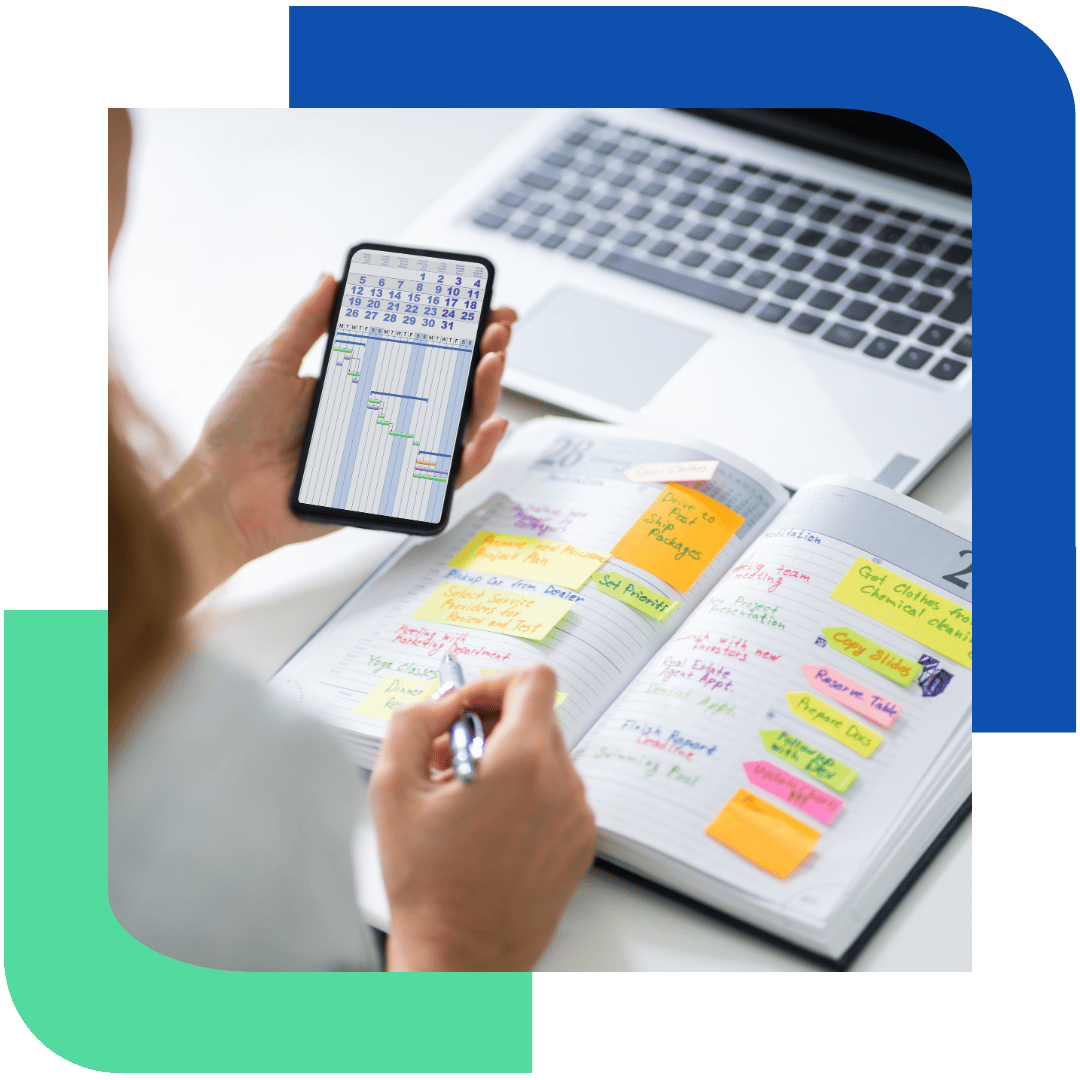
 SUD admission intake friction.
Same-day admissions are common in SUD treatment. A patient calls, qualifies, and needs consent forms, insurance verification, and clinical screening completed before arrival. Manual paper intake delays bed assignment by hours. Digital intake that syncs to the EHR compresses that timeline from hours to minutes.
"We have 19 pages of paper forms per patient and staff have to manually download and re-upload them."— SUD treatment center · Curogram demo

 Reputation Management Automation.
Patients who complete SUD treatment are often the strongest program advocates — but asking for a review requires sensitivity and timing manual processes rarely get right. Most Opus users have no automated mechanism for post-discharge reviews. The result: low review volume and online ratings that don't reflect actual care quality.
721% Review growth at Optima Medical — 993 → 8,159 reviews in 16 months · 90% 5★ SRC · Curogram client data · eCW

.png?width=1545&height=2000&name=Opus%20EHR+Curogram%20Integration%20Spec%20(1545%20x%202000%20px).png)
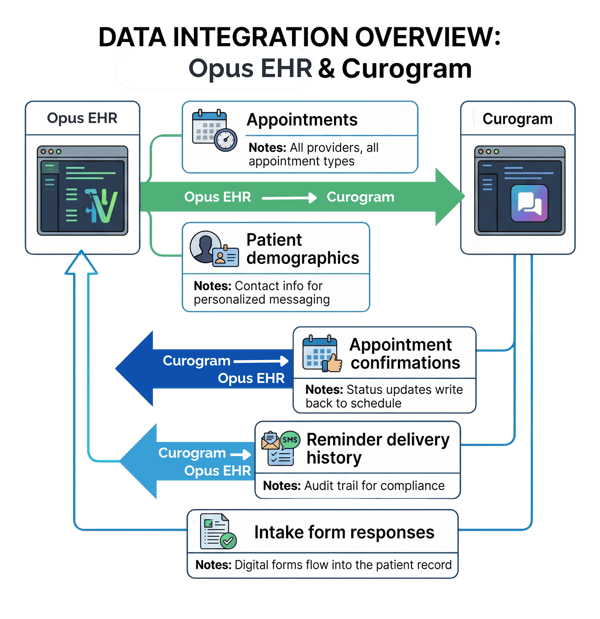
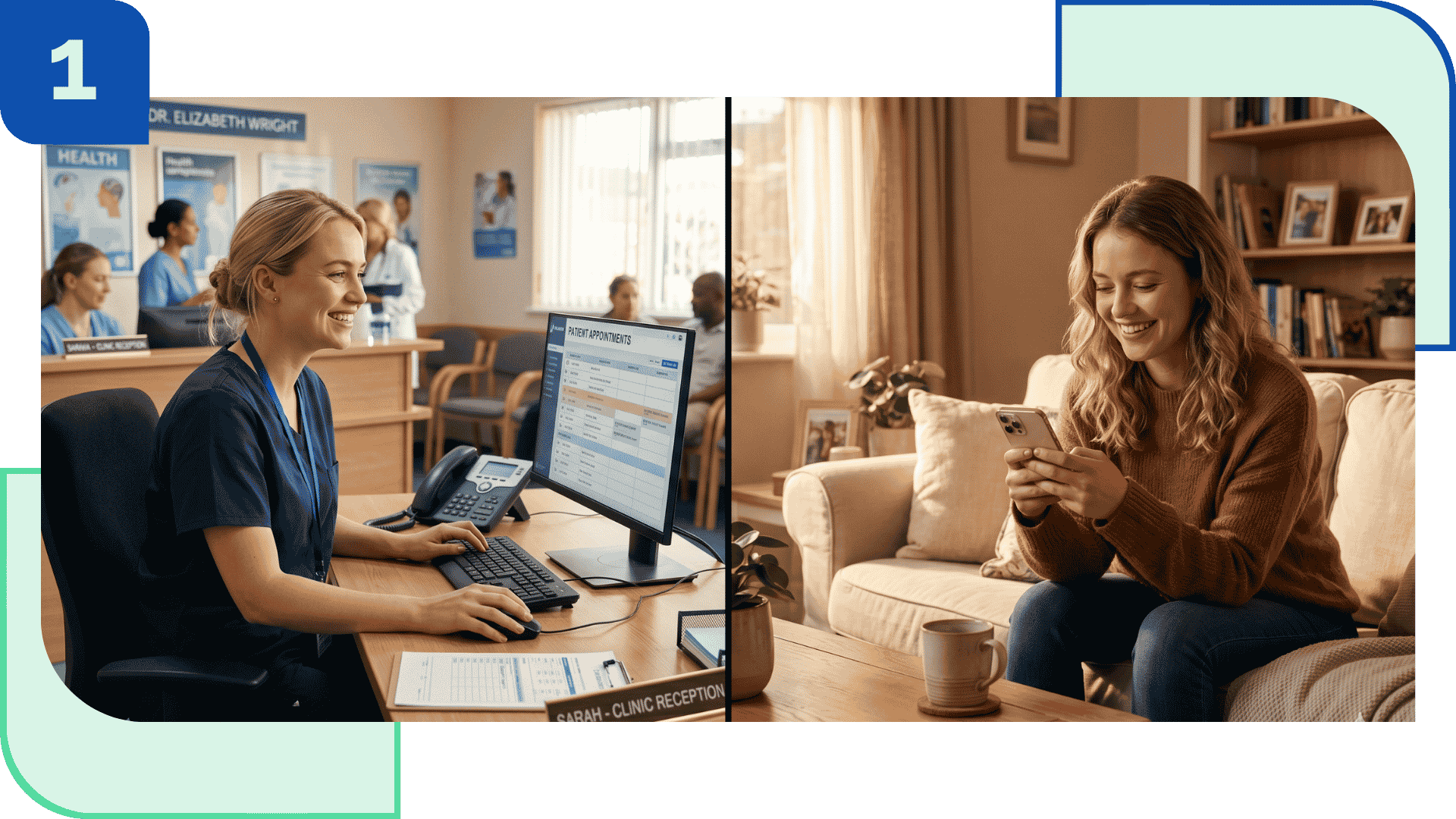
Two-Way HIPAA Texting with 42 CFR Part 2 Support
Patients text your office number. Staff respond from the Curogram dashboard. Every message is encrypted, logged, and covered under a signed BAA. For SUD programs, the platform supports consent-based messaging workflows consistent with 42 CFR Part 2 confidentiality requirements.
Automated Reminders — Customizable by Program Type
Multi-channel reminders via text, email, and voice, configurable by appointment type: IOP sessions, individual therapy, group therapy, medication management, and intake appointments. Psychiatry on Curogram averages 11.03% no-shows vs. the 23% industry average.

Digital Intake for Same-Day Admissions
Intake forms sent via text link. Patients complete consent documents, insurance verification, clinical screening tools, and ASAM assessment paperwork from their phone before arrival. Responses sync to the Opus patient record — eliminating the 19-page paper intake bottleneck.

Patient Recall Campaigns
Automated SMS campaigns re-engage patients who've lapsed from care. Optima Medical reconverted 35% of lapsed patients within 30 days — 1,240 patients returned, generating an estimated $248,000 in recovered revenue at approximately $12 per reactivated patient versus $250–$350 per new patient through paid advertising.

Automated Google Reviews — Post-Discharge Timing
Review request texts sent automatically after discharge or completion milestones. Timing is configurable to respect the clinical context of SUD treatment — requests go out after the patient has completed their program, not during active treatment.